Can Other Fish Live with a Betta

Yes, other fish can sometimes live with a betta, but it depends entirely on the individual betta’s temperament and careful tankmate selection. A proper tank size (minimum 20 gallons), abundant hiding spots, and choosing peaceful, non-flashy species from the approved list are non-negotiable for success. Never assume a betta will be peaceful; always have a backup plan to separate fish if aggression occurs.
Key Takeaways
- Your Betta’s Personality is Everything: Some bettas are laid-back community fish, while others are aggressive “fighting fish” who will harm or kill tankmates. There is no universal rule.
- Tank Size is the Foundation: A 5-gallon tank is for a solo betta only. To even attempt a community, you need a minimum of 20 gallons to provide enough space and territory for everyone.
- Avoid Flashy, Long-Finned Fish: Fish with bright colors or flowing fins (like guppies, fancy mollies) trigger a betta’s instinct to attack. They will be seen as rival males.
- Choose Peaceful, Schooling Bottom-Dwellers: The safest bets are fast-moving, plain-colored fish that occupy different tank levels, like certain tetras, rasboras, and corydoras catfish.
- Plants and Hiding Spots are Mandatory: Live or silk plants, driftwood, and caves create visual barriers and escape routes, reducing stress and territorial disputes.
- Introduction Order Matters: Add your peaceful community fish first and let them establish their territories for a week before introducing the betta. Never add a new fish to an established betta’s tank.
- Always Have a Plan B: Keep a separate “hospital” tank ready. If aggression occurs, be prepared to remove the betta or the threatened fish immediately.
[FEATURED_IMAGE_PLACEHOLDER]
📑 Table of Contents
- Understanding the Betta: More Than Just a “Fighting Fish”
- The Non-Negotiables: Tank Setup for Success
- The Ideal Tankmates: Safe Species for a Betta Community
- The Danger Zone: Fish to Never House with a Betta
- The Step-by-Step Guide to Introducing a Betta to a Community
- Conclusion: Patience, Observation, and Realistic Expectations
Understanding the Betta: More Than Just a “Fighting Fish”
So, you’ve got a beautiful, flowing-finned betta splendens, commonly known as the Siamese fighting fish, swimming gracefully in its tank. It’s a stunning centerpiece. But then a thought creeps in: “Can other fish live with a betta?” It’s one of the most common questions in the aquarium hobby, and the answer is a classic aquarist’s refrain: “It depends.”
That frustrating answer exists because bettas are complex individuals with strong personalities shaped by genetics and environment. While they were historically bred for aggression in combat, modern pet bettas are generally less aggressive than their fighting strain ancestors. However, that instinct is never fully gone. To understand if your betta can have roommates, we must first understand the betta itself.
The Legacy of the “Fighter”
Betta splendens originates from the shallow, sluggish rice paddies and floodplains of Thailand (formerly Siam). In these confined, resource-scarce environments, males are fiercely territorial. They will attack any other male betta that enters their space to defend mating rights and limited food. This is where the “fighting fish” moniker comes from. Historically, bets were placed on the outcome of these battles, which could last for hours until one fish surrendered.
Today’s aquarium bettas have been selectively bred for decades for color and finnage, not aggression. Many have significantly calmer dispositions. But that ancestral DNA doesn’t just vanish. A betta’s primary instinct is to patrol its territory and view other brightly colored, long-finned fish—especially other males—as intruders to be chased away or eliminated.
Male vs. Female Bettas: A Key Difference
This is a crucial distinction. Male bettas are almost always the ones considered for community tanks. Female bettas are generally less flashy and less aggressively territorial. They can often be kept in small, peaceful groups (called sororities) of 4-5 or more in a heavily planted 20+ gallon tank, where a pecking order can establish. However, individual females can still be bullies. For the purpose of this article on can other fish live with a betta, we will focus primarily on the male betta, as they are the most common pets and present the greater challenge for tankmate compatibility.
Some experienced keepers have had success with female bettas in communities, but the same strict rules about tank size, décor, and species selection apply. The safest and most straightforward path for a beginner is to assume their male betta must be the sole fish unless they meticulously follow the guidelines for a community setup.
The Non-Negotiables: Tank Setup for Success
Before you even think about a tankmate list, your aquarium must meet fundamental requirements. Trying to house a betta with other fish in a small, bare tank is a recipe for disaster, stress, and death. These are not optional upgrades; they are the absolute baseline for any chance at a peaceful community.
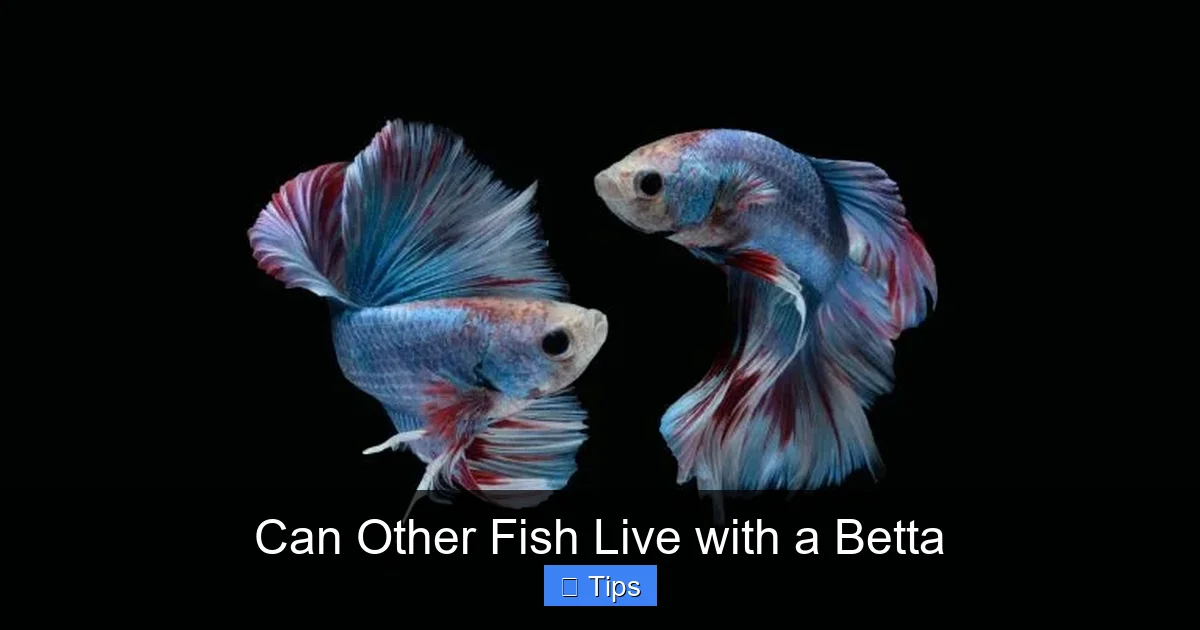
Visual guide about Can Other Fish Live with a Betta
Image source: fishkeepingadvice.com
Tank Size: Bigger is Infinitely Better
Let’s be crystal clear: a 5-gallon or 10-gallon tank is a solo betta tank. Period. The common myth that bettas can live in a vase or a tiny bowl is animal cruelty. They need heated, filtered water and space. To introduce other fish, you must dramatically increase the footprint. The absolute minimum recommended size is a 20-gallon long tank. A 20-gallon “long” model provides more horizontal swimming space at the water’s surface (a betta’s favorite layer) than a 20-gallon “tall” tank. Even better is a 29-gallon or 30-gallon tank. This extra space allows the betta to establish a larger territory and provides other fish with ample room to avoid the betta if needed. In a small tank, there is no escape, and the betta will see every corner as its own.
The Power of Plants and Décor: Creating a Maze
Open water is a stressor for a territorial betta. It feels exposed and will patrol relentlessly. Your tank must be a dense, complex labyrinth. The goal is to break the line of sight. Use:
- Live Plants: The gold standard. Plants like Java fern, Anubias, Cryptocorynes, and floating plants (like Salvinia or Frogbit) are excellent. They soften the water, improve water quality, and provide fantastic cover.
- Silk Plants: A great alternative if you’re not ready for live plants. Avoid plastic plants with sharp edges; they can damage a betta’s delicate fins.
- Driftwood and Rock Caves: Provide hiding spots at mid-level and on the substrate. Ensure all décor is smooth and has no sharp points.
- Pipes, PVC Tubes, and Themed Ornaments: These create tunnels and enclosed spaces where other fish can feel safe.
A well-planted tank doesn’t just look beautiful; it functionally reduces aggression by ensuring the betta can’t see the whole tank at once. A fish that darts behind a plant is out of sight, out of mind.
Filtration and Water Parameters
A gentle filter is essential for a community tank to handle the increased bioload. Bettas prefer low to moderate water flow, as their long fins make them poor swimmers in strong currents. Sponge filters are an excellent, gentle choice, or you can baffle a hang-on-back filter with a sponge. Stable water parameters are critical: temperature 78-80°F (25.5-26.5°C), pH 7.0-7.5, and ammonia/nitrite at 0 ppm. A cycled tank is a must before adding any fish.
The Ideal Tankmates: Safe Species for a Betta Community
Now we get to the heart of the question: can other fish live with a betta? The answer is yes, if you choose the right roommates. The perfect betta tankmate is a fish that:

Visual guide about Can Other Fish Live with a Betta
Image source: aniimad.com
- Occupies a different tank level (bottom or mid-water, not the surface where the betta patrols).
- Is plain-colored and has short, non-flowing fins.
- Is fast-moving and agile to dodge any curious chasing.
- Is peaceful and social, not fin-nipping or boisterous.
- Has similar water parameter requirements.
Here are the top-tier, most reliably compatible species, always introduced in appropriate schools.
Top Picks: The Corydoras Catfish
These tiny, armored catfish are arguably the best betta tankmates available. They are utterly peaceful, social, and spend all day on the bottom sifting through sand for food. They have no interest in the betta’s domain. A school of 6+ Pygmy Corydoras (Corydoras pygmaeus) or 5-6 larger species like the Bronze Cory (Corydoras aeneus) in a 20+ gallon tank is a fantastic combination. They help clean the substrate and add cute activity to the bottom of the tank.
Excellent Schoolers: Rasboras and Tetras
Small, active schooling fish from the mid-water column can work beautifully, but species selection is critical.
- Harlequin Rasboras (Trigonostigma heteromorpha): A classic choice. Their orange/red coloration is on the body, not the fins, and they are active but not overly boisterous. A school of 8+ is ideal.
- Lambchop Rasboras (Trigonostigma espei): Similar to harlequins but smaller and with a distinctive dark marking. Very peaceful.
- Ember Tetras (Hyphessobrycon amandae): Tiny, fiery orange fish that school beautifully in the middle of the tank. Their size and speed help them avoid bettas. Keep in groups of 10+.
- Neon Tetras (Paracheirodon innesi): A staple, but with caution. Their bright blue stripe can sometimes trigger a betta. They must be in a large school (10+) to feel secure and disperse their color. Success is not guaranteed but is common.
- Black Neon Tetras (Hyphessobrycon herbertaxelrodi): A safer alternative to neons. Their coloration is more subtle, and they are hardier and less likely to trigger aggression.
The Quirky and the Quiet: Kuhli Loaches and Snails
For unique tank dynamics:
- Kuhli Loaches (Pangio kuhlii): These fascinating, eel-like loaches are nocturnal, peaceful bottom-dwellers. They burrow into the substrate and come out in groups to wriggle around. A group of 5+ is needed for them to be active during the day. They are an excellent, low-interaction choice.
- Snails: Most aquarists find snails to be perfectly safe betta tankmates. The betta may investigate a snail, but will quickly lose interest. Nerite Snails are excellent algae eaters that won’t overpopulate your tank. Mystery/Apple Snails are large and slow, completely uninteresting to a betta. Ramshorn Snails and Bladder Snails are fine but can overbreed. Avoid tiny snails like bladder snails if your betta is a known nipper, as it might peck at them.
The Danger Zone: Fish to Never House with a Betta
Just as important as knowing who might work is knowing who absolutely will not. Mixing a betta with the wrong fish leads to stress, injury, and death. Here is your “do not house” list.
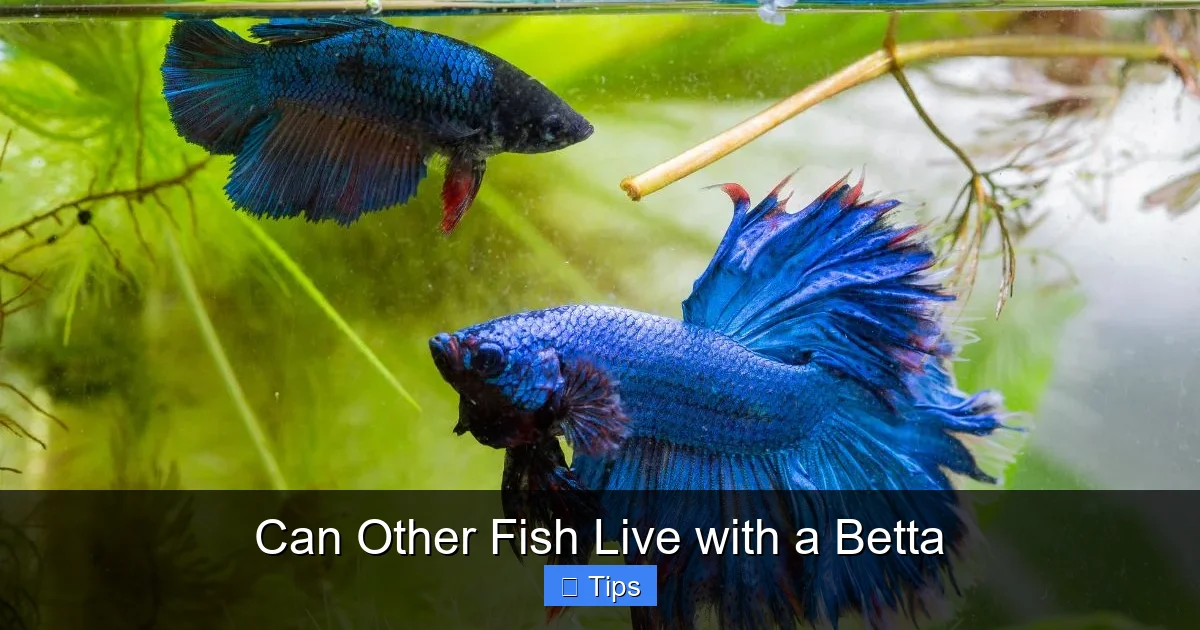
Visual guide about Can Other Fish Live with a Betta
Image source: housedpet.com
Flashy Rivals: Guppies, Fancy Mollies, and Other “Betta-Likes”
This is the cardinal rule. Never house a betta with any fish that has long, flowing fins or extremely bright, contrasting colors. This includes:
- Guppies: Especially males with large, colorful tails. Your betta will see a male guppy as a rival male betta and will relentlessly chase and nip at its fins, leading to fatal stress and fin rot.
- Fancy Mollies & Platies: Some varieties, like the Sailfin Molly, have exaggerated dorsal fins that are a red flag.
- Fantail or Veiltail Goldfish: Their flowing fins and different temperature requirements make this a terrible match.
- Other Bettas: Male bettas with male bettas is a guaranteed fight. Female bettas with female bettas requires a large, specialized sorority tank. Never mix sexes.
Fin-Nippers and Boisterous Bullies
Some fish are simply too rough or curious for a betta’s delicate fins.
- Tiger Barbs: The classic fin-nipper. They are fast, boisterous, and will relentlessly nip at the long, flowing fins of a betta, causing extreme stress and physical damage.
- Serpae Tetras: Known to be nippy, especially in schools too small. They are a common cause of betta fin loss.
- Large, Boisterous Cichlids: Like Convicts or Oscars. They are too aggressive and large, and will either eat the betta or be so domineering that the betta will be constantly stressed.
- Aggressive “Tank Boss” Species: Fish like the Jack Dempsey or Green Terror are powerful predators and will view a betta as a snack or a nuisance to be harassed.
Slow, Long-Finned “Swimming Snacks”
Fish that are slow-moving with elaborate fins are not just targets for betta aggression; they are also targets for the betta’s instinct to eat small, slow-moving creatures.
- Fancy Goldfish: Slow, messy, and require cold water. A poor match on every level.
- Angelfish: While not always aggressive, they are slow, have prominent fins, and grow large enough to potentially see a small betta as food.
- Butterfly Koi or Orandas: Any fancy, slow goldfish variant is a bad idea.
The Step-by-Step Guide to Introducing a Betta to a Community
You’ve got your 20+ gallon, heavily planted tank. You’ve chosen a school of harlequin rasboras and a group of pygmy corydoras. Now, the introduction process is critical. Doing it wrong can doom the entire endeavor from the start.
Step 1: Establish the Community First
This is the most important step. Do not buy the betta first. Set up your fully cycled, heated, filtered, and densely planted tank. Add your chosen community fish (the rasboras, corydoras, etc.) first. Let them live in the tank for at least one full week, preferably two. This allows them to:
- Acclimate to the water parameters.
- Establish their own territories and social hierarchies (schools will stick together).
- Feel secure in their environment before a new, potentially territorial predator is introduced.
When you finally add the betta, it will be the new fish in an established community, which often leads to less defensive behavior from the betta. It will be exploring, not immediately defending a claimed space.
Step 2: The Betta Acclimation and Observation
When you bring your betta home from the store, float its bag in the tank for 15-20 minutes to equalize temperature, then slowly drip-acclimate it to the tank water over 30-60 minutes. Gently net the betta out of the bag (do not pour store water into your display tank) and release it into the community.
For the first 24-48 hours, watch closely from outside the tank. Do not tap on the glass. Look for signs of aggression:
- Flaring: The betta puffs out its gills and flares its fins. Occasional flaring at a fish that comes too close can be normal.
- Chasing: Sustained, rapid chasing of a specific fish around the tank.
- Nipping: The betta darting in and biting another fish, especially at the fins.
- Hiding: If your betta immediately darts into a plant and never comes out, it is terrified and stressed. The other fish may also be bullying it.
Mild, occasional chasing that stops when the other fish retreats can sometimes be worked out as the betta learns its boundaries. But constant, high-stress chasing requires immediate intervention.
Step 3: The Backup Plan: Separation
Have a plan before you start. You need a separate, cycled quarantine or “hospital” tank (5+ gallons) with a filter and heater. If aggression is constant and one-sided, you must remove either the betta or the victimized fish. It is almost always easier and safer to remove the betta. It is the one with the potential for lethal aggression. Move it to the backup tank. You can then try re-introducing it days later, but often a betta that shows intense aggression is simply a solitary fish and must remain alone. Never gamble with the lives of your other fish.
Conclusion: Patience, Observation, and Realistic Expectations
So, can other fish live with a betta? The hopeful answer is yes, but with profound caveats. It is not a guaranteed outcome, and it is certainly not a beginner-level project. It requires a significant investment in a larger, well-planned aquarium, careful selection of specific, compatible species, and diligent observation.
Your betta is an individual. You might get a gem of a personality that peacefully cohabitates with a school of ember tetras and a cory catfish, becoming a gentle king of a vibrant community. Or, you might have a betta that views any other fish as an invader to be chased to the point of exhaustion. There is no way to know for sure until you try under the correct conditions.
The safest, most stress-free path for both you and your fish is often to appreciate the betta for the stunning, personality-filled solo specimen it is. A single betta in a beautifully planted, properly sized 10-gallon tank is a rewarding and visually spectacular pet. But if you are set on creating a community, arm yourself with knowledge, start with the right tank and the right fish, and always, always prioritize the well-being of every creature in your care. A peaceful community tank with a betta is a beautiful and dynamic achievement, but it is earned through preparation, not wishful thinking.
Frequently Asked Questions
Can a female betta live with other fish?
Yes, female bettas are generally less aggressive than males and can often be kept in community tanks with the same careful species selection. However, individual females can still be territorial. Some aquarists also successfully keep small groups of females (sororities) together in large, heavily planted tanks, but this is more advanced and carries its own risks of bullying.
Are shrimp or snails safe with a betta?
Yes, most shrimp and snails are excellent and low-risk betta tankmates. Bettas may peck at a shrimp occasionally out of curiosity, but they typically lose interest. Cherry shrimp can sometimes be eaten if the betta is particularly aggressive or the shrimp are very small, but Amano shrimp or larger ghost shrimp are very safe. Snails like nerites, mystery snails, and ramshorns are almost always ignored completely.
What is the absolute minimum tank size for a betta with other fish?
The absolute minimum is a 20-gallon long tank. A 10-gallon tank is too small to provide adequate space for a betta to have its own territory while allowing other fish to establish their own spaces and avoid conflict. In a 20-gallon, you have a fighting chance with the right fish and setup; in anything smaller, you are setting up for failure.
My betta flares at its reflection. Does that mean it will be aggressive to tankmates?
Not necessarily. Flaring at its own reflection is often just a sign of a territorial betta reacting to what it perceives as another betta. It’s a common behavior and doesn’t automatically predict aggression toward other, differently-shaped species. However, a betta that is constantly stressed by its reflection (flaring for minutes on end) is already in a heightened state and may be more prone to redirect that aggression at tankmates. Using a background on the tank sides or slightly moving the tank can often stop reflection-flaring.
Can I keep two male bettas together if the tank is huge?
No. No tank is big enough for two male bettas. Their aggression is instinctual and territorial. They will fight until one is severely injured or dead, regardless of tank size. The only exception is using a solid, permanent divider to create two completely separate, inaccessible compartments within one tank, but then they are not truly living together.
How long should I wait before giving up on a betta community?
If you observe constant, relentless chasing that causes the victim fish to be perpetually hiding, losing weight, or showing physical damage (torn fins), you must intervene within 24-48 hours. Some initial curiosity and light chasing for the first day or two can be normal as the betta assesses the new arrivals. But if the behavior is severe and sustained, separate the fish immediately. Do not wait for a fish to die from stress. A good rule of thumb: if you have to ask if it’s too much, it probably is.