Can Betta Fish Live with Other Species

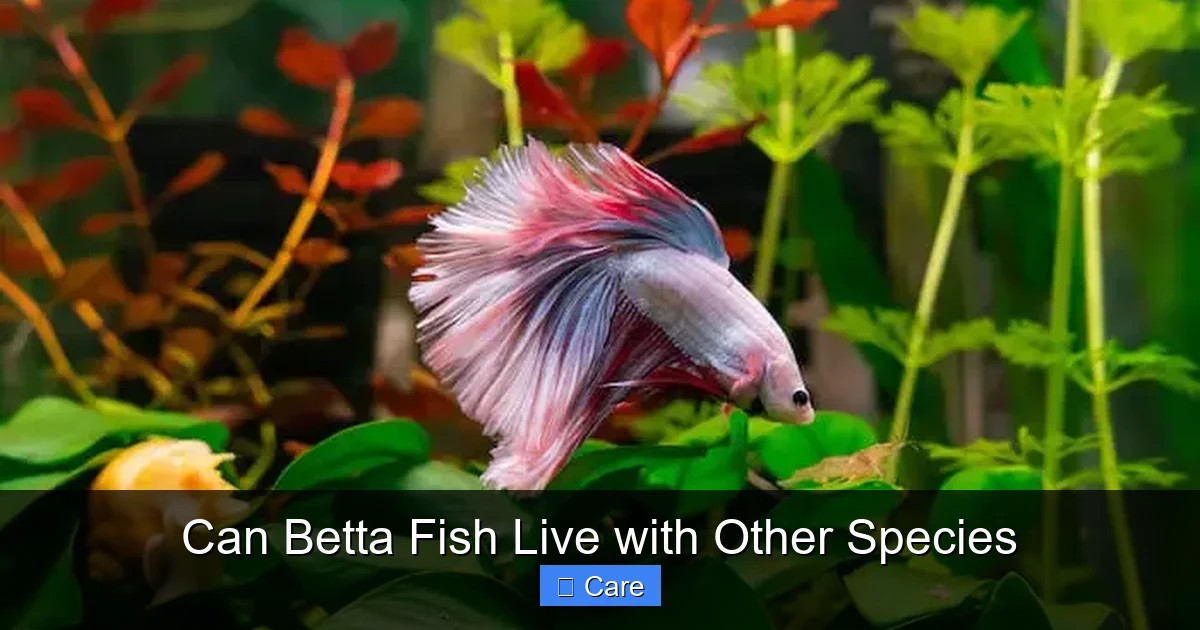
Contrary to popular belief, betta fish can often live with other species, but success depends entirely on careful planning and understanding your individual betta’s personality. Their famous aggression, especially towards other Bettas and fish with similar flowing fins, means not all tank mates are safe. However, with a properly sized, heavily planted tank and the right choice of peaceful, fast, or bottom-dwelling species, a harmonious community aquarium is very achievable. Always introduce tank mates cautiously and be prepared to separate them if conflicts arise.
Key Takeaways
- Your Betta’s Personality is Key: Some bettas are naturally more aggressive than others; observe yours before adding any companions.
- Tank Size & Setup are Non-Negotiable: A minimum of 20 gallons is strongly recommended for any community tank, with abundant plants and hiding spots to break lines of sight.
- Avoid “Triggers”: Never house bettas with other Bettas, fancy guppies, or any fish with large, flowing fins that resemble a rival.
- Ideal Tank Mates are Specific: Target peaceful, fast-swimming, or bottom-dwelling species like certain tetras, rasboras, corydoras catfish, and Kuhli loaches.
- Invertebrates Can Be Great (With Caution): Shrimp and snails are often good options, but large or aggressive shrimp may be seen as food.
- Introduction Order Matters: Add all other tank mates first and let them establish their territories before introducing the betta.
- Always Have a Backup Plan: Keep a separate “hospital” or quarantine tank ready to quickly remove a betta if it shows excessive aggression.
[FEATURED_IMAGE_PLACEHOLDER]
📑 Table of Contents
- Can Betta Fish Live with Other Species? The Complete Truth
- Understanding the Betta: More Than Just a Fighter
- The Golden Rules: Criteria for a Successful Betta Community
- The Ideal Tank Mate Checklist: What to Look For
- The Safe List: Proven Betta Tank Mates
- The Risky List: Species to Approach with Extreme Caution or Avoid
- The Invertebrate Option: Shrimp and Snails
- The Step-by-Step Plan: Introducing Your Betta to a Community
- Conclusion: It’s a Journey, Not a Guarantee
Can Betta Fish Live with Other Species? The Complete Truth
So you’ve fallen in love with the stunning, flowing fins and vibrant personality of a betta fish. You’ve set up a beautiful, heated tank just for your new Siamese fighting fish. But then a thought creeps in: “It’s so lonely in there by itself. Can my betta have friends?” This is one of the most common questions in the aquarium hobby, and the answer is a firm, nuanced “It depends.”
The short, dramatic history of the betta—bred for centuries for sparring matches—gives them a reputation as solitary, grumpy hermits. And yes, that reputation is well-earned when it comes to other bettas. But when it comes to other species? The waters are much murkier, and often, much more peaceful. Many bettas live happily in well-planned community tanks for years. The key is moving beyond the simple “yes or no” and understanding the how and why behind betta compatibility.
This guide will dive deep into the realities of mixing bettas with other fish and creatures. We’ll debunk myths, explore the critical factors that determine success, provide detailed lists of potential tank mates (both good and bad), and give you a step-by-step plan for creating a serene underwater world where your betta can be the star of a community show, not a lonely solo act. Let’s get started.
Understanding the Betta: More Than Just a Fighter
The Legacy of the “Fighting Fish”
To understand a betta’s behavior, you must first understand its history. The wild betta (Betta splendens) is a relatively shy, insect-eating fish from the shallow, warm rice paddies and slow-moving streams of Southeast Asia. It was the plucky locals who first noticed their fierce territorial disputes, which rarely resulted in death but were dramatic displays of flaring gills and extended fins. Selective breeding over centuries amplified these aggressive and showy traits for gambling matches, creating the modern domesticated betta we know today.
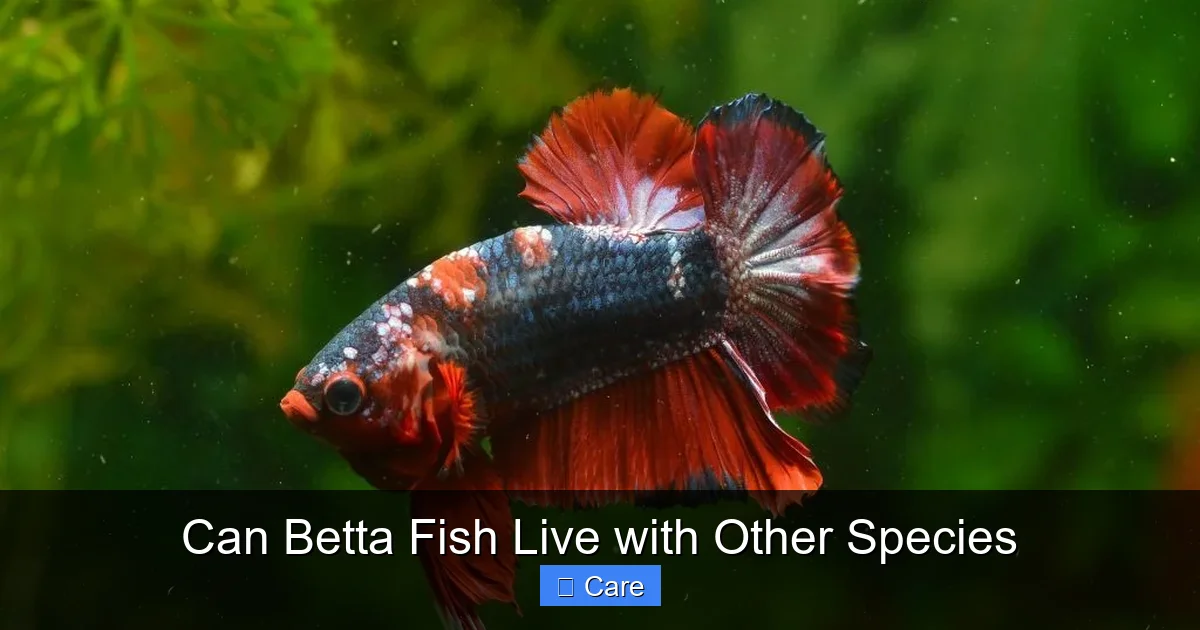
Visual guide about Can Betta Fish Live with Other Species
Image source: forfishlovers.com
This history means your pet betta has a strong, instinctual drive to defend its space from anything it perceives as a rival—especially another male betta. This is why the #1 rule is never house two male bettas together (and even females can be risky in small setups). But that same territorial instinct can be directed at any fish that looks like a competitor.
The Labyrinth Organ and Surface Dwellers
Betta fish possess a unique anatomical feature called a labyrinth organ. This complex structure allows them to breathe atmospheric air from the water’s surface. In the wild, this adaptation lets them survive in oxygen-poor, stagnant water. What does this mean for tank mates? Bettas are predominantly surface and top-level swimmers. They spend much of their time patrolling the upper water column, resting on plants or decorations near the surface. Therefore, the best tank mates are often fish that occupy the middle and bottom levels of the tank, minimizing direct competition for space and reducing visual confrontations.
Personality Over Species
This is the most critical concept: betta fish have individual personalities. One betta might completely ignore a school of neon tetras, while another will relentlessly chase them. Some are curious and bold, others are timid and easily stressed. You cannot guarantee compatibility based solely on a species list. The process requires careful observation and patience. Think of it like introducing a new person to a roommate who is very particular about their space—sometimes it clicks, sometimes it doesn’t.
The Golden Rules: Criteria for a Successful Betta Community
Before we even look at specific fish, you must adhere to these foundational rules. Ignoring them is the fastest path to a stressed betta, injured tank mates, and a heartbreaking cleanup.
Visual guide about Can Betta Fish Live with Other Species
Image source: fishkeepingadvice.com
Rule #1: Tank Size is Everything (Minimum 20 Gallons)
This cannot be stressed enough. A tiny 5-gallon “nano” tank is only suitable for a single betta (and even then, it’s on the small side). To introduce any other living creature, you need ample space to establish territories and dilute aggression. The absolute minimum for a betta community is a 20-gallon long tank. This provides a significant footprint (length) which is more important than height, as it creates more horizontal territory. A 20-gallon long offers roughly 30 inches of swimming space, allowing a betta to patrol its end while other fish have room to escape. Larger is always better—a 29 or 55-gallon tank provides even more stability and options.
Rule #2: The Aquascape is Your Defense System
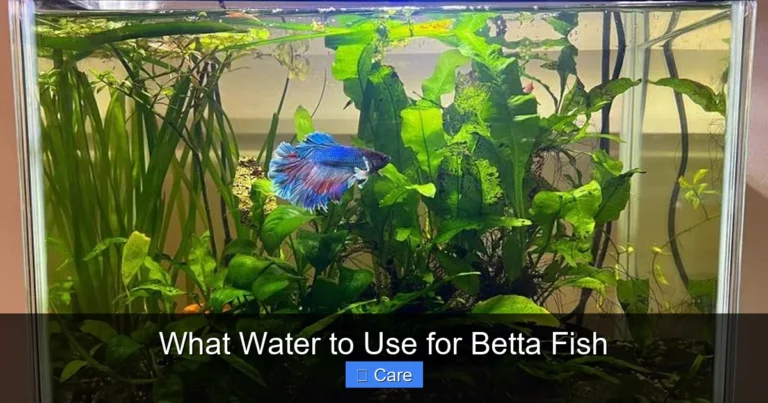
In a sparsely decorated tank, a betta sees everything and everyone in its territory. Your tank’s layout is your primary tool to prevent constant visual contact, which is a major trigger for aggression. You need to create a dense, jungle-like environment.
- Live Plants are Best: Plants like java fern, anubias, cryptocorynes, and floating plants (frogbit, dwarf water lettuce) are excellent. They break lines of sight, provide cover for nervous fish, and improve water quality. Even silk plants are a vast improvement over plastic ones.
- Use Vertical Structure: Place tall plants (like vallisneria or jungle val) at the back, medium plants in the middle, and low-lying plants (like dwarf sagittaria) in the foreground. This creates layers of hiding spots.
- Add Hardscape: Driftwood, rock caves, and ceramic ornaments provide additional breaks in sightlines and essential hiding places for shy fish.
- Establish “Betta-Free” Zones: Designate one end of the tank with heavy planting and decor where the betta is less likely to patrol, giving other fish a true refuge.
Rule #3: Water Parameters & Tank Maturity
Your betta is sensitive to poor water quality. A community tank adds more biological load (fish waste). You must have a fully cycled tank (established nitrogen cycle) before adding any fish. Stable parameters are crucial: temperature 78-80°F (25-27°C), ammonia and nitrite at 0 ppm, and low nitrates (below 20 ppm). A powerful filter is essential to handle the extra load, but ensure its outflow is not so strong that it creates a current that stresses your betta (they prefer calm water). A sponge filter is an excellent, gentle addition.
The Ideal Tank Mate Checklist: What to Look For
When evaluating a potential tank mate, ask these questions. The best candidates score “yes” on most of these points.
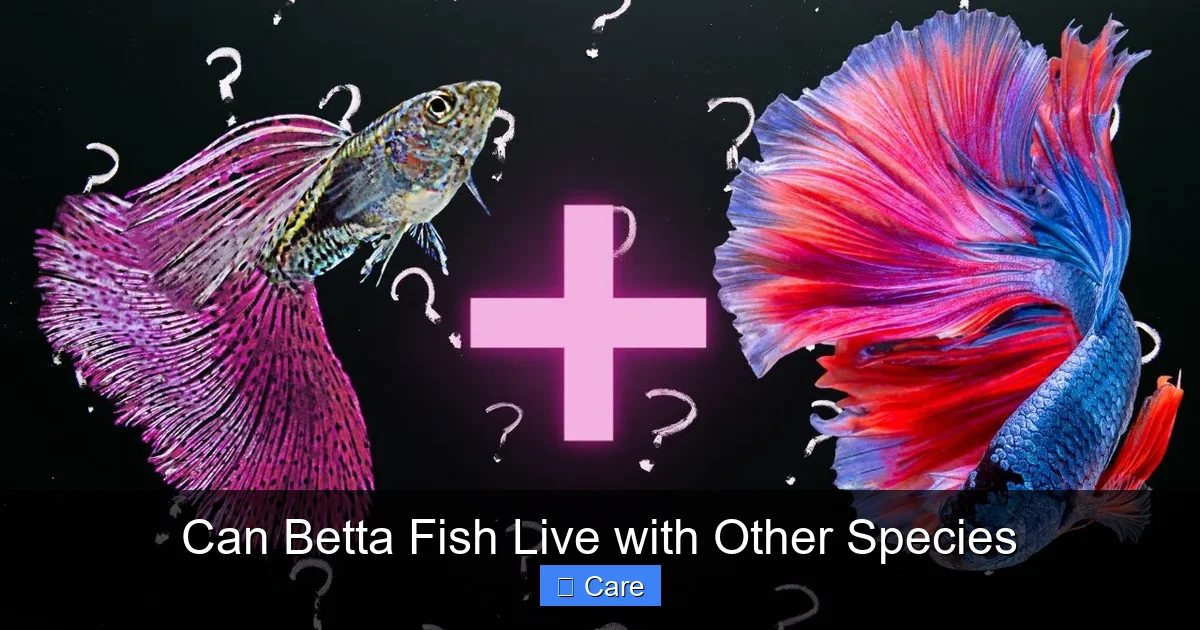
Visual guide about Can Betta Fish Live with Other Species
Image source: i.ytimg.com
Peaceful & Non-Terrestrial
You want fish that are not known for being nippy, bossy, or territorial themselves. Schooling fish are often excellent because their focus is on their own group, not on defending a patch of sand. Avoid fish known for fin-nipping (like some tiger barbs) or that are large and boisterous.
Prefers Different Water Levels
As mentioned, bettas own the top. Target fish that are active in the middle (like rasboras, small tetras) or bottom (like corydoras, Kuhli loaches) of the tank. This spatial separation is a natural conflict reducer.
Not Flashy or Fancy
This is a big one. Bettas are triggered by long, flowing, bright fins because they resemble a rival male betta. Avoid guppies (especially fancy males with huge tails), fancy goldfish, and other betta-like fish such as gouramis (which are closely related and often just as territorial).
Fast & Evasive (A Bonus)
Fish that are quick and agile have a better chance of escaping a curious or mildly aggressive betta’s snap. Slow, deliberate swimmers are easier targets. However, speed alone isn’t enough if the betta is hyper-aggressive.
Similar Water Requirements
All tank mates must thrive in the same warm, soft to moderately hard water that a betta needs (tropical, 78-80°F). Cold-water fish like most goldfish are a terrible match.
The Safe List: Proven Betta Tank Mates
Based on the criteria above, here are some of the most consistently successful tank mates for a betta in a properly sized and decorated tank. Remember: Always research the specific species for its full care needs.
Small Rasboras & Tetras
These are the cornerstone of many successful betta communities. They are peaceful, schooling fish that stay small and active in the middle levels.
- Harlequin Rasboras (Trigonostigma heteromorpha): A classic choice. They have peaceful personalities, beautiful coloration, and a distinct triangular marking. They school beautifully and are fast enough to evade a casual betta.
- Chili Rasboras (Boraras brigittae): Tiny, vibrant red fish. Their minuscule size (under 0.5 inches) means they are not seen as a threat, and they are incredibly active. Need a group of 8+.
- Neon Tetras (Paracheirodon innesi): A popular schooling fish. Their simple coloration and mid-level swimming make them good candidates. However, they can be slightly more delicate and require excellent water quality. Cardinal Tetras are a similar, slightly larger option.
- Ember Tetras (Hyphessobrycon amandae): Perfect for a betta tank. Their tiny, fiery orange bodies and calm nature make them ideal. They school in the middle and are a beautiful contrast to a blue or red betta.
- Black Neon Tetras (Hyphessobrycon herbertaxelrodi): Slightly more robust than neons, with striking black and white stripes. They are active, peaceful, and make a great visual complement.
Corydoras Catfish (The Perfect Bottom Dwellers)
Cory cats are arguably the best tank mate you can add to a betta tank. They are utterly peaceful, social (keep in groups of 5+), and spend all day sifting through the substrate on the bottom, completely ignoring the betta above. Their armored plates protect them from any accidental bites.
- Pygmy Corydoras (Corydoras pygmaeus): The smallest species, staying about 1 inch. They are active and often swim in the lower mid-level, not just on the bottom.
- Habbys Corydoras (Corydoras habrosus): Another tiny, adorable species that is a fantastic choice.
- Bronze/Albino Corydoras (Corydoras aeneus): A larger, more common species (2.5 inches). They are extremely hardy and a great choice for beginners.
- Panda Corydoras (Corydoras panda): Known for their distinctive black and white markings. They are a bit more sensitive to poor water but are wonderful when conditions are good.
Other Excellent Oddities
- Kuhli Loaches (Pangio kuhlii): These fascinating, eel-like fish are the ultimate escape artists and bottom dwellers. They are nocturnal, so you might not see them much during the day, but they are completely harmless and fun to watch at night. Keep in a group of 5+.
- African Dwarf Frogs (Hymenochirus spp.): Fully aquatic frogs that can coexist with bettas. They occupy the bottom and mid-levels, are peaceful, and have different care requirements that overlap well (warm water, carnivorous diet). Important: Never house with African Clawed Frogs, which are aggressive predators.
- Bristlenose Plecos (Ancistrus spp.): A small, armored plecostomus (4-5 inches). They are algae eaters that mostly stick to surfaces. Their bony plates and nocturnal habits make them generally safe, but some bettas may harass them. A large, mature pleco in a 20+ gallon tank can work.
The Risky List: Species to Approach with Extreme Caution or Avoid
These species are frequently mentioned but come with significant red flags. Proceed only with immense research, a huge tank (30+ gallons), and a backup plan.
Other Gouramis
This includes dwarf gouramis (like the popular Powder Blue Dwarf Gourami), honey gouramis, and paradise fish. They are closely related to bettas and share the same labyrinth organ and often a similarly territorial disposition. Pairing two labyrinth fish with a tendency for aggression is a recipe for constant stress and conflict. Generally not recommended.
Fancy Guppies
The flowing, colorful tails of male fancy guppies are a direct trigger for a betta’s territorial aggression. The betta will see them as a rival and likely chase and nip at them relentlessly, leading to a shredded, stressed guppy. Endler’s livebearers (the plain, wild-type guppy) with short tails might work in a very large, heavily planted tank, but it’s a gamble.
Long-Finned Fish in General
This extends to fancy varieties of other species: fancy goldfish (comets, orandas), veil-tailed angelfish, etc. Any fish with long, flowing fins is a potential target. Stick to short-finned, wild-type varieties if considering any of these groups (which is rare for a betta community).
Large, Boisterous, or Nippy Fish
Fish like tiger barbs (fin-nippers), serpae tetras (can be nippy), most cichlids (far too aggressive), and large, fast-swimming fish (like some danios) can stress a betta or be too much for its calm nature. They might also outcompete the betta for food.
The Invertebrate Option: Shrimp and Snails
Invertebrates can make fantastic, low-maintenance tank mates for bettas because they occupy a completely different biological niche and are not seen as direct competitors. However, they are not without risk.
Freshwater Shrimp
Shrimp are excellent algae cleaners and add interesting movement to the bottom of the tank.
- Cherry Shrimp (Neocaridina davidi): Very popular, colorful, and breed readily. Their small size means a curious betta might see one as a snack, but a well-fed betta in a planted tank will often ignore them. They reproduce quickly, so even if a few are eaten, the colony persists.
- Amano Shrimp (Caridina multidentata): Larger (2+ inches), hardy, and excellent algae eaters. Their size and active foraging make them less likely to be seen as food. A great choice.
- Ghost Shrimp (Palaemonetes spp.): Inexpensive, transparent, and very active. They are fantastic scavengers. Their transparency gives them a slight advantage in avoiding detection.
- Warning: Avoid large, aggressive shrimp like the Bamboo Shrimp or any that can easily overpower a small fish (unlikely, but possible with very small juvenile bettas). Also, be aware that some bettas will make a sport of hunting shrimp. Observation is key.
Snails
Snails are almost always safe and are fantastic cleanup crews.
- Nerite Snails: The best choice. They have a beautiful, patterned shell, cannot reproduce in freshwater (so no snail overpopulation), and are excellent at eating algae. They are completely ignored by bettas.
- Mystery/Apple Snails: Larger, peaceful snails that will clean the tank. They can sometimes be a target if a betta is particularly curious, but their hard shell protects them. They can reproduce if both genders are present.
- Ramshorn Snails & Pond Snails: Often considered pests as they can overpopulate. Generally safe but usually unwanted.
The Step-by-Step Plan: Introducing Your Betta to a Community
You have a cycled, planted 20+ gallon tank. You’ve chosen a peaceful, compatible species and a group of them (schooling fish need groups of 6-8+). Now, the introduction process is everything.
Step 1: The Tank Mate First Method (Highly Recommended)
This is the single most important piece of advice. Add all of your other fish/invertebrates to the fully cycled tank first. Let them live there for 2-3 weeks. Let them establish their territories, their schools, and their routines. The tank becomes “theirs.” This is crucial because when you add the betta, it will be the new intruder. The existing fish will be settled and less likely to be seen as a threat by the betta, and the betta will be too busy exploring its new home to immediately target them.
Step 2: The Betta Introduction
When you bring your betta home, float the bag in the tank for 15-20 minutes to equalize temperature. Then, use a drip acclimation method or carefully add small amounts of tank water to the bag over 30-60 minutes to acclimate it to the water chemistry. Do not pour the bag water into your tank. Use a net to gently transfer the betta into the tank.
Step 3: The Critical Observation Period
For the first 24-48 hours, watch closely. Some flaring (gills puffed out, fins spread) and brief chases are normal as the betta establishes its space. However, you must intervene if you see:
- Relentless, non-stop chasing that prevents other fish from feeding or resting.
- Fish hiding constantly and not coming out to eat.
- Visible damage to any fish (torn fins, missing scales).
- The betta cornering another fish against the glass or decor.
If you see this level of aggression, you must have a backup tank ready to remove the betta immediately. Some bettas simply cannot live with others, and that’s okay. Their needs come first.
Step 4: Feeding and Long-Term Maintenance
Feed your betta first, near the surface, with a high-quality pellet or frozen food. Then, sprinkle food for the other fish (flakes, sinking wafers for bottom feeders). This ensures the betta is satisfied and less likely to see other fish as food competition. Maintain excellent water quality with regular water changes (25-50% weekly) and filter cleaning.
Conclusion: It’s a Journey, Not a Guarantee
So, can betta fish live with other species? The definitive answer is yes, many can, but it is not a universal truth. It is a calculated decision based on providing the right environment—a spacious, heavily planted aquarium—and choosing the right, low-key companions from the safe list. Your betta’s unique personality will always be the final judge.
The reward for getting it right is a vibrant, dynamic community tank where your betta’s majestic displays are part of a larger, peaceful ecosystem. The risk is a stressed, injured fish. Therefore, go in with your eyes open. Start with the safest, most compatible species like corydoras catfish and a school of tiny rasboras or tetras in a 20-gallon long tank. Have a separate hospital tank ready. Be patient during introductions and observant in the first week.
The betta, with its proud history and stunning beauty, deserves a home where it can thrive. Whether that home is a serene solo palace or the bustling centerpiece of a community depends on your commitment to understanding and meeting its complex needs. Armed with this knowledge, you are now equipped to make that decision wisely and create the aquarium you’ve been dreaming of.
Frequently Asked Questions
Can I put a betta with a goldfish?
No, this is a very poor match. Goldfish are cold-water fish that prefer temperatures around 68°F, while bettas require tropical water at 78-80°F. Goldfish also produce massive amounts of waste, which can quickly foul the warm water and harm the betta. Their different environmental needs make cohabitation impossible.
What about putting two female bettas together?
While less aggressive than males, female bettas can still be territorial. A small “sorority” of 4-5 females in a very large, heavily planted tank (29+ gallons) is sometimes attempted by advanced hobbyists, but it requires extreme diligence and carries a high risk of bullying and injury. It is not recommended for beginners and is far from a guaranteed peaceful setup.
Can bettas live with shrimp?
Often, yes. Small shrimp like Cherry Shrimp or Amano Shrimp are generally good additions. The betta may eat a few juvenile shrimp out of curiosity, but a well-fed betta in a densely planted tank will usually leave them alone. Larger, more aggressive shrimp should be avoided.
Will a betta kill my snails?
Almost certainly not. Snails have a hard, protective shell that a betta cannot damage. Bettas may peck at a snail’s foot or tentacles out of curiosity, but the snail is safe. Nerite snails are particularly excellent and worry-free tank mates.
How big of a tank do I need for a betta community?
The absolute minimum is a 20-gallon long tank. This provides enough horizontal space for territories to form and for other fish to have clear areas away from the betta. A 29-gallon or larger tank is even better and gives you more flexibility in choosing tank mates.
My betta is chasing my new fish. What should I do?
First, monitor for 24-48 hours. Some initial flaring and chasing is normal. If the chasing is relentless, prevents the other fish from eating or resting, or causes physical harm, you must separate them. Have a backup tank ready to house either the betta or the new fish. Some bettas simply cannot live with others, and their welfare must come first.