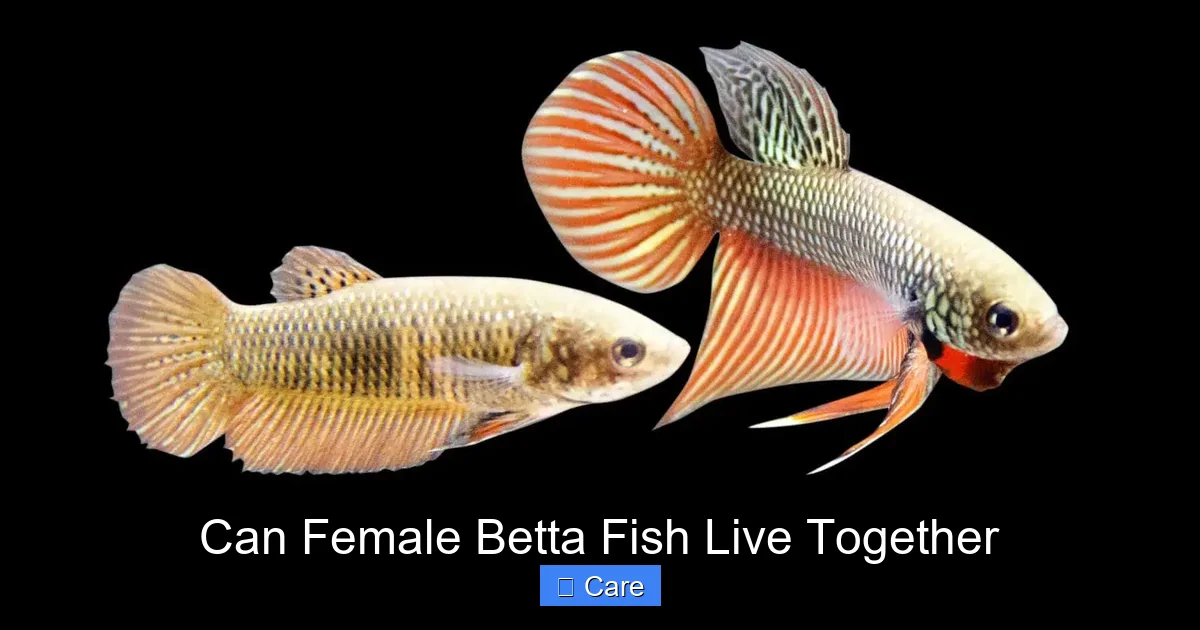
Can Female Betta Fish Live Together
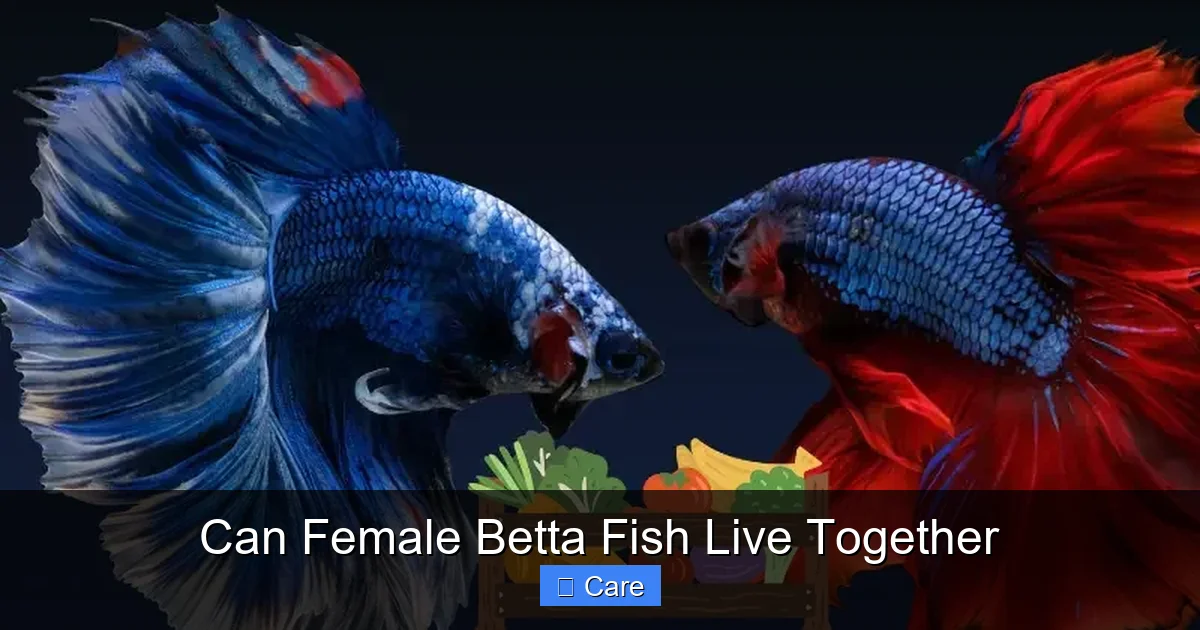
Yes, female betta fish can live together, but it’s not as simple as just dropping them in a tank. A successful betta sorority requires a large, heavily planted tank (minimum 20+ gallons), a meticulous introduction process, and constant monitoring for aggression. It’s a rewarding but advanced hobby that demands commitment to provide a peaceful community for these stunning fish.
Key Takeaways
- It’s Possible, Not Guaranteed: A female betta sorority can thrive, but success depends entirely on proper tank size, setup, and individual fish temperaments. Some bettas are simply too aggressive for group living.
- Tank Size is Non-Negotiable: The absolute minimum for a sorority is a 20-gallon long tank, but a 29-gallon or larger is strongly recommended to provide enough territory and break lines of sight.
- Heavy Planting & Hiding Spots are Critical: Use live or silk plants, driftwood, and caves to create a dense, complex environment. This breaks visual contact and provides escape routes, drastically reducing stress and aggression.
- The Introduction Process is a Marathon, Not a Sprint: A proper sorority requires a multi-week process involving quarantine, a divider, and supervised “meet-and-greets” in a neutral container before permanent cohabitation.
- Constant Vigilance is Required: Once housed together, you must monitor for signs of bullying, fin-nipping, or harassment daily. Have a backup plan (a hospital tank) ready to separate any problematic individuals immediately.
- Not All Females Are Suitable: Choose females from reputable sources known for calmer lines. Avoid any fish showing persistent flaring, biting, or extreme territorial behavior during the introduction phase.
- Compatible Tank Mates Can Help: Adding small, peaceful schooling fish like harlequin rasboras or celestial pearl danios can diffuse focus and create a more dynamic, stable community.
📑 Table of Contents
- Can Female Betta Fish Live Together? Unpacking the Sorority Myth
- Understanding Betta Behavior: The “Why” Behind the Challenge
- The Ultimate Tank Setup: Building a Peaceful Kingdom
- The Critical Introduction Process: A Step-by-Step Guide
- Daily Care, Monitoring, and Maintenance
- Common Mistakes and Troubleshooting: When Things Go Wrong
- Conclusion: Is a Betta Sorority Right for You?
Can Female Betta Fish Live Together? Unpacking the Sorority Myth
So, you’ve got a beautiful female betta fish. She’s a solo queen in her little betta cube, flaring at her reflection, and you can’t help but think: wouldn’t it be stunning to see a group of them together? The image of a serene, colorful sorority of females is incredibly appealing. The short answer is: yes, female betta fish can live together under the right conditions. But the long, crucial answer is where the real work begins. This isn’t a beginner setup. A betta sorority is an advanced fishkeeping project that requires significant investment in space, equipment, patience, and observation. Think of it less like getting a group of goldfish and more like carefully introducing a small pride of lions—it’s about managing complex social dynamics in a confined space. This guide will walk you through every single step, from the initial “is this a good idea?” question to the day-to-day care of a thriving female betta community.
Understanding Betta Behavior: The “Why” Behind the Challenge
To succeed with a sorority, you must first understand the betta. Betta splendens, the Siamese fighting fish, earned its name through centuries of selective breeding for aggression, primarily in males. However, females possess the same territorial instincts and labyrinth organ (allowing them to breathe air). In the wild, bettas are solitary creatures, defending small patches of vegetation. They are not schooling fish. When confined, their instinct to claim space and resources becomes heightened. So, why can females sometimes coexist while males almost never can? Generally, females tend to be less intensely territorial than males, and their aggression is often more hierarchical—a pecking order is established. In a sufficiently large, complex environment, this hierarchy can stabilize without constant violence. But this is a fragile balance. A cramped, bare tank turns that hierarchy into a bloody battleground. Your entire goal is to design an environment that tricks their instincts into thinking there is enough space for everyone.
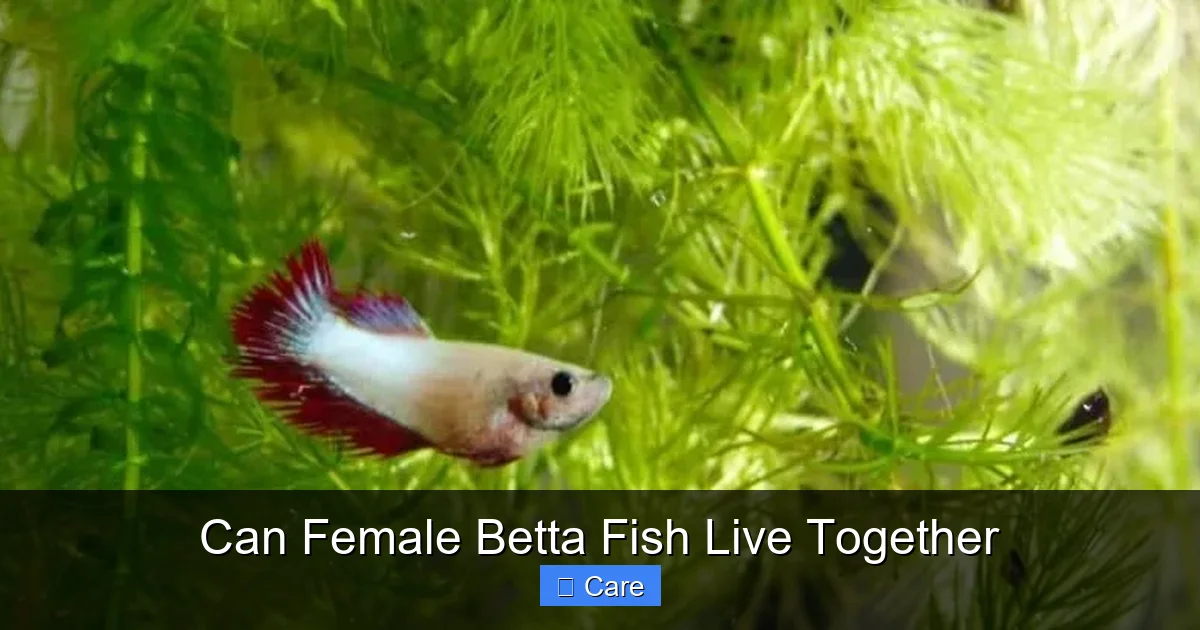
Visual guide about Can Female Betta Fish Live Together
Image source: memfish.net
The Hierarchy: Pecking Order vs. Bullying
When you first introduce females, you will see chasing, flaring (gills puffed out), and minor nipping. This is normal as they figure out who’s who. A stable hierarchy will see one slightly dominant female (the “alpha”) who may get first pick at food or the best resting spot, but the others are largely left alone. The problems arise when this crosses into relentless bullying: one fish is chased to the point of exhaustion, hides constantly, has torn or shredded fins, or is denied access to food. This is not acceptable and requires immediate intervention. The line between a working hierarchy and a toxic tank is drawn at the point of sustained physical harm or chronic stress.
Individual Personalities Matter Immensely
Just like people, every betta has a unique personality. Some are laid-back “zen masters.” Others are fiery, confrontational “warriors.” You cannot force a naturally aggressive betta to be peaceful. Part of the sorority process is a prolonged temperament test. During the introduction phase, you are evaluating each fish. If one consistently initiates unprovoked attacks, shows zero妥协 (compromise), or causes visible injury to others, she does not belong in the permanent sorority. She should be moved to a solo tank as a “spawn tank queen.” This isn’t a failure; it’s responsible fishkeeping.
The Ultimate Tank Setup: Building a Peaceful Kingdom
If your tank is the kingdom, your female bettas are the citizens. A kingdom with no borders, no hiding places, and scarce resources descends into chaos. Your tank setup is the single most important factor for sorority success. Skimp here, and you will fail.
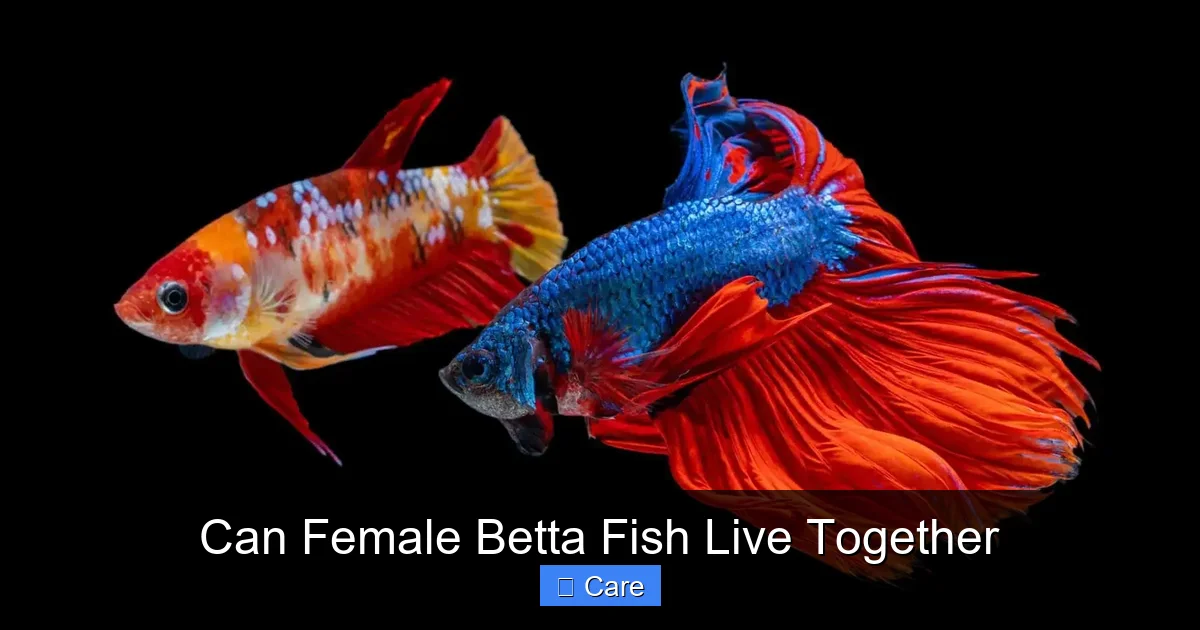
Visual guide about Can Female Betta Fish Live Together
Image source: bettasource.com
Tank Size and Dimensions: Bigger is Always Better
Let’s be absolutely clear: a 5-gallon or 10-gallon tank is not suitable for a sorority. The absolute, rock-bottom minimum is a 20-gallon long tank (30” x 12” x 13”). The “long” dimension is critical because it provides more horizontal swimming space and surface area for territory breaks. However, the 20-gallon is a starting point for 3-4 very carefully selected, docile females. For a stable group of 5-7, a 29-gallon or 40-gallon breeder is the ideal target. This extra space allows for denser aquascaping, more distinct territories, and dilutes the concentration of ammonia and aggression. Remember: you are trying to mimic a vast, complex natural habitat in a glass box. More gallons mean more options for your fish to avoid each other.
Aquascaping: Creating a Labyrinth of Escape
The goal is to eliminate long, straight sightlines. Your tank should look like a dense jungle, not an open arena. Here’s your shopping list for a peaceful sorority:
- Plants: Use a mix of tall background plants (like Vallisneria or Amazon swords), mid-ground bushy plants (Bacopa, Rotala), and fine foreground plants (Dwarf hairgrass, Monte Carlo). Live plants are highly recommended as they improve water quality and provide more complex textures. Silk plants are a good second choice. Avoid plastic plants with sharp edges.
- Hardscape: Driftwood (Mopan, Malaysian), large smooth river stones, and ceramic or PVC pipes create caves, tunnels, and overhangs. These are vital for breaking lines of sight and providing bolt-holes.
- Floating Plants: A thick layer of floating plants like Salvinia or Frogbit is a sorority secret weapon. It creates a dim, dappled light effect (bettas love this), provides surface cover, and dramatically reduces aggression from above.
- Substrate: Sand or fine gravel is best for foraging bettas. Avoid sharp gravel that can tear their delicate fins.
Your scape should be so dense that you can barely see from one end of the tank to the other. If you can see a clear path from the filter intake to the heater, you need more plants.
Filtration, Heating, and Water Parameters
Excellent water quality is the foundation of health and reduced stress, which directly impacts aggression.
- Filter: Use a gentle filter with adjustable flow. Sponge filters are excellent for sororities as they provide biological filtration without creating a strong current that stresses bettas. A hang-on-back (HOB) filter with a spray bar or baffled outflow works too. The goal is pristine water with minimal surface disturbance.
- Heater: Bettas are tropical fish. Maintain a stable temperature between 78-80°F (25.5-26.5°C). A reliable, fully-submersible heater with a controller is a must.
- Water Parameters: Aim for 0 ppm ammonia and nitrite, and nitrates under 20 ppm. pH should be stable between 6.5-7.5. Perform regular water changes (25-50% weekly) to keep parameters pristine.
The Critical Introduction Process: A Step-by-Step Guide
Rushing the introduction is the #1 reason sororities fail. This phase can take 3-6 weeks. You must be patient. The goal is to introduce them to each other gradually, in a controlled way, so they become accustomed to the presence of others without feeling their territory is immediately under invasion.
Visual guide about Can Female Betta Fish Live Together
Image source: bettasource.com
Step 1: Quarantine and Observation (1-2 Weeks)
Every new fish, even from a trusted store, should be quarantined in a separate tank for at least 2-4 weeks. This protects your main sorority from potential diseases. During this time, observe each female’s personality in a bare, small “observation tank” (a 5-gallon is fine). Does she flare constantly at her reflection? Is she hyper-alert and darting? Or is she relatively calm, exploring? Note the feisty ones. You’ll want to avoid adding the most aggressive individuals to your final group.
Step 2: The Divider Method (1-2 Weeks)
Now, move all your selected females (start with 4-5, not 7) into the final, fully-scaped sorority tank. Use a permanent, clear divider (acrylic or egg crate) to split the tank into separate compartments. Each female gets her own section with plants and a hiding spot. They can see, smell, and sense each other but cannot physically interact. This allows them to establish a baseline awareness without fighting. During this period, feed them on opposite sides of the divider. Watch for persistent, violent flaring through the divider—a bad sign.
Step 3: Neutral Container “Meet-and-Greets” (1-2 Weeks)
This is the most intense part. You will conduct short, supervised meetings in a completely neutral container—a clean 10-gallon tank with no plants, decorations, or hiding spots. Fill it with water from the sorority tank. Use a net to transfer two females at a time into this neutral space. Set a timer for 15-30 minutes. Watch closely.
- Acceptable Behavior: Initial flaring, chasing, and posturing. They will circle each other. This is them testing boundaries.
- Unacceptable Behavior: One fish relentlessly chasing another with no pause, biting, locking jaws, or one fish being cornered and unable to escape. If this happens, separate them immediately with a net. That pair is not compatible.
Do not put all the fish in the neutral tank at once. Pair them up over several sessions. You are looking for pairs that, after some initial bluster, settle into a “live and let live” truce—they may ignore each other or keep a respectful distance. The goal is to find which individuals can tolerate each other.
Step 4: Final Cohabitation and The “Honeymoon” Period
Based on your neutral container tests, you now have a good idea of which females might work together. Remove the divider from the main tank. Initially, there will be a burst of chasing and flaring as they re-establish territories in the full scape. This can last 24-72 hours. Do not panic. As long as no one is being relentlessly hunted to the point of exhaustion or injury, let them work it out. The dense planting will allow the submissive fish to disappear. Monitor closely for the first week. Have your hospital tank ready. After about a week, if the chasing has subsided to occasional reminders (“hey, that’s my favorite leaf”), you likely have a functional sorority.
Daily Care, Monitoring, and Maintenance
A sorority is not a “set it and forget it” system. It requires active, daily management.
Feeding: Preventing Food Fights
Feed high-quality pellets, frozen daphnia, or bloodworms. In a sorority, food competition is a major trigger for aggression. To prevent this:
- Feed multiple small meals throughout the day rather than one large one.
- Use a feeding ring or spread food in several different locations around the tank simultaneously.
- Observe that all fish are getting their fill. A submissive betta may be scared to come out. You may need to gently distract a dominant fish with a pipette of food elsewhere so others can eat.
The Daily Health and Behavior Check
Spend 5-10 minutes each day just watching. You are looking for:
- Fin Condition: Any torn, shredded, or ragged fins? (Not to be confused with a female’s naturally shorter, less-flowy fins).
- Body Condition: Is anyone overly thin, with a sunken belly? This indicates stress and not eating.
- Behavior: Is one fish hiding 24/7? Is one fish being chased relentlessly? Are there prolonged, intense flare-ups in a specific corner?
- General Activity: All fish should be alert, exploring, and resting in various spots (plants, decorations). Lethargy is a red flag.
Water Changes: The Non-Negotiable Routine
With 5+ bettas, your bioload is significant. A 50% water change weekly is the absolute minimum. Use a gravel vacuum to clean the substrate, being careful not to disturb plants too much. Always treat new water with a dechlorinator and match the temperature closely. Stable, clean water is your best tool for preventing disease and aggression.
Common Mistakes and Troubleshooting: When Things Go Wrong
Even with the best preparation, issues can arise. Here’s how to diagnose and fix them.
“My bettas are constantly fighting!”
Diagnosis: Tank is too small, not enough visual barriers, or you have an incompatible personality mix. The hierarchy hasn’t stabilized.
Solution: Add more plants and hardscape immediately. Consider upgrading to a larger tank. If chasing persists after 2 weeks with no improvement and injuries occur, you must rehome the most aggressive individual. You cannot force peace.
“One betta is being bullied and hiding all the time.”
Diagnosis: The hierarchy is toxic. The bullied fish is stressed and at risk of health decline.
Solution: This is your cue to act. The bullied fish needs to be removed to a hospital/solo tank for its safety. The sorority may now be stable with one less member. You can try to re-introduce the bullied fish later with a different group, but often a solo life is its best future.
“Can I add another female later?”
Diagnosis: This is extremely risky. A stable sorority is a delicate balance. Adding a new, “foreign” betta will be seen as an intruder and will be attacked by the entire established group.
Solution: The safest way is to completely reset: remove all fish, re-scape or rearrange the entire tank (to destroy all territories), and then start the introduction process from scratch with the new, larger group. This is a major undertaking.
Conclusion: Is a Betta Sorority Right for You?
A successful female betta sorority is one of the most stunning displays in the freshwater aquarium hobby. A group of vibrant, flowing females, each with their own personality, navigating a lush underwater jungle is a living work of art. But achieving this requires you to be more than just a fish owner; you need to be a dedicated aquarist, a patient observer, and a responsible planner. It demands a significant investment in a large, well-planted tank, a multi-week introduction protocol, and a commitment to daily monitoring. If you are willing to put in this work, the reward is an extraordinary and dynamic community. If you are looking for a low-maintenance, “just add water” pet, a single male or female betta in a properly sized, heated, filtered tank is the perfect choice. The sorority is for the enthusiast ready to dive deep into the nuanced world of betta social behavior. Choose your path wisely, and your fish will thank you with health and vibrant life.
Frequently Asked Questions
What is the absolute minimum tank size for a female betta sorority?
The absolute minimum is a 20-gallon long tank for 3-4 very carefully selected, docile females. However, a 29-gallon or larger is strongly recommended to provide adequate space and increase the chances of long-term success.
Can I put male and female bettas together in a community tank?
No, never. Males and females will breed relentlessly, and the male’s aggression will almost certainly result in the female’s injury or death. The only exception is a carefully controlled, supervised breeding tank for a very short period, which is a separate and advanced process entirely.
How many female bettas should I start with?
Start with a small group of 4-5 females. This allows for a more stable hierarchy to form than a pair (which will almost always fight to the death) or a trio (where one is often picked on). A larger group of 6-7 in a 40+ gallon tank can also be very stable, as aggression is more diffused.
My sorority has been peaceful for months, but now one is bullying. What happened?
Betta hierarchies can shift, especially as fish grow or as environmental conditions change. A new, dominant personality may emerge. Reassess tank setup—add more plants or rearrange decorations to break up territories. If bullying persists, you may need to remove the aggressor or the victim to a separate tank.
Can I keep other fish with my female betta sorority?
Yes, and it’s highly recommended. Peaceful, fast-moving schooling fish like harlequin rasboras, celestial pearl danios, or ember tetras can be excellent tank mates. They occupy different areas of the water column and help diffuse the bettas’ focus. Avoid fish with long, flowing fins (like guppies) that might be mistaken for rival bettas.
How do I know if my sorority is successful and stable?
A stable sorority shows minimal chasing (mostly brief reminders at feeding time), all fish are out and about exploring, all are eating well, and fins are intact. You will see a established pecking order where the dominant fish gets first pick, but others are not being harmed or chronically stressed. This peace should persist for weeks at a time.