Can I Use Spring Water for My Betta Fish
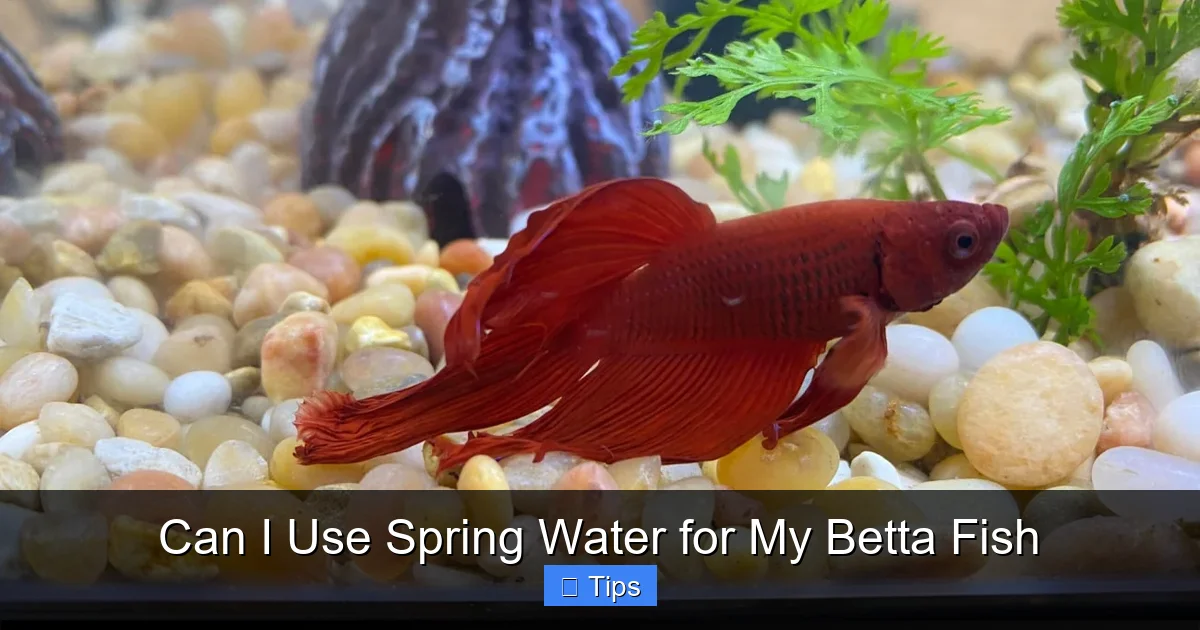
Using spring water for your betta fish is generally not recommended as a primary water source. While it’s free of chlorine, its unpredictable mineral content, variable pH, and lack of essential electrolytes can stress your betta. The safest, most consistent option is always properly treated tap water. If you must use spring water, you must test it, condition it, and understand it’s a temporary solution, not a long-term regimen.
Key Takeaways
- Spring water is not “ready-to-use” for bettas: Despite being untreated, its natural mineral profile (GH, KH, TDS) is unknown and often unsuitable for the specific, stable parameters a betta needs.
- Chlorine-free ≠ betta-safe: The main advantage—no chlorine—is easily achieved with a water conditioner on tap water, making this benefit redundant for regular use.
- Mineral imbalance is a major risk: High mineral content (hard water) can cause dangerous pH swings, scale damage, and kidney stress, while very soft water lacks electrolytes for osmoregulation.
- Consistency is critical: Bettas thrive on stable water chemistry. Switching between different spring water brands or batches introduces constant, stressful parameter fluctuations.
- Cost and environmental impact are high: Relying on bottled water is prohibitively expensive for regular water changes and generates significant plastic waste compared to treating tap water.
- Treated tap water is the gold standard: It’s cost-effective, environmentally sound, and allows you to precisely control and stabilize pH, hardness, and remove toxins.
- If you use spring water, treat it as a temporary measure: Always test parameters first, use a comprehensive conditioner, and never use it exclusively without understanding its full chemical makeup.
📑 Table of Contents
- Understanding Your Betta’s Natural Habitat and Water Needs
- What Exactly Is “Spring Water”?
- The Pros and Cons of Using Spring Water for Bettas
- Spring Water vs. The Alternatives: A Practical Comparison
- How to Safely Use Spring Water If You Choose To (The Emergency Protocol)
- The Verdict: Best Practices for Crystal-Clear, Betta-Safe Water
Understanding Your Betta’s Natural Habitat and Water Needs
Before we dive into the specifics of spring water, we need to think like a betta. Your magnificent Siamese fighting fish isn’t just a colorful decoration; it’s a creature evolved for the slow-moving, shallow waters of Thailand’s rice paddies, ditches, and warm floodplains. These aren’t crystal-clear mountain streams. They are warm, often tea-colored from tannins, with soft to moderately soft water, a stable pH between 6.5 and 7.5, and a temperature around 78-80°F (25.5-26.7°C). The key word here is stable. In the wild, the water parameters change slowly, over seasons. In your tank, sudden changes are a primary cause of stress, which leads to a suppressed immune system and disease.
Why Water Parameters Matter More Than You Think
For a betta, water isn’t just a place to swim; it’s the medium they breathe (via their labyrinth organ), the source of everything they ingest, and the buffer against infection. Three parameters are absolutely critical:
- pH: The measure of how acidic or alkaline the water is. Bettas prefer a stable, slightly acidic to neutral range (6.5-7.5). A sudden swing of even 0.2 can shock their system.
- Hardness (GH & KH): General Hardness (GH) measures calcium and magnesium (essential for bones and scales). Carbonate Hardness (KH) measures the water’s buffering capacity—its ability to resist pH crashes. Bettas prefer soft to moderately soft water (GH 3-8 dGH, KH 3-6 dKH).
- Temperature: They are tropical fish. Consistently warm water (78-80°F) is non-negotiable for a healthy metabolism and immune function.
Your goal is to replicate the slow, stable conditions of a Thai rice paddy, not a turbulent spring. This context is vital for evaluating any water source.
What Exactly Is “Spring Water”?
This seems like a simple question, but the label “spring water” is legally defined and often misunderstood. According to the FDA, true spring water must come from an underground formation from which water flows naturally to the surface. It must be collected at the spring or via a well tapping the underground formation. The key point is: it is not treated beyond basic filtration to remove debris. It contains the natural minerals dissolved as it travels through rock and soil.
Visual guide about Can I Use Spring Water for My Betta Fish
Image source: bettacarefishguide.com
The “Natural” Appeal vs. The Unseen Reality
We’re drawn to spring water because it sounds pure and natural. “No chemicals!” “From a mountain aquifer!” But “natural” does not mean “optimal for a specific tropical fish.” The mineral content (your GH and KH) of spring water is entirely dependent on the geology of the aquifer it comes from. One brand from a limestone region will be very hard (high GH/KH). Another from a granite region will be very soft. The pH can range from 6.0 to 8.5. There is zero standardization for betta fish needs. You are essentially playing Russian roulette with your pet’s health every time you buy a new gallon. Furthermore, while it’s free of chlorine, it can contain other contaminants like nitrates, heavy metals, or bacteria, as it’s not disinfected. This variability is the antithesis of the stable environment a betta requires.
The Pros and Cons of Using Spring Water for Bettas
Let’s break it down honestly. There are a few perceived benefits, but they are heavily outweighed by significant drawbacks for everyday tank maintenance.

Visual guide about Can I Use Spring Water for My Betta Fish
Image source: bettafish.org
The Perceived Pros (And Why They’re Misleading)
- “It’s chlorine-free.” Yes, this is true. But this is the easiest problem to solve. A $5 bottle of a quality water conditioner like Seachem Prime will detoxify chlorine, chloramine, and heavy metals from your tap water instantly. This is not a valid reason to choose an expensive, inconsistent water source.
- “It’s pure and natural.” As discussed, “natural” mineral profiles are unpredictable. What is “pure” to a human bottler is a chemical lottery for your fish. You have no control over the TDS (Total Dissolved Solids), which can be very high.
- “My betta seems to love it!” A betta may not immediately die from a water change with spring water, but subtle, long-term stress from mineral imbalance or pH instability can manifest as faded colors, lethargy, torn fins, or susceptibility to velvet or dropsy months later. The connection is rarely made by the owner.
The Significant Cons (The Deal-Breakers)
- Complete Lack of Parameter Control: You cannot adjust the hardness or pH of spring water without adding more chemicals (which is a dangerous balancing act). With treated tap water, you can use pH buffers or hardness adjusters if needed, but often, straight conditioned tap water is perfect.
- Prohibitive Cost: Let’s do the math. A betta in a 5-gallon tank needs a 25-50% water change weekly. That’s 1.25 to 2.5 gallons per week. A gallon of spring water costs $1-$3. That’s $52-$156 per year, just for water. A $10 bottle of water conditioner treats 1,000+ gallons. The economic argument is absurd.
- Environmental catastrophe: Single-use plastic bottles are a major pollutant. Using them for fish water is an ethically poor choice when a sustainable tap-water-based system exists.
- Inconsistent Brand-to-Brand and Batch-to-Batch: Even the same brand can vary slightly depending on the aquifer’s recharge rate. You cannot build a stable, long-term ecosystem in your tank if your foundational element (water) changes weekly.
- Lacks Essential Electrolytes for Osmoregulation: Some very soft spring waters (low GH) can actually be problematic. Fish need a certain level of dissolved minerals in their environment to properly regulate the flow of fluids in and out of their cells (osmoregulation). Extremely soft water can place physiological stress on the fish.
Spring Water vs. The Alternatives: A Practical Comparison
To make an informed decision, you must compare spring water to the other common options. Let’s line them up.
Visual guide about Can I Use Spring Water for My Betta Fish
Image source: modestfish.b-cdn.net
Option 1: Treated Tap Water (The Champion)
This is the undisputed winner for 99% of betta keepers.
- Pros: Inexpensive, environmentally friendly, consistent (from your municipal source), easy to condition. You know exactly what’s coming out of your tap (you can get a water report from your city). You can neutralize chlorine, chloramine, and metals with a conditioner. It provides a stable baseline of minerals (unless your tap is extremely hard/soft, which is rare and then manageable with additives).
- Cons: Contains chlorine/chloramine (easily fixed). May have high pH or hardness if you have “hard” municipal water (this can be managed with natural driftwood, Indian almond leaves, or specific substrates to gently lower pH, or by diluting with a small amount of reverse osmosis water).
- Verdict: Always start here. Condition it, match the temperature, and you have perfect betta water.
Option 2: Distilled Water (The Blank Slate)
Distilled water is the opposite of spring water. It is H2O and nothing else. All minerals have been removed through boiling and condensation.
- Pros: Completely predictable, zero TDS, no contaminants. It’s a perfect “base” water.
- Cons: It is dangerous to use alone. With no minerals, it is highly aggressive and will leach essential electrolytes from your fish’s body through osmosis, causing severe stress and potentially death. It also has no buffering capacity, so your pH will crash with any biological activity.
- How to Use: You must remineralize it with a commercial product (e.g., Seachem Equilibrium for minerals, Seachem Alkaline Buffer for KH) to create a precise, stable water chemistry. This is common in advanced planted tanks or for breeding sensitive species, but it’s overkill and risky for a beginner betta keeper.
Option 3: Reverse Osmosis (RO) Water (The Purified Base)
RO water is similar to distilled but produced by forcing water through a semi-permeable membrane. It removes 95-99% of contaminants, including minerals.
- Pros/Cons: Identical to distilled water in its uses and dangers. It’s a blank slate that must be remineralized. Some stores sell pre-mixed “RO/Di” water for aquariums, which is safe if properly balanced.
- Verdict: Like distilled, it’s for advanced hobbyists who need precise control, not for routine betta water changes.
Spring Water: Where It Fits In
Spring water sits in a weird, risky middle ground. It’s not as pure as distilled/RO, but it’s not as consistent and controllable as treated tap. It is inferior to treated tap water for the vast majority of situations. Its only conceivable niche is if you have a truly terrible municipal water supply (extremely high chloramine, heavy metals, or extreme pH/hardness that is impossible to manage) AND you cannot use an RO system. Even then, you would need to test every single bottle of spring water you buy to ensure consistency.
How to Safely Use Spring Water If You Choose To (The Emergency Protocol)
Let’s say you’re in a situation where you have no choice—a hotel stay, a broken water conditioner, or a municipal water advisory. Here is how to mitigate the risks if you must use spring water for a temporary water change.
Step 1: Know Your Source. Test, Don’t Guess.
This is non-negotiable. Buy a liquid-based test kit (like API’s Freshwater Master Test Kit) and a separate GH/KH test kit. Test the spring water before you put it in the tank. You need to know:
- pH: Is it within 6.5-7.5?
- GH: Is it between 3-8 dGH (50-140 ppm)?
- KH: Is it between 3-6 dKH (50-100 ppm)?
If the pH is 8.2 and the GH is 15, this water is not suitable for your betta without significant (and risky) adjustment. If it’s within range, proceed with extreme caution.
Step 2: Temperature Matching is Critical
Never add cold spring water to your tank. Bring it to room temperature, then use an aquarium heater to bring it exactly to your tank’s temperature (within 1°F). A temperature shock is a fast track to ich or a swim bladder issue.
Step 3: Use a Full-Spectrum Water Conditioner
Even though spring water has no chlorine, it may have trace metals or other organics from the bottling process. Always dose your spring water with a quality conditioner like Seachem Prime or Tetra AquaSafe before adding it to the tank. This is your safety net.
Step 4: Perform Only Partial Changes (20-30%)
Never do a 100% water change with a new, untested water source. A 20-30% change dilutes any potential issues and gives your betta’s system a chance to adapt without a massive shock.
Step 5: Observe Your Betta Relentlessly
For the next 24-48 hours, watch for signs of distress: clamped fins, loss of appetite, frantic swimming, rubbing against objects (itchiness), or hiding. If you see any of these, be prepared to do another small water change with your known-safe, conditioned tap water to dilute the new parameters.
The Verdict: Best Practices for Crystal-Clear, Betta-Safe Water
After all this, the answer is clear. Spring water is a poor, expensive, and risky choice for maintaining a betta tank. It solves a problem (chlorine) that has a simpler, cheaper solution (conditioner) while introducing a much larger problem (unpredictable chemistry).
The Simple, Proven Routine for Health and Vibrancy
- Use Your Tap Water. Get to know it. Request a water quality report from your municipality.
- Dechlorinate Every Drop. Use a reliable water conditioner for every single water change, no exceptions.
- Match the Temperature. Have your new water within 1°F of the tank. A small heater in the bucket of new water can help.
- Change Water Regularly. 25-50% weekly is the standard for a single betta in a filtered, heated 5-gallon tank. Use a gravel vacuum to clean debris from the substrate.
- Test Monthly. Use your test kit once a month on your tank water to ensure your cycle is stable and your conditioner is working. You should see 0 ppm ammonia, 0 ppm nitrite, and low nitrates (under 20 ppm).
- Add Tannins Naturally. For a slightly lower, more stable pH and natural anti-bacterial/fungal properties, add a piece of Indian almond leaf or a small piece of driftwood to the tank. This mimics the betta’s natural blackwater habitat.
Your betta doesn’t need “spring” water. It needs stable, clean, warm water. The most stable, clean, and cost-effective way to achieve that is by mastering the simple art of treated tap water changes. Save the spring water for your own glass, and give your fish the consistent, controlled environment it deserves to thrive for years.
Frequently Asked Questions
Can I use any brand of bottled spring water for my betta?
No. Different brands have vastly different mineral contents based on their source. One may be too hard, another too soft. You would have to test each brand individually, making it impractical and risky. It’s not a reliable or consistent water source.
Is spring water better than distilled water for bettas?
Neither is ideal for regular use. Spring water has unpredictable minerals that can harm your betta. Distilled water has no minerals at all and is lethally aggressive unless meticulously remineralized. Treated tap water is superior to both because it provides a consistent, safe baseline.
What about “purified” or “drinking” water from the store?
These are often just filtered tap water or a mix. They may or may not have minerals added back for taste. They are also a gamble. The only bottled water you could theoretically use is one that lists its mineral content (GH/KH) on the bottle and it matches betta needs, which is exceptionally rare. Always assume bottled water is unsuitable until proven otherwise by a test.
How often should I change the water if I’m using spring water?
The frequency of water changes (25-50% weekly) is not determined by the water source but by the bioload of your tank. However, if using spring water, you must be extra cautious. Stick to the lower end of the range (25%) and ensure you test the new water’s parameters against your tank’s before adding it to avoid shock.
Can I use rainwater collected in a clean barrel instead of spring water?
No. Rainwater is essentially distilled water—soft, acidic, and devoid of minerals. It will leach electrolytes from your betta and cause a catastrophic pH crash. It also contains atmospheric pollutants and debris. It is dangerous and should never be used.
What are the first signs that my spring water is harming my betta?
Look for subtle, long-term signs: faded or dull coloration, torn or fraying fins (especially the long, flowing fins of a halfmoon), lethargy (resting at the bottom more than usual), and a loss of appetite. More acute signs of severe imbalance include frantic swimming, flashing (rubbing against objects), and clamped fins. These indicate poor water quality from any source, but with spring water, the culprit is often an unknown pH or hardness spike.