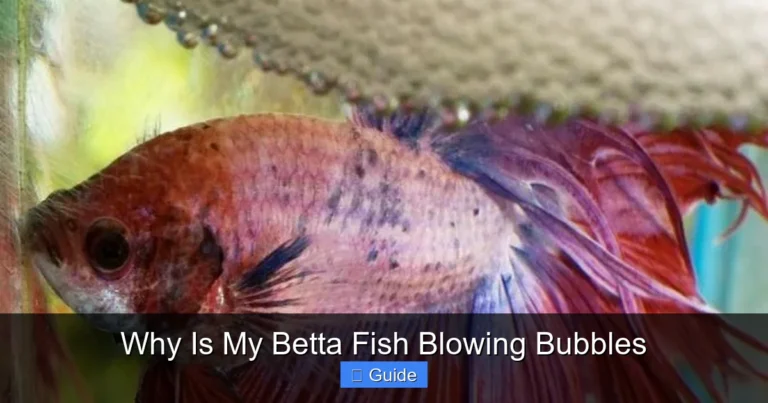
Can I Put Two Female Betta Fish Together
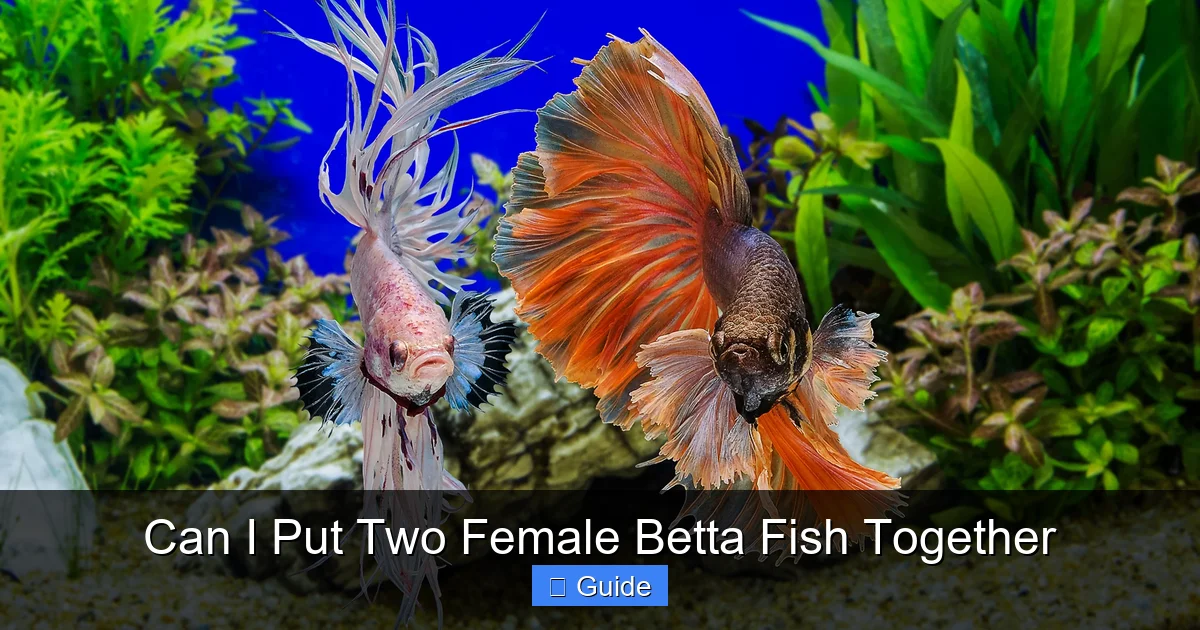
Yes, you can keep multiple female betta fish together, but it is not a simple or beginner-friendly endeavor. Unlike males, females can sometimes tolerate each other in a large, heavily decorated community tank called a “sorority.” Success depends on providing a minimum 20-gallon tank, introducing a group of 4-6 at once, and constant monitoring for aggression. For most keepers, a single female betta in a species-only tank remains the safest and most rewarding choice.
Key Takeaways
- Female bettas are not inherently “community fish”: While less aggressive than males, they are still territorial Siamese fighting fish with individual personalities that can turn hostile.
- A proper sorority requires a large, heavily planted tank: The absolute minimum is a 20-gallon long tank with abundant plants, rocks, and wood to break lines of sight and provide escape routes.
- Introduce a group, not a pair: Adding 4-6 young, similar-sized females simultaneously prevents one from establishing dominance and bullying a single newcomer.
- Constant observation is non-negotiable: You must watch for flaring, chasing, torn fins, and hiding daily. Be prepared to separate aggressors immediately.
- It is a high-risk, high-effort endeavor: Sororities have a high failure rate and can lead to serious injury or death. They are not recommended for beginners or those seeking a low-maintenance tank.
- Single-species tanks are the gold standard: A beautifully decorated 5-gallon tank for one female betta provides a stress-free, spectacular display with minimal risk.
- Consider peaceful tankmates instead: If you want a community, use your single female betta with small, fast, non-flashy species like neon tetras or harlequin rasboras in a properly sized tank.
📑 Table of Contents
- The Allure and the Reality of the Betta Sorority
- Why Females Are Different (But Not “Nice”)
- The Sorority Tank: A Non-Negotiable Foundation
- Forming the Sorority: The Critical First Steps
- Signs of Success and the Red Flags of Failure
- Is It Worth It? The Ethical Alternative
- Conclusion: A Choice Made with Eyes Wide Open
The Allure and the Reality of the Betta Sorority
You’ve seen them—stunning videos of multiple female betta fish, each with a unique color pattern, swimming peacefully amid a jungle of plants. The idea of a “betta sorority” is captivating. It promises more vibrant colors, more dynamic movement, and a beautiful community tank all centered around the world’s most beloved aquarium fish. The question “Can I put two female betta fish together?” is a logical one, especially after knowing that male bettas must live alone. The answer is a qualified, careful yes, but it comes with a mountain of crucial caveats, requirements, and inherent risks that every potential keeper must understand before attempting it.
This guide will dive deep into the reality of housing female bettas together. We’ll move beyond the simple yes/no to explore the how, the why it’s difficult, and the what-if-it-goes-wrong. Our goal is to equip you with the knowledge to make an informed, ethical decision for the fish involved. Keep in mind that what you’re attempting is fundamentally against the solitary nature of the betta species. You are working against their instincts, not with them. Success is a fragile balance achieved through meticulous planning and vigilant care, not a guarantee.
Why Females Are Different (But Not “Nice”)
The Biology of the Betta
To understand if you can put two female betta fish together, you must first understand what a betta is. Bettas (Betta splendens) are anabantoids, a group of fish that includes gouramis. Their most famous trait, the labyrinth organ, allows them to breathe atmospheric air. But their defining behavioral trait is extreme territoriality, especially towards other members of their own species. This is a product of centuries of selective breeding for aggression in their native Thailand for fighting matches. While females were not selected for the same level of aggression as males, the genetic predisposition is still very much there.

Visual guide about Can I Put Two Female Betta Fish Together
Image source: aquariumpub.com
In the wild, bettas are solitary creatures. A male will defend a small territory—often just a few square feet of plant thicket or root system—from all intruders. Females have their own overlapping territories but typically avoid direct, prolonged conflict. The key difference in captivity is space. In a tiny, barren cup or a small, sparse tank, there is no “avoiding.” The entire tank is the territory, and any other betta is an intruder to be challenged. A female’s aggression is often more subtle and persistent than a male’s flashy, explosive displays, but it can be just as deadly over time through chronic stress and pecking order bullying.
Debunking the “Females are Community Fish” Myth
You may have heard that female bettas can be kept in groups, sometimes called “sororities,” and that they are peaceful. This is a dangerous oversimplification. The ability for a group of females to cohabit is not a species-wide trait; it is a complex interplay of individual personalities, tank size, environmental enrichment, and sheer luck. Some females are naturally more docile (“crowd pleasers”), while others are relentless bullies from a young age. Your success depends on getting a group where no single individual is overwhelmingly dominant and aggressive. This is why introducing a pair is almost always a disaster. With two, one will become the alpha and relentlessly harass the beta, causing immense stress, loss of appetite, and physical injury. A group of four or more diffuses this single-target focus; aggression gets spread out, and a bullied fish has more places to hide and more conspecifics to school with for safety.
The Sorority Tank: A Non-Negotiable Foundation
If you decide to proceed, your tank setup is not just important—it is the single greatest factor determining life or death. The phrase “go big or go home” has never been more accurate. Forget the 5-gallon “betta tank” you see at the pet store. That is for one fish. For a sorority, we are talking about a substantial, long, and heavily planted aquarium.
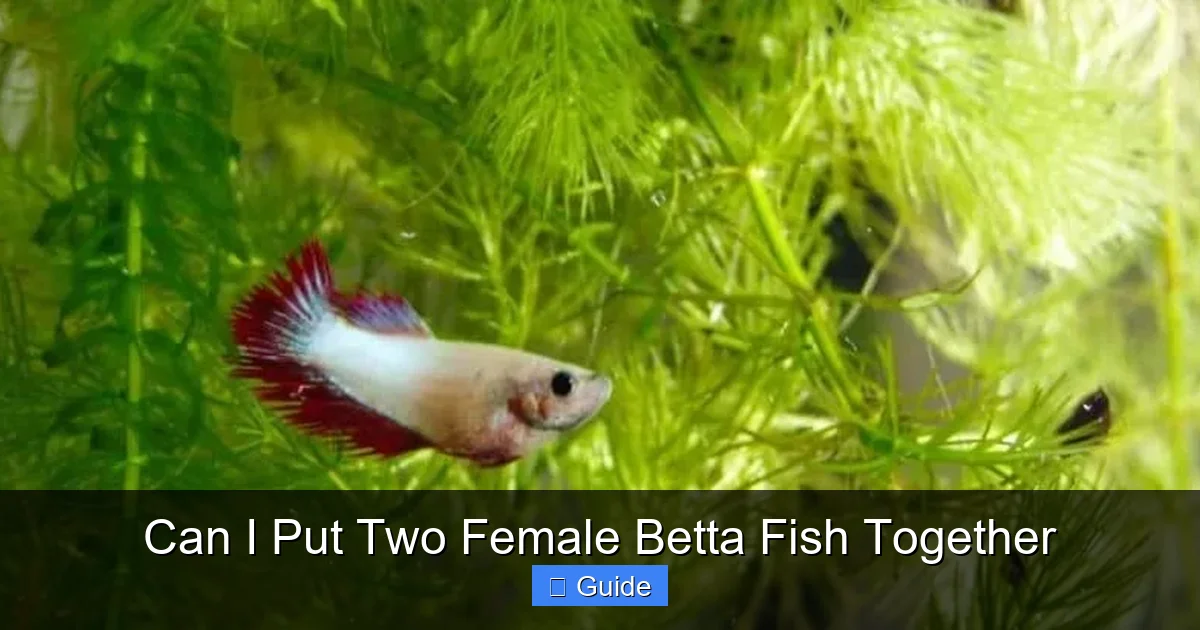
Visual guide about Can I Put Two Female Betta Fish Together
Image source: memfish.net
Tank Size and Dimensions: The Absolute Minimum
The widely accepted, absolute minimum for a female betta sorority is a 20-gallon long tank. Why “long”? Because horizontal swimming space is more important than vertical height for these fish that establish territories along the substrate and mid-water column. A 20-gallon long provides about 30 inches of swimming length. This gives each fish, in a group of 5-6, a theoretical 5-6 inches of personal space, but more importantly, it provides enough length for multiple distinct territories to be established with buffer zones between them. A 20-gallon “tall” tank is significantly less suitable due to the reduced footprint. If you have the space and budget, a 29-gallon or 40-gallon breeder tank is even better, providing more stability, more space for plants, and a greater buffer against water quality issues that stress fish and provoke aggression. Remember: bettas are labyrinth fish and need access to the water’s surface, so the tank must not be overfilled.
The Jungle Effect: Why Plants and Cover Are Mandatory
A bare sorority tank is a gladiatorial arena. Your goal is to make it a dense, complex city where fish can disappear. The “jungle effect” is your primary tool for preventing aggression. You need:
- Floating Plants: These are crucial. They break the line of sight from the surface (where bettas often patrol), diffuse light, and provide a sense of security. Use species like Salvinia, Frogbit, or Duckweed (though it can overrun). A large raft of floating plants can cover 30-40% of the surface.
- Stem Plants & Bushes: Plant densely from front to back. Use fast-growing stems like Rotala, Ludwigia, or Water Wisteria to create walls of greenery. Group them in clusters to form thickets.
- Hardscape: Driftwood (like Malaysian or mopani), large smooth river rocks, and ceramic or PVC pipes are essential. They create caves, overhangs, and broken sight-lines. A fish can claim a small cave as its personal fortress.
- Leaf Litter: If you’re going for a natural blackwater biotope, dried catappa leaves or almond leaves provide additional cover, tannins (which can reduce stress), and micro-habitats.
The rule of thumb: you should not be able to see clearly from one end of the tank to the other without a plant or piece of wood blocking your view. This visual barrier is what prevents constant, stressful monitoring of each other.
Forming the Sorority: The Critical First Steps
How you introduce your females is as important as the tank itself. This process is often called “dumping” for a reason—it’s not a gentle, slow introduction.
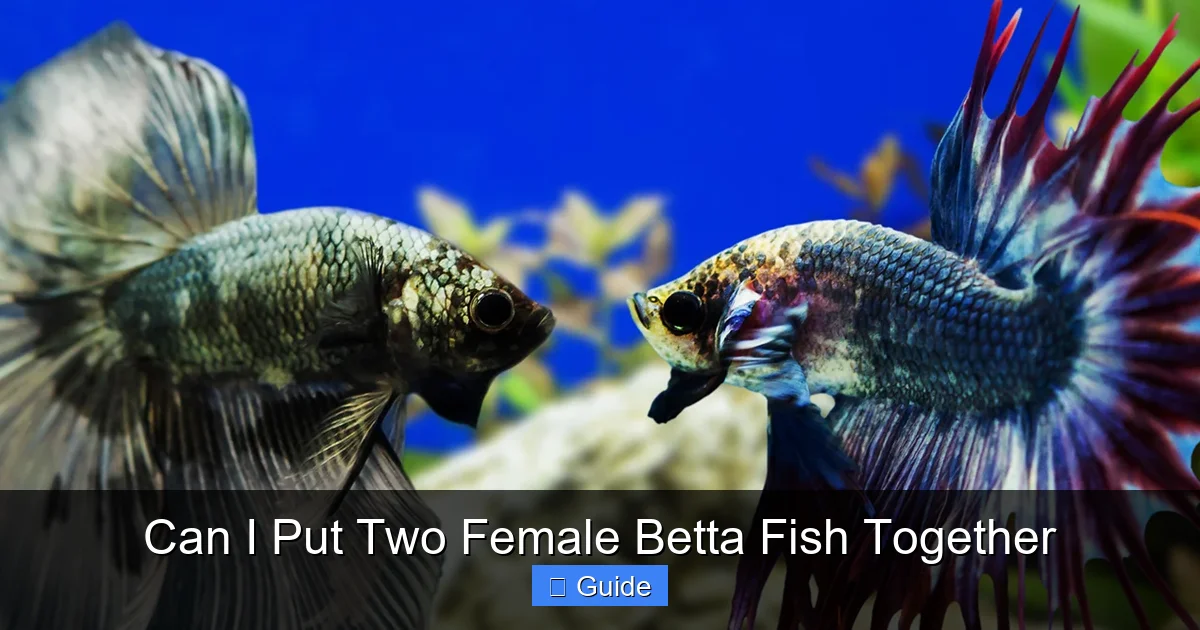
Visual guide about Can I Put Two Female Betta Fish Together
Image source: petmedaily.com
Acquiring Your Fish: Source and Selection
Never take a single, adult female from a community tank at a pet store and add her to an established sorority. She is already stressed and will be seen as an intruder. The best practice is to source 4-6 young, similarly-sized females from a reputable local breeder or a trusted online seller who can ship them together. You want them to be juveniles, not fully mature adults with established territories. They should be of comparable size to prevent obvious size-based bullying. If buying from a store, ask if you can purchase a small group (a “school”) of their female bettas that are already housed together in a large tank. Avoid any fish with visibly torn fins, clamped fins, or lethargic behavior.
The Simultaneous Introduction (“The Dump”)
On the day of arrival, your fully cycled, heat-stable, and densely planted sorority tank should be waiting. Using a net, gently transfer all the females from their shipping bag or store containers directly into the sorority tank at the same time. There is no acclimation drip for this; the shock of the new environment is actually helpful as it distracts them from each other initially. Once they are all in, immediately lower the lights and consider covering the tank with a towel for the first 24-48 hours to reduce visual stress. The next few days are critical. Expect some flaring (gills puffed out), some chasing, and some posturing. This is the establishment of a pecking order. Intervene only if you see a fish being relentlessly chased to the point of exhaustion, hiding constantly, or with physical damage like torn fins. Have a hospital tank ready to isolate any extreme bullies.
Signs of Success and the Red Flags of Failure
After the initial few days, a successful sorority will begin to stabilize. You will see the females spread out, each claiming a general area with their favorite plant thicket or cave. They may occasionally flare at each other across a clear patch, but it should be brief and followed by retreat. They should all be eating readily at feeding time, swimming actively during the day, and displaying their beautiful fins. A peaceful sorority often looks like a single, large school of fish moving through the plants, occasionally splitting off.
The Unacceptable Warning Signs
These are signs the sorority is failing and requires immediate action:
- Constant Chasing: One or two fish are being chased non-stop by the same aggressor(s) whenever they move.
- Hiding 24/7: A fish is never seen out in the open, even for food. It is clamped, pale, and motionless in a corner or cave.
- Physical Injury: Torn, shredded, or missing fins. This is a clear sign of biting.
- Loss of Appetite: A fish that is not coming up for food or is being bullied away from food.
- Lethargy and Clamped Fins: General signs of severe stress and poor water quality (which aggression can cause via excessive waste).
If you see these, the aggressive fish must be removed immediately to a separate hospital tank. Sometimes, a previously bullied fish will recover if the bully is gone. Other times, the social order has been so disrupted that the entire group may need to be re-housed separately. Be prepared for this possibility. Sororities can collapse weeks or even months after formation when a new dominant fish asserts itself.
Is It Worth It? The Ethical Alternative
After reading this, you might be wondering if the stress, risk, and intensive management are worth it. For the vast majority of hobbyists, the answer is a resounding no. The most beautiful, stress-free, and ethically sound way to keep a betta is to provide a species-appropriate, beautifully aquascaped single tank. A 5-gallon tank (the absolute minimum for a single betta) can be a stunning, living piece of art with a single, healthy, vibrant fish that displays its full personality—building bubble nests, exploring, and greeting you—without the constant shadow of violence.
The Perfect Single Betta Setup
For one female betta, provide a 5-gallon (or larger) tank with a gentle filter (a sponge filter is ideal), a heater set to 78-80°F, and a secure lid (they are jumpers!). Decorate it just as you would a sorority, but on a smaller scale: a few live plants (like Anubias or Java Fern attached to driftwood), a cave, and some floating plants. This setup is low-stress for you and the fish, easier to maintain, and eliminates the risk of injury or death from tankmates. You get all the beauty and personality with none of the gamble.
Community Tank Options WITH a Single Female Betta
If your heart is set on a community, you can keep one female betta as the centerpiece in a larger community tank (20+ gallons). The betta must be added last to an established community of peaceful, fast-moving, non-flashy fish that do not resemble other bettas (no long, flowing fins). Excellent choices include:
- Small schooling tetras (Neon, Cardinal, Ember)
- Harlequin rasboras
- Otocinclus catfish
- Amano shrimp or large ghost shrimp (though bettas may eat smaller ones)
The betta may be mildly territorial but will often ignore these fast, non-threatening species that stay in the lower and middle levels of the tank. This is a far safer and more stable option than a betta sorority and allows you to enjoy a true community.
Conclusion: A Choice Made with Eyes Wide Open
So, can you put two female betta fish together? The technical answer is yes, but the practical, ethical, and responsible answer is: only if you are prepared to meet an exceptionally high standard of care, accept a significant risk of failure, and are willing to intervene and separate fish at a moment’s notice. A female betta sorority is a fascinating but advanced project, akin to keeping a pack of small, territorial predators. It is not a casual endeavor and should not be attempted by beginners or anyone seeking a simple, decorative tank.
For 99% of people asking this question, the best path is to provide one magnificent female betta with a pristine, planted single tank or to introduce her gently to a carefully selected community of other peaceful species. You will still be rewarded with the breathtaking beauty and engaging personality of the betta, but you will spare yourself and your fish the anxiety, injury, and potential tragedy that so often accompanies sorority attempts. Choose the path of stability and individual care. Your future, thriving betta will thank you for it.
Frequently Asked Questions
What is the absolute minimum tank size for a female betta sorority?
The absolute minimum is a 20-gallon long tank (30 inches in length). Anything smaller dramatically increases aggression and stress, making failure almost certain. A larger tank (29-40 gallons) is strongly recommended for better stability and space.
Can I add a new female betta to an established sorority?
No, you should never add a single female to an existing group. The new fish will be seen as an intruder and will be relentlessly attacked. Sororities must be formed by adding a group of 4-6 juveniles simultaneously to a new, empty tank.
How many female bettas should be in a sorority?
Aim for a group of 4 to 6 females. A group of two or three is a recipe for disaster, as one will dominate the others. A larger group helps diffuse aggression, as no single fish is the sole target.
What are the first signs that my sorority is failing?
The first red flags are a fish that is constantly being chased and cannot rest, a fish that is always hiding and not eating, or visible damage like torn fins. Chronic stress signs like clamped fins and lethargy are also major warnings.
Can I keep a female betta with other fish instead of other bettas?
Yes, and this is often a better option. A single female betta can be a peaceful community member in a 20+ gallon tank with small, fast, non-aggressive schooling fish like neon tetras or harlequin rasboras. She must be added last to an established tank.
Is a female betta sorority suitable for a beginner?
Absolutely not. A sorority is an advanced, high-risk setup that requires experience in fish behavior, aggressive management, and water chemistry. A single betta in a properly sized, decorated tank is the perfect project for a beginner.