Can I Put Other Fish with a Betta
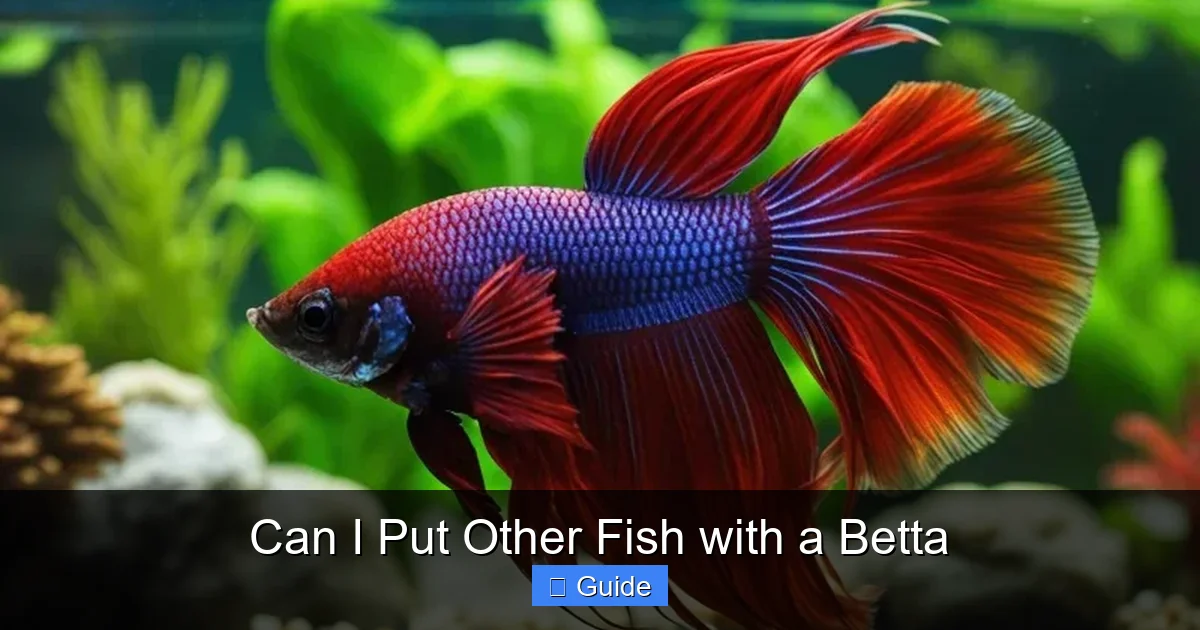
Yes, you can often put other fish with a betta, but success depends entirely on your individual betta’s personality and meticulous tank setup. A minimum 20-gallon tank with abundant hiding spots is non-negotiable. You must select peaceful, short-finned species that occupy different tank levels and introduce them with extreme care. Always be prepared to separate fish if aggression occurs.
So you’ve got that stunning betta fish, with its flowing fins and vibrant colors, swimming gracefully in its tank. It’s a beautiful sight. But then you wonder: is my betta lonely? Can I put other fish with a betta to create a more dynamic, lively aquarium? This is one of the most common questions in the fishkeeping hobby, and the answer is a definitive, cautious yes, but…
The image of a betta—often sold in tiny cups at pet stores—as a solitary, aggressive brute is only half the story. In the vast, shallow rice paddies and slow-moving streams of Southeast Asia where they originate, bettas (Betta splendens) do encounter other fish. Their infamous aggression is primarily directed at other male bettas, a trait bred for fighting. With other species, their temperament is highly individual. Some are curious and tolerant, while others will see any intruder as a threat to be eliminated. Your success in creating a peaceful community tank hinges on understanding this nuance and planning every detail with precision.
This guide will walk you through everything you need to know. We’ll debunk myths, dive deep into tank setup, explore the best and worst possible tank mates, and provide a fail-safe introduction protocol. Think of this not as a simple yes/no list, but as a masterclass in betta sociology and aquarium management. By the end, you’ll have the knowledge and confidence to make an informed decision for your specific betta and create a thriving underwater community.
Key Takeaways
- Your Betta’s Personality is Key: Some bettas are docile community fish, while others are relentless aggressors. There is no guarantee, and you must observe your specific fish.
- Tank Size is the Foundation: A 20-gallon (75L) long tank is the absolute minimum recommended for introducing any tank mate, providing essential space to establish territories.
- Choose Peaceful, Non-Fin-Nipping Species: Ideal mates are small, schooling fish like neon tetras or bottom-dwellers like corydoras that won’t provoke your betta.
- Avoid Flashy, Long-Finned, or Aggressive Fish: Guppies, fancy goldfish, and other “fighter” fish like tiger barbs are almost always a recipe for disaster.
- The Introduction Process is Critical: Using a tank divider or introducing all fish simultaneously (with the betta last) can dramatically reduce initial territorial disputes.
- You Must Be a Constant Observer: For the first few weeks, watch for flaring, chasing, or nipped fins. Be ready to rehome a mate or use a divider at any moment.
- Hiding Places are Not Optional: Live or silk plants, driftwood, and caves are essential to break line-of-sight and give potential victims escape routes.
📑 Table of Contents
- Understanding the Betta: More Than Just a “Fighting Fish”
- The Non-Negotiable Foundation: Tank Setup & Environment
- Ideal Tank Mates: The Peaceful Cohabitors
- Fish to Avoid: The Danger Zone
- The Introduction Process: A Step-by-Step Guide to Peace
- Troubleshooting and Long-Term Monitoring
- Conclusion: Patience, Planning, and Observation
Understanding the Betta: More Than Just a “Fighting Fish”
Before we even think about other fish, we must understand our betta. Its behavior is the single most important variable in this entire equation.
The Myth of the Always-Aggressive Betta
The term “Siamese fighting fish” is a historical misnomer that has unfairly tarnished the species’ reputation. Yes, male bettas were selectively bred for aggression toward each other for centuries. This genetic predisposition means you should never house two male bettas together, and even a male and female require extreme caution and a large, heavily planted tank to manage constant harassment. However, this same selective pressure did not breed them to be indiscriminate killers of all other fish species. In the wild, a betta’s life is about conserving energy—chasing every small fish would be wasteful. Their aggression is typically a response to perceived threats: a flashy fish that looks like a rival male, a long-finned fish that triggers a territorial response, or a fish that invades its bubble nest or favorite hiding spot.
Factors That Influence a Betta’s Temperament
Why is one betta peaceful while another is a terror? Several factors play a role:
- Genetics & Lineage: Some breeding lines have been selected for color and finnage over aggression, resulting in calmer personalities. Wild-type bettas (often called “Plakat” or short-finned types) are frequently more active and less prone to lethargic territoriality, though they can still be feisty.
- Individual Personality: Just like people or dogs, bettas have distinct personalities. You may have a curious, bold explorer or a shy, retiring homebody.
- Environment & Past Experiences: A betta that has been severely stressed, kept in poor conditions, or has had negative encounters with other fish may be permanently skittish or aggressive. A well-maintained, stable environment fosters a more secure and less reactive fish.
- Health: A sick or painful betta will be more irritable and defensive. Always ensure your betta is in perfect health before introducing any stressors.
Practical Tip: Before considering tank mates, simply observe your betta in its current tank for a week. Is it alert and curious when you approach? Does it flare at its own reflection (a sign of territorial aggression)? Is it active and building bubble nests (a sign of health and, sometimes, readiness to breed)? A betta that is constantly flaring at everything in sight is a poor candidate for a community tank.
The Non-Negotiable Foundation: Tank Setup & Environment
You cannot overstate the importance of the physical environment. A proper setup is your primary tool for managing betta behavior and ensuring the survival of any potential tank mates. A cramped, barren tank is a guaranteed failure.
Visual guide about Can I Put Other Fish with a Betta
Image source: bettacarefishguide.com
Tank Size: Bigger is Infinitely Better
The tiny, decorative “betta bowls” are animal cruelty, plain and simple. They provide no space for territory or escape, forcing any tank mate into constant, direct conflict with the betta. For a single betta alone, a 5-gallon (19L) heated and filtered tank is the absolute humane minimum. For any community scenario, you must start at a minimum of 20 gallons (75L). A 20-gallon long tank (30″ x 12″ x 13″) is ideal because its larger footprint provides more horizontal swimming space and territorial boundaries than a tall, narrow tank of the same volume. More water volume also means more stable water parameters, which reduces stress for all inhabitants. If you have the space and budget, a 29-gallon or larger is even better and opens up more mate options.
The Architecture of Peace: Hiding Spots and Line-of-Sight Breakers
This is your most powerful defensive strategy. You must design the aquascape so a betta cannot see the entire tank from one spot. The goal is to create a landscape of nooks, crannies, and visual barriers.
- Plants are Essential: Use a mix of tall background plants (like Amazon swords or Vallisneria), mid-ground plants (like Java fern or Anubias attached to driftwood), and foreground carpets (like Dwarf Hairgrass or Monte Carlo). Live plants are fantastic for water quality and provide complex structure, but high-quality silk plants are a perfectly acceptable and often hardier alternative.
- Hardscape is Your Friend: Driftwood, large smooth river rocks, and ceramic or resin caves create solid barriers. Arrange them to form “walls” and “alleys” in the tank.
- Open Swimming Space: While providing cover, also leave a clear area in the center or top of the tank for active schooling fish to swim without constantly skirting the betta’s territory.
Water Parameters: The Unseen Peacekeeper
Stable, pristine water is critical. A stressed betta is an aggressive betta. A stressed tank mate is a slow, vulnerable target.
- Temperature: Bettas are tropical fish requiring 78-80°F (25.5-26.5°C). Most common community fish (tetras, rasboras, corydoras) thrive in this range. Avoid cooler-water fish like goldfish.
- Filtration: Use a gentle filter with an adjustable flow. Bettas hate strong currents due to their large fins. A sponge filter is an excellent, betta-safe choice for a community tank, or a hang-on-back filter with a flow diffuser.
- Cycling: The tank must be fully cycled (established nitrogen cycle) before adding any fish. This process converts toxic ammonia and nitrite. An uncycled tank is a death sentence for sensitive fish.
Ideal Tank Mates: The Peaceful Cohabitors
With the foundation laid, we can discuss candidates. The perfect betta tank mate has these traits: small, peaceful, schooling, and occupies a different tank layer (bottom or mid-water). They should be fast enough to evade a sudden lunge but not so fast or flashy as to trigger constant chasing.
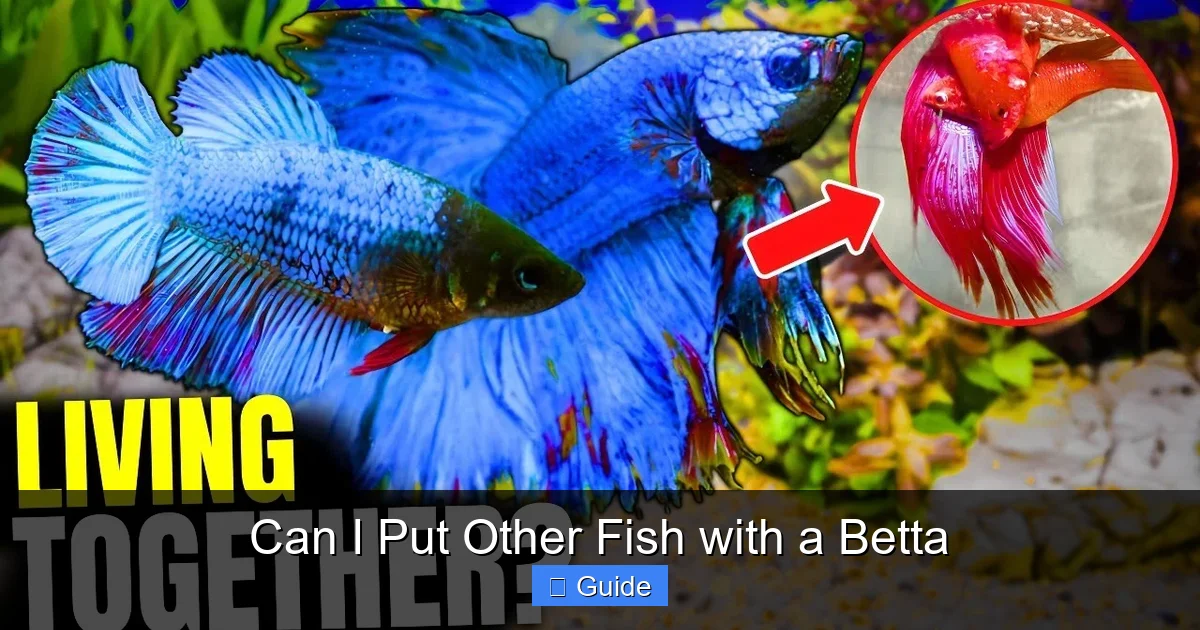
Visual guide about Can I Put Other Fish with a Betta
Image source: i.ytimg.com
Top Tier: The Most Reliable Choices
- Neon Tetras & Other Small Tetras: The classic choice. A school of 8-10 neon tetras (Paracheirodon innesi) or cardinal tetras (Paracheirodon axelrodi) is beautiful. They stay in the mid-to-upper tank, are peaceful, and their small size and quick movements make them less likely to be seen as a threat. Important: Always buy a proper school (minimum 6, 10+ is better) so they feel secure and stick together, not straying into the betta’s space.
- Harlequin Rasboras: Similar to tetras but often hardier and less prone to “neon tetra disease.” A school of 8+ Trigonostigma heteromorpha adds brilliant orange and black accents. They are active but not overly boisterous.
- Corydoras Catfish: The ultimate bottom-dwelling cleanup crew. These small, armored catfish (like Corydoras pygmaeus, C. habrosus, or C. panda) are social and should be kept in groups of 5 or more. They scavenge the substrate, completely ignoring the betta above. Their spiny fins also deter a betta from trying to eat them.
- Kuhli Loaches: For a more exotic bottom-dweller. These eel-like, peaceful loaches (Pangio kuhlii) are fascinating to watch as they burrow and slither through the substrate. Keep them in groups of 3-5.
- African Dwarf Frogs: A truly unique invertebrate option. These fully aquatic frogs (Hymenochirus boettgeri) are peaceful, interesting, and occupy the bottom/mid-water. They have poor eyesight, so ensure your betta doesn’t see them as slow-moving food. Feed your frogs in a separate dish to ensure they get enough food.
- Amano Shrimp or Ghost Shrimp: While not fish, these larger, hardy shrimp can be excellent cleanup crew. Amano shrimp (Caridina multidentata) are prolific algae eaters and are large enough (2 inches) that a betta is less likely to see them as a snack. Ghost shrimp (Palaemonetes spp.) are cheaper but more likely to be eaten. Note: Small cherry shrimp (Neocaridina davidi) are often seen as food by bettas, especially larger ones.
Conditional & Advanced Choices
- Snails: Nerite snails (various species) are fantastic. They have a hard shell, are algae-eaters, and are completely oblivious to fish. They cannot reproduce in freshwater. Apple snails are large but can be messy. Ramshorn snails multiply quickly and can become a pest.
- Otocinclus Catfish: The dedicated algae eater. These tiny suckermouth catfish are peaceful and school well. They are very sensitive to water quality and require established tanks with plenty of algae or supplemented with algae wafers.
- Guppies & Endlers: EXTREME CAUTION. While some bettas ignore them, many will relentlessly chase the long, flowing fins of male guppies, which they mistake for another male betta. Only try with a very docile betta and a female or short-finned “Endler’s livebearer” (Poecilia wingei). Be prepared for failure.
Fish to Avoid: The Danger Zone
Some fish are so likely to trigger aggression or be preyed upon that they should never be considered.
Visual guide about Can I Put Other Fish with a Betta
Image source: bettafishcaretaker.com
The “No” List
- Any Other Betta Fish: Male/male is a fight to the death. Male/female leads to constant harassment and stress for the female. Two females can sometimes work in a massive, heavily planted sorority tank (40+ gallons), but this is an advanced, high-risk setup for experienced keepers only.
- Long, Flowing Finned Fish: This includes fancy guppies, male swordtails, some platies, and fancy goldfish (like veiltails). The flowing fins mimic a rival male betta and will trigger relentless flaring and nipping.
- Aggressive or “Nipping” Fish: Tiger barbs, serpae tetras, red-eyed tetras, and some large danios are notorious fin-nippers. They will harass the betta’s long fins, and the betta will retaliate, leading to a torn-up, stressful mess for everyone.
- Large or “Bully” Fish: Any fish large enough to see the betta as food (like some large cichlids or gouramis) or that is itself a territorial bully (like some dwarf gouramis or paradise fish) is a bad idea. The betta may be intimidated, or a violent clash will ensue.
- Other Gouramis: This is tricky. Some peaceful, small gouramis like the Croaking Gourami (Trichopsis vittata) or Chocolate Gourami (Sphaerichthys osphromenoides) can work in a very large, well-planted tank with a calm betta, as they occupy a similar mid-level niche and are generally non-confrontational. However, many dwarf gouramis (Trichogaster lalius) can be territorial and may spar with the betta. This is a high-risk pairing requiring immense observation.
- Slow, Fancy Goldfish: They are cold-water fish requiring vastly different temperatures. Their flowing fins are a target, and they produce massive amounts of waste, polluting the water for the tropical betta.
The Introduction Process: A Step-by-Step Guide to Peace
Even with perfect fish and a perfect tank, a bad introduction can ruin everything. Never just dump a new fish into the betta’s established territory. You have two primary, proven methods.
Method 1: The Simultaneous Introduction (The “All at Once” Method)
This is often the smoothest method because no fish has established territory.
- Setup the Community Tank First: Fully cycle and stock your peaceful community fish (tetras, corydoras, etc.) at least 2-3 weeks before you even bring the betta home. This allows the community fish to establish their own schools and territories without a dominant predator present.
- Acclimate the Betta: When you get your betta, float its bag in the tank for 15-20 minutes to equalize temperature. Then slowly drip-acclimate it to the tank water over 1-2 hours.
- Release and Observe: Gently net the betta from the bag and release it into the community tank. The existing fish will likely be curious but will generally ignore it after a few minutes. The betta will explore but will be less inclined to defend a space that isn’t solely “theirs.”
Pro Tip: Use a fish bag or a small, clear breeding box inside the main tank to let the betta and community fish see each other through a barrier for 15-30 minutes before release. This can help them acclimate to each other’s presence without physical contact.
Method 2: The Tank Divider (The “Gradual” Method)
Use this if your betta is already established in a tank alone, or if you’re nervous.
- Install a Solid Divider: Use a permanent acrylic divider, a piece of craft mesh sealed with silicone, or a large floating breeding box. The divider must be completely opaque—no seeing through.
- Add the New Fish First: Place your new community fish on one side of the divider. Let them acclimate and settle for 24-48 hours.
- Add the Betta: Then, acclimate and add your betta to the other side. For the next 2-3 days, they will sense each other through the barrier (smell, water movement) but cannot see each other to flare.
- The Removal: After 3 days, carefully remove the divider during a low-stress time (e.g., when the lights are dim). Have a net and a backup tank ready in case of immediate violence. Observe closely for 30-60 minutes. If there is intense, persistent flaring and chasing, replace the divider for another 24 hours and try again. If they largely ignore each other, leave them together.
Critical Introduction Rules
- Feed Separately: Use a feeding ring or feed the betta on one side and the community on the other to prevent food competition.
- Lights On Low: Introduce or remove dividers with the tank lights off or very dim. Bright light increases stress and aggression.
- Nighttime is Best: Performing the final step just before you turn the lights off for the night gives fish a chance to settle without constant visual confrontation.
- Have a Plan B: Always have a spare 5-10 gallon tank (a “hospital” or “quarantine” tank) cycled and ready. If the betta shows unrelenting aggression after 48 hours of observation, you must be prepared to move either the betta or the tank mate to this backup tank. Renting a tank divider from a local fish store is also a smart temporary solution.
Troubleshooting and Long-Term Monitoring
The first two weeks are the most critical. Your job as a keeper is to be a detective and a referee.
What to Watch For (The Warning Signs)
- Constant Flaring: It’s normal for a betta to flare once or twice at a new fish out of curiosity. But if your betta is continuously displaying its gills and fins at a specific tank mate, that’s a sign of intense stress and aggression.
- Unrelenting Chasing: A quick chase to establish boundaries is one thing. Continuous, frantic chasing that prevents the other fish from eating or resting is bullying and will lead to exhaustion and death for the victim.
- Nipped or Torn Fins: Check the fins of your betta and its tank mates daily. Any sign of physical damage means aggression is occurring, even if you don’t see the actual act (which often happens at night or in dense plants).
- Hiding & Loss of Appetite: If any fish is spending all day hidden, not eating, or looking pale and lethargic, it is being stressed. This is a major red flag.
What to Do If Problems Arise
If you observe the warning signs, act immediately. Do not hope “they’ll work it out.” They won’t.
- Separate Immediately: Use a net to move the victim or the aggressor to your backup tank. It is almost always easier and less stressful to move the betta, as it is the most likely source of the problem.
- Re-evaluate: Was the tank large enough? Were there enough hiding spots? Was the chosen species wrong? Use this as a learning experience.
- Try a Divider: If you are committed to keeping both fish, a permanent, opaque divider is your last resort. This allows visual separation but shared water chemistry.
- Rehome Responsibly: If separation is necessary long-term, find a suitable new home for the displaced fish. Never just release it into the wild.
Remember, a peaceful community is a dynamic balance. It can change with the betta’s mood, the season, or the addition of a new plant. Stay observant, enjoy the beauty of your carefully curated ecosystem, and always prioritize the well-being of the most vulnerable creature in the tank.
Conclusion: Patience, Planning, and Observation
The question “Can I put other fish with a betta?” is not a simple yes or no. It is a question that demands a thoughtful, case-by-case answer. The vibrant, interactive community tank you dream of is absolutely achievable. You can watch a peaceful school of neon tetras shimmer in the upper water column while your betta lazily patrols its favorite leaf, and a band of corydoras catfish playfully sifts the sand at the bottom. It’s a rewarding sight.
But it is built on a foundation of respect for the betta’s nature. It starts with rejecting the myth of the universally aggressive betta and instead seeing your fish as an individual. It requires investing in a spacious, well-planted, properly cycled tank—not as an optional upgrade, but as the essential stage for this experiment. It means doing your homework on tank mates, avoiding flashy fins and aggressive species, and choosing peaceful, small-schooling fish that occupy different niches.
Most importantly, it demands a careful, strategic introduction and a long-term commitment to being a watchful keeper. Be the calm observer, ready to intervene at the first sign of trouble. Be prepared with a backup plan. If, after all your planning, your betta proves to be a true solitary, that’s okay too. A beautifully aquascaped, species-only 20-gallon tank for a single, healthy, thriving betta is a thousand times better than a stressful, bloody community. The goal is always a stress-free, healthy environment. With patience, planning, and keen observation, you can unlock the door to a stunning community tank and give your betta the enriching environment it deserves.
Frequently Asked Questions
Can two betta fish live together?
No, two male bettas will fight to the death. A male and female can only be kept together temporarily for breeding under strict supervision, as the male will constantly harass the female. Female-only sorority tanks are possible but require immense space (40+ gallons), heavy planting, and are high-risk for experienced keepers only.
Can I put shrimp or snails with my betta?
Yes, larger shrimp like Amano shrimp or Ghost shrimp are often good additions, as they are too big to be seen as food and are efficient cleaners. Snails, especially Nerite snails, are almost always perfect tank mates as they have hard shells and are completely ignored. Small cherry shrimp have a high chance of being eaten.
What is the absolute minimum tank size for a betta with other fish?
While a single betta can survive in 5 gallons, for any community tank, the absolute minimum is a 20-gallon long tank. This provides enough horizontal space for territories to form and for tank mates to escape a chasing betta. Anything smaller dramatically increases stress and aggression.
How do I know if my betta is stressed by tank mates?
Look for constant, intense flaring (gills extended), relentless chasing of a specific fish, torn or nipped fins on any inhabitant, and prolonged hiding or loss of appetite in your betta or its tank mates. These are clear signs the arrangement is failing.
What is the best way to introduce a betta to an existing community tank?
The most reliable method is the “simultaneous introduction.” First, fully stock and establish your peaceful community fish (like a school of tetras and corydoras) in the tank for 2-3 weeks. Then, carefully acclimate and add the betta. Since no fish has established territory, conflicts are minimal.
My betta is flaring at its new tank mate but not chasing. Is this okay?
Occasional, brief flaring is normal as fish establish boundaries. However, if the flaring is constant, prolonged, or paired with chasing, it is a sign of high stress and aggression. Monitor the situation closely for the first 48 hours. If the behavior persists, you will likely need to separate the fish using a divider or a backup tank.