Can Betta Fish Live with Other Fish
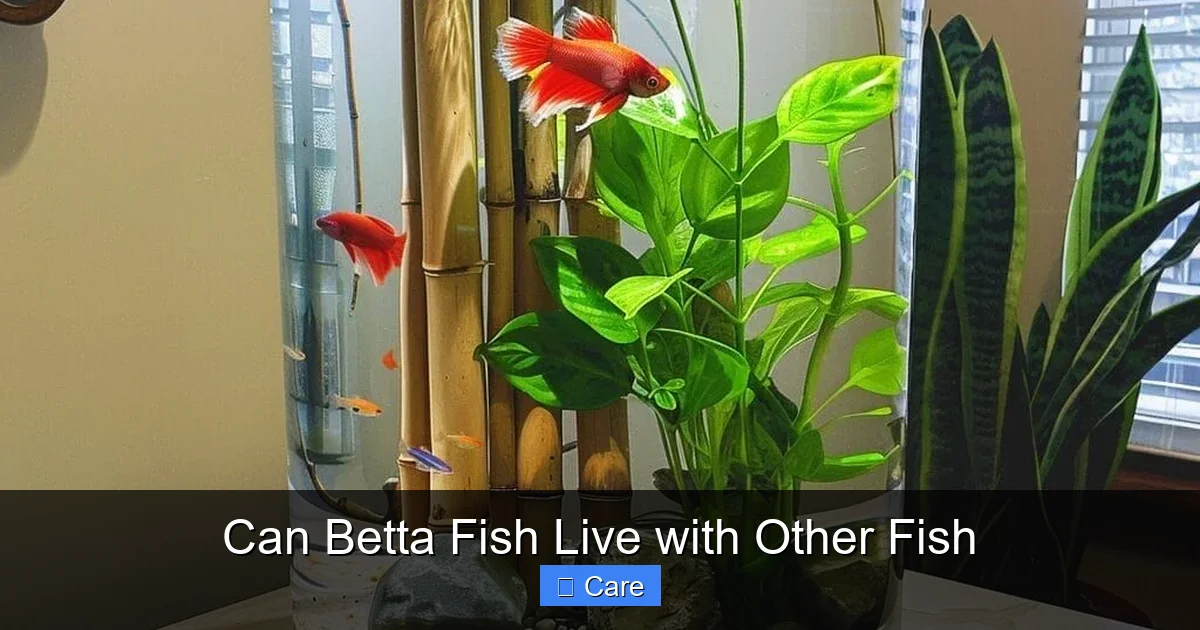
Yes, betta fish can sometimes live with other fish, but it requires meticulous planning. Success depends entirely on the individual betta’s temperament, a suitably large and decorated tank, and choosing tankmates that are peaceful, fast, and occupy different swimming levels. Never assume compatibility; careful observation and a backup plan are essential for a thriving community aquarium.
Key Takeaways
- Bettas are individuals: While known for aggression, some bettas are peaceful while others are fiercely territorial. Your betta’s personality is the ultimate deciding factor.
- Tank size is non-negotiable: A minimum of 20 gallons is strongly recommended for any community tank with a betta to provide enough space and reduce territorial disputes.
- Choose the right tankmates: Avoid fish with long, flowing fins (like guppies) or bright colors that might trigger aggression. Opt for peaceful, fast-swimming, bottom-dwelling, or schooling species.
- The tank setup is your first defense: Ample plants, decorations, and hiding spots are crucial to break line-of-sight and give the betta and other fish places to retreat and claim as their own.
- Introduction order matters: Always establish the betta in its fully cycled, decorated tank first, then add other fish. Never add a betta to an existing community.
- Have a backup plan: Be prepared to separate the betta immediately if signs of persistent aggression or stress appear in any fish. A second “hospital” tank is a wise investment.
- Water parameters must be stable: All inhabitants must require similar water conditions (temperature ~78-80°F, pH ~7.0). Bettas are tropical fish and cannot live with cold-water species like goldfish.
📑 Table of Contents
Debunking the Myth: The Solitary Betta
Walk into any pet store, and you’ll see them: beautiful Betta splendens, often isolated in tiny cups or bowls. This practice has cemented a powerful myth—that betta fish, also known as Siamese fighting fish, must always be kept alone. But is this the whole truth? The answer, like most things in the aquarium hobby, is a nuanced yes and no. While it’s absolutely true that male bettas are famously territorial and can be aggressive, decades of selective breeding for color and finnage have produced a wide range of personalities. Many bettas, with the right environment and carefully chosen companions, can and do thrive in peaceful community tanks. The key is understanding why they might fight and how to construct an environment that minimizes those triggers. This article will be your comprehensive guide to navigating the complex, but often rewarding, world of betta fish tankmates.
The Origin of the Aggression: A Fighter’s Biology
To understand how to live with a betta, you must first understand its instincts. Betta splendens were originally bred in the rice paddies of Southeast Asia for aggressive sparring matches, a practice that dates back centuries. This history has hardwired them with a strong sense of territory, particularly around the water’s surface where they build their bubble nests. Males will flare (extend their gills and fins) to appear larger and intimidate intruders. Persistent flaring, chasing, and nipping are signs of stress and aggression that can lead to injury or death for a tankmate—or the betta itself, from stress-induced illness. Female bettas are generally less aggressive but can still be territorial, especially in smaller spaces. This inherent behavior is the primary reason caution is always advised.
The Foundation: Crafting the Perfect Betta Tank
Before you even consider another fish, your betta’s tank must be a sanctuary that caters to its needs and reduces stress. A poorly set up tank is a recipe for disaster, turning even the most docile betta into a bully out of frustration. The goal is to create an environment with ample space and visual barriers, making it impossible for the betta to constantly patrol a single, visible territory.
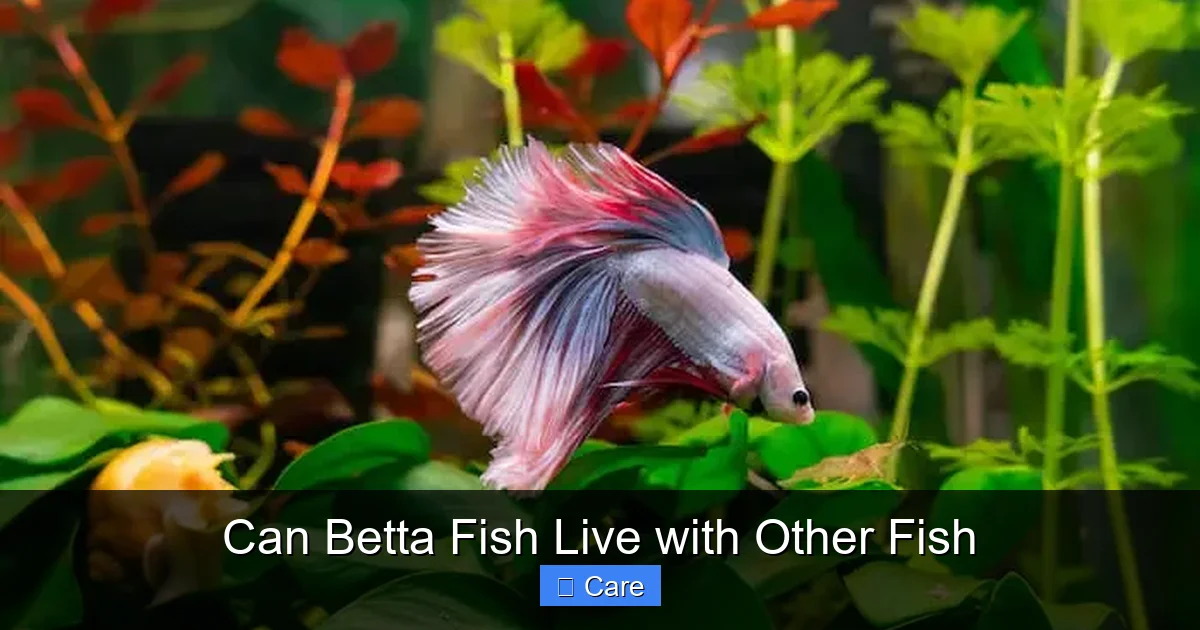
Visual guide about Can Betta Fish Live with Other Fish
Image source: forfishlovers.com
Tank Size: Bigger is Infinitely Better
The tiny cup is a cruel myth. A proper, permanent home for a betta is a minimum of 5 gallons, but for a community tank, this is the absolute bare minimum and highly discouraged. We strongly recommend starting with a 20-gallon (long) tank or larger. Why? Space dilutes aggression. In a 5-gallon tank, a betta can see and claim the entire aquarium as its domain. In a 20-gallon tank, its territory might be a corner with a plant, while a school of neon tetras claims the middle column, and a group of cories the bottom. The extra volume also provides more stable water parameters, which is critical for the health of all fish.
The Importance of Décor: Hiding Spots and Line-of-Sight Breakers
Your tank’s aquascape is your most powerful tool. Bettas need plants, driftwood, rocks, and caves. Live plants like Java fern, Anubias, and floating plants (duckweed, frogbit) are ideal as they improve water quality and provide complex, natural cover. Even silk plants are excellent. The rule is: you should not be able to see a clear, unobstructed path from one end of the tank to the other. This vertical and horizontal complexity breaks the betta’s line of sight, preventing it from seeing other fish as constant invaders in its space. It gives other fish places to dart into if chased and allows the betta to feel it has a secure, hidden area of its own.
Water Parameters: The Non-Negotiable Baseline
All potential tankmates must share the betta’s tropical preferences. The temperature must be stable between 78°F and 80°F (25.5°C – 26.5°C) using a reliable aquarium heater. pH should be around 7.0, and ammonia/nitrite must be zero with nitrates kept low (<20 ppm) through regular water changes. A cycled, fully established filter is essential for biological filtration. Introducing any fish into an uncycled tank is a death sentence for all inhabitants, but especially for a betta with its delicate labyrinth organ.
Ideal Tankmates: The Compatible Candidates
Now for the fun part: choosing companions. The perfect betta tankmate is peaceful, fast, non-territorial, and does not resemble a betta (no long, flowing fins or bright colors that might be seen as a rival). They should also occupy a different niche in the tank. Here are the most reliable categories and species.
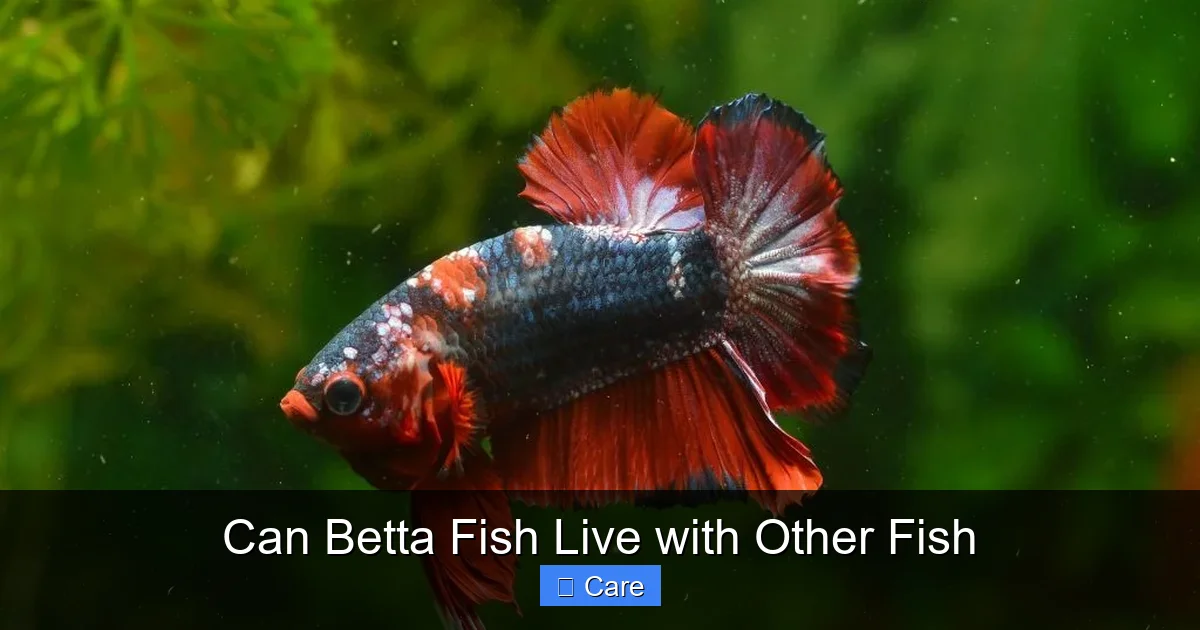
Visual guide about Can Betta Fish Live with Other Fish
Image source: fishkeepingadvice.com
Peaceful Schooling Fish (Top & Middle Levels)
These fish add movement and interest to the upper half of the tank. Their key advantage is speed and numbers; they are too quick to be caught and their schooling behavior is fascinating to watch.
- Neon & Cardinal Tetras: Classic choices. They are small, peaceful, and fast. Keep them in groups of 6+.
- Harlequin Rasboras: Similar to tetras but with a more distinct color pattern and a slightly larger size, making them less likely to be seen as prey.
- Celestial Pearl Danios (CPDs): Tiny, active, and beautiful. They prefer slightly cooler water (72-78°F), so only choose them if your betta is comfortable at the lower end of its range.
- White Cloud Mountain Minnows: Another cool-water option (65-75°F). Only suitable for a betta that tolerates cooler temps, often a better match for a female betta.
Practical Tip: Always add the school of tetras or rasboras before introducing the betta to the tank. This allows them to establish their school and feel secure in their territory, reducing panic when the betta arrives.
Bottom Dwellers & Clean-Up Crew (Bottom Level)
These fish occupy the completely different bottom stratum, eliminating direct competition for space.
- Kuhli Loaches: The ultimate betta companion. Eel-like, nocturnal, and incredibly peaceful. They burrow in the substrate and are fascinating to watch. Keep in groups of 3+.
- Pygmy Corydoras: The smallest cory species. Adorable, active, and social. They school on the bottom, sifting through sand. Keep in groups of 6+.
- Otocinclus Catfish: The dedicated algae eater. They are very peaceful, small, and cling to glass and leaves. They do best in groups of 3+ and require well-established tanks with algae to graze on.
- Amano Shrimp: Not a fish, but an excellent invertebrate. They are large, active algae-eaters and detritus feeders that are generally ignored by bettas. Their size makes them less likely to be seen as a snack.
Practical Example: A 20-gallon community with a male Halfmoon Betta, a school of 8 Harlequin Rasboras, and a group of 6 Pygmy Corydoras, densely planted with Anubias and Java moss, is a classic and highly successful setup.
Other Invertebrate Options
Shrimp and snails can be fantastic additions, but there’s a risk. A curious betta may see a slow-moving snail or a bright shrimp as food.
- Ghost Shrimp / Amano Shrimp: As mentioned, larger shrimp are best. Ghost shrimp are transparent and often ignored. Always introduce them after the betta is settled and well-fed.
- Nerite Snails: Excellent algae eaters with hard shells that bettas cannot crack. They are completely harmless and ignore fish.
- Mystery (Apple) Snails: Larger and more active, but their size and slow movement can sometimes trigger a betta’s chasing instinct. Supervision is required.
Caution: Avoid small shrimp like Cherry Shrimp. They are often viewed as a tasty snack, even by a peaceful betta.
The Critical Introduction Process: Patience is Everything
Even with a perfect tank and ideal species, the introduction method can make or break the community. Rushing this process is the most common cause of failure.

Visual guide about Can Betta Fish Live with Other Fish
Image source: i.ytimg.com
Step 1: The Betta is First
This is the golden rule. The betta must be the last animal added to an established, decorated, and cycled community tank. If you add other fish first, they will claim the entire tank as their territory. When you then add the betta, it will be seen as an intruder in their home, and the existing fish may harass it. By adding the betta first (or to a new setup), it establishes its territory in the context of the full tank, and the other fish are introduced into
Frequently Asked Questions
What is can betta fish live with other fish?
can betta fish live with other fish is an important topic with many practical applications.