How Often Should I Change Water for Betta Fish
You should change water for your betta fish every 1 to 2 weeks with a partial water change of about 25-30%. The exact frequency depends on your tank size, filtration, and feeding habits. Regular water changes keep ammonia levels low and your betta healthy. This guide covers everything from preparation to execution so you can keep your fish happy.
Keeping your betta fish healthy starts with one simple but essential task: changing the water regularly. If you are wondering how often should i change water for betta fish, you are not alone. This is one of the most asked questions among new betta owners, and for good reason. Clean water is the foundation of a happy, vibrant betta.
The truth is, there is no single answer that fits every tank. Your schedule depends on several factors like tank size, filtration, feeding amount, and whether you keep your betta alone or with other fish. But do not worry. By the end of this guide, you will know exactly what to do and when to do it.
This article breaks down everything you need to know about changing water for betta fish. We will cover the ideal frequency, the step-by-step process, common mistakes, and expert tips that make the whole thing easier. Let us dive in.
Key Takeaways
- Partial water changes every 1-2 weeks are the gold standard for most betta tanks.
- Tank size matters — smaller bowls need more frequent water changes than larger aquariums.
- Always use water conditioner to remove harmful chlorine and chloramine from tap water.
- Match the new water temperature to your tank water to avoid stressing your betta.
- Over-changing can be harmful — removing too much water disrupts beneficial bacteria.
- Watch for warning signs like cloudy water or lethargic behavior that signal it is time for a change.
- Consistency beats perfection — a regular schedule matters more than getting it exactly right every time.
📑 Table of Contents
- Why Regular Water Changes Matter for Betta Fish
- How Often Should I Change Water for Betta Fish
- How to Do a Water Change for Betta Fish
- Common Mistakes When Changing Betta Fish Water
- Signs Your Betta Needs a Water Change Sooner
- Expert Tips for Perfect Water Changes
- Quick Tips for Busy Fish Owners
- Final Thoughts
Why Regular Water Changes Matter for Betta Fish
Bettas produce waste just like any other fish. That waste breaks down into ammonia, which is toxic even in small amounts. In the wild, bettas live in large bodies of water where toxins get diluted naturally. In a home tank, those toxins build up fast unless you remove them through regular water changes.
Water changes for betta fish serve three main purposes:
- Remove harmful toxins like ammonia, nitrite, and nitrate before they reach dangerous levels.
- Replenish essential minerals that your betta needs for healthy fins, bright colors, and strong immunity.
- Maintain stable water parameters so your betta stays stress-free and active.
Without regular changes, even a well-filtered tank can become a health hazard. Your betta might develop fin rot, lose its color, or become lethargic. In severe cases, poor water quality can be fatal.
How Ammonia Builds Up in a Betta Tank
Every time your betta eats, it produces waste. Uneaten food also decays and releases ammonia into the water. Even the biological filter in your tank converts ammonia into nitrite and then nitrate, but nitrate still accumulates over time. A partial water change physically removes that buildup, which is why it is so important.
Think of it like changing the air filters in your home. You do not wait until the air is completely dirty, right? The same logic applies to your betta tank. Small, consistent changes work far better than occasional big cleanups.
How Often Should I Change Water for Betta Fish
The general rule of thumb is to perform a partial water change every 1 to 2 weeks. But the exact frequency depends on your specific setup. Here is a closer look at what works best in different scenarios.
For Small Bowls and Vases (Under 5 Gallons)
If your betta lives in a small bowl or vase, you will need to change the water more often. A bowl under 5 gallons has very little water volume, which means toxins build up quickly. Aim for a 25-30% water change every 5 to 7 days.
Keep in mind that bowls usually lack filtration. Without a filter, there is no helper to break down waste between water changes. This is why small setups demand more frequent attention.
For Standard Tanks (5 to 10 Gallons)
A 5 to 10-gallon tank with a filter is the sweet spot for most betta owners. In this setup, a 20-25% water change every 7 to 14 days works great. The filter helps maintain water quality between changes, giving you a bit more flexibility.
For Larger Tanks (15+ Gallons)
Larger tanks are more stable because the water volume dilutes toxins more effectively. You can get away with a 15-20% water change every 2 weeks in a well-filtered 15-gallon tank or larger.
Quick Reference Table
| Tank Size | Water Change Frequency | Percentage Per Change |
|---|---|---|
| Under 5 gallons (bowl) | Every 5-7 days | 25-30% |
| 5-10 gallons | Every 7-14 days | 20-25% |
| 15+ gallons | Every 14-21 days | 15-20% |
These numbers are starting points. Always observe your water conditions and adjust as needed. Testing your water with a simple kit can tell you a lot about whether your schedule is working.
How to Do a Water Change for Betta Fish
Now that you know how often to change the water, let us talk about how to actually do it. The good news is that how to do a water change for betta fish is straightforward and does not require fancy equipment.
Step 1: Gather Your Supplies
Before you start, make sure you have everything ready. You will need:
- A clean bucket or container dedicated to fish use only
- A siphon or gravel vacuum
- Water conditioner (also called tap water conditioner)
- A thermometer to check water temperature
- A clean cloth or sponge for wiping the tank glass
Step 2: Prepare the New Water
This step is critical. Never add untreated tap water directly to your betta tank. Chlorine and chloramine in tap water can damage your betta’s gills and stress its immune system. Use a water conditioner to neutralize these chemicals.
If you want to learn the full process, check out our guide on how to prepare water for a betta fish. It covers everything from letting water sit overnight to using conditioners properly.
Make sure the new water is close to the tank temperature. Bettas are tropical fish and prefer water between 76 and 82 degrees Fahrenheit. A sudden temperature drop can shock your fish and lead to illness.
Step 3: Remove the Old Water
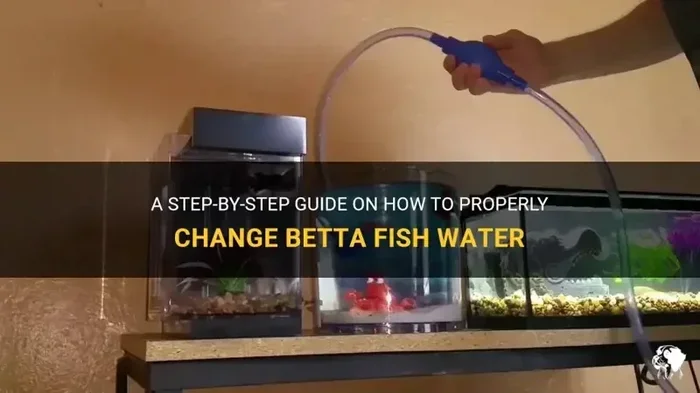
Use your siphon to remove the designated percentage of water. For example, if you are doing a 25% change in a 10-gallon tank, remove 2.5 gallons. Focus on areas near the substrate where waste tends to collect.
While you are removing water, gently vacuum the gravel to pull out debris and uneaten food. This keeps the tank bottom clean without disturbing beneficial bacteria colonies that live deeper in the substrate.
Step 4: Add the New Water
Slowly pour the conditioned, temperature-matched water into the tank. Avoid pouring directly onto your betta or disturbing the substrate too much. A gentle flow is best.
If you are new to this process, our detailed guide on how to do a water change for betta fish walks you through each step with photos and tips.
Step 5: Check and Monitor
After the water change, give your betta a few minutes to settle. Check the temperature and make sure everything looks calm. Over the next 24 hours, watch for any signs of stress like rapid breathing or hiding.
Common Mistakes When Changing Betta Fish Water
Even experienced fish keepers make mistakes. Here are the most common errors people make when changing water for their betta and how to avoid them.
Mistake 1: Changing Too Much Water at Once
It is tempting to empty the whole tank and start fresh, but this is a bad idea. Replacing more than 50% of the water at once can crash your tank’s nitrogen cycle. It also removes beneficial bacteria that your betta depends on for a healthy environment.
Stick to partial water changes of 20-30%. This keeps the ecosystem stable while still removing harmful waste products.
Mistake 2: Forgetting to Treat the Water
Tap water contains chlorine and chloramine that are safe for humans but deadly for fish. Always add water conditioner before introducing new water to the tank. This is a non-negotiable step in betta fish water changes.
Mistake 3: Ignoring Water Temperature
Bettas are sensitive to temperature swings. Adding cold water to a warm tank can cause thermal shock. Use a thermometer and match the temperature as closely as possible. Even a few degrees off can stress your fish.
Mistake 4: Changing Water Too Frequently
More is not always better. Changing water every day or every other day can strip away essential minerals and destabilize the beneficial bacteria in your tank. Trust the process and stick to a consistent schedule.
Mistake 5: Not Cleaning the Tank While Doing a Water Change
A water change is also a great time to do light tank maintenance. Wipe down the glass, remove any visible debris, and check your filter media. A clean tank makes the water change more effective and keeps your betta comfortable.
Signs Your Betta Needs a Water Change Sooner
Sometimes you cannot stick to your regular schedule, and that is okay. But watch for these signs that tell you it is time for an unscheduled water change:
- Cloudy or foul-smelling water — this usually means ammonia is building up.
- Lethargy or loss of appetite — your betta may be stressed by poor water quality.
- Faded colors — a healthy betta should have vibrant, bright colors.
- Fins clamped close to the body — this is a classic sign of discomfort.
- White or fuzzy patches on the body — these can indicate a fungal or bacterial infection triggered by poor water conditions.
If you notice any of these signs, do a partial water change immediately. If your betta seems particularly unwell after a water change, visit our guide on how to save dying betta fish after water change for emergency steps.
Expert Tips for Perfect Water Changes
Here are some pro tips that will make your water change routine smoother and more effective:
- Set a schedule and stick to it. Consistency is the key to maintaining stable water quality. Pick a day each week or two weeks and make it a habit.
- Use a gravel vacuum. It makes removing old water and cleaning the substrate much easier and more efficient.
- Keep a dedicated fish bucket. Never use a bucket that has been used for cleaning chemicals or other household purposes.
- Test your water regularly. A simple liquid test kit can tell you your ammonia, nitrite, and nitrate levels. This helps you adjust your water change frequency if needed.
- Do not forget to rinse your filter media in old tank water (not tap water) once a month to keep it working effectively.
- Match the water source. If you always use the same water source (like filtered tap water), your tank parameters stay more consistent.
Quick Tips for Busy Fish Owners
Do not have a lot of time? Here are some quick tips to make betta tank maintenance easier:
- Use a water change system with a built-in vacuum to save time.
- Prepare your conditioned water the night before so it is ready when you need it.
- Keep a checklist on your fridge so you never forget your scheduled water change.
- Invest in a liquid test kit so you can spot problems early.
- If you travel often, consider an automatic water changer or ask a friend to help.
Remember, even a quick 10-minute partial water change is better than skipping it entirely. Your betta will thank you with bright colors, active swimming, and a long, healthy life.
Final Thoughts
So, how often should i change water for betta fish? The answer is every 1 to 2 weeks for most setups, with adjustments based on tank size and conditions. The most important thing is to stay consistent and never skip treating your water with conditioner.
Regular water changes are the single most impactful thing you can do for your betta’s health. They prevent toxin buildup, support stable water parameters, and create a thriving environment where your fish can truly flourish.
Start with the schedule that fits your setup, follow the steps outlined in this guide, and adjust as you learn your tank’s unique needs. Once you make water changes a routine, it becomes second nature. Your betta will live a happier, healthier life, and you will enjoy watching it more.
Take action today. Pick a day on your calendar, gather your supplies, and give your betta the clean water it deserves. You will notice the difference in its energy, appetite, and overall appearance within days.