Can Betta Fish Be Housed Together

Betta fish are famous for their striking colors and feisty personalities, but can they share a home? In most cases, male bettas should stay solo, while females can sometimes live together in a sorority tank. Understanding tank size, décor, and compatible tank mates is key to preventing fights and keeping everyone healthy.
Key Takeaways
- Male vs. female: Males are highly territorial; females are more tolerant when kept in groups.
- Tank size matters: A minimum of 10 gallons for a sorority, 5 gallons for a single male.
- Plants and hiding spots: Live plants, caves, and driftwood reduce aggression.
- Water quality: Stable pH (6.5‑7.5) and temperature (78‑80 °F) are essential for all bettas.
- Gradual introductions: Use a divider or a neutral “quarantine” tank to test compatibility.
- Suitable tank mates: Small, non‑fin‑nipping species like neon tetras or corydoras can coexist.
- Monitoring: Watch for signs of stress—frayed fins, faded colors, or constant gill flaring.
📑 Table of Contents
- Introduction: The Betta Personality Puzzle
- 1. Male Betta Fish – The Lone Warriors
- 2. Female Betta Fish – The Socialites
- 3. Mixed‑Gender Tanks – A Delicate Balance
- 4. Choosing the Right Tank Setup
- 5. Compatible Tank Mates – Expanding the Community
- 6. Step‑by‑Step Guide to Introducing Betta Fish
- Conclusion: Making the Right Choice for Your Betta
Introduction: The Betta Personality Puzzle
Betta fish, also called Siamese fighting fish, are beloved for their vivid fins and bold behavior. Many beginners wonder if these beauties can live together or if they must be solitary showpieces. The short answer: it depends on gender, tank size, and how you set up the environment. This guide walks you through the science, the common myths, and the practical steps to create a harmonious betta community.
We’ll break down the differences between male and female bettas, explore sorority tanks, discuss safe mixed‑gender setups, and suggest compatible tank mates. By the end, you’ll know exactly when you can say “yes” to housing betta fish together and when a solo tank is the safest choice.
1. Male Betta Fish – The Lone Warriors
Why Males Prefer Solo Living
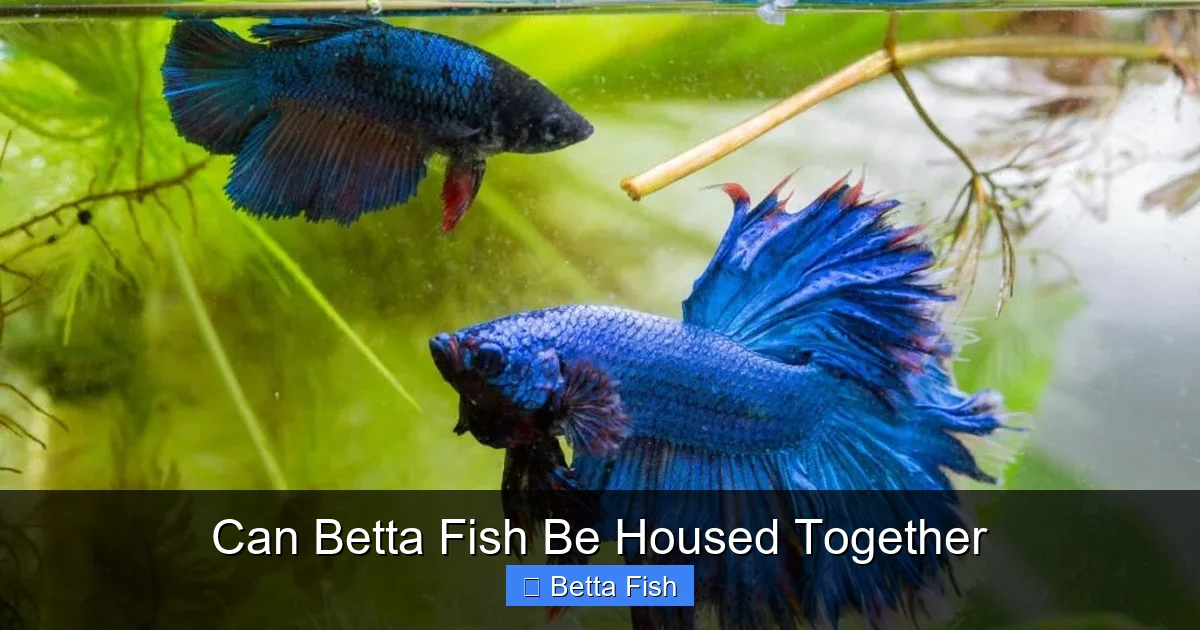
Male bettas are naturally territorial. In the wild they defend small puddles, and in captivity they view any other male—or even a similarly colorful female—as a rival. The classic “fighting fish” reputation comes from this instinct. When two males share a space, they often flare, bite, and can cause severe injuries.
Visual guide about Can Betta Fish Be Housed Together
Image source: housedpet.com
Can Two Male Betta Fish Be Kept Together?
The short answer is no, unless you use a heavily divided tank with solid barriers. Even then, the visual contact can cause chronic stress. For more details, see our article on Can You Keep 2 Male Betta Fish Together.
When a Male Might Co‑Exist with Others
Male bettas can live with non‑betta species that are fast‑swimming and keep to the lower levels of the tank, such as small rasboras or certain catfish. The key is to avoid fish with long, flowing fins that a male might mistake for a rival.
2. Female Betta Fish – The Socialites
Understanding Female Aggression
Female bettas are less aggressive than males, but they are not completely peace‑loving. In the wild, females form loose hierarchies and can tolerate each other if space and hiding places are ample.

Visual guide about Can Betta Fish Be Housed Together
Image source: housedpet.com
Can Two Female Betta Fish Be Together?
Yes, two or more females can share a tank if the aquarium is large enough (at least 10 gallons) and equipped with plenty of plants and décor. Read more about this in Can Two Female Betta Fish Be Together.
Setting Up a Sorority Tank
- Tank size: 10‑20 gallons for 4‑6 females.
- Plants: Live plants like Java fern and Anubias provide cover.
- Decor: Caves, driftwood, and silicone‑sealed ornaments create visual barriers.
- Sexing: Ensure all bettas are truly female; a mis‑sexed male can become a bully.
Start with a larger group (5‑6) to dilute any dominant individual’s power. Over time, the hierarchy stabilizes, and aggression drops.
3. Mixed‑Gender Tanks – A Delicate Balance
Can Male and Female Betta Fish Be Kept Together?
Mixing a male with females is risky. A male may view any female as a mate and become overly aggressive, especially during breeding season. However, with a spacious tank (20+ gallons), plenty of plants, and a careful introduction, some hobbyists have succeeded.
Visual guide about Can Betta Fish Be Housed Together
Image source: housedpet.com
For a detailed look, check out Can Male And Female Betta Fish Be Kept Together. The article explains how to use a “neutral” tank for initial meetings and how to watch for spawning behavior.
Breeding Considerations
If you aim to breed, a male and a single female can be housed together temporarily. Provide a bubble nest, and remove the female once eggs are laid to prevent the male from eating them.
4. Choosing the Right Tank Setup
Tank Size and Shape
Size matters more than shape. A long tank offers more horizontal space for territories, while a tall tank gives vertical swimming room for surface‑dwelling bettas.
Water Parameters
- Temperature: 78‑80 °F (25.5‑26.5 °C).
- pH: 6.5‑7.5, stable.
- Hardness: 3‑4 dGH.
- Filtration: Gentle flow; bettas dislike strong currents.
Plants, Hiding Spots, and Flow
Live plants not only improve water quality but also break line‑of‑sight, lowering aggression. Use floating plants like duckweed to create surface cover, and add driftwood or ceramic caves for bottom hiding.
5. Compatible Tank Mates – Expanding the Community
Fish That Get Along With Betta
When adding other species, choose small, non‑aggressive fish that stay in the mid‑to‑bottom levels. Good choices include:
- Neon tetras (stay in schools)
- Corydoras catfish (bottom dwellers)
- Harlequin rasboras
- Otocinclus catfish (algae eaters)
Fish to Avoid
Long‑finned species such as guppies, mollies, or fancy goldfish can trigger a betta’s territorial response. Also avoid other aggressive or fast‑chasing fish like barbs.
For a full list, see Which Fish Can Be Kept With Betta.
6. Step‑by‑Step Guide to Introducing Betta Fish
1. Quarantine New Arrivals
Always quarantine new bettas for at least two weeks to prevent disease spread.
2. Use a Divider
Place a clear acrylic divider in the tank. This lets the fish see each other without contact, allowing you to gauge aggression.
3. Observe Behavior
Watch for flaring, chasing, or constant hiding. If both fish are calm after 48 hours, you can try a supervised free swim.
4. Gradual Release
Turn off the lights for a few minutes, then lift the divider slowly. If any fish shows stress, re‑divide immediately.
5. Ongoing Monitoring
Check daily for fin damage, loss of color, or reduced appetite. Early intervention prevents serious injury.
Conclusion: Making the Right Choice for Your Betta
Betta fish can be housed together, but the answer isn’t a simple “yes” or “no.” Males are best kept alone unless separated by a solid barrier. Females can thrive in a well‑planted sorority tank, while mixed‑gender setups demand careful planning and plenty of space. By respecting each fish’s natural behavior, maintaining optimal water conditions, and providing ample hiding spots, you can create a vibrant community that showcases the beauty of bettas without the drama of constant fighting.
Remember, every fish is an individual. Even within the same gender, personalities differ. Start slow, observe closely, and be ready to adapt your setup. With patience and the right knowledge, you’ll enjoy a stunning, peaceful aquarium that both you and your bettas love.
Frequently Asked Questions
Can I keep two male betta fish in the same tank?
No. Male bettas are highly territorial and will fight aggressively if placed together, even with a divider that allows visual contact.
How many female betta fish can I keep in a sorority?
Ideally 4‑6 females in a 10‑20 gallon tank. More fish help spread out dominance, reducing the chance of one bully.
Is it safe to keep a male betta with guppies?
Generally not. Guppies have long, flowing fins that a male betta may mistake for a rival, leading to fin nipping.
What temperature should a community betta tank have?
Maintain 78‑80 °F (25.5‑26.5 °C) for all bettas and compatible tank mates to keep metabolism stable.
Do bettas need a heater if the room is warm?
Yes. Even in a warm room, temperature can fluctuate. A reliable aquarium heater ensures a constant 78‑80 °F.
Can I add a betta to an existing community tank?
Only if the tank is large (20+ gallons), well‑planted, and already houses non‑aggressive, bottom‑dwelling fish. Introduce the betta slowly using a divider.