Which Fish Can Be Kept with Betta
Betta fish, known for their aggression, can sometimes share tanks with carefully selected species. Success depends entirely on the individual betta’s personality, a spacious and well-decorated tank, and choosing peaceful, non-flashy tank mates from specific categories like bottom-dwellers or small, fast-moving schools. Always introduce new fish slowly and monitor interactions closely to prevent stress and injury.
Key Takeaways
- Your Betta’s Personality is Key: Some bettas are naturally more tolerant than others; there are no guarantees, only educated guesses based on species history.
- Tank Size is Non-Negotiable: A minimum of 20 gallons is strongly recommended for any community tank with a betta to provide enough space for territories.
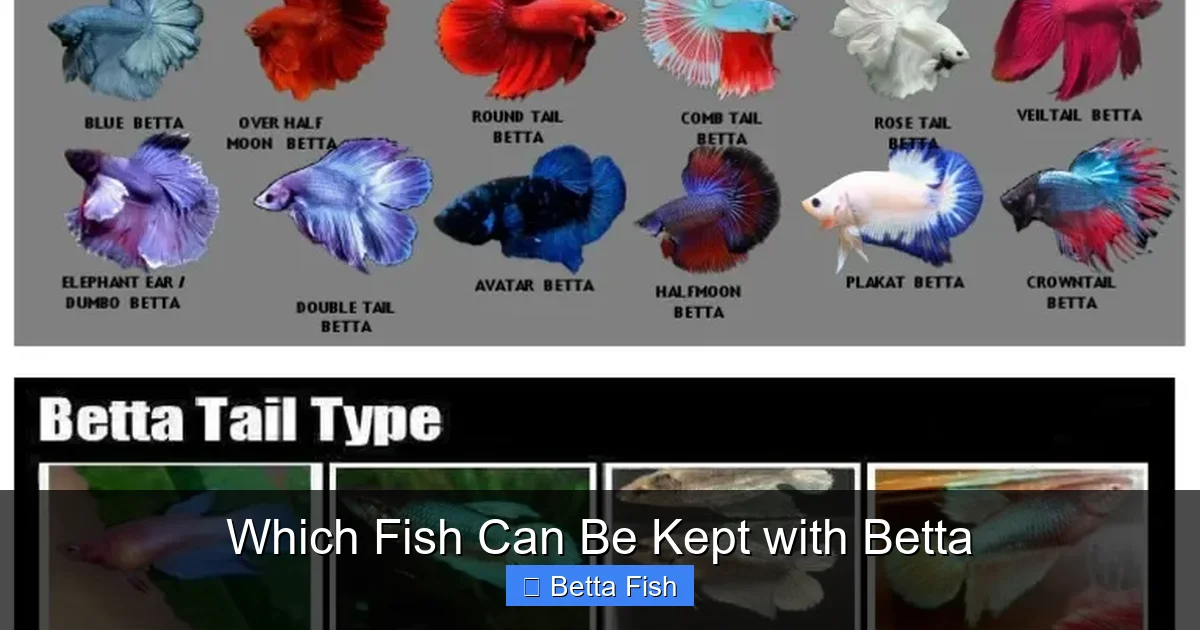
- Avoid Flashy, Long-Finned Fish: Fish that look like rival bettas (guppies, fancy guppies, some goldfish) or have flowing fins will almost certainly trigger aggression.
- Target Bottom-Dwellers and Fast Mid-Level Swimmers: These occupy different tank levels, reducing direct encounters and competition for space.
- The Tank Must Be Heavily Planted and Structured: Live or silk plants, driftwood, and caves provide essential hiding spots and visual barriers to break lines of sight.
- Introduce the Betta Last: Establish the community tank first, then add the betta to an environment that is already “claimed” by others, which can reduce its territorial instinct.
- Observe Relentlessly: Watch for chasing, flaring, or hiding for the first 48-72 hours. Have a backup plan (a separate tank) ready to remove a bully or a victim instantly.
📑 Table of Contents
- Understanding Betta Temperament and Social Needs
- The Ideal Tank Setup for Community Living
- Top Tank Mate Candidates: Peaceful Bottom-Dwellers
- Top Tank Mate Candidates: Mid-Level Community Fish
- Species to Avoid: Common and Costly Mistakes
- The Introduction Process: How to Add Tank Mates Successfully
- Creating a Thriving, Peaceful Community
Understanding Betta Temperament and Social Needs
Before we even begin to answer “which fish can be kept with betta,” we must first understand the creature at the center of our question. The Siamese fighting fish, or Betta splendens, has a reputation. This reputation is earned through centuries of selective breeding for combat. The males, in particular, are famously territorial and aggressive towards other males of their own kind. But it’s crucial to remember that this is a generalization about a species, not a absolute rule for every single individual.
Think of a betta like a person with a very strong,sometimes grumpy, personality. Some are grumpy loners who want to fight anything that moves. Others are mild-mannered and largely indifferent to their tank mates. This variability is why there is no single, foolproof list. Your success will depend on observing your specific betta’s behavior. Female bettas, while still capable of aggression, are often (but not always) less intensely territorial than males and can sometimes be kept in sorority groups of 4-5 with careful planning. However, for this guide, we will focus primarily on finding mates for both male and female bettas, with the understanding that females may offer slightly more flexibility.
The Myth of the “Always Lonely” Betta
A common myth is that bettas must always be kept alone. This stems from their aggressive reputation and the fact that they are often sold in tiny, isolated cups. While a lone betta in a properly sized, enriched tank is certainly a valid and low-risk choice, it is not the only one. In the wild, bettas live in shallow, vegetated waters where they encounter many other species. They are not schooling fish but they are not strict hermits either. The goal of a community tank is to replicate a slice of that natural environment where the betta has its own space but is not constantly provoked by the presence of others.
The Ideal Tank Setup for Community Living
You cannot discuss compatible fish without first discussing the environment they will share. The tank itself is your primary tool for managing betta aggression. A poorly set up tank will fail, no matter how “peaceful” your chosen tank mates are. A great setup can sometimes allow a moderately tempered betta to coexist with suitable species.

Visual guide about Which Fish Can Be Kept with Betta
Image source: petshun.com
Tank Size: Bigger is Infinitely Better
If you are considering tank mates, forget the 1-gallon or even 5-gallon tank. The absolute minimum recommended size for a betta community is 20 gallons (75 liters). Why? Space is the ultimate stress reducer. In a small tank, a betta can see an intruder in its territory from any angle. There are no escape routes. In a 20+ gallon tank, you can create distinct zones. The betta can patrol its preferred top-layer area near a floating log or plant, while other fish occupy the middle and bottom. This physical separation is critical. A larger water volume also dilutes any potential aggression-related stress hormones and provides more stable water parameters.
Aquascaping for Peace: Structure and Sight Lines
Your tank must be a fortress of hiding places and visual barriers. The goal is to prevent the betta from having a constant, unobstructed view of its tank mates, which can trigger territorial chasing. Use a combination of:
- Dense Plantation: Live plants like Java fern, Anubias, Cryptocorynes, and floating plants (duckweed, frogbit, water lettuce) are perfect. They break up the water column and provide cover. Silk plants are a fine alternative if live ones are too daunting.
- Hardscape: Driftwood, lava rock, and ceramic caves create permanent structures. Place them to form little nooks and crannies.
- Substrate Variation: A sand bottom is ideal for many bottom-dwellers we’ll discuss later. You can also create areas of different texture with smooth gravel patches.
Think of it like designing an apartment building. The betta gets the penthouse suite (the top layer with floating plants). Everyone else gets apartments on the lower floors, with walls (plants/wood) between units so they don’t constantly glare at each other.
Top Tank Mate Candidates: Peaceful Bottom-Dwellers
This is the most successful and recommended category of tank mates for bettas. Bottom-dwellers occupy a completely different niche. They stay at the substrate, scavenging for food, while the betta rules the upper water column. They are generally not brightly colored in a way that mimics a betta, and they are built differently—often with armoured plates or whiskers, not flowing fins. Their activity is also more sedate.
Visual guide about Which Fish Can Be Kept with Betta
Image source: saraichinwag.com
Corydoras Catfish (The “Cory Cats”)
These adorable, social armoured catfish are arguably the gold standard for betta companions. They are peaceful, hardy, and come in many species (Pygmy, Panda, Bronze, Julii). They are small (1-3 inches), live in groups (a minimum of 6 is crucial for their wellbeing), and spend their days sifting through the sand for food. Their whisker-like barbels and bony plates make them uninteresting to a betta. They are active during the day but pose no threat. A school of 6+ Pygmy Corys in a 20-gallon planted tank with a betta is a classic, beautiful, and usually successful combination.
Kuhli Loaches
If you want something with a more unique, eel-like appearance, the Kuhli Loach (Pangio kuhlii) is a fantastic choice. These orange-and-black striped, snake-like fish are nocturnal but will come out during feeding. They are incredibly peaceful, shy, and spend most of the day buried in the substrate or hiding under decorations. A group of 5-6 Kuhli Loaches adds a fascinating, low-profile element to the lower levels of the tank. They are not aggressive, have no long fins to provoke, and their bizarre shape is not recognized as a threat by bettas.
Otocinclus Catfish (“Otos”)
For the dedicated planted tank enthusiast, Otocinclus are the ultimate algae-eating cleanup crew. These tiny (1-2 inch) suckermouth catfish are almost entirely herbivorous, grazing on diatoms and soft algae on plant leaves and glass. They are very delicate and require a well-established tank with plenty of biofilm and algae to eat. They are schooling fish and should be kept in groups of 6+. Their small size and non-threatening nature make them good betta tank mates, provided your betta isn’t overly rambunctious. They are more of a specialist addition for the advanced hobbyist.
Top Tank Mate Candidates: Mid-Level Community Fish
This category requires more careful selection. These fish swim in the middle of the tank, the same layer as a betta often patrols. We must choose species that are fast, non-aggressive, and not visually similar to another betta. They should be fish that school, as a single, slow-moving fish is an easy target for a curious or grumpy betta.

Visual guide about Which Fish Can Be Kept with Betta
Image source: petshun.com
Small Rasboras and Danios
This group includes some of the best choices. They are fast, active schooling fish that add brilliant color and movement without being threatening.
- Harlequin Rasboras (Trigonostigma heteromorpha): A personal favorite. They have a distinctive black triangle on their orange/red bodies, swim in loose schools, and are robust. Their shape and color are not betta-like.
- Phoenix Rasboras (Boraras merah): A tiny, vibrant red fish. Their small size (under 1 inch) and speed make them good candidates. Keep them in a school of 8+.
- Chili Rasboras (Boraras brigittae): Similar to Phoenix Rasboras—tiny, red, and fast. They are almost like living glitter in a planted tank.
- Celestial Pearl Danios (Danio margaritatus): Also known as Galaxy Rasboras, these stunning little fish have a starry pattern. They are active but small and peaceful.
- Zebra Danios (Danio rerio): A classic, hardy, and very fast swimmer. Their horizontal stripes and hyperactive nature make them poor targets for a betta, which prefers slower-moving prey. However, their high energy can sometimes annoy a very calm betta, so observation is key.
Neon and Cardinal Tetras
The iconic neon tetra (Paracheirodon innesi) and its larger cousin, the cardinal tetra (Paracheirodon axelrodi), are classic community fish. They are mid-level swimmers that form beautiful, shimmering schools. Important: They must be kept in groups of 10 or more to feel secure and to diffuse any potential bullying. A single neon tetra will be a nervous wreck and an easy target. Their slender, torpedo-shaped bodies and lack of flowing fins make them a good visual match. Their blue and red stripes are not similar to a betta’s colors.
White Cloud Mountain Minnows
These are an excellent, often overlooked choice. They are hardy, peaceful, and prefer cooler water (72-76°F), which can be a benefit if your betta also tolerates slightly cooler temps. They are active, school in the mid-level, and have a simple, attractive appearance with red fins. Their tolerance for a wider temperature range makes them a flexible option. Keep them in groups of 6+.
Species to Avoid: Common and Costly Mistakes
Just as important as knowing who *might* work is knowing who absolutely will not work. This list is not exhaustive, but it covers the most frequent errors.
Other Bettas
This should be obvious, but it must be stated: Never house two male bettas together. They will fight to the death. Female bettas can sometimes be kept in sororities (5+ females in a 40+ gallon heavily planted tank), but this is advanced and risky. Never house a male and female together long-term except for controlled breeding, which has its own dangers.
Fancy Guppies and Other Long-Finned Fish
This is a classic mistake. The flowing, elaborate fins of fancy guppies, swordtails, platies (males), and even some angelfish are a direct trigger for a betta’s instinct to attack what it perceives as a rival male betta. The betta will nip at these fins, causing severe injury, stress, and fungal infections. Even plain, short-finned guppies can be risky due to their bright colors and active behavior.
Aggressive or Semi-Aggressive Fish
Avoid fish with a known reputation for fin-nipping or territorial aggression. This includes:
- Tiger Barbs: Famous fin-nippers. They will harass a betta relentlessly.
- Some Cichlids: Like convicts or Jack Dempseys. They are too aggressive and large.
- Some Gouramis: Other anabantoids like dwarf gouramis can be hit-or-miss. Some are peaceful, others are just as territorial as bettas. The risk of conflict is very high.
- Paradise Fish: Another anabantoid with a similar, often more aggressive, temperament.
Red-Tailed or Red-Shaded Fish
Some bettas, particularly those with red in their fins, may react aggressively to other red-tailed fish like some red-tailed sharks or red-tailed black sharks (which are actually minnows and very aggressive themselves). The red color can be a trigger. It’s best to avoid any fish with prominent red in their fins or bodies if your betta has red.
Slow, Fancy, or Delicate Fish
A slow-moving fish like a fancy angelfish (with long fins) or a delicate, fancy goldfish is an easy target. The betta will see it as food or a threat and chase it. These fish also often have different temperature and water parameter requirements than tropical bettas.
The Introduction Process: How to Add Tank Mates Successfully
You have your 20+ gallon, heavily planted tank. You’ve chosen a school of Corydoras and a school of Harlequin Rasboras. Now, the most critical phase begins: introduction. Rushing this process is the number one reason community tanks with bettas fail.
Step 1: The Tank is Established First
This is the most important rule. Do not buy the betta first. Set up your community tank with your chosen filter, heater, plants, and decorations. Cycle the tank completely (establish beneficial bacteria) for 4-6 weeks. Then, add your chosen schooling fish in their groups (e.g., all 6 Corys, all 8 Rasboras). Let them live in this established community for 2-3 weeks. They will claim their own spaces, establish a pecking order, and the tank will become “theirs.” This is crucial.
Step 2: Introducing the Betta
After the community is settled, it’s time for the betta. Choose a healthy, alert-looking betta from a reputable store. Acclimate it to the tank water temperature and chemistry using the drip method. Once acclimated, gently use a net to transfer it to the community tank. Do not cup it and pour the water in. By introducing the betta last, you are placing it into an environment that is already inhabited. It is less likely to see the entire tank as its exclusive territory to defend against newcomers. Instead, it will be the “newcomer” and must navigate the existing social structure.
Step 3: The 72-Hour Watch
For the next three days, you must be a vigilant observer. Watch the betta’s behavior. Is it flaring (gills puffed out) constantly at specific fish? Is it chasing them relentlessly to the point of exhaustion? Is it hiding and not coming out to eat? Some initial curiosity (following, brief flares) is normal. Sustained, aggressive chasing is not. Also watch the other fish. Are they huddled in a corner, terrified? Are any fish missing or visibly injured? Have a hospital/quarantine tank ready. If the betta shows unrelenting aggression towards any fish, you must remove either the betta (to a solo tank) or the victim (to a separate hospital tank) immediately. Do not hope “they’ll work it out.” They won’t.
Creating a Thriving, Peaceful Community
If the introduction goes well and after a week or two you see the betta largely ignoring its tank mates, and the other fish are acting normally (schooling, foraging, exploring), you have likely succeeded. But your work isn’t done. Maintaining this peace requires ongoing diligence.
- Feed Appropriately: Ensure your betta gets its required high-protein food (pellets, frozen brine shrimp) so it doesn’t see its tank mates as food. Feed the other fish their appropriate diet on the opposite side of the tank to avoid competition.
- Maintain Impeccable Water Quality: Stress from poor water parameters can make even a peaceful betta irritable. Perform regular water changes (25% weekly) and monitor ammonia, nitrite, and nitrate.
- Keep a Backup Plan: Always have a 5-10 gallon cycled hospital tank ready. Fish personalities can change. A once-peaceful betta might become grumpy as it matures. A new fish might introduce aggression. Be prepared to separate residents if needed.
- Enrich the Environment: Occasionally rearrange the plants and decorations (during a water change) to create new hiding spots and break up established territories that might be causing tension.
Ultimately, a successful community tank with a betta is a beautiful and rewarding achievement. It showcases the betta not just as a solitary jewel, but as a functional part of a dynamic ecosystem. By respecting its natural instincts, providing an abundance of space and cover, and choosing the right companions from the categories we’ve discussed, you can create a serene underwater world that is greater than the sum of its parts. Patience, observation, and a well-prepared tank are your greatest allies.
Frequently Asked Questions
Can a female betta be kept with other fish?
Yes, female bettas are often less aggressive than males and can sometimes be kept with peaceful community fish under the same strict guidelines (large tank, lots of plants, careful species selection). They can also sometimes be kept in small groups (sororities) of 4-5 in a very large, heavily planted tank, but this is more advanced and carries higher risk of bullying.
What is the absolute smallest tank I can try for a betta with tank mates?
While technically possible in a 10-gallon with extreme caution and only the tiniest, fastest fish (like a single pea puffer or a very small school of neon tetras), it is strongly discouraged. 20 gallons is the true minimum for providing enough space to establish separate territories and reduce stress. Anything smaller dramatically increases the risk of aggression and is unfair to the fish.
Are shrimp or snails good tank mates for bettas?
Yes, with caveats. Ghost shrimp, Amano shrimp, and Cherry shrimp can be good cleanup crews. However, a curious or hungry betta may eat them, especially smaller cherry shrimp. Larger Amano shrimp are often ignored. Snails like Nerite snails, Mystery snails, or Ramshorn snails are excellent choices—they are slow, have hard shells, and are generally ignored by bettas. They also help clean algae.
How many tank mates should I get for my betta?
Always get schooling fish in their proper groups (6+ for most small tetras, rasboras, and corydoras). A lone fish will be stressed and a target. For bottom-dwellers like corys or kuhli loaches, a group of 6-8 is ideal. For mid-level schooling fish, a group of 8-10 is best. This allows them to school together for security, diffusing the betta’s attention and reducing the chance of any single fish being picked on.
My betta flared at the new fish but didn’t chase them. Is that okay?
Initial flaring (puffing out gills) is a normal betta response to a new object in its territory. It’s a warning display. The key is what happens next. If the betta flares once or twice, then loses interest and goes back to its business while the other fish calmly swim away, that’s a good sign. If the flaring is followed by relentless, high-speed chasing that forces the other fish into corners or out of the water column, that is aggression and requires intervention.
What should I do if my betta starts fighting with a tank mate?
Act immediately. Have a separate, cycled “hospital” or backup tank ready. Use a net to remove the victim of the bullying first to save its life. If the betta is the aggressor, you now have two options: 1) Return the betta to a permanent solo tank, or 2) If the betta is bullying a specific species but seems fine with others, you may need to rehome the bullied fish. Never hope the situation will resolve itself—it will only get worse, leading to injury or death.