Baby betta fish can sometimes share a tank, but success depends on size, gender, and careful planning. By providing plenty of space, hiding spots, and monitoring behavior, you can raise fry together safely.
Key Takeaways
- Size matters: Young bettas need at least 5 gallons per fry to reduce aggression.
- Gender plays a role: Same‑sex groups are calmer than mixed‑sex groups.
- Plenty of plants and décor: Hiding places prevent fights and stress.
- Water quality is critical: Frequent water changes keep ammonia low for delicate fry.
- Gradual introductions work best: Start with a separate nursery tank before moving fry to the main tank.
- Monitor daily: Early signs of bullying require immediate action.
- Know the limits: Even with perfect conditions, not all baby bettas will get along long‑term.
📑 Table of Contents
- Introduction: Why the Question Matters
- 1. Understanding Betta Behavior From Day One
- 2. The Right Tank Setup for Multiple Fry
- 3. Gender Dynamics: Same‑Sex vs. Mixed‑Sex Groups
- 4. Feeding Strategies That Reduce Conflict
- 5. Monitoring Behavior and Taking Action
- 6. Long‑Term Outlook: From Fry to Adult
- Conclusion
Introduction: Why the Question Matters
When you first bring home a batch of betta fry, the excitement is real. You picture a tiny, colorful community swimming together, and you wonder, can baby betta fish live together without turning your tank into a battlefield?
Betta fish are famous for their feisty personalities, especially males. That reputation makes many hobbyists hesitant to keep more than one in the same space. Yet, with the right approach, baby bettas—both male and female—can coexist, at least for a while. In this guide we’ll break down everything you need to know, from tank size to gender dynamics, and give you practical steps to raise a happy fry group.
1. Understanding Betta Behavior From Day One
Natural instincts of bettas
Betta fish are territorial by nature. In the wild they defend small puddles and rice paddies, chasing away intruders. This instinct is strongest in adult males, but even fry have a tiny spark of aggression that grows as they mature.

Visual guide about Can Baby Betta Fish Live Together
Image source: petshun.com
How fry differ from adults
Baby betta fish are less aggressive because they haven’t yet developed their full coloration or fins, which are the visual cues used in fights. This gives you a window of opportunity—usually the first 4‑6 weeks—where they can share a tank more peacefully.
Key takeaway
While fry are generally calmer, you must still plan for the inevitable shift in behavior as they grow.
2. The Right Tank Setup for Multiple Fry
Tank size and volume
Space is the single most important factor. A good rule of thumb is **5 gallons (≈19 L) per baby betta**. If you have four fry, aim for a 20‑gallon tank. This extra room dilutes territorial lines and gives each fish room to claim a small personal zone.

Visual guide about Can Baby Betta Fish Live Together
Image source: aniimad.com
Filtration and water flow
Fry are sensitive to water quality. Use a gentle sponge filter that provides biological filtration without creating a strong current that could stress them. Change 25 % of the water weekly, or more often if you notice cloudiness.
Plants, rocks, and décor
Live plants like Java moss, Anubias, or floating duckweed create natural hideouts. Add driftwood and smooth rocks to break sight lines. The goal is to have at least one hiding spot per fry, so they can escape if a bully appears.
Lighting and temperature
Maintain a stable temperature of 78‑80 °F (25‑27 °C). Use a low‑intensity LED light on a 10‑hour on / 14‑hour off cycle to mimic natural day/night rhythms and reduce stress.
Practical tip
Start the fry in a separate “nursery” tank (5‑10 gallons) for the first two weeks. This gives you control over water parameters and lets you observe each fry’s temperament before introducing them to the main community tank.
3. Gender Dynamics: Same‑Sex vs. Mixed‑Sex Groups
Male‑only groups
Male fry can be the most aggressive once they start showing their brilliant colors. If you choose a male‑only group, keep the tank at the larger end of the size range (6‑8 gallons per fish) and provide abundant visual barriers.
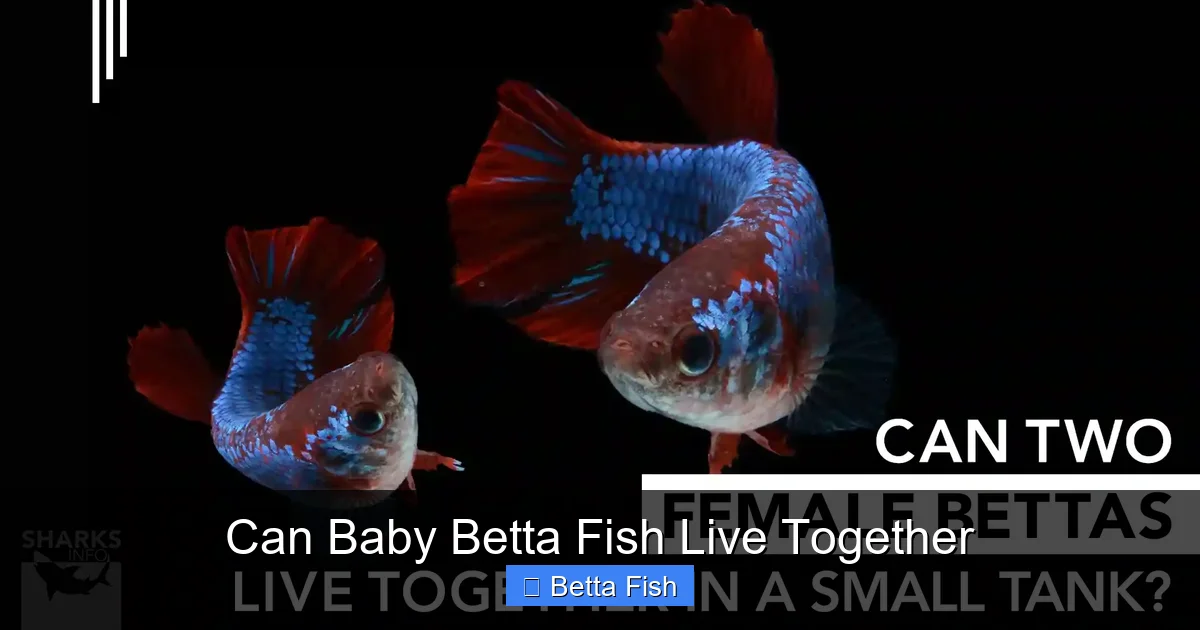
Visual guide about Can Baby Betta Fish Live Together
Image source: sharksinfo.com
Female‑only groups
Females tend to be less territorial, making them the easier choice for a community of baby bettas. A group of 4‑5 female fry can comfortably share a 20‑gallon tank with minimal conflict.
Mixed‑sex groups
Mixing genders adds complexity. Early on, fry may not recognize each other as “male” or “female,” but as they mature, the males will often start chasing females. If you decide to try a mixed group, keep the ratio low—one male to three females—and be ready to separate if aggression spikes.
Helpful resource
For a deeper dive into gender‑based compatibility, see our article on Can A Male And Female Betta Fish Live Together.
4. Feeding Strategies That Reduce Conflict
Multiple feeding spots
Scatter food across the tank or use a feeding ring with several openings. This prevents one dominant fry from monopolizing the meal.
Food type and frequency
Offer high‑quality fry food (microworms, baby brine shrimp) 2‑3 times daily in small portions. Over‑feeding creates waste, which can cloud water and increase stress.
Observation tip
Watch which fry eat first. If one consistently snatches all the food, consider a temporary separate feeding cup for the slower eaters.
5. Monitoring Behavior and Taking Action
Signs of bullying
- Chasing or nipping at another fry’s fins.
- One fry hiding constantly while others swim freely.
- Loss of color or slowed growth in a particular fry.
Intervention steps
- Identify the aggressor: Use a clear container to isolate the bully for a few hours.
- Re‑arrange décor: Move plants and rocks to break established territories.
- Consider separation: If aggression persists after 48 hours, move the bully to a separate tank.
When to expect changes
Most fry will settle into a hierarchy by the fourth week. After that, the dominant fish usually establishes a clear territory, and the rest adapt. However, rapid growth can reignite aggression, so keep a close eye on them for the first three months.
6. Long‑Term Outlook: From Fry to Adult
Preparing for adulthood
Even if your baby betta fish live together peacefully for months, you must plan for eventual separation. Adult males will almost always fight, and many females will still show territorial behavior.
Transition options
- Gradual split: Move half the group to a second tank once they reach 2‑3 inches.
- Solo housing: Keep the most aggressive fish alone in a 5‑gallon tank with minimal décor.
- Community tank: If you have a mixed‑sex group with calm females, consider adding peaceful tank mates like small rasboras or snails (see Can Snails And Betta Fish Live Together).
Final thoughts
In short, can baby betta fish live together? Yes, but only under the right conditions: ample space, plenty of hiding places, careful gender selection, and vigilant monitoring. Treat the fry stage as a trial period, and be ready to adapt as they grow.
Conclusion
Raising betta fry together can be a rewarding experience, offering a glimpse into the early life of these striking fish. By respecting their natural instincts, providing a well‑planted, spacious tank, and staying proactive about aggression, you give your baby bettas the best chance to thrive side by side. Remember, the goal isn’t to force perpetual peace but to create an environment where each fry can grow healthily until it’s time for a more permanent, individualized setup. With patience and a little know‑how, you’ll answer the question “can baby betta fish live together” with a confident “yes—if you do it right.”
Frequently Asked Questions
Can baby betta fish of different genders live together?
They can for a short period, but as males mature they may become territorial. Keep the ratio low (one male to several females) and be ready to separate if aggression appears.
How many baby bettas can I keep in a 10‑gallon tank?
Ideally no more than two to three fry. Each needs about 5 gallons of space to reduce stress and fighting.
Do I need a filter for a fry tank?
Yes, a gentle sponge filter provides essential biological filtration without creating strong currents that can stress delicate fry.
What plants are best for a baby betta community?
Java moss, Anubias, and floating duckweed are excellent because they create cover and are easy to maintain.
How often should I feed betta fry?
Feed small amounts 2‑3 times daily with microworms or baby brine shrimp. Over‑feeding can cloud water and increase aggression.
When should I separate baby bettas into individual tanks?
If you notice persistent bullying after the first month, or when the fry reach about 2‑3 inches, it’s time to consider splitting them into separate tanks.

