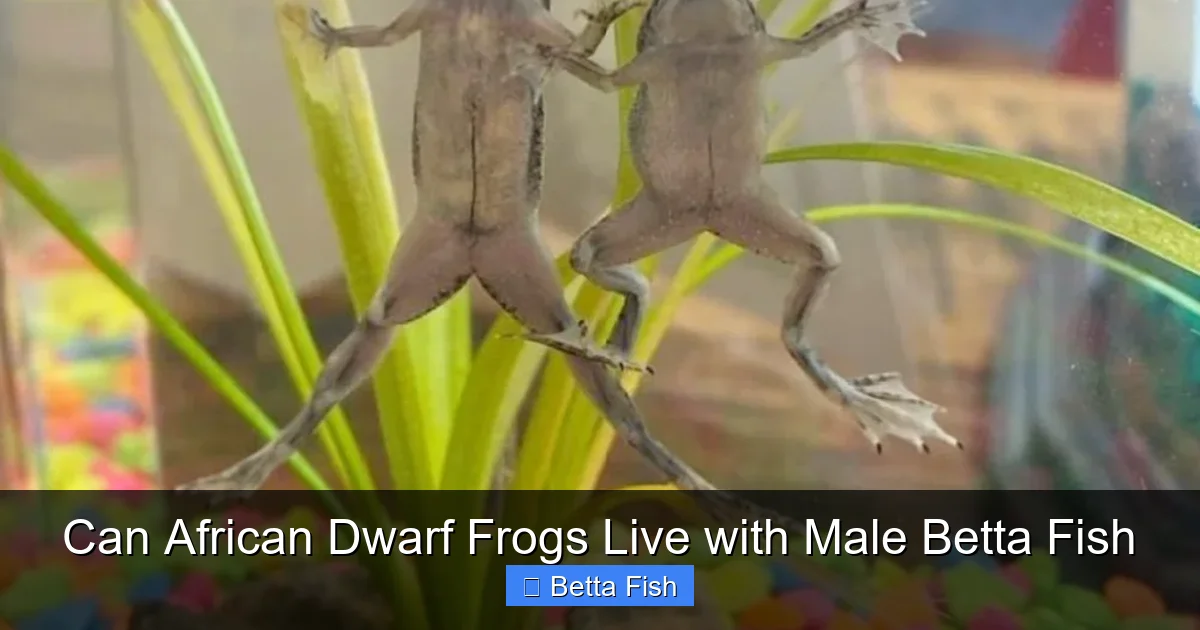
Can African Dwarf Frogs Live with Male Betta Fish

African dwarf frogs and male betta fish can sometimes coexist, but success depends on tank size, temperament, and careful monitoring. Provide plenty of hiding spots, maintain stable water parameters, and watch for aggression to ensure a peaceful community.
Key Takeaways
- Temperament matters: Both species can be territorial; choose a calm betta and a peaceful frog.
- Tank size is critical: A minimum of 20 gallons gives enough space for hiding and swimming.
- Water parameters must match: Keep temperature 74‑80°F, pH 6.5‑7.5, and soft to medium hardness.
- Provide plenty of cover: Live plants, caves, and PVC pipes reduce stress for both occupants.
- Monitor daily: Look for signs of stress, fin nipping, or frog distress and be ready to separate.
- Feeding strategies differ: Feed bettas protein‑rich pellets and frogs sinking foods or live foods.
- Backup plan: Always have a separate quarantine tank ready in case incompatibility appears.
📑 Table of Contents
- Introduction: A Curious Pair
- Understanding the Species
- Do Their Water Requirements Match?
- Tank Setup for a Peaceful Co‑habitation
- Behavioral Compatibility
- Feeding Both Residents
- Potential Risks and How to Mitigate Them
- Step‑by‑Step Guide to Introducing Your Betta and Frog
- When to Say “No”: Recognizing Deal‑Breakers
- Expert Tips and Tricks
- Conclusion: Can African Dwarf Frogs Live with Male Betta Fish?
- Further Reading
Introduction: A Curious Pair
If you’ve ever watched a male betta flaunt its brilliant fins and wondered whether a tiny African dwarf frog could share the spotlight, you’re not alone. Many hobbyists love the idea of a mixed‑species tank that looks lively yet stays manageable. The big question is simple: can African dwarf frogs live with male betta fish without drama?
In this guide we’ll walk through everything you need to know—temperament, water chemistry, tank layout, feeding, and the red‑flag signs that tell you it’s time to separate. By the end you’ll have a clear checklist to decide if your betta and frog can become tank‑mates or if they belong in their own homes.
Understanding the Species
Male Betta Fish
Male bettas (Betta splendens) are famed for their vivid colors and elaborate fins. They are naturally aggressive toward other males and sometimes toward similarly shaped fish. Their diet is protein‑heavy, and they thrive in warm, slightly acidic water.
Visual guide about Can African Dwarf Frogs Live with Male Betta Fish
Image source: media.leisureliving.com
African Dwarf Frogs
African dwarf frogs (Hymenochirus spp.) are fully aquatic, small (1‑1.5 in), and love to hide among plants. They are peaceful, nocturnal feeders, and need water that is warm (74‑80°F) and soft to medium‑hard. Unlike bettas, they breathe through their skin and need a well‑oxygenated surface.
Both species love similar temperature ranges, which is the first reason many hobbyists think they might get along.
Do Their Water Requirements Match?
Temperature
Both bettas and dwarf frogs do best between 74°F and 80°F. Maintaining this range with a reliable heater is easy in a 20‑gallon tank.

Visual guide about Can African Dwarf Frogs Live with Male Betta Fish
Image source: spectrapets.com
pH and Hardness
Bettas prefer pH 6.5‑7.5, while dwarf frogs are comfortable in the same range. Aim for a hardness of 5‑12 dGH. Using a gentle water conditioner will keep ammonia and nitrite at zero.
Filtration and Flow
Frogs need a calm surface for breathing, so a sponge filter or a low‑flow canister works best. Bettas also dislike strong currents, so the same filtration setup satisfies both.
Tank Setup for a Peaceful Co‑habitation
Size Matters
While a 10‑gallon tank might seem enough, it leaves little room for territories. A 20‑gallon long or larger gives each resident space to claim its own zone.

Visual guide about Can African Dwarf Frogs Live with Male Betta Fish
Image source: spectrapets.com
Hiding Places
- Live plants like Java fern, Anubias, and floating duckweed create natural cover.
- Artificial caves, PVC pipes, and ceramic pots provide extra refuge for the frog.
- Floating lily pads or a piece of bark give the betta a place to rest near the surface.
Substrate Choices
Fine sand or smooth gravel prevents damage to the frog’s delicate skin. Avoid sharp-edged stones that could injure the betta’s fins.
Behavioral Compatibility
Temperament Checks
Not all male bettas are alike. Some are docile and will ignore a slow‑moving frog, while others will chase any creature that resembles a fish. Before mixing, observe your betta’s reaction to a floating plastic frog or a gentle tap on the glass.
Signs of Stress
- Betta: Flaring, nipping, or constant hovering near the frog.
- Frog: Hiding all the time, loss of appetite, or abnormal breathing at the surface.
If you notice these behaviors, be prepared to separate them quickly.
Feeding Both Residents
Betta Diet
High‑quality betta pellets, frozen or live brine shrimp, and occasional bloodworms keep your male betta healthy.
Frog Diet
Dwarf frogs love bloodworms, brine shrimp, and specially formulated frog foods that sink. Feed them after the betta has finished to avoid competition.
Feeding Schedule
Two small feedings per day work well: morning for the betta, evening for the frog. This reduces the chance of the betta seeing the frog as food.
Potential Risks and How to Mitigate Them
Aggression
If the betta shows persistent aggression, a divider or a separate tank is the safest solution.
Health Concerns
Both species are sensitive to poor water quality. Perform 25% water changes weekly, test parameters, and keep the tank clean.
Diseases
Frogs can carry chytrid fungus, which is harmless to bettas but can spread to other amphibians. Quarantine new frogs for at least two weeks before introduction.
Step‑by‑Step Guide to Introducing Your Betta and Frog
1. Prepare the Tank
Set up the tank with plants, caves, and a low‑flow filter. Cycle the tank for at least four weeks.
2. Test Water Parameters
Ensure temperature, pH, and hardness are within the compatible range.
3. Acclimate the Frog
Use the drip method to slowly introduce the frog to the tank water over 30‑45 minutes.
4. Observe Initial Interactions
Watch for 24‑48 hours. If the betta flares but does not attack, you’re likely okay.
5. Adjust the Environment
Add more plants or rearrange decorations if the betta seems overly territorial.
When to Say “No”: Recognizing Deal‑Breakers
Even with perfect water and a spacious tank, some bettas simply cannot coexist with a frog. If you see any of the following, separate them immediately:
- Betta repeatedly nips at the frog’s tail or limbs.
- Frog stops eating and spends all time at the surface gasping.
- Visible injuries on either animal.
Having a backup 10‑gallon tank ready makes the transition painless.
Expert Tips and Tricks
- Use a thin layer of driftwood to create a natural barrier without blocking sight.
- Consider a floating leaf or lily pad that the frog can rest on while the betta swims above.
- Maintain a consistent feeding routine to reduce competition.
Conclusion: Can African Dwarf Frogs Live with Male Betta Fish?
In short, yes, African dwarf frogs can live with male betta fish under the right conditions. The key is a spacious, well‑planted tank, careful monitoring of temperament, and a commitment to excellent water quality. If you’re willing to invest time in observation and tank maintenance, this pairing can add a unique dynamic to your aquarium. However, always have a backup plan—some bettas simply won’t share.
By following the steps outlined above, you’ll give both your betta and dwarf frog the best chance at a harmonious cohabitation.
Further Reading
For more information on mixed‑species tanks, check out these helpful articles:
- Can Aquatic Frogs Live With Betta Fish
- What Fish Can Live With A Male Betta
- Can A Male Betta Live With Other Fish
Frequently Asked Questions
Can African dwarf frogs share a tank with a male betta?
Yes, they can coexist if the tank is large enough, water parameters match, and the betta shows a calm temperament.
What tank size is recommended for a betta and dwarf frog?
A minimum of 20 gallons is ideal to provide separate territories and plenty of hiding spots.
Do I need a heater for both species?
Both prefer 74‑80°F, so a reliable aquarium heater set within this range will keep them comfortable.
How often should I feed my dwarf frog?
Feed small amounts of sinking foods or live brine shrimp once or twice daily, preferably after the betta has finished eating.
What are the warning signs of incompatibility?
Frequent fin nipping, the frog gasping at the surface, loss of appetite, or visible injuries indicate the pair should be separated.
Can I keep more than one dwarf frog with a male betta?
It’s possible, but adding more frogs increases competition for space and may stress the betta. Start with one frog and monitor behavior before adding more.