Can a Goldfish and Betta Fish Live Together
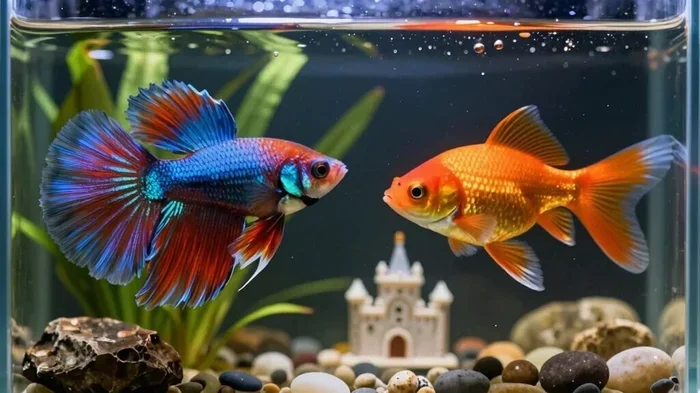
Can a goldfish and betta fish live together? The short answer is no — it is not recommended. Goldfish and bettas have very different water temperature needs, tank size requirements, and behavioral traits. Keeping them together often leads to stress, disease, and a shortened lifespan for one or both fish.
So, you are thinking about putting a goldfish and a betta fish in the same tank? Maybe you saw a cute video online, or you just love both fish and want them as tank mates. Either way, can a goldfish and betta fish live together is a question many new fish keepers ask — and the answer is more complicated than you might think.
The truth is, goldfish and bettas come from completely different environments. One prefers cold water. The other needs warm water. One grows huge. The other stays small. These differences make sharing a tank risky and often harmful. Before you make any decisions, it helps to understand what each fish needs and why mixing them can cause problems.
This guide breaks everything down for you. We will look at water conditions, tank size, behavior, diet, and health risks. By the end, you will know exactly whether this pairing is a good idea — and what you can do instead to keep your fish happy and healthy.
Key Takeaways
- Different water temperatures: Goldfish need cold water, while bettas thrive in warm water — making shared tanks risky.
- Tank size mismatch: Goldfish grow large and produce heavy waste, which bettas cannot tolerate.
- Behavioral conflicts: Bettas can be territorial, and goldfish may nip at betta fins.
- Disease risk increases: Mixing species raises the chance of spreading parasites and infections.
- Better alternatives exist: You can keep each fish in a well-planned tank suited to their individual needs.
- If you must try: Use a large tank with heavy filtration, plenty of hiding spots, and close monitoring.
- Know the signs: Learn to recognize stress and illness early to protect both fish.
📑 Table of Contents
Why Goldfish and Bettas Are Not a Good Match
At first glance, goldfish and bettas might seem like they could get along. Both are colorful freshwater fish that do well in home aquariums. But looks can be deceiving. Under the surface, these two species have very different needs that clash in important ways.
Water Temperature Needs
This is the biggest problem. Goldfish are cold-water fish. They do best in water temperatures between 65°F and 72°F (18°C to 22°C). Bettas, on the other hand, are tropical fish. They need warm water, ideally between 76°F and 82°F (24°C to 28°C).
You cannot satisfy both temperature ranges in a single tank. If you keep the water warm for your betta, your goldfish will be stressed. If you keep it cool for your goldfish, your betta will become sluggish and prone to illness. Over time, the wrong temperature weakens the immune system of both fish.
Some people try to find a middle ground. This almost never works. A temperature that is okay for one fish is usually harmful to the other. Can a goldfish and betta fish live together in a stable temperature? Not really — unless you want to constantly adjust the environment, which is stressful for everyone involved.
Tank Size and Waste Production
Goldfish grow much bigger than most people expect. Common goldfish can reach 10 to 12 inches, and some varieties grow even larger. They also produce a lot of waste. A single goldfish needs at least a 20-gallon tank, and bigger is always better.
Bettas do well in smaller tanks — a 5-gallon tank is the minimum recommended size. But putting a goldfish and a betta together means you need to meet the goldfish’s space needs. A small tank leads to poor water quality, which harms both fish.
Even in a large tank, goldfish waste can overload the filtration system. Ammonia and nitrite levels can spike quickly, which is dangerous for bettas. Bettas are especially sensitive to poor water conditions.
Behavioral Differences
Bettas are known for their territorial behavior. Male bettas, in particular, can be aggressive toward fish with long, flowing fins. Goldfish have flowing fins and slow swimming speeds, which can trigger a betta’s chasing or nipping behavior.
Goldfish are also curious and sometimes playful. They may bump into or nibble at a betta’s fins out of curiosity rather than malice. But even accidental fin damage can cause stress and open the door to infections.
Goldfish are also voracious eaters. They eat quickly and greedily, which means they often grab food before the slower-moving betta can get to it. This leads to the betta going hungry and the goldfish becoming overweight.
Water Conditions: A Closer Look
Water quality is the foundation of any healthy aquarium. When you mix two species with different needs, maintaining proper conditions becomes much harder. Here is a side-by-side look at what each fish requires.
Goldfish Water Preferences
- Temperature: 65°F to 72°F (18°C to 22°C)
- pH: 6.0 to 8.0
- Hardness: Soft to moderately hard
- Filtration: Strong filtration needed due to high waste
- Tank Size: Minimum 20 gallons for one goldfish
Betta Fish Water Preferences
- Temperature: 76°F to 82°F (24°C to 28°C)
- pH: 6.5 to 7.5
- Hardness: Soft to moderately hard
- Filtration: Gentle filtration preferred (bettas dislike strong currents)
- Tank Size: Minimum 5 gallons
As you can see, the temperature ranges do not overlap enough to create a safe zone for both fish. Even the pH ranges are slightly different. Can a goldfish and betta fish live together if you adjust the water carefully? Theoretically, maybe — but in practice, the stress of constantly balancing opposing needs takes a toll on both fish.
Health Risks of Keeping Them Together
Mixing goldfish and bettas raises several health concerns. These are not just theoretical — they are real risks that many fish keepers run into.
Disease Transmission
Different fish species can carry different diseases. A goldfish might be immune to a parasite that is deadly to a betta, or vice versa. When they share a tank, diseases spread easily. Common issues include ich (white spot disease), fin rot, and fungal infections.
Goldfish are also more likely to carry pathogens that do not affect them but can seriously harm bettas. Even a seemingly healthy goldfish can pass on something that makes your betta very sick.
Stress and Weakened Immune Systems
Stress is a silent killer in aquariums. When a fish feels threatened or uncomfortable, its immune system weakens. This makes it more vulnerable to diseases that it would normally fight off easily.
Both goldfish and bettas can become stressed in a shared tank. The betta may feel chased or outcompeted for food. The goldfish may feel cramped or too warm. Over time, chronic stress leads to poor health, faded colors, and a shorter lifespan.
Fin Damage
Betta fish have long, delicate fins. Goldfish have been known to nip at these fins, either out of curiosity or aggression. Even minor fin damage can lead to infections if the water quality is not perfect. And a stressed betta may flare and chase the goldfish, burning energy it needs to stay healthy.
If you are set on keeping both species, it is important to understand the risks. Can a goldfish and betta fish live together safely? Only in very rare and carefully managed setups — and even then, it is not recommended by most experienced aquarists.
What If You Already Have Them in the Same Tank?
If you currently keep a goldfish and a betta together, do not panic. Some fish do survive in these setups, even if it is not ideal. Here is what you should do right now.
- Test your water parameters immediately. Check ammonia, nitrite, nitrate, and pH levels. Any spikes are dangerous.
- Watch for signs of stress. Look for clamped fins, loss of color, rapid breathing, or hiding behavior in the betta. Watch for lethargy or erratic swimming in the goldfish.
- Feed the betta separately. Use a feeding ring or target-feed the betta to make sure it gets enough food.
- Consider a tank divider. If the fish are not getting along, a divider can keep them safe while still sharing the same water.
- Plan a long-term solution. The best option is usually to rehome one of the fish to a tank that suits its needs.
Many people who ask can a goldfish and betta fish live together already have both fish and are looking for a fix. The honest answer is that separating them is almost always the kindest choice.
Better Tank Mate Options for Each Fish
If you love both goldfish and bettas, the best solution is to keep them in separate tanks — each set up for their specific needs. But if you want tank mates for one or both species, there are much better options than mixing them together.
Good Tank Mates for Bettas
- Neon tetras: Small, peaceful, and fast enough to avoid betta aggression.
- Snails: Nerite snails and mystery snails are great companions. They do not bother bettas and help clean the tank.
- Ghost shrimp: Inexpensive and entertaining. Most bettas ignore them.
- Corydoras catfish: Peaceful bottom-dwellers that stay out of the betta’s way.
For more ideas, check out our guide on betta fish and goldfish together to understand why this pairing does not work well.
Good Tank Mates for Goldfish
- Other goldfish: Goldfish are social and do well with other goldfish of similar size.
- White cloud mountain minnows: Cold-water fish that can tolerate the same temperatures as goldfish.
- Azalea shrimp: Hardy shrimp that can handle cooler water.
- Weather loaches: Peaceful bottom-dwellers that do well in goldfish tanks.
For more information on compatible companions, read our article on betta fish live in a tank with goldfish and male betta fish live with a goldfish to explore why these combinations are problematic.
Expert Tips for Keeping Either Fish Happy
Whether you keep a goldfish, a betta, or both in separate tanks, these tips will help you provide the best care possible.
For Goldfish
- Use a tank that is at least 20 gallons per goldfish.
- Install a powerful filter to handle heavy waste production.
- Keep the water temperature between 65°F and 72°F.
- Feed a varied diet of flakes, pellets, and fresh vegetables.
- Do regular water changes — 25% to 50% weekly for young goldfish.
For Bettas
- A 5-gallon tank is the minimum; 10 gallons is better.
- Use a gentle filter to avoid strong currents.
- Keep the water temperature between 76°F and 82°F with a heater.
- Feed high-quality betta pellets or frozen bloodworms.
- Add plants and hiding spots to reduce stress.
Conclusion
The answer to can a goldfish and betta fish live together is clear: it is not a good idea. The temperature differences alone make it nearly impossible to keep both fish healthy in the same tank. Add in the waste production, behavioral conflicts, and disease risks, and the case against mixing them becomes even stronger.
Both goldfish and bettas are wonderful pets that deserve proper care. Giving each fish its own well-set-up tank is the best way to ensure they live long, happy, and healthy lives. If you are new to fish keeping, start with one species, learn its needs, and build your confidence from there. Your fish will thank you for it.
Before you add any new fish to your aquarium, always research the species carefully. A little planning goes a long way toward avoiding heartbreak and creating a thriving aquatic environment for your fish.
Frequently Asked Questions
Can a goldfish and betta fish live together in a large tank?
Even in a large tank, the temperature and behavioral differences make this pairing risky. Goldfish need cold water and bettas need warm water. These conflicting needs make it very hard to keep both fish healthy long-term.
What happens if a betta bites a goldfish?
Bettas may nip at goldfish fins, especially if the goldfish has long or flowing fins. This can cause stress, open wounds, and secondary infections in the goldfish. It is best to prevent this by keeping them in separate tanks.
Can female bettas live with goldfish?
Female bettas are generally less aggressive than males, but they still have different temperature and water needs than goldfish. The species mismatch makes them unsuitable tank mates regardless of the betta’s gender.
Do goldfish eat betta food?
Yes, goldfish are opportunistic eaters and will eat almost anything, including betta food. This is a problem because goldfish need different nutrients than bettas. Overfeeding betta food to goldfish can lead to health issues.
Is it cruel to keep a goldfish and betta together?
Most experts consider it unwise and potentially harmful. The different environmental needs mean at least one fish will be living in suboptimal conditions, which can shorten its lifespan and cause ongoing stress.
Can you use a tank divider to keep them together?
A tank divider can work as a temporary solution. It allows both fish to share the same water and visual space while preventing direct contact. However, it does not solve the temperature problem, so it is not a long-term fix.