Can a Betta Fish See in the Dark

Can a betta fish see in the dark? The short answer is no, not very well. Betta fish have small eyes adapted for daylight, and their night vision is quite limited. However, they can sense movement and light changes in low-light conditions using other senses. Understanding how betta fish vision works helps you create a healthier, more comfortable aquarium environment for your colorful companion.
Key Takeaways
- Betta fish cannot see well in the dark: Their eyes are built for daylight, not nighttime vision.
- They use other senses to navigate: Lateral lines and smell help bettas move around when it is dark.
- A consistent light cycle matters: Bettas need 8-12 hours of light and equal darkness to stay healthy.
- Leaving them in total darkness harms health: Too much darkness causes stress and disrupts sleep patterns.
- You can leave betta fish in the dark briefly: Short periods are fine, but permanent darkness is not recommended.
- Tank setup affects their comfort: Proper aquarium lighting and hiding spots make a big difference.
📑 Table of Contents
Can a Betta Fish See in the Dark?
If you own a betta fish, you have probably wondered about their vision at night. The question “can a betta fish see in the dark” comes up a lot among fish keepers. The answer might surprise you. Bettas are beautiful, colorful fish with big personalities, but their eyesight in low light is not their strongest feature.
Betta fish have small eyes compared to their body size. These eyes work best during the day. At night, they rely on other senses to get around. Knowing how your betta sees the world helps you take better care of them. Let us dive deep into this topic and explore everything you need to know about betta fish vision in dark conditions.
Understanding your fish’s needs goes beyond just feeding them. It means creating an environment where they feel safe and comfortable. Light plays a huge role in that. So let us break down exactly what happens when the lights go out in your aquarium.
How Betta Fish Eyes Work
Betta fish eyes are designed for daylight. They have a structure called the tapetum lucidum in very limited amounts, which is the reflective layer behind the retina that helps nocturnal animals see in the dark. Bettas lack a strong version of this. That means their night vision is much weaker than creatures like cats or owls.
During the day, bettas can see colors quite well. They can pick up on reds, blues, and greens. This is why betta fish colors often look so vivid in a well-lit tank. But when the lights go off, their visual sharpness drops significantly.
Here are some key facts about betta fish eyes:
- Betta eyes are adapted for bright, natural light conditions.
- They cannot see well in complete darkness.
- They detect movement better than fine details at night.
- Their eyes adjust slowly to changes in light.
- Bright lights can actually damage their eyes over time.
So if you have been asking yourself, “can my betta fish see in the dark,” the honest answer is that their vision becomes very limited. They are not completely blind, but they cannot navigate like they do during the day.
What Other Senses Do Bettas Use?
Even though betta fish vision weakens in the dark, they are not helpless. Bettas have two powerful backup systems. The first is the lateral line system. This is a series of tiny sensors running along each side of their body. These sensors detect vibrations and pressure changes in the water.
Think of it like a built-in radar. Your betta can feel where objects are, even when they cannot see them. This helps them avoid walls, plants, and other decorations in a dark aquarium.
The second sense is smell. Bettas have a strong sense of smell that helps them detect food and recognize their surroundings. This is why bettas often swim to the surface when you approach the tank, even before you drop in food.
So while can betta fish see their food in the dark is a common question, the truth is they find food using smell and vibrations more than sight in low-light settings.
What Happens in a Dark Aquarium
A completely dark aquarium affects betta fish in several ways. Some of these effects are immediate, while others build up over time. Let us look at what happens when your tank is too dark or when the lights are off for too long.
Short-Term Effects of Darkness
When you turn off the aquarium lights, your betta does not instantly panic. In the short term, they will settle into a resting state. Bettas are not fully nocturnal, but they do rest at night. They might hover near plants or hide behind decorations.
During this rest period, their betta fish behavior at night changes. They become less active and responsive. If you shine a light in the tank, they might startle and swim away quickly. This reaction shows that their eyesight in low light is not sharp enough to detect movement immediately.
Some owners wonder, “can you leave betta fish in the dark” overnight. The answer is yes. A natural day-and-night cycle is actually healthy for them. Just make sure the darkness is not permanent or unexpected.
Long-Term Effects of Permanent Darkness
Leaving a betta in permanent darkness is a different story. Over time, this causes serious problems. Here is what can happen:
- Stress builds up: Bettas need a predictable light cycle to feel secure.
- Color fades: Without light, their vibrant colors become dull.
- Sleep patterns break: Bettas need darkness to sleep well, but total darkness all the time confuses their internal clock.
- Appetite drops: A stressed betta eats less and may refuse food.
- Immune system weakens: Stressed fish get sick more easily.
- They cannot see food well: Feeding becomes harder when they cannot spot food particles.
If you have been considering keeping your tank in the dark all the time, please reconsider. Your betta needs light to thrive. The key is balance, not total darkness.
Can Betta Fish Survive in the Dark?
Technically, a betta can survive in the dark for short periods. But survival is not the same as thriving. A fish living in permanent darkness will have a much lower quality of life. They may become lethargic, lose their bright colors, and develop health issues over time.
If you are worried about “can betta fish survive in the dark,” the better question is “should they live in the dark.” The answer is clearly no. Proper lighting is an essential part of responsible betta care.
Betta Fish Behavior at Night
Understanding how your betta acts at night gives you insight into their world. Most bettas become less active after the lights go off. They find a comfortable spot to rest, often near plants or in cozy corners of the tank.
Do Bettas Sleep in the Dark?
Yes, bettas do sleep in the dark. In fact, darkness helps them rest better. A betta that gets proper darkness at night will be more active and colorful during the day. If your tank is always lit, your fish might become exhausted and stressed.
Some owners ask, “can you leave your betta fish in the dark” while they are at work or school. This is perfectly fine. In fact, it mimics their natural habitat where daylight and darkness follow a regular pattern.
Nighttime Swimming and Restlessness
Sometimes you might notice your betta swimming around at night. This can happen for a few reasons:
- The tank light is still on or there is ambient light from a nearby window.
- The water temperature is too warm or too cold.
- They are hungry and looking for food.
- They feel stressed or threatened by tank mates.
- The filter noise is too loud and keeps them awake.
If your betta is restless at night, check these factors first. A peaceful, consistent environment helps them sleep better when the lights go out.
Setting Up the Right Light Cycle
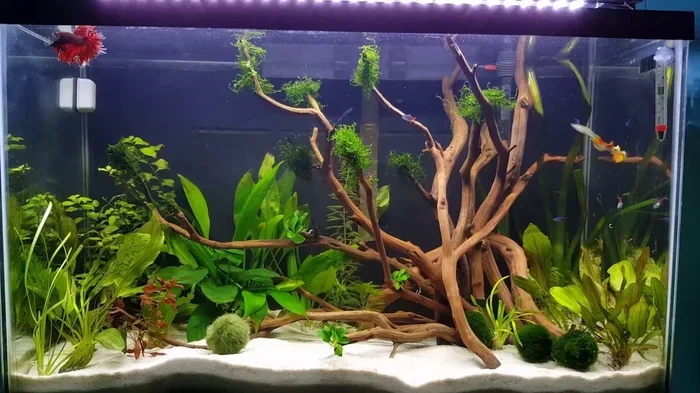
A good light cycle is one of the simplest things you can do for your betta. It affects their sleep, mood, colors, and overall health. Here is how to set up the perfect lighting schedule.
Recommended Light Schedule
Follow this simple routine for a happy betta:
- Turn on the aquarium light in the morning. Aim for 8 to 10 hours of light per day.
- Keep the light consistent. Turn it on and off at the same times every day.
- Turn off the light at night. Give your betta 10 to 14 hours of darkness.
- Avoid sudden light changes. Dim the room lights before turning on the tank light.
This schedule mimics natural daylight patterns. Your betta will feel more comfortable and behave more naturally.
Types of Aquarium Lighting
Not all lights are equal. Here is a quick comparison of common options for a betta tank:
| Light Type | Pros | Cons |
|---|---|---|
| LED Aquarium Light | Energy efficient, low heat, adjustable | Higher upfront cost |
| Fluorescent Strip Light | Affordable, widely available | Can produce excess heat |
| Incandescent Bulb | Cheap, easy to find | Too much heat, not ideal |
| Natural Sunlight | Free, full spectrum | Uncontrollable, algae growth |
LED lights are the best choice for most betta tanks. They provide a clean, bright light without overheating the water. Plus, many LED fixtures let you control the intensity, which is great for mimicking a natural day-and-night cycle.
Quick Tips for Lighting Your Betta Tank
- Place the tank away from direct sunlight. It causes temperature swings and algae blooms.
- Use a timer. This ensures your betta gets consistent light and darkness every day.
- Do not leave the light on 24/7. This stresses your fish and ruins their sleep.
- If you work night shifts, use a dimmable light so you can simulate nighttime when you sleep.
- Add floating plants. They soften the light and make your betta feel more secure.
Common Mistakes About Betta Fish Darkness
Many new betta owners make mistakes when it comes to lighting and darkness. Avoid these common errors to keep your fish healthy and happy.
Mistake 1: Keeping the Tank Light On All the Time
This is one of the worst things you can do. Constant light causes stress, disrupts sleep, and encourages algae growth. Your betta needs a clear day-and-night cycle. If you forget to turn off the light, get a cheap timer. It makes a huge difference.
Mistake 2: Placing the Tank in a Dark Room
Some people keep betta tanks in windowless rooms or closets. While this might seem peaceful, it leaves the fish without any natural light cues. Bettas need some light exposure to maintain their colors and stay active.
Mistake 3: Sudden Light Changes
Imagine someone shining a flashlight in your face while you are sleeping. That is what sudden light does to your betta. Always transition gradually. Dim the room lights before turning on the tank light, and vice versa at night.
Mistake 4: Ignoring the Need for Darkness
Some owners think more light is better. It is not. Bettas need darkness to rest properly. Without it, they become stressed and their health declines. If you are ever unsure whether you should “leave betta fish in the dark” at night, remember that darkness is their natural resting state.
Expert Insights on Betta Fish Vision
Fish biologists have studied betta vision extensively. Here are some expert insights that every betta owner should know.
Betta fish see best in the 450 to 700 nanometer range. This covers blue, green, and red wavelengths. They can distinguish between these colors during the day. However, in low light, their color perception drops sharply.
Their eyes adjust slowly to darkness. This means if you turn off the light suddenly, your betta will be disoriented for a few minutes. Give them time to adjust. This is why gradual light changes matter so much.
Bettas can detect polarized light. This is a unique ability that helps them navigate and find food. Even in slightly dim conditions, this sense gives them an edge over other fish that rely solely on vision.
So while the answer to “can a betta fish see in the dark” is mostly no, they are not completely without visual abilities at night. Their other senses make up for the gap, but they still need proper light to function at their best.
Conclusion
So, can a betta fish see in the dark? Not very well. Their betta fish vision is designed for daylight, and they struggle in complete darkness. However, they are not helpless. With the lateral line system and strong sense of smell, they navigate their world even when light is limited.
The most important takeaway is this: your betta needs a balanced light cycle. Give them 8 to 10 hours of light and 10 to 14 hours of darkness every day. Avoid permanent darkness, sudden light changes, and constant illumination. These simple steps go a long way in keeping your betta healthy, colorful, and happy.
If you want to learn more about how bettas interact with their environment, check out our guide on can my betta fish see in the dark for deeper insights. And if you are curious about nighttime care, read our article on can you leave betta fish in the dark for practical tips on managing your tank after hours.
Remember, a well-lit tank is a happy tank. Your betta will thank you with vibrant colors, active behavior, and a long, healthy life.
Frequently Asked Questions
Can a betta fish see in total darkness?
No, betta fish cannot see in total darkness. Their eyes are adapted for daylight, and they have very limited night vision. In complete darkness, they rely on their lateral line system and sense of smell to navigate and find food.
How long can I leave my betta fish in the dark?
Leaving your betta in the dark overnight is perfectly fine and actually recommended. A natural day-and-night cycle with 10 to 14 hours of darkness helps your betta rest and maintain healthy sleep patterns.
Do betta fish need light at night?
No, betta fish do not need light at night. In fact, darkness is essential for their rest. Keeping the light on 24/7 causes stress, disrupts their sleep cycle, and can lead to health problems over time.
Can betta fish find food in a dark tank?
Yes, bettas can find food in a dark tank using their sense of smell and the lateral line system that detects vibrations. However, their ability to see food in the dark is very limited, so regular feeding during daylight hours is best.
What happens if I keep my betta in the dark all the time?
Keeping a betta in permanent darkness causes stress, faded colors, appetite loss, and a weakened immune system. Bettas need a balanced light cycle to stay healthy, vibrant, and active. Total darkness should only be part of their natural night cycle.
Is it okay to use a night light in a betta tank?
A very dim night light is okay if you want to observe your fish at night. However, any light at night can disrupt your betta’s sleep. If you must use one, choose a dim, warm-colored light and keep it as brief as possible.