Are Betta Fish Sensitive to Light
Yes, betta fish are sensitive to light, and understanding this is key to keeping your pet healthy and stress-free. The right aquarium lighting setup can improve your betta’s color, appetite, and overall well-being, while the wrong setup can cause stress and health problems. In this guide, we cover everything you need to know about betta fish lighting, including the best types, schedules, and common mistakes to avoid.
Key Takeaways
- Betta fish are highly sensitive to light: Both natural and artificial light affect their behavior, sleep, and health. Proper lighting is not just about looks, it is about your fish’s comfort.
- LED lights are a safe choice: When set correctly, LED aquarium lights provide the right intensity without overheating the tank or stressing your betta.
- A consistent light schedule matters: Betta fish thrive on a 8 to 12 hour light cycle. Irregular schedules can disrupt their circadian rhythm and cause stress.
- Too much light is harmful: Excessive brightness or prolonged exposure can lead to betta fish stress, poor sleep, and even algae overgrowth in the tank.
- Watch for stress signals: Clamped fins, hiding, and loss of appetite are signs your betta may be uncomfortable with the current lighting setup.
- Dark periods are essential: Your betta needs uninterrupted darkness to rest. A timer is the easiest way to ensure a proper photoperiod.
📑 Table of Contents
- Are Betta Fish Sensitive to Light? Everything You Need to Know
- What Does It Mean for Betta Fish to Be Sensitive to Light?
- How Light Affects Your Betta Fish’s Health
- The Best Light Setup for Betta Fish
- Signs Your Betta Fish Is Stressed by Light
- How to Create the Perfect Lighting Schedule for Your Betta
- Common Mistakes With Betta Fish Lighting
- Conclusion: Are Betta Fish Sensitive to Light?
Are Betta Fish Sensitive to Light? Everything You Need to Know
So, are betta fish sensitive to light? The short answer is yes. Betta fish are very much affected by the light in their environment. Whether it is sunlight streaming through a window or a bright LED mounted on your aquarium, light plays a major role in how your betta feels, behaves, and stays healthy.
Many new betta owners do not think twice about lighting. They set up a tank, drop in a plant or two, and leave the light on for hours without a second thought. This is a common mistake. Betta fish lighting is one of those topics that seem small but actually have a big impact. Getting it right means a more active, colorful, and happy fish. Getting it wrong can lead to stress, illness, and a dull-looking betta.
In this guide, we will walk you through everything about how betta fish react to light, what the best lighting choices are, and how to set up a schedule that keeps your fish comfortable. If you have ever wondered whether your betta is stressed by the glow of its tank, keep reading.
What Does It Mean for Betta Fish to Be Sensitive to Light?
Being sensitive to light means that your betta notices and reacts to changes in brightness and light duration. Unlike some hardy species, bettas do not handle sudden or extreme lighting well. Their bodies respond to light in several ways.
How Light Affects Their Behavior
Bettas are crepuscular creatures. That means they are most active during dawn and dusk. In the wild, they live in shallow, slow-moving waters in Southeast Asia where natural light changes gradually throughout the day. They use light cues to know when to swim, eat, and rest.
When you keep a betta in a tank, the lighting you provide replaces those natural cues. If the light is too harsh, too bright, or left on too long, your betta can become confused. Some bettas become agitated and swim frantically. Others shut down and hide in corners. Neither reaction is good.
You might also notice your betta changing color based on the lighting. A well-lit tank can bring out vibrant blues, reds, and greens. But if the light is too intense, those same colors may look washed out or cause your betta to darken as a stress response.
Are Betta Fish Afraid of Light?
This is a question many beginners ask. The answer depends on the type and intensity of light. Are betta fish afraid of light? Not necessarily afraid, but they can certainly become uncomfortable with certain lighting conditions. Sudden bright flashes, direct sunlight, or very strong LEDs can startle them. Over time, this fear turns into chronic stress.
If your betta darts away every time you turn on the tank light, that is a clear sign something is off. It does not mean you need to remove the light entirely. It means you need to adjust the setup.
How Light Affects Your Betta Fish’s Health
Light does more than just affect your betta’s mood. It directly impacts health. Here are the main ways betta fish are affected by light.
Sleep Quality and Rest
Bettas need darkness to sleep properly. Without enough dark time, they become sleep-deprived. A sleep-deprived betta is more likely to get sick, eat less, and lose its vibrant colors. Think of it like this, you would not sleep well if someone shone a desk lamp on your face all night. Your betta feels the same way.
A good rule is to give your betta 8 to 10 hours of darkness every day. Some aquarists use a small moonlight feature or a dim blue LED to provide gentle nighttime illumination without disturbing rest.
Stress and Immune System
Betta fish stress is one of the biggest problems caused by bad lighting. When a betta is stressed, its immune system weakens. This opens the door to infections, fin rot, and other diseases. Stress can also cause behavioral issues like aggression, lethargy, or loss of appetite.
Stress from light often comes from two sources. The first is light intensity, where the bulb is simply too bright. The second is light duration, where the light stays on too many hours. Both can be fixed with simple adjustments.
Algae Growth and Water Quality
Too much light does not just affect your fish. It also fuels algae growth in the tank. Algae blooms can dirty the water, reduce oxygen levels, and create a toxic environment. This is another indirect way that light impacts your betta’s health. Keeping light hours controlled helps keep algae in check and water conditions stable.
The Best Light Setup for Betta Fish
Choosing the right light for your betta tank can feel overwhelming with so many options available. Not all aquarium lights are created equal, and what works for a goldfish tank might be terrible for a betta. Here is what you need to know.
LED Lights: The Top Choice
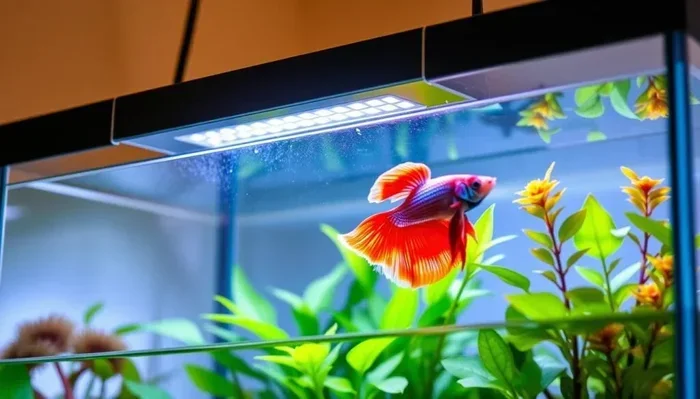
Are LED fish tank lights okay to leave on betta? Yes, when used correctly. LED lights are the best option for most betta owners. They produce minimal heat, come in a range of color temperatures, and allow you to control brightness easily.
Here is why LEDs work so well for bettas:
- Low heat output keeps water temperature stable.
- Available in dim settings perfect for sensitive bettas.
- Energy efficient and long lasting.
- Many come with built-in timers.
When shopping for an LED, look for one that allows you to adjust brightness. A light that can run at around 20 to 40 percent intensity is often perfect for a betta tank. Avoid high-wattage LEDs designed for reef tanks or planted aquariums with high-light plants. Those are way too intense for a betta.
Other Lighting Options
Fluorescent tubes are another option. They are affordable and widely available. However, they generate more heat and are harder to dim. Incandescent bulbs are not recommended at all. They produce too much heat and offer poor light quality. Are betta fish sensitive to artificial light? They can be, especially if the artificial light is harsh or runs for too long. Always lean toward adjustable, cooler options.
Natural Light vs. Artificial Light
Some owners place their betta tank near a window to use natural light. While this sounds nice, it is risky. Sunlight causes temperature swings that can shock your betta. It also comes and goes unpredictably, making it hard to maintain a consistent photoperiod. Artificial light gives you full control, which is exactly what your betta needs.
Signs Your Betta Fish Is Stressed by Light
Not sure if your betta is bothered by the lighting? Watch for these clear warning signs. Catching these early can prevent bigger health problems down the road.
Behavioral Signs
- Hiding constantly: Your betta retreats to corners or behind decorations whenever the light is on.
- Clamped fins: Fins held close to the body signal discomfort or stress.
- Rapid swimming: Frantic movement after the light turns on suggests alarm.
- Loss of appetite: A stressed betta often ignores food.
- Glass surfing: Swimming against the tank walls can indicate unease.
Physical Signs
- Dulling of color: A once-vibrant betta becomes pale under prolonged light stress.
- Darkening of body: Some bettas turn darker as a stress response.
- White spots or fungus: A weakened immune system from chronic stress leads to visible health issues.
If you notice any combination of these signs, it is time to evaluate your lighting setup. In many cases, a simple change in bulb type or schedule can make a dramatic difference. You can also check out our guide on whether betta fish are sensitive to water temperature, as temperature and light stress often go hand in hand.
How to Create the Perfect Lighting Schedule for Your Betta
Setting up a consistent aquarium lighting schedule is one of the simplest yet most powerful things you can do for your betta. Here is how to do it right.
Step 1: Choose the Right Duration
Aim for 8 to 12 hours of light per day. Most experienced aquarists recommend starting at 10 hours on and 14 hours off. This mimics a natural day-night cycle and gives your betta plenty of rest. Avoid going beyond 12 hours of light, as this encourages algae growth and can tire out your fish.
Step 2: Use a Timer
The easiest way to keep things consistent is with an automatic timer. Plug your LED light into a simple outlet timer and set it to turn on and off at the same time every day. This removes guesswork and ensures your betta experiences a reliable routine. Betta fish thrive on predictability.
Step 3: Dim the Light if Needed
If your LED has a brightness control, start at the lowest setting and gradually increase until your betta seems comfortable. A healthy betta will explore the tank, display open fins, and show interest in food. If your fish seems hesitant or hides, dim it down a notch.
Step 4: Avoid Sudden Changes
Never turn the tank light on in a pitch-dark room all at once. Instead, use a light with a gradual ramp-up feature or simply turn on a room light first. This prevents a jarring shock to your betta’s system. Similarly, do not leave the room dark while the tank light blazes on.
- Always use a timer for consistent light cycles.
- Start with low brightness and increase gradually.
- Never place your tank in direct sunlight.
- Consider a moonlight feature for nighttime ambiance.
- Keep the light schedule the same, even on weekends.
Common Mistakes With Betta Fish Lighting
Even experienced fish keepers make lighting mistakes. Here are the most common ones to watch out for.
Leaving the Light On Overnight
This is the number one mistake. Some people forget to turn off the tank light or leave it on to see their betta at night. This disrupts sleep and causes chronic stress. Your betta needs dark hours to rest and recover. Always turn off the light when you go to bed.
Using the Wrong Type of Light
Not every light sold as an aquarium light is suitable for bettas. High-intensity lights designed for reef tanks or heavily planted tanks are too strong. They can overheat the water and overwhelm your fish. Stick to low to medium intensity LEDs designed for small tanks.
Ignoring the Photoperiod
The term photoperiod refers to the length of light exposure in a 24-hour cycle. Ignoring this concept means you risk over-lighting your tank. Without a defined photoperiod, your betta has no idea when to be active and when to rest. A timer solves this problem instantly.
Relying Only on Room Light
Some owners think ambient room light is enough for a betta. While it is better than nothing, it is usually inconsistent. Rooms get dark at different times depending on curtains, furniture, and time of day. Your betta benefits from a dedicated aquarium light with a predictable schedule. This also ties into making sure your betta has the right environment overall, including proper filtration and temperature.whether betta fish are supposed to have a filter.
Forgetting to Monitor How Your Betta Reacts
Every betta is different. What works for one fish might not work for another. Pay attention to your betta’s behavior after lighting changes. If something feels off, adjust and observe again. Your fish will tell you what it needs if you watch closely.
Professional aquarists recommend treating your betta’s lighting like you would treat your own sleep environment. A dark, quiet room helps you sleep well. The same principle applies to your fish. Consistent, moderate lighting with plenty of dark time leads to the healthiest and most colorful bettas. If you are ever unsure about your setup, consider consulting an aquatic specialist or visiting a reputable fish store for personalized advice. Remember, understanding whether are betta fish sensitive to artificial light and how to manage it is a cornerstone of responsible betta ownership.
Conclusion: Are Betta Fish Sensitive to Light?
So, are betta fish sensitive to light? Absolutely. Light affects nearly every aspect of your betta’s life from behavior and sleep to health and color. The good news is that with a few simple adjustments, you can create a lighting setup that keeps your betta thriving.
Choose a gentle LED light, set a consistent schedule with a timer, and watch how your betta responds. Avoid the common mistakes of over-lighting and irregular schedules. Provide plenty of dark time for rest and always make changes gradually. Your betta will reward you with vibrant colors, active swimming, and a happy, healthy life.
Remember, a well-lit tank is not about making your aquarium look great, although that is a nice bonus. It is about creating an environment where your betta feels safe, comfortable, and truly at home. Take the time to get your betta fish lighting right, and you will see the difference in every splash and shimmer of your beautiful fish.
Frequently Asked Questions
Are betta fish sensitive to light at night?
Yes, betta fish are very sensitive to light at night. They need darkness to sleep and recover. Leaving the tank light on overnight disrupts their rest, causes stress, and can weaken their immune system over time. Always turn off your tank light before bed.
Can a light be too bright for a betta fish?
Absolutely. A light that is too bright can cause stress, clamped fins, hiding behavior, and even color fading in your betta. Choose a low to medium intensity LED and adjust the brightness until your fish appears relaxed and active. If your betta hides whenever the light is on, it is likely too bright.
How many hours of light does a betta fish need?
A betta fish needs about 8 to 12 hours of light per day. A 10-hour light cycle with 14 hours of darkness is a great starting point. Use a timer to keep the schedule consistent every single day. This mimics a natural day-night rhythm and supports healthy sleep patterns.
What type of light is best for betta fish?
LED lights are the best choice for betta fish. They produce little heat, are energy efficient, and allow you to adjust brightness easily. Look for a low to medium intensity LED designed for small aquariums. Avoid high-wattage bulbs and fluorescent tubes that generate excess heat and cannot be dimmed.
Do betta fish like natural sunlight?
While betta fish can benefit from some natural light, direct sunlight is risky. It causes rapid temperature changes that can shock your fish and encourages heavy algae growth. Artificial lighting with a timer gives you better control and a more consistent photoperiod that your betta will appreciate much more.
How can I tell if my betta is stressed by the light?
Common signs include hiding constantly, clamped fins, rapid or erratic swimming, loss of appetite, and dulling colors. If your betta shows these behaviors whenever the light is on, try dimming it or reducing the daily light hours. A gradual adjustment to a gentler setup usually resolves the issue within a few days.