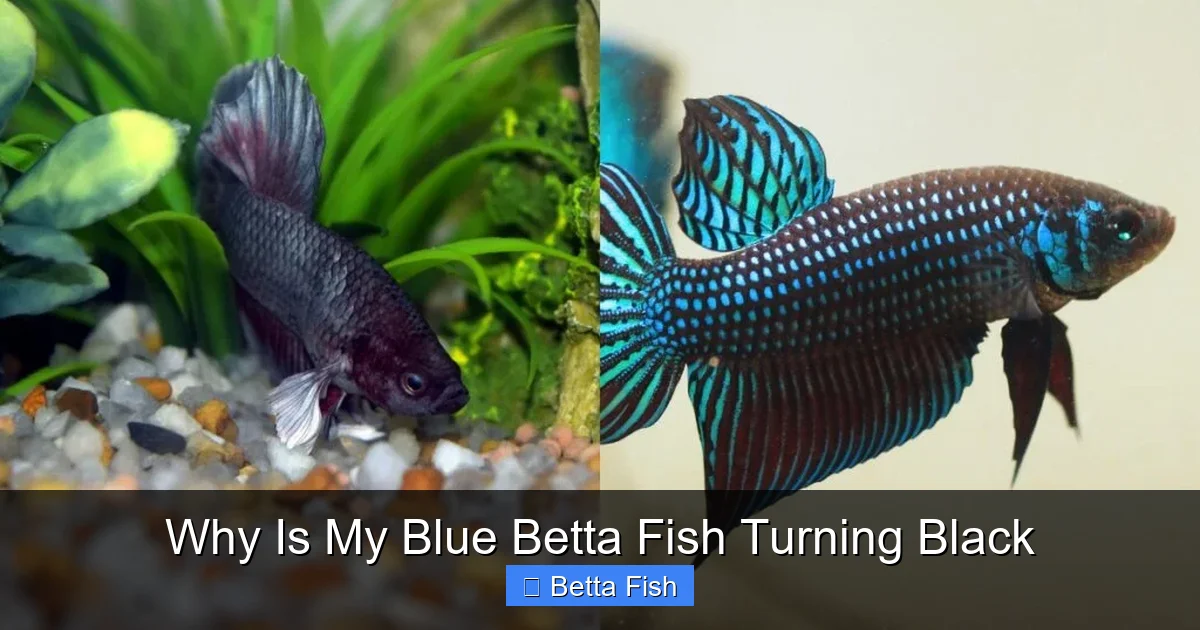
Seeing a once‑bright blue betta turn black can be alarming, but it’s often a sign of stress, disease, or water issues. By checking water parameters, diet, and looking for health symptoms, you can act fast to prevent permanent color loss and keep your fish thriving.
Key Takeaways
- Water quality is the biggest factor: Poor parameters trigger stress and pigment loss.
- Illnesses like ich or fungal infections cause black spots: Early detection and treatment are crucial.
- Stress from over‑feeding, aggression, or improper lighting can fade colors: Create a calm, stable environment.
- Genetics and natural color change: Some bettas naturally darken with age.
- Proper diet restores vibrancy: Include color‑enhancing foods rich in carotenoids.
- Regular tank maintenance prevents most problems: Weekly water changes and filter checks are a must.
- Quick action saves your fish: Identify the cause within 24‑48 hours for the best outcome.
📑 Table of Contents
- Introduction: When Your Blue Betta Starts Turning Black
- 1. Water Quality – The Silent Color Killer
- 2. Health Problems That Turn Skin Black
- 3. Stressors That Cause Color Fading
- 4. Natural Color Change – When Black Is Normal
- 5. Practical Steps to Restore and Preserve Color
- Conclusion: Turning Concern Into Care
Introduction: When Your Blue Betta Starts Turning Black
Betta fish are famous for their dazzling blues, reds, and purples. So when a prized blue betta begins to lose its brilliance and turn black, it feels like a personal crisis. You might wonder, “why is my blue betta fish turning black?” The answer isn’t always simple, but it usually points to one or more underlying issues in the fish’s environment or health.
In this guide we’ll walk through the most common reasons behind the darkening, show you how to spot warning signs, and give you practical, step‑by‑step solutions. By the end, you’ll know exactly what to check, how to treat the problem, and how to keep your betta looking its best for years to come.
1. Water Quality – The Silent Color Killer
Betta fish are very sensitive to the chemistry of their water. Even small fluctuations can stress them enough to lose pigment.

Visual guide about Why Is My Blue Betta Fish Turning Black
Image source: as2.ftcdn.net
1.1. Ammonia, Nitrite, and Nitrate
High ammonia or nitrite levels are toxic and cause a condition called “blackening” where the fish’s skin darkens as a protective response. Test your water weekly with a liquid test kit. Ideal levels are:
- Ammonia: 0 ppm
- Nitrite: 0 ppm
- Nitrate: < 20 ppm for bettas
If any of these numbers are off, perform a 25‑30 % water change immediately and clean the substrate.
1.2. pH and Hardness
Bettas prefer a stable pH between 6.5 and 7.5. Sudden swings can stress the fish and cause pigment loss. Use a pH‑stable buffer if you live in an area with very soft or very hard water.
1.3. Temperature
Temperatures below 76 °F (24 °C) slow metabolism and can dull colors. Keep the tank between 78‑80 °F (25‑27 °C) with a reliable heater.
1.4. How to Fix Water Issues Fast
- Test water with a 5‑parameter kit.
- Do a 30 % water change with pre‑conditioned water.
- Check the filter – clean or replace media if flow is weak.
- Monitor daily for 3‑5 days; repeat changes if needed.
2. Health Problems That Turn Skin Black
Diseases often manifest as dark patches, spots, or an overall blackening of the body. Recognizing the pattern helps you choose the right treatment.

Visual guide about Why Is My Blue Betta Fish Turning Black
Image source: i.ytimg.com
2.1. Ich (White Spot Disease)
Although named “white spot,” ich can cause a betta’s surrounding skin to turn black as the immune system fights the parasite. Look for tiny white dots on the fins and body.
Treat with a 2‑day increase in temperature (to 82 °F) and a proven ich medication such as copper‑based or formalin treatments.
2.2. Fungal Infections
Fungus appears as cotton‑like growths, often preceded by blackened, irritated skin. It thrives in dirty water or after injuries.
Use a broad‑spectrum antifungal like Maracyn Two, and improve water quality right away.
2.3. Velvet (Oodinium)
Velvet gives the fish a dusty, gold‑brown sheen, but the surrounding skin may become darker. The fish may rub against objects.
Treat with copper sulfate or a dedicated velvet medication, and raise temperature to 80 °F.
2.4. Internal Parasites and Bacterial Infections
These can cause a gradual darkening of the whole body, loss of appetite, and lethargy. If you notice your betta floating sideways or not eating, consider a full‑spectrum antibiotic like Maracyn Three.
2.5. When to Seek Professional Help
If you’ve tried water changes, medication, and the fish still darkens, it may be time to consult a vet who specializes in fish.
3. Stressors That Cause Color Fading
Even without disease, stress can make a blue betta look dull or black.
Visual guide about Why Is My Blue Betta Fish Turning Black
Image source: online-field-guide.com
3.1. Aggression and Overcrowding
Bettas are territorial. If you keep another male, or even a very active female, the dominant fish may hide and lose color. Provide at least 2.5 gallons per fish and add visual barriers.
3.2. Poor Lighting
Insufficient or flickering light reduces the production of pigments. Use a low‑wattage LED that mimics natural daylight for 8‑10 hours a day.
3.3. Over‑feeding and Bad Diet
Excess protein leads to waste, which pollutes water. A diet low in carotenoids also fails to support bright blues. Feed high‑quality betta pellets, occasional frozen bloodworms, and a small amount of algae wafers.
3.4. Sudden Changes in Environment
Moving the tank, changing décor, or even a loud noise can stress a betta. Keep routine consistent and introduce new items slowly.
4. Natural Color Change – When Black Is Normal
Not every darkening is a problem. Some bettas naturally become darker as they age or during breeding.
4.1. Maturity
Young bettas often display vibrant blues that fade to a deeper, almost black hue after 6‑12 months. This is a normal part of their life cycle.
4.2. Breeding Phase
Male bettas may darken their bodies to attract females and to signal dominance. If your fish is building a bubble nest, a darker color is a good sign.
4.3. Seasonal Molting
During a molt, the old scale layer may appear darker. After a few days, a fresh, brighter layer emerges.
5. Practical Steps to Restore and Preserve Color
Now that you know the why, here’s a clear action plan.
5.1. Immediate Water Check
- Test ammonia, nitrite, nitrate, pH, and temperature.
- Do a 30 % water change with conditioned water.
- Clean the substrate with a siphon, but avoid disturbing the fish too much.
5.2. Evaluate Health
- Inspect fins and body for spots, fuzzy growth, or torn scales.
- Observe behavior – is the fish swimming erratically or hiding?
- If you spot disease signs, start the appropriate medication within 12 hours.
5.3. Optimize Diet
- Feed 2‑3 small pellets twice daily.
- Supplement with a weekly freeze‑dried bloodworm treat for extra protein.
- Add a color‑enhancing supplement containing astaxanthin or spirulina.
5.4. Adjust Environment
- Provide a stable temperature (78‑80 °F) with a reliable heater.
- Use a gentle LED light on a 10‑hour schedule.
- Offer hiding spots like a small piece of driftwood or a plant.
5.5. Monitor Progress
Keep a daily log of water parameters, feeding, and color changes. Most improvements appear within 5‑7 days if the cause was water‑related. If the fish continues to darken, revisit the health section or consider a vet visit.
Conclusion: Turning Concern Into Care
Seeing a blue betta turn black can be unsettling, but with a systematic approach you can often reverse the change and prevent future issues. Start with water quality, check for disease, reduce stress, and support the fish with a proper diet. Remember that some darkening is natural as bettas mature or breed, so not every black hue means trouble.
By staying observant and acting quickly, you’ll keep your betta vibrant and healthy, turning that moment of worry into a rewarding learning experience for both you and your fish.
Frequently Asked Questions
Why is my blue betta fish turning black suddenly?
Sudden blackening is most often caused by poor water quality, such as high ammonia or nitrate, or by an early stage of disease like ich or fungal infection.
Can stress make a betta’s color fade to black?
Yes. Aggressive tank mates, sudden temperature changes, or inadequate lighting can stress a betta and cause its pigments to darken.
Is it normal for a betta to get darker as it ages?
Absolutely. Many bettas naturally develop a deeper, almost black hue after several months of life, especially during the breeding season.
What water parameters should I check first?
Test ammonia, nitrite, nitrate, pH, and temperature. Aim for 0 ppm ammonia and nitrite, < 20 ppm nitrate, pH 6.5‑7.5, and temperature 78‑80 °F.
How can I tell if the black spots are disease or normal color change?
Disease spots are usually irregular, may be accompanied by white dots, fuzzy growth, or erratic swimming. Normal color change is uniform across the body and not linked to other symptoms.
Where can I find more information about color changes in bettas?
Check out our article on why did my betta fish turn black for deeper insights into pigment loss and recovery.

