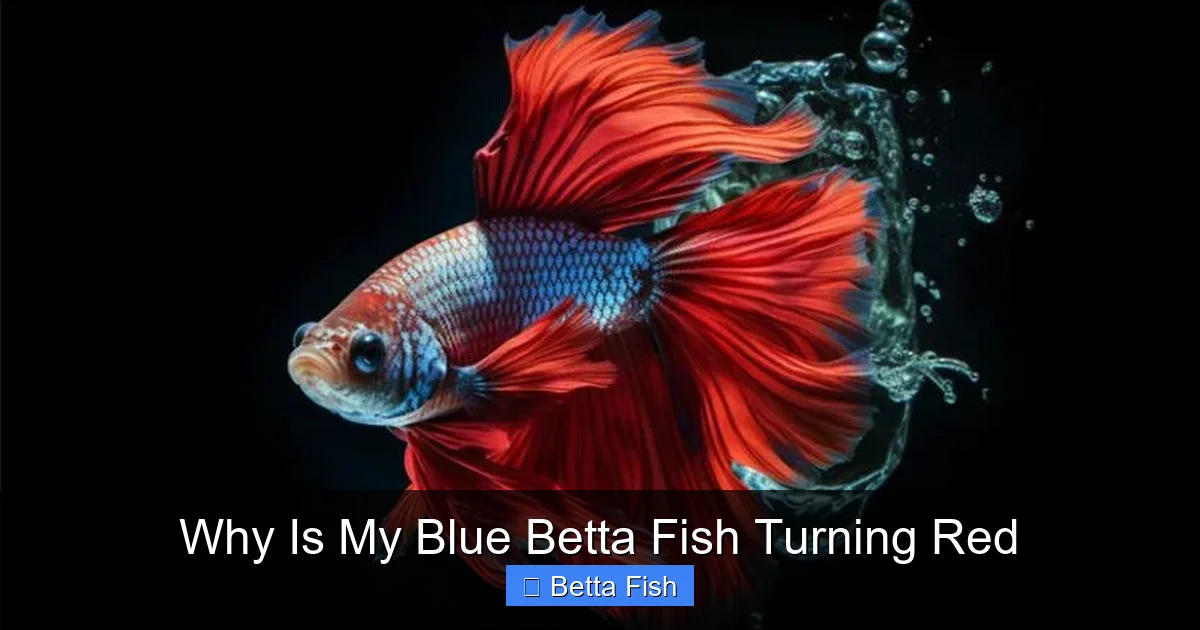
Why Is My Blue Betta Fish Turning Red
Seeing your vibrant blue betta turn red can be alarming. This article explains the common reasons behind the color shift, from stress and water issues to genetics and disease, and gives you simple steps to restore your fish’s brilliant hue.
Key Takeaways
- Stress is a top trigger: Poor water quality, temperature swings, and overcrowding often cause blue bettas to redden.
- Genetics matter: Some blue bettas carry red pigments that appear as they mature.
- Health issues are warning signs: Parasites, bacterial infections, and fin rot can turn scales red.
- Water parameters are crucial: Keep pH, ammonia, nitrite, and nitrate in safe ranges to prevent color loss.
- Diet influences color: A balanced, pigment‑rich diet helps maintain blue coloration.
- Observe behavior: Changes in swimming, appetite, or hiding indicate underlying problems.
- Quick action helps: Adjusting water, treating disease, and improving nutrition can often reverse the red tint.
📑 Table of Contents
- Introduction: When Blue Becomes Red
- 1. Stress: The Hidden Color‑Changer
- 2. Water Quality: The Foundation of Color
- 3. Health Issues: Infections and Parasites
- 4. Genetics and Natural Color Development
- 5. Nutrition: Feeding for Color
- 6. When to Seek Help and How to Use Resources
- Conclusion: Bringing Back the Blue
Introduction: When Blue Becomes Red
Imagine you’ve just set up a gorgeous sapphire‑blue betta in a pristine tank. After a few weeks, the bright blue fades and a reddish hue spreads across the fins and body. It’s a sight that can make any hobbyist’s heart skip a beat. You might wonder, why is my blue betta fish turning red? The answer isn’t always simple, but it’s almost always a sign that something in the fish’s environment or health needs attention.
In this guide we’ll walk through the most common causes, how to spot the early warning signs, and what you can do right now to bring the blue back. We’ll keep the tone friendly—think of it as a chat with a fellow betta lover—so you’ll feel confident taking action.
1. Stress: The Hidden Color‑Changer
Why stress affects pigment
Betta fish are territorial and sensitive. When they feel threatened or uncomfortable, they release stress hormones that can alter pigment cells called chromatophores. These cells shift melanin and erythrophores, often making the fish look more reddish.

Visual guide about Why Is My Blue Betta Fish Turning Red
Image source: n.sinaimg.cn
Common stressors
- Water quality: High ammonia, nitrite, or sudden pH changes.
- Temperature swings: Betta thrive at 76‑82°F (24‑28°C). Even a few degrees off can cause stress.
- Tank size and décor: A bowl or a tank under 2.5 gallons limits swimming space and can lead to aggression.
- Frequent disturbances: Loud noises, bright lights, or constant handling.
How to reduce stress
Start by testing the water with a reliable kit. Aim for ammonia = 0 ppm, nitrite = 0 ppm, nitrate < 20 ppm, and pH = 6.5‑7.5. Perform a 25‑30 % water change if any parameters are out of range. Keep a heater to maintain a stable temperature, and add plenty of live plants or silk plants for hiding spots. Minimizing sudden movements around the tank also helps.
2. Water Quality: The Foundation of Color
Key parameters to monitor
Even minor fluctuations can trigger a color shift. Below is a quick reference:
- Ammonia: 0 ppm (toxic above 0.25 ppm)
- Nitrite: 0 ppm (toxic above 0.5 ppm)
- Nitrate: < 20 ppm (higher levels cause stress)
- pH: 6.5‑7.5 (stable is more important than exact number)
- Temperature: 76‑82°F (24‑28°C)
Practical water‑maintenance routine
1. Test water weekly.
2. Change 20‑30 % of water every 5‑7 days.
3. Use a gentle water conditioner that removes chlorine and chloramine.
4. Rinse substrate with tank water (not tap water) during water changes to keep beneficial bacteria.
Following these steps can often reverse a reddening caused by poor water. If the red patches persist, move on to health checks.
3. Health Issues: Infections and Parasites
Common diseases that turn scales red
- Fin rot: Bacterial infection that causes frayed, reddish fins.
- Ich (White Spot Disease): While the name suggests white, secondary bacterial infections can redden surrounding tissue.
- Velvet disease: A protozoan that gives a dusty look, often accompanied by reddened skin.
- Hemorrhagic septicemia: Severe bacterial infection leading to widespread red spots.
Spotting the signs
Look for loss of appetite, lethargy, clamped fins, or bubbles at the surface (which may indicate a respiratory issue). If you notice any of these alongside the color change, it’s time to treat.
Visual guide about Why Is My Blue Betta Fish Turning Red
Image source: bettafishnest.com
Treatment basics
Isolate the sick betta in a hospital tank. Use a broad‑spectrum antibacterial medication such as Maracyn or a copper‑based treatment for parasites. Follow the product’s dosage instructions carefully. Remember to continue regular water changes to keep the environment clean.
4. Genetics and Natural Color Development
Why some blues turn red naturally
Not every red tint signals a problem. Many blue bettas carry hidden red pigments that emerge as they mature, especially males. Selective breeding can produce “blue‑red” varieties where the red appears along the edges of fins or on the dorsal area.
What to expect
If the fish is otherwise healthy, active, and eating well, the color shift may simply be a genetic trait. In this case, no treatment is needed—just enjoy the unique blend of colors.
5. Nutrition: Feeding for Color
Pigment‑rich diet
Betta fish obtain many of their colors from their food. Live or frozen foods like brine shrimp, daphnia, and bloodworms are high in carotenoids, which enhance reds and oranges. For blues, a diet supplemented with spirulina or algae flakes can help maintain the blue hue.
Feeding schedule
Offer a varied diet 2‑3 times daily, providing only what can be consumed in 2‑3 minutes. Overfeeding leads to water quality problems, which circles back to stress and color loss.
6. When to Seek Help and How to Use Resources
Red flags that need professional advice
If the red areas spread quickly, the fish stops moving, or you see signs of fin rot, consult an experienced aquarist or a veterinarian who specializes in fish.
Useful online resources
Our community has answered many similar questions. For example, you might also wonder why is my betta fish turning white or how to tell if a betta is dying (Is My Betta Fish Dying). These articles can give you a broader view of health indicators.
Conclusion: Bringing Back the Blue
Seeing a blue betta turn red can feel like a crisis, but most of the time it’s a manageable issue. By checking water quality, reducing stress, monitoring for disease, and feeding a balanced diet, you give your fish the best chance to regain its vibrant hue. Remember, a healthy environment is the foundation of color—so keep testing, keep cleaning, and keep loving your finned friend.
Frequently Asked Questions
Why is my blue betta fish turning red when the water looks clear?
Even clear water can hide chemical imbalances. Test for ammonia, nitrite, nitrate, and pH; a hidden spike can stress your fish and cause reddening.
Can a diet change the color of a blue betta?
Yes. Foods high in carotenoids (like brine shrimp) can enhance reds, while algae‑based foods support blue pigments. A balanced diet helps maintain the original color.
Is it normal for a male betta to develop red patches as it ages?
Many male bettas carry hidden red genes that appear with maturity. If the fish is healthy and eating, the change is likely natural.
What water temperature should I keep for a blue betta to prevent color loss?
Maintain a stable temperature between 76°F and 82°F (24‑28°C). Sudden drops or rises can stress the fish and trigger reddening.
How quickly should I act if I notice red spots on my betta’s fins?
Act within 24‑48 hours. Isolate the fish, improve water conditions, and consider a bacterial treatment if fin rot is suspected.
Can poor tank mates cause my blue betta to turn red?
Yes. Aggressive or fin‑nipping tank mates increase stress, which can lead to a red hue. Betta are best kept alone or with very peaceful species.