What Other Fish Can Be With a Betta Best Tank Mates

If you are wondering what other fish can be with a betta, you are in the right place. This guide breaks down the best tank mates, explains why temperament matters, and shows you how to set up a peaceful community aquarium. You will learn which species thrive alongside your betta, how to pick the right tank size, and what to avoid. Let us dive in and build a happy, balanced tank together.
Key Takeaways
- Temperament matters most: Choose calm, non-fin-nipping fish that stay out of the betta’s line of sight.
- Tank size is critical: A 20-gallon long tank gives everyone enough space to swim and hide.
- Bottom dwellers work well: Corydoras catfish and small loaches stay low and rarely bother bettas.
- Avoid fin-nippers and flashy fish: Tiger barbs, zebra danios, and bright guppies often trigger aggression.
- Watch water parameters: Keep temperature around 76-80°F and pH near neutral for the best harmony.
- Introduce slowly: Add tank mates one or two at a time and monitor behavior for the first week.
- Have a backup plan: Keep a separate hospital tank ready in case your betta needs to be moved.
📑 Table of Contents
- What Other Fish Can Be With a Betta Best Tank Mates
- Understanding Betta Behavior Before You Add Tank Mates
- Best Peaceful Fish That Live Well With Bettas
- Tank Mates to Avoid With Bettas
- How to Set Up a Betta Community Tank the Right Way
- How to Introduce New Fish and Keep the Peace
- Expert Tips for Long-Term Success With Betta Tank Mates
- Common Mistakes When Choosing Betta Tank Mates
- Final Thoughts on What Other Fish Can Be With a Betta
What Other Fish Can Be With a Betta Best Tank Mates
Keeping a betta fish is a joy. They are colorful, full of personality, and surprisingly expressive. Many people start with a single betta in a small tank. That setup works fine for a while. But as you learn more, you may want to add companions. The big question is simple: what other fish can be with a betta without causing stress or fights?
The good news is that bettas can live with other fish. The catch is that you must choose carefully. Bettas are territorial by nature. Males, in particular, will defend their space. Females can be social, but they still have limits. The trick is to match your betta with calm, peaceful fish that do not flash bright colors or nip at fins. When you get the mix right, your tank becomes a lively, balanced community.
In this guide, we will walk through the best tank mates, the ones to skip, and the setup steps that keep everyone safe. You will learn how to read your betta’s behavior, how to pick the right tank size, and how to introduce new fish without drama. By the end, you will feel confident building a tank that works for your betta and its new friends.
Understanding Betta Behavior Before You Add Tank Mates
Before you shop for new fish, it helps to understand how bettas think. Bettas are not aggressive all the time. They are simply protective of their space. In the wild, male bettas guard small territories in shallow waters. In a tank, that instinct stays strong. If another fish swims too close to the betta’s favorite resting spot, trouble can start.
Here are a few key traits to keep in mind:
- Territorial nature: Bettas often claim a corner, a plant, or a piece of decor as their own.
- Fin sensitivity: Long-finned bettas can feel stressed by fast, darting fish that zip past them.
- Visual triggers: Bright colors and flowing fins can sometimes spark chasing, especially in males.
- Personality varies: Some bettas are chill and ignore others. Some are bold and will chase anything that moves.
Because of these traits, you cannot just throw any fish into the tank. You need species that stay calm, swim at different levels, and do not compete for the same space. If you are still unsure about the basics, you may want to read our detailed guide on can you keep a betta with other fish for a quick overview of the main rules.
Reading Your Betta’s Personality
Every betta has a unique personality. Some are laid back. Others are bossy. Before adding tank mates, spend a few days watching your betta in its current setup. Note how it reacts when you walk by the tank. Does it flare at its reflection? Does it chase the gravel or plants? These clues tell you a lot about how it might handle new neighbors.
A relaxed betta that ignores movement is a good candidate for a community tank. A betta that flares constantly or paces the glass may need a solo setup. There is no shame in keeping a betta alone. It is a perfectly healthy choice. But if your betta seems calm, you can move forward with careful planning.
Why Tank Size Changes Everything
Space is the biggest factor in community success. A small tank feels crowded fast. When fish cannot escape each other, stress rises. A larger tank gives everyone room to spread out. It also makes water conditions more stable, which helps every fish stay healthy.
For a betta community, aim for at least 20 gallons. A 20-gallon long tank is even better because it offers more surface area and swimming space. If you are working with a smaller tank, stick to just one or two very small, peaceful companions. Overcrowding leads to aggression, poor water quality, and sick fish. If you want a deeper dive on tank size and setup, check out our article on can you use a filter with a betta fish to learn how filtration supports a busy tank.
Best Peaceful Fish That Live Well With Bettas
Now let us get to the fun part. Several peaceful species make excellent companions for bettas. These fish are calm, stay out of the betta’s way, and bring nice movement to the tank. The key is to match their needs with your betta’s temperament and your tank size.
Corydoras Catfish: The Gentle Bottom Dwellers
Corydoras catfish are among the safest choices for a betta tank. They spend most of their time on the bottom, sifting through sand and looking for food. They are small, peaceful, and rarely bother other fish. Because they stay low, they usually avoid the betta’s main territory near the middle and top of the tank.
A few tips for keeping corydoras with a betta:
- Keep them in groups of four or more so they feel secure.
- Use soft sand or smooth gravel to protect their sensitive barbels.
- Choose smaller species like pygmy corys or aeneus corys for a 20-gallon tank.
- Feed them sinking pellets so they get their share before the betta eats.
Small Tetras That Stay Calm
Some tetras work well with bettas, while others do not. The best choices are calm, school-oriented tetras that do not flash too much or nip fins. Ember tetras and neon tetras are popular options. They stay small, swim in groups, and usually keep to the middle of the tank.
A school of six to eight tetras can add beautiful movement without overwhelming your betta. Just make sure the tank is large enough and has plenty of plants or decorations for hiding. If your betta is very bold, start with a smaller school and watch the reaction before adding more.
Rasboras: Quiet Schooling Fish With Great Temperaments
Rasboras are another solid choice. Harlequin rasboras and chili rasboras are small, peaceful, and easy to care for. They form nice schools and tend to stay mid-water. Their subdued colors are less likely to trigger a betta’s territorial instinct than super bright species.
Rasboras also handle similar water conditions as bettas. That makes them easy to pair in the same tank. As with any schooling fish, keep them in groups so they feel safe and act naturally.
Small Livebearers: Use Caution and Pick Wisely
Livebearers like endlers and certain guppies can work in some tanks, but they come with caveats. Male guppies have bright colors and flowing tails, which can sometimes draw a betta’s attention. Endlers are often smaller and less flashy, so they may be a safer pick. If you try livebearers, start with just one or two and monitor closely.
If you are curious about the broader rules for mixing species, our guide on can you mix a betta with other fish covers the main do’s and don’ts in more detail.
Tank Mates to Avoid With Bettas
Not every fish is a good match. Some species are too active, too nippy, or too flashy for a betta tank. Avoiding these fish saves you stress, saves your betta from injury, and keeps the tank peaceful.
Fin-Nippers and Hyperactive Swimmers
Fin-nippers are the worst offenders. Tiger barbs, for example, are famous for chasing and nibbling fins. That behavior is dangerous for bettas, especially those with long, flowing tails. Zebra danios are very fast and can stress a betta by constantly darting around. Even if they do not bite, their speed can make a betta feel crowded and anxious.
Bright, Flashy Fish That Trigger Aggression
Bettas sometimes react to bright colors and big fins. Guppies with large, colorful tails can catch a betta’s eye in a bad way. In some cases, the betta ignores them. In others, the betta flares and chases. Because the outcome is unpredictable, it is safer to choose species with more subdued looks.
Large or Aggressive Species
Big fish are not a good idea in a betta community tank. Large cichlids, for instance, can be territorial and may see the betta as a rival. Even peaceful large fish can accidentally bump into a betta or outcompete it for food. Stick to small, calm species that stay well under three inches.
Goldfish: A Common Mistake
Goldfish are often sold as beginner fish, but they are not a good match for bettas. Goldfish produce a lot of waste, prefer cooler water, and grow much larger than most community tanks can handle. They also have different dietary needs. If you are wondering about this pairing, our article on can betta fish be in a tank with goldfish explains why this combination usually fails.
How to Set Up a Betta Community Tank the Right Way
A good setup makes a huge difference. Even peaceful fish can struggle if the tank is bare, cramped, or poorly filtered. A well-planned environment gives every fish places to hide, swim, and rest. Here is how to build a community tank that supports your betta and its tank mates.
Choose the Right Tank Size and Shape
Start with a 20-gallon long tank if you can. The extra length gives more swimming space and makes it easier to create separate zones. A longer tank also helps with water stability. If you only have a 10-gallon tank, keep the community very small. One or two tiny, peaceful fish is the maximum in that size.
Add Plants, Hides, and Visual Barriers
Plants and decorations are not just for looks. They break up lines of sight, which reduces chasing and flaring. Live plants like java fern, anubias, and floating plants work well because they do not demand strong light or fancy substrates. Add caves, driftwood, or ceramic hides so bottom dwellers have safe spaces too.
A simple layout idea:
- Place tall plants at the back for background cover.
- Use mid-level plants or wood to create visual breaks.
- Leave open swimming areas in the center.
- Put a few hides near the bottom for corydoras and other bottom fish.
Filtration, Heating, and Water Flow
Good filtration keeps the water clean, which is extra important in a community tank. Bettas prefer gentle flow, so use a filter with an adjustable output or add a baffle. A gentle current is fine, but strong flow can stress a betta and make it hard for slow swimmers to rest.
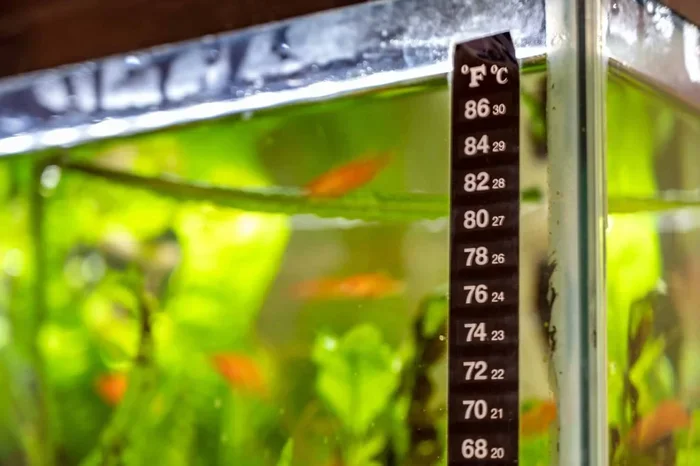
Keep the temperature in the 76-80°F range. Most tropical community fish thrive in that range, and it suits bettas well. Test your water regularly for ammonia, nitrite, nitrate, and pH. Stable water is the foundation of a peaceful tank.
Create Zones so Everyone Has Space
Think of the tank in layers. Bettas often claim the upper and middle areas. Bottom dwellers stay low. Schooling fish use the middle. When each species has its own zone, competition drops. Plants and decor help define these zones without making the tank feel crowded.
How to Introduce New Fish and Keep the Peace
Adding new fish is a process, not a one-time event. A careful introduction reduces stress and helps you spot problems early. Take your time, and do not rush to fill the tank on day one.
The Step-by-Step Introduction Method
Here is a simple approach that works for most betta community setups:
- Quarantine new fish first. Keep them in a separate tank for a week or two to check for illness.
- Prepare the main tank. Make sure water parameters are stable and the tank is fully cycled.
- Add tank mates before the betta if possible. This can help the betta see the tank as shared space from the start.
- If the betta is already in place, add one or two peaceful fish at a time. Watch the reaction closely.
- Feed the tank well during introductions. A distracted betta is less likely to chase.
- Monitor for a full week. Look for hiding, loss of color, torn fins, or constant flaring.
Signs Your Betta Is Stressed or Aggressive
It is normal to see a little curiosity at first. But ongoing aggression is a warning sign. Watch for these red flags:
- Constant flaring at other fish
- Chasing that does not stop after a few days
- Torn fins or missing scales on any fish
- Hiding all day or refusing to eat
- Rapid breathing or pacing the glass
If you see serious aggression, remove the new fish right away. It is better to separate them and try a different species later than to let injuries happen. Sometimes a betta simply will not accept tank mates, and that is okay. A solo betta is still a happy betta.
When to Remove Tank Mates
There are a few clear moments when you should act fast. If any fish is injured, isolate it in a hospital tank. If the betta is attacking constantly, move the newcomers back to a separate setup. If water quality drops because the tank is too busy, reduce the population. Peace and health always come first.
Expert Tips for Long-Term Success With Betta Tank Mates
A community tank is a living system. It needs regular care, observation, and small adjustments over time. These expert tips will help you keep the tank stable and the fish comfortable for the long haul.
Feeding Strategies for Mixed Tanks
In a community tank, food competition can be a real issue. Bettas are eager eaters, and fast swimmers may grab food before slower fish get a chance. To balance feeding:
- Use a mix of floating and sinking foods.
- Feed in different spots of the tank.
- Offer small meals twice a day instead of one big feeding.
- Watch to make sure bottom dwellers get their share.
Regular Maintenance and Water Testing
Clean water keeps stress low. Test your water weekly, especially in a community setup. Do partial water changes on a regular schedule, and vacuum the substrate gently so you do not disturb bottom dwellers. Keep an eye on nitrate levels, since more fish means more waste.
Adjusting Stocking Over Time
Start light and add slowly. It is easy to add more fish later, but hard to fix an overcrowded tank. If your betta seems relaxed and the water stays stable, you can consider small additions. If the tank feels busy or the betta gets cranky, scale back. A calm tank is always better than a crowded one.
Quick Tip: Keep a Backup Plan Ready
Always have a simple backup plan. Keep a small separate tank or a clear plan for rehoming fish if needed. That way, if your betta is not a community fish after all, you can move it without panic. Planning ahead makes the whole experience smoother and safer.
Common Mistakes When Choosing Betta Tank Mates
Even experienced fish keepers make mistakes. Here are the most common ones so you can avoid them.
- Overcrowding the tank. More fish does not mean a better tank. It usually means more stress.
- Picking fish based on color alone. Bright, flashy fish can trigger aggression, even if they are peaceful by nature.
- Skipping the quarantine step. New fish can bring disease into a community tank.
- Ignoring your betta’s personality. A bold betta needs different companions than a shy one.
- Choosing fish with very different water needs. Match temperature, pH, and hardness as closely as possible.
- Adding too many fish at once. Slow introductions give you time to spot problems early.
Final Thoughts on What Other Fish Can Be With a Betta
So, what other fish can be with a betta? The best answer is simple: calm, peaceful fish that respect your betta’s space and fit comfortably in your tank. Corydoras catfish, small tetras, and rasboras are often excellent choices. Fin-nippers, hyperactive swimmers, and flashy livebearers are usually better avoided. Tank size, layout, and your betta’s personality matter just as much as the species you pick.
A successful community tank is built on patience. Start with a well-planned setup, add fish slowly, and watch behavior closely. Keep the water clean, provide hiding places, and be ready to adjust if needed. When everything clicks, you get a beautiful tank full of color, movement, and peaceful activity. And if your betta prefers to live alone, that is perfectly fine too. The best tank is the one where every fish feels safe and comfortable.
Frequently Asked Questions
What other fish can be with a betta in a 20-gallon tank?
In a 20-gallon tank, you can keep a betta with small, peaceful fish like ember tetras, harlequin rasboras, or a small group of corydoras catfish. The key is to avoid overcrowding and choose calm species that stay out of the betta’s way.
Can you put other fish with a male betta safely?
Yes, you can put other fish with a male betta if you choose carefully. Calm bottom dwellers and small schooling fish are the safest options. Avoid fin-nippers and bright, flashy fish that may trigger chasing.
What fish should I avoid putting with a betta?
Avoid fin-nippers like tiger barbs, very fast swimmers like zebra danios, and large or aggressive species. Goldfish are also a poor match because they need cooler water and produce a lot of waste.
How many fish can live with a betta at the same time?
The number depends on tank size and the size of the fish. In a 20-gallon long tank, a betta can usually live with a small school of tetras or rasboras plus a few corydoras. Start with just a couple of tank mates and add slowly.
Can a female betta live with other fish more easily than a male?
Female bettas are often less aggressive than males, so they can sometimes handle community tanks more easily. That said, personality still matters a lot. Some females are very territorial, so you should still choose peaceful tank mates and monitor behavior closely.
How do I know if my betta is stressed by new tank mates?
Signs of stress include constant flaring, chasing, torn fins, hiding, loss of appetite, and rapid breathing. If these signs continue after the first few days, remove the new fish and give your betta time to settle down.