Can Betta Fish See Each Other

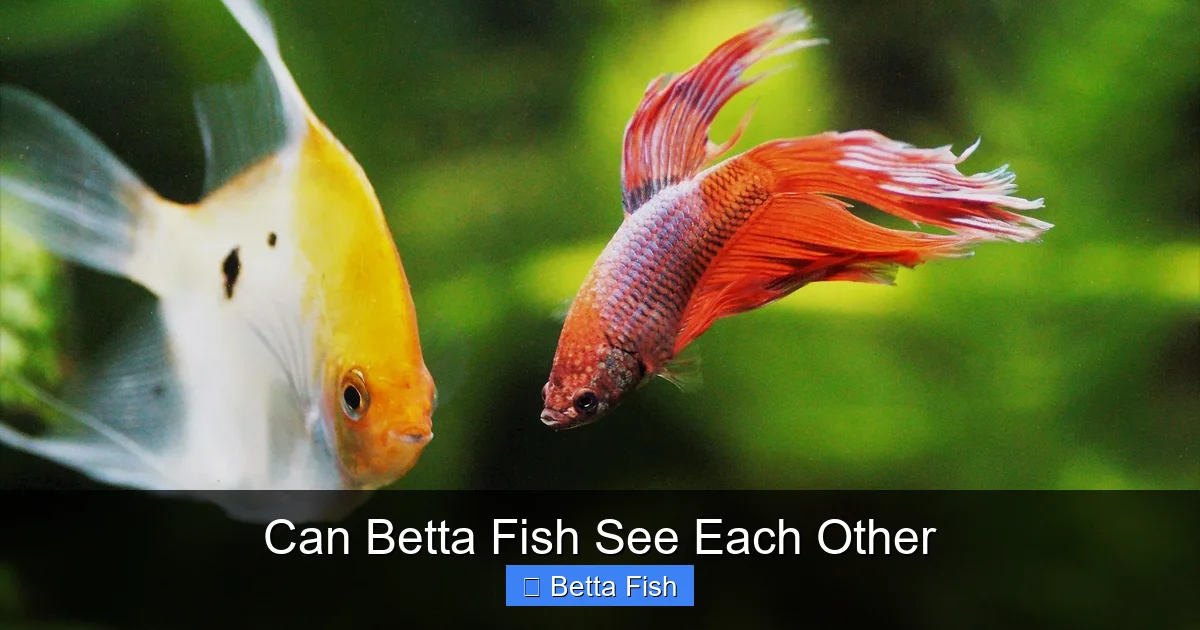
Yes, betta fish can see each other very well. Their sharp vision detects color, movement, and fin displays, which often triggers aggression between males. Understanding how betta fish see each other helps you create safer, stress-free tanks and avoid dangerous fights.
Key Takeaways
- Betta fish have strong vision: They see color and movement clearly, including other bettas nearby.
- Seeing each other often causes stress: Visual contact can trigger flaring, chasing, and fin nipping.
- Males are especially aggressive: Male bettas usually attack other males on sight in shared spaces.
- Females can still clash: Female bettas may fight each other when housed in cramped or poorly structured tanks.
- Barriers change behavior: Solid or planted barriers reduce line-of-sight and lower stress and aggression.
- Tank size and layout matter: Larger, well-decorated tanks help break up sightlines and protect weaker fish.
- Vision affects tank mates: Knowing how bettas see each other helps you choose safer tank mates for betta fish.
📑 Table of Contents
- Can Betta Fish See Each Other? Understanding Betta Vision
- How Betta Fish Eyes Work
- Why Seeing Each Other Often Leads To Aggression
- How Bettas React When They See Each Other
- Can Male Bettas Live Together If They Can See Each Other?
- Can Female Bettas See Each Other And Still Live Together?
- How Tank Setup Changes What Bettas See
- Can Bettas See Other Species The Same Way They See Each Other?
- Practical Tips To Reduce Stress From Visual Contact
- Do Bettas Recognize Each Other Over Time?
- Can Bettas See Each Other In Low Light Or At Night?
- How Understanding Betta Vision Helps You Keep Them Safer
- Conclusion
Can Betta Fish See Each Other? Understanding Betta Vision
If you have ever watched two bettas flare at each other through glass, you already know the answer: yes, betta fish can see each other very well. Their eyes are adapted to spot movement, color changes, and subtle fin movements in the water. This strong vision is part of what makes them such fierce, territorial fish.
In this guide, we will look closely at how betta fish vision works, why seeing each other often leads to fights, and how you can use this knowledge to set up safer, calmer tanks. We will also talk about tank mates, barriers, and practical ways to reduce stress when bettas share a space with other fish.
How Betta Fish Eyes Work

Visual guide about Can Betta Fish See Each Other
Image source: static.vecteezy.com
Betta fish do not see the world exactly like we do, but their eyes are more powerful than many people realize. They rely on vision for hunting, exploring, and defending territory.
Betta Fish Color Vision
Bettas have excellent color vision. In the wild, they live in shallow, plant-filled waters with plenty of light. Their eyes are tuned to detect many colors, including bright reds, blues, and greens. This helps them:
– Spot tiny insects and larvae to eat
– Recognize other bettas by their fin colors
– Notice changes in their environment
When two bettas see each other, those bright colors and flowing fins stand out clearly. That is one reason why they react so strongly to one another.
Sharp Vision For Movement
Bettas are predators of small insects and larvae. To catch food, they need to notice tiny movements at the water surface and among plants. Their eyes are very sensitive to motion.
This means that when another betta moves, flares its fins, or charges across the tank, the first betta sees it instantly. Even small actions, like turning quickly or raising gill covers, can be seen as a threat.
How Clearly Can Bettas See Each Other?
In a clean, well-lit tank, bettas can see each other from across the room if the line of sight is clear. They can detect:
– Body color and patterns
– Fin shape and size
– Body posture and gill flares
– Fast movements and sudden direction changes
If you place two tanks side by side, your bettas will likely notice each other and may start flaring or pacing. That is a clear sign that they can see each other well.
Why Seeing Each Other Often Leads To Aggression
Bettas are famous for their aggression, especially males. Their vision plays a big role in this behavior.
Territorial Instincts Triggered By Sight
In the wild, bettas live in shallow, slow-moving waters with many hiding spots. A male betta will claim a small territory and defend it from rivals. When he sees another male in his space, his instinct is to attack.
Seeing another betta:
– Triggers flaring of fins and gill covers
– Increases stress hormones
– Leads to chasing, nipping, and biting
Because they can see each other so clearly, two males in the same tank often fight until one is badly injured or killed.
Females Are Not Always Peaceful
Many people assume only males fight, but females can also be aggressive. In a small tank, females may see each other as rivals and start nipping fins or chasing. In larger, heavily planted tanks, groups of females (called sororities) can sometimes live together, but even then, visual contact can cause stress.
If you are thinking about keeping more than one betta, it helps to understand their behavior. You can read more in our guide on whether betta fish can live with other betta fish.
How Bettas React When They See Each Other

Visual guide about Can Betta Fish See Each Other
Image source: pangovet.com
When bettas see each other, their behavior changes quickly. These reactions are easy to spot once you know what to look for.
Flaring And Gill Displays
One of the first signs is flaring. A betta will:
– Spread its fins wide
– Push its gill covers forward
– Turn sideways to look bigger
This is a warning: “This is my space, stay away.” If the other betta does not back off, the situation can turn violent.
Pacing And Glass Surfing
When bettas can see each other but cannot reach each other, they may swim back and forth along the glass. This is called glass surfacing or pacing. It is a sign of stress and frustration.
You might see this when:
– Two tanks are placed close together
– A male sees his own reflection for long periods
– A betta sees other fish it cannot reach
Long-term stress like this can weaken their immune system and lead to disease.
Color Changes And Stress Signs
When bettas see rivals, their colors may change slightly. Some fish become darker or more intense in color. Others may show stress bars (faint vertical lines on the body).
Watch for:
– Loss of appetite
– Hiding more than usual
– Torn or chewed fins
– Clamped fins held close to the body
These signs suggest that seeing another betta is causing ongoing stress.
Can Male Bettas Live Together If They Can See Each Other?

Visual guide about Can Betta Fish See Each Other
Image source: dsflyfishing.com
This is one of the most common questions new betta owners ask. The short answer is no. Male bettas should never live in the same tank, even if they “seem fine” at first.
Why Male Bettas Should Not Share A Tank
Even if two males do not fight immediately, constant visual contact keeps them on edge. Over time, this can lead to:
– Sudden, serious fights
– Chronic stress
– Weakened immune systems
– Fin damage and infections
Because bettas can see each other so clearly, they never truly “get used to” a rival in their space. For more details, check our article on why betta fish fight each other.
What About Separated Tanks?
Keeping two males in separate tanks is fine, as long as you manage their line of sight. If the tanks are close, they may still see each other and flare through the glass. To reduce stress:
– Use opaque dividers between tanks
– Keep tanks a bit farther apart
– Add background paper or decorations to block the view
This way, they can live near each other without constant visual contact.
Can Female Bettas See Each Other And Still Live Together?
Visual guide about Can Betta Fish See Each Other
Image source: peta.org
Females are usually less aggressive than males, but they can still fight. Their vision still plays a role in how they interact.
Female Sororities And Visual Stress
A female sorority is a group of female bettas kept in one tank. This can work, but only if:
– The tank is large and heavily planted
– There are enough hiding spots and barriers
– You keep at least 5–6 females to spread out aggression
Even then, females can see each other and may flare or chase from time to time. You must watch for bullying and remove any female that is constantly targeted.
How To Reduce Visual Aggression Among Females
To help females live together more peacefully:
– Use tall plants and decorations to break up sightlines
– Add caves, driftwood, and floating logs
– Avoid long, open spaces where one female can see and chase another easily
By breaking up what they can see, you reduce constant confrontations.
How Tank Setup Changes What Bettas See
Your tank design can make a big difference in how bettas react to each other and to other fish.
Using Plants And Decorations As Visual Barriers
Live or silk plants, rocks, and driftwood can block direct lines of sight. This is important when:
– Keeping female bettas together
– Housing a betta with other species
– Placing tanks near each other
For example, a thick line of tall plants down the middle of a tank can give weaker fish a place to hide where the betta cannot see them easily.
Choosing The Right Tank Size
Small tanks make visual contact constant and inescapable. In a tiny tank, a betta can always see any other fish, which increases stress and aggression.
For a single betta with tank mates, aim for:
– At least 10 gallons for small community setups
– 20 gallons or more for more complex groups or sororities
More space means more room to break up sightlines and create separate territories.
Can Bettas See Other Species The Same Way They See Each Other?
Bettas do not only react to their own kind. They also see other fish and may attack them, especially if they look similar.
Fish That Look Like Bettas Are At Risk
Some fish have bright colors and long, flowing fins. To a betta, these fish may look like rivals. This includes:
– Fancy guppies
– Some male endlers
– Other labyrinth fish with bright colors
If a betta sees these fish as threats, he may chase and nip their fins.
Safer Tank Mates That Are Less Threatening
Safer tank mates are usually:
– Dull or neutral in color
– Small and fast
– Not fin nippers themselves
Examples include:
– Harlequin rasboras
– Corydoras catfish
– Small loaches
– Certain species of tetras (in larger tanks)
If you want to learn more about mixing species, read our guide on whether betta fish can live with other species.
Practical Tips To Reduce Stress From Visual Contact
Now that you know bettas can see each other clearly, here are some practical steps you can use right away.
1. Avoid Placing Tanks Face To Face
If you keep more than one betta tank, do not put them directly next to each other with clear sides facing. Use:
– Solid backgrounds on the tanks
– Sideboards or decorations between them
– A bit of distance between tanks
This reduces constant flaring and pacing.
2. Break Up Lines Of Sight Inside The Tank
Inside the tank, use:
– Tall plants (real or silk)
– Floating plants
– Driftwood and rock arches
– Caves and tunnels
These create “rooms” so fish can avoid each other visually when needed.
3. Watch Body Language Closely
Learn to read your betta’s posture. If you see constant flaring, chasing, or hiding, the visual environment may be the problem. Rearranging decorations can change sightlines and reduce tension.
4. Use Dividers When Testing New Tank Mates
When introducing new fish, consider using a tank divider for a few days. This lets them see each other without physical contact. If the betta reacts with nonstop aggression, it may not be safe to house them together.
5. Keep Lighting Balanced
Very bright lighting can make colors stand out more and increase visual aggression. Use moderate lighting and floating plants to create shaded areas where fish can retreat.
Do Bettas Recognize Each Other Over Time?
Bettas can learn to recognize other fish and even their owners. They remember:
– Which fish live in their tank
– Which ones are threats
– Which ones ignore them
If a betta sees the same tank mate every day without conflict, he may become less aggressive toward that specific fish. However, if you move tanks around or add new fish, the betta may react strongly again because the visual scene has changed.
Can Bettas See Each Other In Low Light Or At Night?
Bettas rely mostly on vision, but they also use their lateral line (a sense organ along their body) to detect movement and vibrations in the water.
Low Light Conditions
In dim light, bettas can still see shapes and movement, but colors are less clear. They may:
– React less strongly to distant fish
– Still flare if another betta comes close
– Use their lateral line to sense motion
Nighttime Behavior
In complete darkness, bettas cannot see well, but they can still sense movement. They usually rest near the surface or on plants at night. If two bettas are in the same tank, they may accidentally bump into each other, which can startle them and lead to sudden aggression once the lights come back on.
How Understanding Betta Vision Helps You Keep Them Safer
Knowing that bettas can see each other so well changes how you should think about tank setup and tank mates.
Plan For Sightlines, Not Just Space
A 20-gallon tank with no decorations can be more stressful than a 10-gallan tank full of plants and hiding spots. What matters is not only how much water there is, but how much of it is visually blocked.
Choose Tank Mates With Vision In Mind
When choosing other fish, think about how your betta will see them:
– Will their colors look like a rival?
– Do they have long fins that may trigger attacks?
– Are they fast enough to avoid constant chasing?
If you are unsure, start with peaceful, dull-colored fish that stay in different areas of the tank.
Be Ready To Separate Aggressive Fish
Even with perfect setup, some bettas are too aggressive to live with others. If you see constant flaring, torn fins, or hiding, be ready to move fish to separate tanks. Their vision will not “get used to” a rival if the aggression is strong.
Conclusion
So, can betta fish see each other? Yes, they can, and they do it very well. Their strong color vision and sensitivity to movement mean that when they see another betta, they often react with aggression or stress.
This knowledge should guide how you set up your tanks:
– Never house two males together
– Use plants and decorations to break up sightlines
– Choose tank mates that do not look like rivals
– Watch for stress signs and separate fish when needed
By understanding how bettas see each other, you can create a safer, calmer home for them and avoid many common problems.
Frequently Asked Questions
Can betta fish see each other through glass?
Yes, bettas can see each other through clear glass. They may flare, pace, or show stress when they see another betta in a nearby tank.
Do bettas get stressed when they see each other?
Yes, visual contact often causes stress. Constant exposure can lead to flaring, hiding, loss of appetite, and weakened health.
Can two male bettas ever be in the same room?
They can be in the same room if their tanks are not directly facing each other. Use backgrounds or barriers so they cannot see each other constantly.
Can female bettas see each other and live together?
Females can see each other, and they may still fight. They can sometimes live in groups if the tank is large, heavily planted, and has many hiding spots.
Do bettas recognize each other over time?
Bettas can learn to recognize specific fish and may react less to familiar tank mates. However, they can still become aggressive if the environment changes.
Can bettas see other fish as threats?
Yes, they may see bright or long-finned fish as rivals. Choosing dull-colored, peaceful tank mates reduces the chance of attacks.