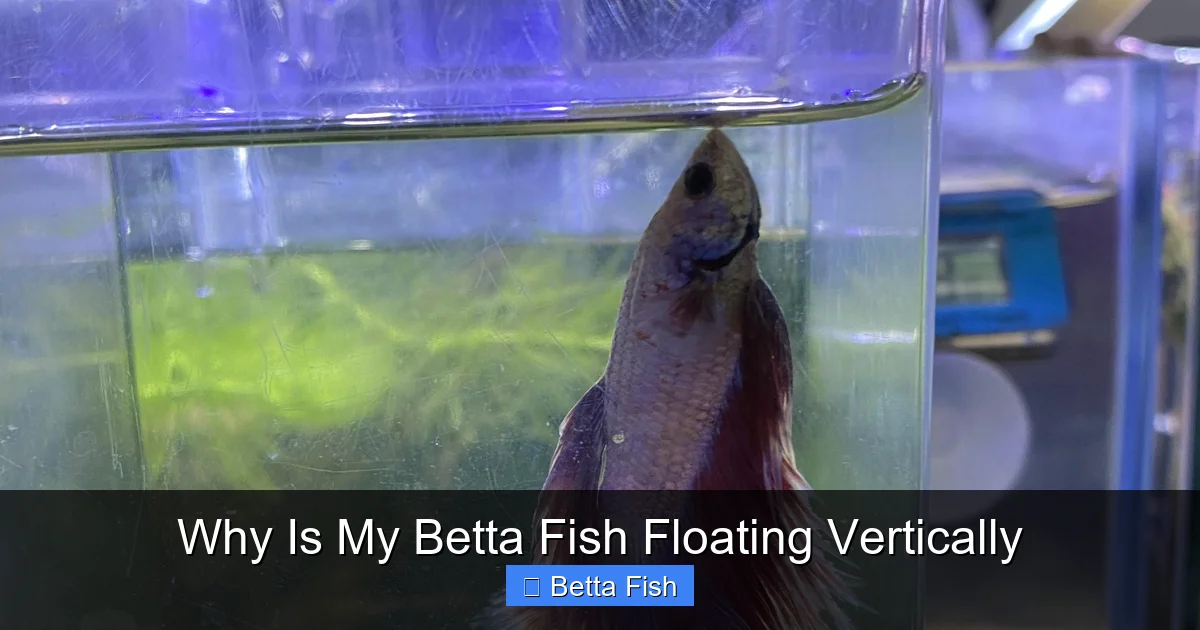
Why Is My Betta Fish Floating Vertically

Seeing your betta fish float vertically can be alarming, but it’s often a sign of an underlying issue you can address. Learn the common causes—from swim bladder problems to water quality—and get practical steps to restore your fish’s normal swimming posture.
Key Takeaways
- Swim bladder disorders: The most frequent reason for vertical floating, often linked to diet or injury.
- Water parameters matter: Poor water quality can stress bettas and affect buoyancy.
- Temperature is crucial: Too cold or too warm water disrupts metabolism and buoyancy control.
- Observe behavior: Look for additional symptoms like loss of appetite or faded colors to pinpoint the problem.
- Simple home remedies: Fasting, adjusting diet, and water changes can often resolve minor buoyancy issues.
- When to seek help: Persistent floating may require veterinary care or a specialist betta fish clinic.
- Preventive care: Regular water tests, proper feeding, and a stress‑free environment keep your betta swimming upright.
📑 Table of Contents
- Introduction: The Upside‑Down World of a Vertically Floating Betta
- 1. Understanding the Swim Bladder: The Fish’s Internal Floatation Device
- 2. Water Quality: The Silent Influencer
- 3. Temperature Troubles: Too Hot or Too Cold?
- 4. Feeding Mistakes That Lead to Vertical Floating
- 5. Recognizing When It’s More Than a Swim Bladder Issue
- 6. Preventive Care: Keeping Your Betta Upright for Life
- Conclusion: Turning the Tide on Vertical Floating
Introduction: The Upside‑Down World of a Vertically Floating Betta
Imagine you’re watching your vibrant betta glide through the water, tail fins fluttering like a tiny flag. Then, out of the blue, it stops swimming level and begins to float vertically, head up or down, as if it’s doing a strange yoga pose. It’s unsettling, and many betta owners ask, “why is my betta fish floating vertically?” The good news is that most of the time the answer is not a death sentence—it’s a clue that something in the tank needs attention.
In this article we’ll break down the most common reasons behind vertical floating, show you how to diagnose the problem, and give you step‑by‑step fixes that are easy to try at home. By the end, you’ll feel confident that you can help your betta return to its graceful, horizontal swims.
1. Understanding the Swim Bladder: The Fish’s Internal Floatation Device
What is the swim bladder?
The swim bladder is a gas‑filled organ located behind the backbone. It lets a fish control its buoyancy, much like a tiny balloon. When the bladder is functioning correctly, the fish can hover at any depth without constantly swimming.
Visual guide about Why Is My Betta Fish Floating Vertically
Image source: i.redd.it
How swim bladder problems cause vertical floating
If the bladder is over‑inflated, under‑inflated, or damaged, the fish loses its ability to stay level. An over‑inflated bladder pushes the fish upward, often causing it to float vertically with the head pointing up. An under‑inflated bladder does the opposite, making the fish sink and tilt head‑down.
Common triggers for swim bladder issues
- Overfeeding or inappropriate food: Large, hard pellets or too much dry food can expand in the gut, pressing against the bladder.
- Constipation: A backed‑up digestive tract can physically compress the bladder.
- Physical injury: Rough handling or tank mates that nip can damage the organ.
- Infections: Bacterial or parasitic infections may inflame the bladder.
2. Water Quality: The Silent Influencer
Why water parameters matter for buoyancy
Betta fish are sensitive to ammonia, nitrite, nitrate, and pH swings. Poor water quality stresses the fish’s internal systems, including the swim bladder. When the fish is stressed, it may gulp air at the surface, inadvertently filling the bladder too much.

Visual guide about Why Is My Betta Fish Floating Vertically
Image source: deccanchronicle.com
Key water tests to run
- Ammonia: Should be 0 ppm.
- Nitrite: 0 ppm.
- Nitrate: Below 20 ppm for bettas.
- pH: Between 6.5 and 7.5.
- Temperature: 76‑82°F (24‑28°C) is ideal.
Quick water‑fix checklist
- Test the water with a reliable kit.
- If ammonia or nitrite is present, perform a 25‑30% water change immediately.
- Adjust temperature with a reliable heater.
- Consider adding a water conditioner that detoxifies ammonia.
3. Temperature Troubles: Too Hot or Too Cold?
How temperature affects metabolism
Betta fish are tropical and rely on warm water to keep their metabolism humming. When the water is too cold, digestion slows, leading to constipation and a higher chance of swim bladder trouble. Overly warm water can increase stress and cause the fish to gulp more air.

Visual guide about Why Is My Betta Fish Floating Vertically
Image source: preview.qiantucdn.com
Setting the perfect temperature
Use an adjustable aquarium heater and a digital thermometer. Aim for a steady 78°F (25.5°C). Avoid sudden spikes—if you need to raise the temperature, do it gradually (1°F per hour).
What to do if the temperature is off
- Cold water: Increase heater output, add a small heater if needed, and monitor for 24‑48 hours.
- Hot water: Turn the heater down, add a few ice cubes in a sealed bag to the tank (do not put ice directly in the water), and re‑test temperature.
4. Feeding Mistakes That Lead to Vertical Floating
Choosing the right diet
Betta fish thrive on high‑protein foods such as frozen or live brine shrimp, daphnia, and specially formulated betta pellets. Avoid bulk dry foods that swell in the stomach.
Fasting as a therapeutic tool
If you suspect constipation, stop feeding for 24‑48 hours. This gives the digestive tract a chance to clear out. After the fast, re‑introduce a small amount of peeled, boiled pea (remove the skin) or a few frozen brine shrimp.
Feeding schedule to prevent problems
- Feed 2‑3 small meals per day, no more than the size of the fish’s eye.
- Include a “treat” day once a week with a live or frozen food item.
- Always remove uneaten food after 5 minutes to keep water clean.
5. Recognizing When It’s More Than a Swim Bladder Issue
Additional symptoms to watch for
Vertical floating can be a symptom of broader health concerns. Keep an eye out for:
- Loss of color or faded fins.
- Clamped fins or reduced movement.
- White or black spots on the body.
- Frequent gulping at the surface.
- Abnormal breathing (rapid gill movement).
When to consult a vet or specialist
If the vertical floating persists after 48‑72 hours of corrective measures, or if you notice any of the above symptoms, it’s time to seek professional help. A fish‑savvy veterinarian can run a thorough exam and may prescribe antibiotics or recommend a specific treatment plan.
Helpful internal resources
For related buoyancy problems, you might also read our guide on why is my betta fish floating sideways, which explains a similar condition from a different angle. If you notice your betta turning pale or white, check out why is my betta fish turning white for insights on stress and disease. Finally, if your fish appears to swim oddly but not vertically, our article on why is my betta fish swimming sideways offers additional troubleshooting steps.
6. Preventive Care: Keeping Your Betta Upright for Life
Routine tank maintenance
Perform a 25‑30% water change weekly. Clean the substrate with a gravel vacuum and wipe down tank walls to prevent algae buildup.
Regular health checks
Spend a few minutes each day observing your betta’s swimming pattern, fin condition, and appetite. Early detection of odd behavior makes treatment easier.
Creating a stress‑free environment
- Provide plenty of hiding spots (plants, caves).
- Avoid bright, direct lighting for more than 8‑10 hours a day.
- Limit sudden movements around the tank.
Conclusion: Turning the Tide on Vertical Floating
Seeing your betta fish float vertically can feel scary, but with the right knowledge you can often correct the problem quickly. Most cases stem from swim bladder issues, water quality, temperature, or feeding habits—each of which is within your control. By testing water, adjusting temperature, feeding the right foods, and watching for additional warning signs, you give your betta the best chance to resume its graceful, horizontal swims.
Remember, consistency is key. Regular tank upkeep and attentive observation will prevent most buoyancy problems before they start. If you’ve tried the home remedies and the fish still floats vertically, don’t hesitate to reach out to a specialist. Your betta’s health is worth the extra effort, and a little care today means many happy, upright swims tomorrow.
Frequently Asked Questions
Why does my betta fish float vertically after a recent water change?
A sudden change in water temperature or chemistry can stress the fish, causing it to gulp air and over‑inflate its swim bladder. Check that the new water matches the tank’s parameters.
Can overfeeding cause my betta to float vertically?
Yes. Large, dry pellets can expand in the gut and press against the swim bladder, leading to buoyancy problems. Feed small portions and consider fasting for 24 hours if you suspect constipation.
Is vertical floating a sign of a serious disease?
It can be a symptom of infection or internal injury, but many times it’s a simple swim bladder issue. Look for other signs like white spots, clamped fins, or loss of appetite to gauge severity.
How long should I wait before seeking veterinary help?
If the fish remains vertical after 48‑72 hours of proper care, or if you notice additional symptoms, contact a fish‑savvy vet promptly.
Will adding a bubble nest help my betta stop floating vertically?
Bubble nests are a natural behavior for male bettas and don’t directly fix buoyancy. However, a healthy, unstressed fish is more likely to build a nest, indicating overall well‑being.
Can temperature fluctuations cause my betta to float head‑down?
Yes. Cold water slows digestion and can lead to constipation, which pushes the fish’s head down. Keep the tank temperature steady between 76‑82°F.