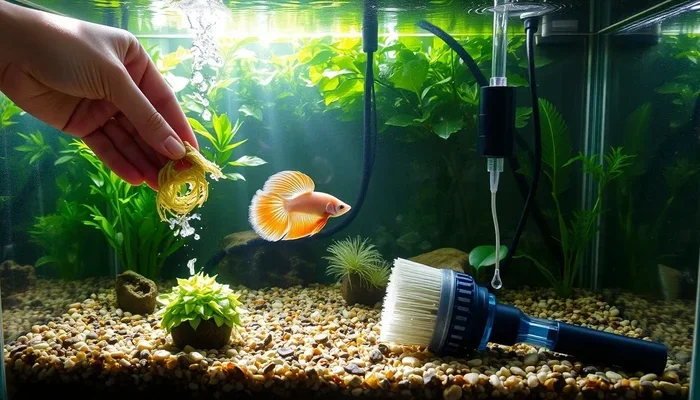
Why Is My Betta Fish Falling to the Bottom

Seeing your betta sink to the bottom can be alarming, but it’s often a clue to an underlying issue. By checking water quality, diet, and health symptoms, you can quickly identify the cause and help your fish bounce back.
Key Takeaways
- Water quality matters: Poor parameters are the top reason bettas rest on the tank floor.
- Health signs: Look for clamped fins, faded color, or labored breathing as warning flags.
- Diet and feeding: Over‑ or under‑feeding can cause digestive problems that push bettas down.
- Temperature stress: Temperatures below 76°F (24°C) make bettas lethargic.
- Tank setup: Too small, crowded, or lacking hiding spots can stress a betta.
- Quick fixes: A water change, temperature adjustment, or a bite of frozen brine shrimp often helps.
- When to seek help: Persistent bottom‑dwelling despite adjustments may need veterinary attention.
📑 Table of Contents
- Introduction: When Your Betta Hits the Bottom
- 1. Water Quality – The Silent Culprit
- 2. Temperature Stress – Too Cold, Too Hot
- 3. Feeding Issues – Overfeeding, Underfeeding, and Digestive Trouble
- 4. Health Problems – Illnesses That Make Betta Rest
- 5. Tank Environment – Size, Decor, and Stress
- 6. Oxygen Levels – The Breath of Life
- Putting It All Together – A Step‑by‑Step Checklist
- Conclusion: From Bottom to Bounce‑Back
Introduction: When Your Betta Hits the Bottom
Imagine you’re watching your betta flash his fins, then—suddenly—he glides down and stays at the bottom. It’s a scene many hobbyists dread. The question instantly pops up: why is my betta fish falling to the bottom?
Don’t panic. Most of the time the answer is simple, and the solution is within reach. In this guide we’ll walk through the most common reasons, how to spot the subtle signs, and what you can do today to get your finned friend back to his vibrant, active self.
1. Water Quality – The Silent Culprit
Why bad water makes bettas sink
Betta fish are especially sensitive to ammonia, nitrite, and low oxygen. When these parameters rise, the fish’s gills struggle, leading to fatigue and a tendency to rest at the bottom.

Visual guide about Why Is My Betta Fish Falling to the Bottom
Image source: royalevents.co.in
Testing your water
- Use a liquid test kit or strip test to check ammonia, nitrite, nitrate, and pH.
- Ideal ranges: Ammonia 0 ppm, Nitrite 0 ppm, Nitrate < 20 ppm, pH 6.5‑7.5.
- Temperature should stay between 76°F‑82°F (24°C‑28°C).
Quick water‑fixes
Perform a 25‑30 % water change with dechlorinated water at the same temperature. Add a water conditioner that detoxifies ammonia if levels are high. After the change, observe your betta for 24 hours.
2. Temperature Stress – Too Cold, Too Hot
How temperature affects behavior
Betta fish are tropical. If the water drops below 76°F (24°C), metabolism slows, and the fish may become sluggish, often lying on the tank floor.

Visual guide about Why Is My Betta Fish Falling to the Bottom
Image source: softwarelinkers.in
Getting the right heat
- Invest in an adjustable aquarium heater rated for your tank size.
- Use a reliable thermometer; digital models give instant readings.
- Raise the temperature gradually—no more than 2°F per day.
When it’s too warm
Water above 84°F (29°C) reduces dissolved oxygen and can cause stress. If you notice rapid breathing or gasping at the surface, lower the temperature slightly and add a small fan to increase surface agitation.
3. Feeding Issues – Overfeeding, Underfeeding, and Digestive Trouble
Signs of a fed‑up belly
Overfeeding leads to constipation, which can make a betta float belly‑up or sink to the bottom to rest. Underfeeding causes weakness, also resulting in bottom‑dwelling.

Visual guide about Why Is My Betta Fish Falling to the Bottom
Image source: v2.cimg.co
Best feeding practices
- Feed high‑quality betta pellets or frozen/brine shrimp once or twice daily.
- Offer only what your fish can eat in 2‑3 minutes.
- Consider a fasting day once a week to clear the gut.
When food is rejected
If your betta spits out food, see our article on why is my betta fish spitting out food. This behavior often precedes bottom‑dwelling.
4. Health Problems – Illnesses That Make Betta Rest
Common diseases linked to bottom‑dwelling
Fin rot, velvet, and ich can all cause lethargy. Look for clamped fins, white spots, or a dusty coating on the body.
Diagnosing quickly
Compare symptoms with our guide on how to tell if my betta fish is sick. Early detection makes treatment easier.
Treatment basics
- Isolate the sick betta in a hospital tank.
- Use appropriate medication—copper‑based for ich, antibiotics for bacterial infections.
- Maintain pristine water during treatment.
5. Tank Environment – Size, Decor, and Stress
Why a cramped tank pushes bettas down
Betas need space to explore. A bowl or a 2‑gallon tank can cause stress, leading to a fish that spends most of its time at the bottom.
Ideal setup
- Minimum 5‑gallon tank with a lid.
- Soft substrate (fine sand or smooth gravel).
- Live or silk plants for hiding spots.
- Gentle filtration that doesn’t create strong currents.
When other fish are around
Betta males are territorial. If you house a male with aggressive tank mates, he may hide at the bottom. Learn more about betta social needs in why betta fish need to be alone.
6. Oxygen Levels – The Breath of Life
Low oxygen makes bettas rest
Stagnant water or lack of surface agitation reduces dissolved oxygen. A fish that can’t get enough oxygen will become lethargic and sit at the bottom.
Boosting oxygen
- Add a small air stone or adjust the filter output to create gentle surface movement.
- Perform regular water changes to refresh oxygen levels.
- Keep the tank away from direct sunlight to prevent overheating and low oxygen.
Putting It All Together – A Step‑by‑Step Checklist
Day‑One Quick Fix
- Test water parameters.
- Do a 25 % water change.
- Check heater temperature; adjust if needed.
- Observe feeding behavior; reduce or increase food accordingly.
- Look for visible signs of disease.
Follow‑Up Over the Next 48 Hours
- Retest water; aim for stable parameters.
- Monitor activity; a healthy betta should swim up, explore, and flare fins.
- If the fish remains at the bottom, consider a short fast and then offer a small portion of frozen brine shrimp.
- Start a treatment plan if any disease signs appear.
Conclusion: From Bottom to Bounce‑Back
Spotting your betta laying on the tank floor can feel like a red flag, but most of the time the cause is something you can fix at home. By checking water quality, temperature, feeding habits, health signs, and tank setup, you’ll quickly answer the question “why is my betta fish falling to the bottom?” and take effective action.
Remember, consistency is key. Regular maintenance, proper nutrition, and a stress‑free environment keep your betta thriving. If you’ve tried the steps above and the problem persists, don’t hesitate to consult a vet who specializes in fish health.
Frequently Asked Questions
Why is my betta fish falling to the bottom after a water change?
Sudden temperature shifts or a spike in ammonia from a faulty water conditioner can stress a betta, causing it to rest on the tank floor. Check the water parameters and ensure the new water matches the tank’s temperature.
Can low oxygen cause my betta to stay at the bottom?
Yes. Stagnant water with little surface movement reduces dissolved oxygen, making the fish lethargic. Adding a gentle air stone or increasing filter flow helps.
My betta isn’t eating and is lying on the bottom. What should I do?
Fast the fish for 24 hours, then offer a small amount of high‑protein food like frozen brine shrimp. If it still refuses, test water quality and look for disease signs.
Is it normal for a betta to rest at the bottom occasionally?
Occasional short rests are normal, especially after feeding. Persistent bottom‑dwelling, however, signals a problem that needs investigation.
How often should I change the water to prevent bottom‑dwelling?
Change 25‑30 % of the water weekly, or more often if you notice rising ammonia or nitrite levels. Consistent partial changes keep parameters stable.
What should I do if my betta is floating sideways and also staying at the bottom?
Floating sideways often indicates swim bladder issues. Combine a water quality check with a fasting period and then feed a pea to help relieve constipation. For persistent problems, see how to tell if my betta fish is dying for further guidance.