How Long Do You Change Your Water for Betta Fish
How long do you change your water for betta fish? Most experts recommend a 25-50% partial water change every 1-2 weeks for a healthy betta tank. The exact frequency depends on tank size, filtration, and stocking levels. This guide covers everything from water change schedules to step-by-step methods so your betta stays happy and healthy.
Key Takeaways
- Water Change Frequency: Perform a partial water change every 1-2 weeks for standard betta tanks.
- Change Amount: Replace 25-50% of the water each session to maintain stable parameters.
- Water Type Matters: Always use dechlorinated tap water or treated water safe for betta fish.
- Temperature Is Key: Match the new water temperature to the tank water to avoid stressing your betta.
- Overchanging Is Risky: Changing too much water at once can disrupt beneficial bacteria and harm your fish.
- Watch for Warning Signs: Cloudy water, ammonia spikes, and behavioral changes signal it is time for a change.
📑 Table of Contents
- How Long Do You Change Your Water for Betta Fish
- Why Water Changes Matter for Betta Fish
- How Often Should You Change Betta Fish Water
- How Much Water Should You Change
- Step-by-Step Guide to Changing Betta Water
- Common Mistakes to Avoid During Water Changes
- Expert Tips for a Healthier Betta Tank
- When to Do an Emergency Water Change
- Final Thoughts
How Long Do You Change Your Water for Betta Fish
If you own a betta fish, you already know that clean water is everything. These colorful little fish thrive in well-maintained environments. But here is the big question: how long do you change your water for betta fish? And more importantly, how often should you do it?
The answer is not as simple as a single number. It depends on your tank size, your filter, and how many fish you keep. In this guide, we will walk you through everything you need to know about betta fish water change frequency. You will learn the ideal schedule, the right amount of water to swap, and simple steps to make the process easy and stress-free for your fish.
Whether you are a complete beginner or a seasoned betta keeper, this guide has practical tips you can use today. Let us dive in and make sure your betta always has the best water possible.
Why Water Changes Matter for Betta Fish
Betta fish may look tough, but they are sensitive to poor water quality. In the wild, bettas live in warm, slow-moving waters. But in a home aquarium, waste builds up fast. Fish produce ammonia through their gills and waste. Uneaten food decays. And all of this adds up quickly.
Without regular water changes, nitrate and ammonia levels rise to dangerous levels. These toxins can cause serious health problems. Your betta may develop fin rot, lose its color, or stop eating. In worst cases, poor water quality can shorten how long betta fish live significantly.
This is exactly why a consistent water change schedule is so important. Think of it like taking your betta to the spa. A fresh water change removes harmful chemicals and refreshes the tank. It keeps the environment clean, safe, and comfortable.
The Role of the Nitrogen Cycle
Every aquarium has something called the nitrogen cycle. Good bacteria break down toxic ammonia into less harmful nitrite, and then into nitrate. But here is the catch. These bacteria cannot eliminate nitrate completely. That is where partial water changes come in. They physically remove the excess nitrate from the tank.
If you skip water changes for too long, nitrate builds up. Even if your betta looks fine on the surface, the invisible toxins are working behind the scenes. This is why understanding betta tank maintenance is so essential for every fish owner.
How Often Should You Change Betta Fish Water
Now let us get to the core question. How often to change water for betta fish? The general rule of thumb is every 1 to 2 weeks. But the exact frequency depends on several factors.
Tank Size and Its Impact
Smaller tanks need more frequent water changes. A 5-gallon tank, for example, builds up waste much faster than a 10-gallon tank. In a small bowl or vase, you may need to change water weekly. Larger tanks with good filtration can go a bit longer between changes.
Here is a simple breakdown to help you decide:
- Bowl or vase (under 3 gallons): Change 50% of the water every week.
- Small tank (5 gallons): Change 25-50% every 1-2 weeks.
- Medium tank (10 gallons): Change 20-30% every 2 weeks.
- Large tank (20+ gallons): Change 15-20% every 2 weeks.
Keep in mind that these are general guidelines. Your specific setup may require adjustments. If you have a strong filter and live plants, you can stretch the schedule a bit. But if your tank has no filter, you should change water more often.
Factors That Speed Up Water Dirtiness
Several things can make your tank water dirty faster than normal. Knowing these factors helps you adjust your water change routine accordingly.
- Overfeeding: Excess food decays quickly and spikes ammonia levels.
- Overstocking: More fish means more waste, even if you only have one betta.
- No filter: Without a filter, debris and toxins accumulate much faster.
- High temperature: Warm water holds less oxygen and speeds up bacterial growth.
- Live plants: Plants can help, but decaying leaves add to the waste load.
If any of these apply to your setup, consider shortening the time between water changes. Your betta will thank you for it.
How Much Water Should You Change
One of the biggest mistakes new betta owners make is changing too much water at once. A massive water swap can shock your fish. It can also crash the beneficial bacteria colony that keeps your tank stable.
The 25-50% Rule
For most betta setups, replacing 25-50% of the tank water is the sweet spot. This amount removes enough waste and toxins without disrupting the biological balance. It also preserves the good bacteria your tank needs.
If your water looks particularly cloudy or your test kit shows high nitrate levels, you can go up to 50%. But never change more than 50% at once unless it is an emergency situation. Gradual changes are always safer for your fish.
Partial Water Change vs. Full Water Change
You might wonder whether a full water change is ever okay. The short answer is rarely. A full water change removes everything, including the beneficial bacteria. This can set your tank back and cause a mini-cycle of ammonia spikes.
A partial water change is always the better approach. It refreshes the water while keeping the tank ecosystem intact. Think of it as topping off a swimming pool, not draining it completely.
Step-by-Step Guide to Changing Betta Water
Ready to do a water change? It is easier than you think. Follow these simple steps to keep your betta fish water change process smooth and effective.
Step 1: Gather Your Supplies
Before you start, make sure you have everything ready. You will need a few basic items:
- A clean bucket or container dedicated to aquarium use
- A gravel vacuum or siphon
- Water conditioner or tap water conditioner for betta fish
- A thermometer to check water temperature
- Clean towels or paper towels for spills
Having everything in place before you start makes the process faster and less stressful for both you and your fish.
Step 2: Prepare the New Water
Fill your bucket with fresh water. If you use tap water, add a water conditioner to remove chlorine and chloramine. These chemicals are harmless to humans but toxic to bettas. Let the water sit for a few minutes after treating it.
Use a thermometer to check the temperature. Betta fish prefer water between 76 and 82 degrees Fahrenheit. The new water should match the tank temperature as closely as possible. Sudden temperature changes can stress your betta and make it vulnerable to disease.
Step 3: Remove the Old Water
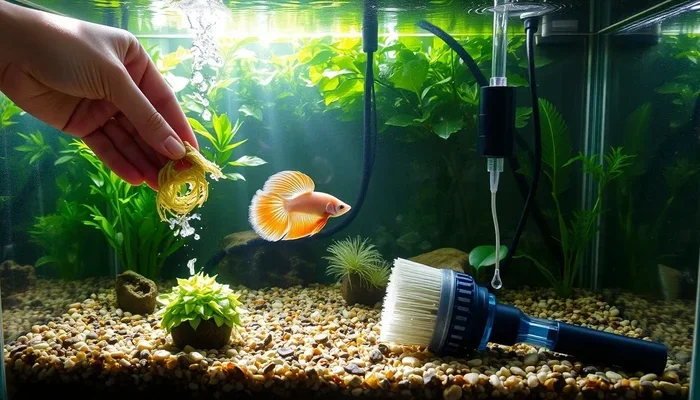
Use a gravel vacuum to siphon out the old water. Start by removing debris from the substrate. Then drain the water into your bucket. Aim for the recommended percentage, whether that is 25% or 50%.
Do not forget to clean the glass during this step. Algae buildup on the walls can affect water quality. A simple algae scraper works wonders.
Step 4: Add the New Water
Slowly pour the treated water back into the tank. Pouring it onto a plate or your hand helps prevent disturbing the substrate. This is especially important if your betta likes to dig or sift through the gravel.
After adding the water, check the temperature one more time. Make sure everything looks and feels right. Your betta should swim around normally within a few minutes.
Step 5: Record Your Water Change
This is a small step that makes a big difference. Keep a simple log of when you changed the water and how much. This helps you stay consistent and track any patterns in water quality. Many betta owners use a simple notebook or a phone app for this.
Common Mistakes to Avoid During Water Changes
Even experienced fish keepers make mistakes. Here are the most common errors to watch out for when you change your betta fish tank water.
Changing Too Much Water at Once
This is the number one mistake. People think more water equals cleaner water. But that is not true. Removing too much water at once wipes out the beneficial bacteria your tank needs. It also shocks your fish. Stick to the 25-50% rule and your betta will stay healthy.
Using Untreated Tap Water
Tap water contains chlorine and chloramine. These chemicals are safe for you but deadly for fish. Always use a water conditioner before adding tap water to your tank. This is a non-negotiable step in how to care for a betta fish.
Ignoring Water Temperature
Betta fish are tropical creatures. They need warm, stable water. Adding cold water during a change can cause temperature shock. Always match the temperature of the new water to the existing tank water. A simple thermometer takes the guesswork out of this process.
Skipping Water Changes Entirely
Some owners think that a good filter means they never need to change water. Filters do a great job, but they cannot remove all dissolved waste. Regular partial water changes are still essential. No filter replaces the need for fresh, clean water.
Expert Tips for a Healthier Betta Tank
Want to take your betta fish care to the next level? Here are some expert-backed tips that make a real difference.
- Test your water regularly: A simple test kit can reveal hidden ammonia, nitrite, and nitrate levels. Testing once a week helps you catch problems early.
- Do not overfeed: Feed your betta small amounts once or twice a day. Remove any uneaten food within a few minutes.
- Add live plants: Plants naturally absorb nitrates and help keep the water cleaner between changes.
- Clean your filter gently: Rinse filter media in old tank water, never tap water. This preserves the good bacteria.
- Watch your betta closely: Changes in behavior, color, or appetite can signal water quality issues. Trust your instincts.
These small habits add up over time. They create a stable, thriving environment where your betta can truly flourish. And remember, consistency is more important than perfection. Even if you miss a scheduled water change by a day or two, your betta will be just fine.
When to Do an Emergency Water Change
Sometimes you need to change water outside of your regular schedule. An emergency water change may be necessary if you notice any of the following signs:
- The water suddenly turns cloudy or foul-smelling
- Your betta is gasping at the surface
- You notice a spike in ammonia or nitrite on your test kit
- Your betta seems lethargic or unresponsive
- You accidentally added something toxic to the tank
In these situations, act quickly. Remove 30-50% of the water and replace it with fresh, treated water at the correct temperature. Then test the water again after a few hours to make sure the parameters have stabilized. If your betta shows signs of distress, consider consulting a fish veterinarian or experienced aquarist.
Final Thoughts
So, how long do you change your water for betta fish? The answer is every 1 to 2 weeks, with a partial water change of 25-50%. This simple routine keeps your betta healthy, colorful, and active. It also extends their lifespan and prevents common water-related diseases.
Remember that every tank is different. Use the guidelines in this article as a starting point and adjust based on your specific setup. Test your water regularly, watch your fish closely, and stay consistent. With a little effort, you can create a beautiful and safe home for your betta fish.
Your betta depends on you for everything. And the simplest thing you can do to show your love is to keep their water clean. Start today, and you will see the difference in your fish’s energy, color, and overall happiness.
For more detailed guidance on maintaining your betta’s environment, check out our complete guide on how to care for a betta fish. You will find additional tips on feeding, tank setup, and keeping your betta thriving for years to come.
Frequently Asked Questions
How long can a betta fish go without a water change?
A betta fish can survive for about 2 weeks without a water change in a well-filtered tank. However, waiting that long is not ideal. Waste and toxins build up over time, which can stress your fish and lead to health problems. Stick to a regular water change schedule every 1-2 weeks for the best results.
Can you change betta fish water too often?
Yes, changing water too often can actually harm your tank. Frequent full water changes strip away beneficial bacteria and destabilize the nitrogen cycle. Stick to partial water changes of 25-50% every 1-2 weeks. This keeps the water fresh without disrupting the tank ecosystem.
What type of water should you use for a betta fish water change?
Always use dechlorinated tap water treated with a water conditioner. You can also use spring water or purified water if your tap water quality is poor. Avoid distilled water because it lacks essential minerals. Make sure the water temperature matches the tank before adding it.
Do betta fish need a water change if they have a filter?
Yes, absolutely. A filter removes debris and processes ammonia, but it does not eliminate dissolved nitrates. Regular partial water changes are still necessary to keep nitrate levels safe. Think of the filter and water changes as two parts of the same betta tank maintenance routine.
How do you know when it is time to change your betta fish water?
Several signs indicate it is time for a water change. Cloudy water, a strong odor, algae buildup, and your betta acting lethargic are all warning signs. Using a test kit to check ammonia, nitrite, and nitrate levels gives you the most accurate answer. If any parameter is high, change a portion of the water right away.
Is it okay to change all the water in a betta fish bowl at once?
No, changing all the water at once is risky and not recommended. It removes beneficial bacteria and causes a sudden shift in water parameters. This can shock or even kill your betta. Always perform a partial water change, replacing only 25-50% of the water at a time. Your fish will be much safer and healthier as a result.