Why Does My Betta Fish Have White Stuff on It
Seeing white spots, flakes, or a milky coating on your betta can be alarming. This guide explains the common reasons behind the white stuff, from harmless slime to serious infections, and offers easy, step‑by‑step treatments so you can act quickly and keep your finned friend thriving.
Key Takeaways
- White coating vs. spots: A thin slime is normal; raised spots often mean disease.
- Water quality matters: Poor parameters fuel fungal and bacterial growth.
- Identify the culprit: Look for texture, location, and behavior to tell fungus, ich, or parasites apart.
- Quick treatment works: Salt baths, antifungal meds, and clean water can reverse early stages.
- Prevention is key: Regular water changes, proper diet, and quarantine prevent recurrence.
- When to seek help: If the white material spreads rapidly or the fish shows stress, consult a vet.
- Useful resources: Links to related articles help you troubleshoot other color and health changes.
📑 Table of Contents
- Introduction: When White Appears on Your Betta
- 1. Normal Slime Coat: The Good White
- 2. Fungal Infections: The Fluffy White Growth
- 3. Ich (White Spot Disease): Tiny Pearls on the Body
- 4. Bacterial Infections: Milky Swellings and White Patches
- 5. Parasites Other Than Ich: Velvet and Flukes
- 6. Environmental Factors: Water Quality and Stress
- Conclusion: Keep an Eye on the White
Introduction: When White Appears on Your Betta
Imagine you’re checking your betta’s tank after a weekend away and notice a pale, powdery film on its fins. Your first thought might be “gross!” but it’s also a signal that something in the environment or the fish’s body needs attention. White stuff on a betta can range from harmless slime to dangerous fungal growth. Understanding the difference is the first step to a happy, healthy fish.
In this article we’ll walk through the most common causes, how to spot the warning signs, and what you can do right now to treat the problem. We’ll keep the language simple—think of us chatting over a cup of coffee—so you can act fast without feeling overwhelmed.
1. Normal Slime Coat: The Good White
What is the slime coat?
All healthy fish produce a thin, almost invisible mucus layer that protects against bacteria and parasites. When the water is slightly dirty or the fish is stressed, the coat can become more noticeable as a milky sheen.

Visual guide about Why Does My Betta Fish Have White Stuff on It
Image source: i.ytimg.com
How to tell it apart from disease
- Texture: A normal slime coat feels smooth and slides off when you gently touch it with a soft finger.
- Location: It covers the whole body evenly, not just patches.
- Behavior: Your betta swims normally, eats well, and shows no signs of distress.
Quick care tips
If the slime looks a bit thicker than usual, simply improve water quality. A 20‑30 % water change, a quick dip in a low‑dose salt bath (1 gram of aquarium salt per litre), and checking the filter will usually restore balance.
2. Fungal Infections: The Fluffy White Growth
What does fungal infection look like?
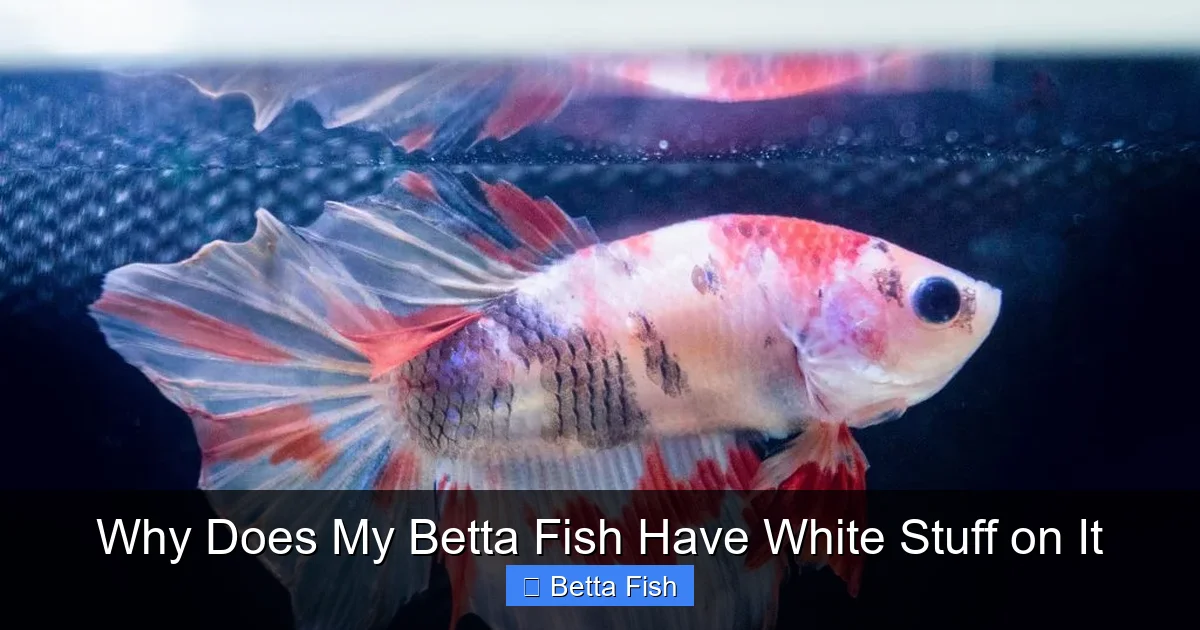
Fungus appears as white, cotton‑like patches that may start on fins, the tail, or any wounded area. It often spreads outward, forming a fuzzy border that feels like a soft blanket.

Visual guide about Why Does My Betta Fish Have White Stuff on It
Image source: ekk4j69ebaa.exactdn.com
Why does it happen?
Fungal spores are everywhere in a tank, but they only take hold when the fish’s immune system is weakened—often after a recent injury, poor water, or a sudden temperature change.
Step‑by‑step treatment
- Isolate the fish: Move the betta to a hospital tank with clean, conditioned water.
- Salt bath: Add 2 grams of aquarium salt per litre for 30 minutes, twice a day.
- Antifungal medication: Use a product containing malachite green or formalin, following the label dosage.
- Maintain pristine water: Perform 25 % water changes daily until the fungus clears.
For a detailed medication guide, see our article on how to cure white spots on betta fish.
3. Ich (White Spot Disease): Tiny Pearls on the Body
Spotting ich on a betta
Ich, caused by the parasite Ichthyophthirius multifiliis, shows as tiny, raised white dots—like pepper grains—on the skin and fins. The spots are usually 1–2 mm in diameter and may cause the fish to rub against objects.
Why bettas get ich
Introducing a new fish without quarantine, sudden temperature drops, or stressed water parameters can trigger an outbreak.
Treatment plan
- Raise the tank temperature slowly to 28‑30 °C (82‑86 °F). The parasite’s life cycle speeds up, making treatment easier.
- Add a copper‑based medication or a formalin dip, following the product instructions.
- Increase daily water changes to 30 % to flush out free‑swimming parasites.
If you’re curious why your betta might be turning white in the first place, check out why is my betta fish turning white.
4. Bacterial Infections: Milky Swellings and White Patches
Symptoms to watch for
Bacterial infections often start with a cloudy or milky area on the body, sometimes with a slight swelling. The affected skin may feel soft to the touch and the fish might show reduced appetite.
Common triggers
Overcrowding, dirty substrate, and unfiltered water create a breeding ground for harmful bacteria.
How to treat
- Quarantine the betta immediately.
- Start a broad‑spectrum antibiotic such as kanamycin or erythromycin, dosing as directed.
- Perform a 30 % water change daily and keep the tank temperature stable around 26 °C (79 °F).
- Consider adding a small amount of aquarium salt (1 g/L) to reduce osmotic stress.
5. Parasites Other Than Ich: Velvet and Flukes
Velvet disease
Velvet, caused by Oodinium spp., gives the fish a fine gold‑gray dusting that can look white in bright light. It often spreads quickly and can be fatal if untreated.
Fluke infections
Flukes attach to the gills and may cause a white, frothy coating around the mouth and opercula.
Management
Both conditions respond to copper sulfate treatments and a gradual temperature increase to 28 °C (82 °F). Always follow the medication label and monitor water parameters closely.
6. Environmental Factors: Water Quality and Stress
Key water parameters
Ammonia above 0 ppm, nitrite above 0 ppm, and nitrate over 20 ppm create a stressful environment that encourages white growths. pH should stay between 6.5 and 7.5 for most bettas.
Cleaning routine
- Do a 25 % water change twice a week.
- Vacuum the substrate to remove uneaten food.
- Rinse filter media in tank water (not tap water) to preserve beneficial bacteria.
Preventive measures
Feed a varied diet of high‑quality pellets, frozen brine shrimp, and occasional bloodworms. Avoid overfeeding; excess waste fuels bacterial and fungal growth.
Conclusion: Keep an Eye on the White
White stuff on a betta fish is a signal—not a sentence. By observing texture, location, and your fish’s behavior, you can quickly differentiate a harmless slime coat from a serious infection. Prompt treatment, clean water, and a stress‑free environment are the best tools in your arsenal. Remember, a healthy tank is the foundation for a vibrant betta, and a little vigilance goes a long way.
If you’ve noticed other color changes, such as turning white and dying, you may also want to read why did my betta fish turn white and died for deeper insight.
Frequently Asked Questions
Why does my betta have white spots on its fins?
White spots are often a sign of fungal infection or ich. Check the texture—fluffy growth suggests fungus, while tiny raised dots point to ich.
Is a white coating on a betta ever normal?
Yes, a thin milky slime coat is a natural protective layer. It becomes a concern only if it thickens, spreads unevenly, or is accompanied by other symptoms.
Can I treat white fungus at home?
Absolutely. A salt bath combined with a commercial antifungal medication usually clears early infections within a few days.
How quickly does ich spread on a betta?
Ich can become visible within 24‑48 hours after exposure. Early treatment is crucial to prevent severe stress or death.
What water changes help prevent white growths?
Changing 25‑30 % of the water weekly, keeping ammonia and nitrite at 0 ppm, and maintaining stable temperature all reduce the risk.
When should I see a vet for my betta?
If the white material spreads rapidly, the fish stops eating, or you notice breathing difficulty, seek professional help immediately.