Is a Betta Fish Invertebrate or Vertebrate
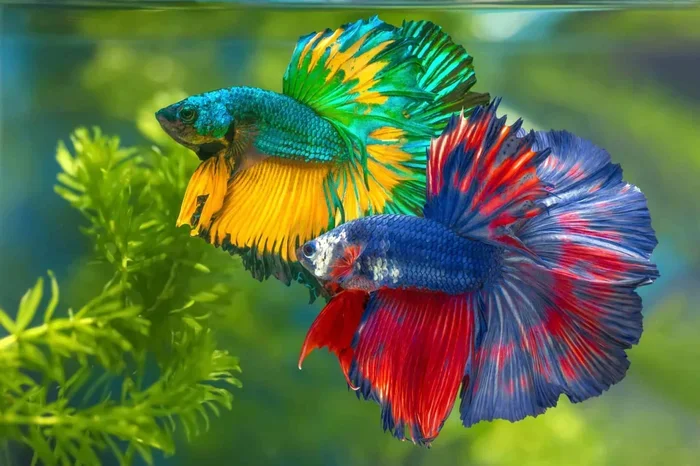
A betta fish is absolutely a vertebrate. It belongs to the vertebrate group because it has a backbone and a spinal column, just like all other fish, mammals, birds, and reptiles. Understanding the betta fish classification helps aquarium owners appreciate how these beautiful creatures are built and why their care needs differ from invertebrates like snails and shrimp.
Have you ever wondered about the basic biology of your betta fish? Maybe you have heard the terms vertebrate and invertebrate thrown around and felt confused. The truth is simple and fascinating. A betta fish is a vertebrate, which means it has a backbone, just like you do.
Understanding whether a betta fish is invertebrate or vertebrate matters more than you might think. It affects everything from how their body works to what kind of tank mates they can have. Let us dive deep into the world of betta fish anatomy and classification.
Whether you are a new aquarium owner or a seasoned hobbyist, knowing the basics of betta fish biology helps you provide better care. This article breaks it all down in simple terms. You will learn what makes a betta a vertebrate, how that differs from invertebrates, and why this knowledge matters for your aquarium.
Key Takeaways
- Betta fish are vertebrates: They have a backbone, spinal cord, and internal skeleton, placing them firmly in the vertebrate group.
- Betta fish belong to the class Actinopterygii: This is the class of ray-finned fish, which includes most aquarium fish species.
- Invertebrates lack a backbone: Creatures like snails, shrimp, and jellyfish are invertebrates, and they are very different from bettas in anatomy.
- Understanding vertebrate vs invertebrate helps with tank mates: Knowing the difference helps you choose compatible tank mates for your betta and provide better care.
- Betta fish share traits with other vertebrates: They have a centralized nervous system, a closed circulatory system, and internal organs similar to other vertebrates.
- Proper care starts with knowing their biology: Learning about betta fish anatomy helps you create a healthier aquarium environment.
📑 Table of Contents
- What Makes a Betta Fish a Vertebrate?
- Vertebrate vs Invertebrate: What Is the Difference?
- Where Does the Betta Fish Fit in Animal Classification?
- Betta Fish Anatomy: A Closer Look at a Vertebrate Body
- Why Does This Classification Matter for Aquarium Owners?
- Fun Facts About Betta Fish Biology
- Common Mistakes People Make About Fish Classification
- Final Thoughts on Betta Fish Classification
What Makes a Betta Fish a Vertebrate?
The answer is straightforward. A betta fish has a backbone made of bone or cartilage. This backbone, also called a spinal column, runs along the length of its body. Inside that backbone sits the spinal cord, which connects to the brain. This is the defining feature of all vertebrates.
The Backbone and Internal Skeleton
Every betta fish has an internal skeleton. This skeleton supports the body, protects vital organs, and allows for movement. The bones in a betta are lightweight but strong. They are designed to help the fish swim gracefully through the water.
Here are the key parts of a betta fish skeleton:
- Skull: Protects the brain and sensory organs.
- Vertebrae: Small bones stacked on top of each other that form the spine.
- Ribs: Protect internal organs like the heart and swim bladder.
- Fin rays: Support the fins and help with steering and balance.
All of these structures are found inside the body. This is a hallmark of vertebrates. Invertebrates, on the other hand, either have no skeleton at all or rely on an external shell.
The Nervous System of a Betta Fish
Vertebrates have a centralized nervous system. For a betta fish, this means a brain connected to a spinal cord through the vertebrae. This system allows bettas to process information, respond to their environment, and coordinate movement.
Bettas are surprisingly intelligent for fish. They can recognize their owners, respond to feeding times, and even interact with objects in their tank. All of this is made possible by their vertebrate nervous system. If a betta fish were an invertebrate, it would lack this complex brain and spinal cord structure.
Vertebrate vs Invertebrate: What Is the Difference?
Understanding the difference between vertebrates and invertebrates is the foundation of animal classification. These two groups make up the vast majority of the animal kingdom, but they are very different in structure.
What Are Vertebrates?
Vertebrates are animals with a backbone. This group includes fish, amphibians, reptiles, birds, and mammals. Humans are vertebrates. Dogs are vertebrates. And yes, your betta fish is a vertebrate too.
Vertebrates share several common traits:
- Internal skeleton: A bony or cartilaginous framework inside the body.
- Spinal cord: A nerve cord protected by the vertebrae.
- Closed circulatory system: Blood flows through vessels, not open cavities.
- Well-developed brain: A central brain that controls body functions.
- Bilateral symmetry: The body can be divided into two mirror-image halves.
What Are Invertebrates?
Invertebrates are animals without a backbone. This group is much larger than the vertebrate group. It includes insects, spiders, worms, jellyfish, snails, and shrimp. In fact, about 95 percent of all animal species are invertebrates.
Invertebrates have very different body structures:
- Exoskeletons: Some, like crabs and insects, have a hard outer shell.
- Hydrostatic skeletons: Some, like worms, use fluid pressure for support.
- No spinal cord: Their nervous systems are much simpler.
- Open circulatory systems: Blood flows freely in body cavities in many species.
Side-by-Side Comparison
Here is a simple comparison to help you understand the differences:
- Backbone: Vertebrates have one. Invertebrates do not.
- Skeleton: Vertebrates have an internal skeleton. Invertebrates may have an exoskeleton or no skeleton at all.
- Nervous system: Vertebrates have a complex brain and spinal cord. Invertebrates have simpler nerve nets or ganglia.
- Size: Vertebrates tend to be larger, though there are exceptions. Invertebrates are often smaller.
- Examples in aquariums: Bettas, goldfish, and guppies are vertebrates. Snails, shrimp, and corals are invertebrates.
This comparison matters a lot for aquarium owners. If you are planning a community tank, knowing which animals are vertebrates and which are invertebrates helps you choose the right tank mates for your betta.
Where Does the Betta Fish Fit in Animal Classification?
Animal classification is like a big family tree. Every animal has a place on this tree based on its traits. The betta fish has a very specific spot on this tree, and it is firmly in the vertebrate branch.
The Scientific Classification of Betta Fish
Scientists use a system called taxonomy to classify all living things. Here is where your betta fits in:
- Kingdom: Animalia (all animals)
- Phylum: Chordata (animals with a notochord)
- Subphylum: Vertebrata (animals with a backbone)
- Class: Actinopterygii (ray-finned fish)
- Order: Anabantiformes (gourami order)
- Family: Osphronemidae (gourami family)
- Genus: Betta
- Species: Betta splendens (the common betta)
Notice the subphylum Vertebrata. This is the group that includes all animals with backbones. Your betta fish is part of this group from the very start of its classification. It is not just a vertebrate by a small detail. It is a vertebrate by its entire biological design.
What Is Chordata?
All vertebrates belong to the phylum Chordata. Chordates share a few key features at some point in their development. These include a notochord, a dorsal nerve cord, pharyngeal slits, and a post-anal tail. In vertebrates, the notochord is replaced by the spinal column during development.
The betta fish develops all of these features. Even as a tiny fry, a betta has a notochord that quickly turns into vertebrae. This is a clear sign that bettas are vertebrates, not invertebrates.
Betta Fish Anatomy: A Closer Look at a Vertebrate Body
Now that we know bettas are vertebrates, let us look at how this shows up in their anatomy. The body of a betta fish is designed around its vertebrate structure.
The Head and Brain
The betta head houses a well-developed brain protected by the skull. Bettas have excellent senses for a fish. They can see colors, detect vibrations in the water, and even smell chemical signals. All of this is controlled by the brain, which is part of the central nervous system found only in vertebrates.
The Torso and Organs
Inside the torso of a betta fish, you find all the organs you would expect in a vertebrate. The heart pumps blood through a closed circulatory system. The gills extract oxygen from water. The swim bladder helps the fish control its buoyancy. The liver, kidneys, and digestive system all work together to keep the fish healthy.
None of these organs would work the same way in an invertebrate. Invertebrates like snails and shrimp have completely different body plans. Their organs are arranged differently, and they lack the complex systems found in vertebrates.
The Fins and Tail
The fins of a betta are supported by fin rays, which are part of the internal skeleton. This is another vertebrate trait. The tail fin provides propulsion, while the other fins help with steering and balance. All of these structures depend on the internal bone framework that only vertebrates have.
If you ever watch your betta swim gracefully around the tank, remember that every movement is coordinated by its vertebrate nervous system and powered by its vertebrate musculoskeletal structure. It is truly amazing how much complexity is packed into such a small body.
Why Does This Classification Matter for Aquarium Owners?
You might be thinking, “I just want to keep my betta happy. Why do I need to know about vertebrates and invertebrates?” The answer is practical. Understanding the biology of your fish helps you make better decisions about tank setup, diet, and tank mates.
Choosing the Right Tank Size
Because bettas are active vertebrates with complex needs, they require proper space. A 5 gallon tank is the minimum recommended size for a single betta. This gives them room to swim and explore, which supports their vertebrate needs for exercise and mental stimulation.
Invertebrates like snails and shrimp often need different tank conditions. They may prefer different water parameters, different hiding spots, and different food types. Knowing the difference helps you plan a tank that works for everyone.
Feeding Your Betta Properly
Bettas are carnivorous vertebrates. They need a diet rich in protein from animal sources. This is very different from many invertebrates that might share a tank. Shrimp and snails eat algae and detritus, while bettas need meaty foods like pellets, frozen brine shrimp, and bloodworms.
Feeding the wrong diet to a vertebrate like a betta can lead to health problems. A betta fish not eating or moving could be a sign of nutritional issues. Always research the dietary needs of your pets based on their biological classification.
Tank Mate Compatibility
When choosing fish that are compatible with a male betta, it helps to understand that bettas are vertebrates with specific behavioral traits. They can be territorial and aggressive toward other fish with similar shapes and colors. Invertebrates like snails and shrimp are often safe tank mates because they are a completely different type of animal.
Understanding the difference between vertebrates and invertebrates helps you avoid costly mistakes. You will know which species can coexist peacefully and which ones cannot.
Fun Facts About Betta Fish Biology
Now for the interesting stuff. Here are some fun facts about betta fish that highlight their vertebrate nature:
- Bettas breathe air: Unlike most fish, bettas have a special organ called the labyrinth organ. This allows them to breathe atmospheric air. It is an adaptation found only in anabantoid fish, a group of vertebrates.
- They have a memory: Studies have shown that bettas can remember things for months. This level of cognitive ability is linked to their vertebrate brain structure.
- Bubble nests are a vertebrate behavior: Male bettas build bubble nests to protect their eggs. This reproductive behavior is driven by their biology as vertebrates.
- They feel temperature changes: As cold-blooded vertebrates, bettas rely on their environment to regulate body temperature. This is why tank temperature matters so much.
- Bettas have scales: Like other fish vertebrates, bettas are covered in scales that protect their body and reduce friction in the water.
Each of these facts ties back to the betta fish being a vertebrate. If bettas were invertebrates, they would not have these traits. The backbone and internal structures make all of these amazing abilities possible.
Common Mistakes People Make About Fish Classification
There are a few misconceptions that come up often when people talk about fish and invertebrates. Let us clear some of those up.
Mistake 1: All fish are the same type of animal. This is not true. Fish include both vertebrates (like bettas, goldfish, and guppies) and invertebrates (like jellyfish and sea cucumbers). The word “fish” describes a lifestyle, not a single biological group.
Mistake 2: Invertebrates cannot be kept in aquariums. Many popular aquarium pets are invertebrates. Snails, shrimp, and corals are all invertebrates. They make great additions to a betta tank when chosen carefully.
Mistake 3: Small fish are simpler animals. Size does not determine complexity. A tiny betta fish has a more complex body structure than many larger invertebrates. Its vertebrate anatomy includes a brain, spinal cord, and internal organs that rival those of much larger animals.
Avoiding these mistakes helps you become a better aquarium owner. It also deepens your appreciation for the amazing biology of your betta fish.
Final Thoughts on Betta Fish Classification
So, to answer the question clearly: a betta fish is a vertebrate, not an invertebrate. It has a backbone, an internal skeleton, a complex nervous system, and all the other traits that define vertebrates. This classification shapes every aspect of how bettas look, behave, and thrive.
Understanding this basic fact helps you take better care of your fish. It guides your choices about tank setup, diet, tank mates, and overall aquarium design. The more you know about your betta fish biology, the better equipped you are to provide a happy, healthy home.
If you want to learn more about your betta, check out our article on how long a betta fish lives or explore what makes a betta fish natural habitat. Every piece of knowledge helps you become a more confident and caring fish owner.
Your betta is a remarkable vertebrate. Treat it with the care and respect that its complex biology deserves, and it will reward you with years of beauty and companionship.
Frequently Asked Questions
Is a betta fish an invertebrate or vertebrate?
A betta fish is definitely a vertebrate. It has a backbone, an internal skeleton, and a centralized nervous system. These are all defining traits of vertebrates, and bettas belong to the subphylum Vertebrata in scientific classification.
What class does a betta fish belong to?
Betta fish belong to the class Actinopterygii, which includes all ray-finned fish. This class is part of the vertebrate group. All fish in this class have backbones and internal skeletons.
Are aquarium snails vertebrates or invertebrates?
Aquarium snails are invertebrates. They do not have a backbone or internal skeleton. Instead, they have a soft body and often a hard external shell. This makes them very different from bettas, which are vertebrates.
Can betta fish and shrimp live together in the same tank?
Yes, bettas and shrimp can sometimes live together. Bettas are vertebrates and shrimp are invertebrates, so they are very different types of animals. However, compatibility depends on the individual betta temperament and the shrimp species. Always monitor their interactions closely.
Why do bettas have a backbone?
Bettas have a backbone because they are vertebrates. The backbone, or spinal column, supports the body, protects the spinal cord, and provides attachment points for muscles. This internal skeleton is essential for the betta fish anatomy and its ability to swim effectively.
How does knowing about vertebrate vs invertebrate help with betta care?
Understanding this difference helps you choose the right tank mates, diet, and tank setup. Vertebrates like bettas have different needs than invertebrates like snails and shrimp. This knowledge leads to a healthier, more harmonious aquarium environment.