Which Is Better Cod Liver or Fish Oil
Cod liver oil and fish oil are not the same. Cod liver oil is a vitamin-rich whole-food extract from cod livers, containing vitamins A and D alongside omega-3s. Fish oil is typically a purified, concentrated source of just omega-3 fatty acids (EPA/DHA) from various fish bodies. Your choice depends entirely on your primary health goals: cod liver oil is excellent for foundational vitamin sufficiency, while high-quality fish oil is superior for targeted, high-dose omega-3 therapy. Always prioritize purity and third-party testing for either.
Key Takeaways
- Source & Processing: Cod liver oil comes from the liver of Atlantic cod; fish oil is usually derived from the flesh or whole small fish of various species like anchovies and sardines.
- Nutrient Profile: Cod liver oil naturally contains significant vitamins A and D; fish oil is primarily a concentrated source of omega-3 fatty acids (EPA and DHA) with minimal other vitamins.
- Primary Use Case: Choose cod liver oil for general wellness and vitamin A/D support. Choose purified fish oil for specific therapeutic goals like lowering triglycerides, reducing inflammation, or supporting brain health with high-dose EPA/DHA.
- Vitamin A Risk: Cod liver oil’s high vitamin A content can be toxic in excess, especially for pregnant women and those with certain conditions. Fish oil carries no such risk.
- Purity is Paramount: Both oils can contain contaminants (mercury, PCBs). Always select brands with verified third-party testing (e.g., IFOS, GOED) for purity and freshness to avoid rancidity.
- Form Matters: For fish oil, triglyceride form is better absorbed than the cheaper ethyl ester form. Cod liver oil is almost always in natural triglyceride form.
- Not Interchangeable: They serve different purposes. You may even need both, but consult a healthcare provider to avoid excessive vitamin A intake or omega-3 dosing.
📑 Table of Contents
- Introduction: The Great Omega-3 Confusion
- 1. Origins and Processing: From Sea to Bottle
- 2. Nutrient Profile Showdown: Vitamins vs. Concentrated Omega-3s
- 3. Health Benefits: Where Each One Shines
- 4. Quality, Purity, and Rancidity: The Non-Negotiable Factors
- 5. How to Choose: A Practical Decision-Making Guide
- 6. The Bottom Line: It’s Not a Competition, It’s a Toolbox
Introduction: The Great Omega-3 Confusion
Walk into any health food store, and you’ll find two bottles sitting side-by-side: one labeled “Cod Liver Oil” and another labeled “Fish Oil.” They look similar, often have similar price points, and both promise heart and brain health. It’s easy to assume they’re interchangeable. But what if I told you they are fundamentally different supplements with distinct histories, nutrient compositions, and best-use scenarios? This confusion isn’t just semantics; it can lead to choosing the wrong product for your specific health needs, or worse, missing out on critical nutrients or even risking toxicity.
For decades, cod liver oil was the original omega-3 supplement, a staple in Victorian medicine cabinets and given to children for “strong bones and teeth.” Fish oil, as we know it today, is a product of modern refinement, designed to deliver massive, purified doses of omega-3s for clinical research. One is a complex, whole-food-derived oil packed with fat-soluble vitamins. The other is a targeted, concentrated nutraceutical. Understanding this difference is the first step toward making an informed decision for you and your family. So, which is better? The honest answer is: it depends entirely on what you’re trying to achieve.
1. Origins and Processing: From Sea to Bottle
What is Cod Liver Oil Exactly?
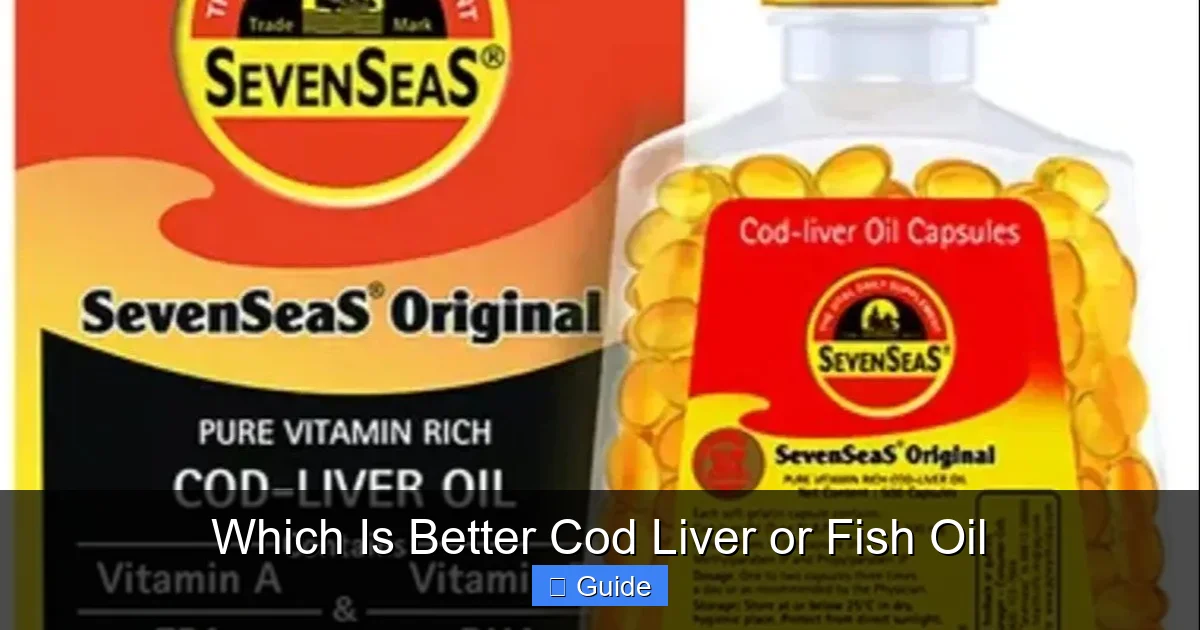
Cod liver oil, as its name suggests, is extracted from the livers of Atlantic cod (Gadus morhua). This is a crucial distinction. The liver is an organ that processes and stores nutrients, including fat-soluble vitamins. Historically, the oil was obtained by slow-cooking cod livers in barrels and skimming the oil that rose to the top—a method used since the Viking era. Modern cod liver oil is typically produced using gentle heat or molecular distillation to extract the oil while trying to preserve its delicate vitamin content. Because it comes from an organ, not the muscle tissue, it is inherently richer in vitamins A and D than the flesh of the fish itself.

Visual guide about Which Is Better Cod Liver or Fish Oil
Image source: cdn.consumerlab.com
What is Fish Oil Exactly?
“Fish oil” is a broader term. Most commercial fish oil supplements are made from small, oily, short-lived fish like anchovies, sardines, and mackerel. These fish are caught specifically for their oil. The oil is extracted from the entire fish (flesh, skin, innards) and then goes through extensive refining, deodorizing, and often molecular distillation. The goal of this processing is to concentrate the omega-3 fatty acids—eicosapentaenoic acid (EPA) and docosahexaenoic acid (DHA)—and remove impurities like mercury, arsenic, polychlorinated biphenyls (PCBs), and dioxins. The end product can be a concentrate, sometimes providing 500mg, 1000mg, or even more of EPA/DHA per softgel, in a purer form than you could get from eating the fish itself.
Processing Impacts Nutrient Integrity
The processing difference leads to a major compositional divergence. Cod liver oil processing must be careful not to destroy its valuable vitamins A and D, which are sensitive to heat and light. This often means less intensive purification, meaning cod liver oil can have a stronger “fishy” taste and may contain trace amounts of other liver-derived compounds. Fish oil processing is all about purity and concentration. It removes virtually all vitamins and other non-omega-3 components to deliver a precise dose of EPA and DHA. This makes fish oil generally more odorless and tasteless in its final, encapsulated form.
2. Nutrient Profile Showdown: Vitamins vs. Concentrated Omega-3s
This is the core of the debate. Let’s look at a typical serving comparison, but remember that brands vary widely.
Visual guide about Which Is Better Cod Liver or Fish Oil
Image source: c8.alamy.com
- Cod Liver Oil (1 teaspoon / ~4.5g): Typically provides about 450–1000 mg of combined EPA/DHA. Its standout feature is its vitamin content: often 400–1000 IU of Vitamin A and 200–400 IU of Vitamin D. It also contains some other fat-soluble compounds from the liver.
- Standard Fish Oil (1 softgel / ~1g): Usually provides 180–300 mg of combined EPA/DHA. A “concentrated” or “high-potency” fish oil softgel (1g) can provide 500–1000+ mg of EPA/DHA. It contains negligible amounts of vitamins A or D.
The Vitamin A & D Factor: A Blessing and a Curse
The vitamins in cod liver oil are its primary advantage and its greatest risk. Vitamin A is essential for vision, immune function, and cellular growth. Vitamin D is crucial for bone health, immune regulation, and mood. For individuals with limited sun exposure, darker skin, or dietary restrictions (e.g., vegans), cod liver oil can be a practical source of vitamin D. However, vitamin A is a fat-soluble vitamin that accumulates in the body. The Tolerable Upper Intake Level (UL) for adults is 3,000 IU per day. A single teaspoon of some cod liver oils can provide nearly a third of that limit. Chronic overconsumption can lead to hypervitaminosis A, causing liver damage, bone pain, hair loss, and birth defects. This makes cod liver oil completely unsuitable for pregnant women due to the teratogenic risk of excess vitamin A. Fish oil has zero vitamin A, eliminating this concern entirely.
Omega-3 Concentration: The Therapeutic Dose
For clinical purposes—such as lowering high triglycerides (which often requires 2-4 grams of EPA/DHA daily), managing rheumatoid arthritis, or supporting major depressive disorder—the dose matters immensely. Achieving a therapeutic dose with standard cod liver oil would mean consuming large volumes, which would then lead to dangerously high vitamin A intake. With concentrated fish oil, you can take 4-6 softgels to get 2-4 grams of EPA/DHA without any risk of vitamin A toxicity. Therefore, for any condition where research uses high-dose omega-3s, purified fish oil is the only logical choice.
3. Health Benefits: Where Each One Shines
Cod Liver Oil: The Foundational Support
Cod liver oil’s benefit profile is tied to its dual-action: omega-3s plus vitamins A & D.
- Historical & General Wellness: Its legacy is in preventing deficiency diseases like rickets (vitamin D deficiency) and night blindness (vitamin A deficiency). For someone with a poor diet and little sun, it offers a broad nutritional safety net.
- Immune Modulation: The combination of omega-3s and vitamin D provides a potent one-two punch for immune system regulation. This may offer general support against common illnesses and autoimmune overactivity.
- Bone & Teeth Health: Vitamin D aids calcium absorption, while vitamin A is involved in bone remodeling. This combo is why it was traditionally given to children.
Fish Oil: The Targeted Therapeutic Agent
Fish oil’s benefits are almost exclusively attributed to its high, purified doses of EPA and DHA.
- Cardiovascular Health: Strong evidence shows high-dose fish oil (prescription-strength) significantly lowers triglycerides. It may also modestly raise HDL (“good”) cholesterol, lower blood pressure, and reduce the risk of heart attack in high-risk individuals.
- Inflammatory Conditions: EPA is a precursor to anti-inflammatory compounds (resolvins, protectins). High doses are used to reduce joint pain and stiffness in rheumatoid arthritis and may help with inflammatory bowel disease.
- Brain & Mental Health: DHA is a primary structural fat in the brain and retina. Supplementation supports cognitive function with aging and is extensively researched for depression, anxiety, and ADHD.
- Pregnancy & Infant Development: DHA is critical for fetal brain and retinal development. Purified fish oil (without vitamin A) is the recommended source for pregnant and breastfeeding women.
Overlap in Benefits
Both provide omega-3s, so both will offer some general anti-inflammatory and cardioprotective benefits at standard doses. However, the magnitude of effect for specific conditions is almost always tied to the EPA/DHA dose, giving fish oil the edge in therapeutic scenarios.
Visual guide about Which Is Better Cod Liver or Fish Oil
Image source: c8.alamy.com
4. Quality, Purity, and Rancidity: The Non-Negotiable Factors
This is where both products can fail spectacularly if you buy poorly. Fish, especially larger, predatory ones, accumulate toxins from the ocean. The liver is a detoxification organ, so cod liver could theoretically concentrate certain contaminants.
The Contaminant Problem
Heavy metals (mercury, lead, cadmium), industrial chemicals (PCBs, dioxins), and pesticides can be present in unrefined oils. Molecular distillation is the key process that removes these. However, not all manufacturers use it thoroughly. This is why third-party verification is not a luxury; it’s a necessity.
The Rancidity Elephant in the Room
Omega-3 fats are highly unstable and oxidize (become rancid) easily when exposed to heat, light, and air. Rancid oil smells “fishy” (a sharp, pungent odor) and is pro-inflammatory—the exact opposite of what you want. It can cause gastrointestinal distress and may be linked to negative health outcomes. Many low-quality oils on the shelf are already oxidized. Look for:
- Antioxidants: Added vitamin E (tocopherols) to protect the oil.
- Packaging: Dark, opaque bottles or blister packs that shield from light.
- Freshness Indicators: Some brands print a “best by” date that is close to the production date, not years in the future. A “freshness test” (strong fishy smell when you open the capsule) is a bad sign.
Certifications to Look For
Do not trust marketing claims like “purified” or “molecularly distilled.” Demand independent, published certification.
- IFOS (International Fish Oil Standards): The gold standard. They test for potency, purity (contaminants), and freshness (oxidation levels). A 5-star rating is excellent.
- GOED (Global Organization for EPA and DHA Omega-3s): Their members must adhere to strict quality and sustainability guidelines.
- USP (United States Pharmacopeia): Verifies that the product contains the ingredients listed, in the declared potency, and meets purity standards.
Bottom Line: A cheap, unverified cod liver oil or fish oil is a gamble with your health. Invest in a brand that transparently shares its third-party test results.
5. How to Choose: A Practical Decision-Making Guide
Forget “which is better.” Ask “which is better for me?”
Choose Cod Liver Oil If:
- You have a documented deficiency in vitamins A and/or D (confirmed by a blood test).
- You live in a northern latitude with very little sun exposure and have dietary restrictions (e.g., dairy-free, low-fat diet) that limit vitamin D intake.
- You are looking for a general, all-around nutritional supplement for a child or adult with a poor diet, and you will strictly adhere to the serving size to avoid vitamin A excess.
- You prefer a single, whole-food-derived product and are diligent about not exceeding the recommended dose.
Choose High-Potency, Purified Fish Oil If:
- Your primary goal is heart health, lowering triglycerides, or supporting brain function.
- You are pregnant, planning to become pregnant, or breastfeeding (to avoid vitamin A).
- You have an inflammatory condition like rheumatoid arthritis and need a therapeutic dose of omega-3s.
- You want a high, precise dose of EPA/DHA without any risk of vitamin A toxicity.
- You are concerned about the “fishy” taste and want a product that is guaranteed fresh and purified.
A Quick-Reference Flowchart
Step 1: Do you need a specific, high dose of EPA/DHA for a health condition (as advised by a doctor)? → Fish Oil.
Step 2: Are you pregnant/breastfeeding or could you be? → Fish Oil (Cod Liver Oil is contraindicated).
Step 3: Do you have a known deficiency in Vitamin D and possibly A, and can you commit to a strict, low dose? → Cod Liver Oil.
Step 4: Are you just looking for general wellness and already eat a balanced diet with some fatty fish? → Either, but prioritize purity. You may not even need a supplement.
6. The Bottom Line: It’s Not a Competition, It’s a Toolbox
Framing the question as “which is better” sets up a false dichotomy. Cod liver oil and high-quality fish oil are different tools for different jobs. Cod liver oil is a nutrient-dense whole food supplement with a historical pedigree. Its value lies in its natural vitamin content, but that comes with the serious caveat of vitamin A toxicity risk. Fish oil is a modern, targeted pharmaceutical-grade nutraceutical designed for delivering clean, high-dose omega-3 fatty acids for specific therapeutic outcomes.
For the vast majority of people in the modern world seeking the cardiovascular, cognitive, and anti-inflammatory benefits of omega-3s, a high-potency, verified-pure fish oil is the more versatile, safer, and more effective choice. The exception is for those with specific, diagnosed vitamin A/D deficiencies who can use cod liver oil carefully as a short-term or carefully managed solution. Always, always check the label for serving size, total vitamin A content, and third-party certifications. Your health is too important to leave to chance or marketing hype.
Frequently Asked Questions
Can I take both cod liver oil and fish oil together?
Generally, no. Combining them would quickly lead to excessive vitamin A intake from the cod liver oil. If you need both vitamin D and high-dose omega-3s, a safer strategy is to take a purified fish oil supplement alongside a separate, low-dose vitamin D3 supplement (without vitamin A).
Is cod liver oil safe for children?
Historically, it was given to children. However, due to the risk of vitamin A toxicity, it must be given with extreme caution and only under pediatric guidance. The dose must be carefully calculated based on the child’s age and weight. Many pediatricians now recommend separate vitamin D drops and a child-formulated fish oil for omega-3s instead.
Why does my fish oil give me “fish burps”?
This is usually a sign of poor quality or rancidity. It can also happen if you take the oil on an empty stomach. To avoid it: choose a fresh, high-quality brand (certified by IFOS/GOED), take your softgel with a meal that contains fat, or try a “enteric-coated” softgel that dissolves in the intestine, not the stomach.
What about plant-based omega-3s like flaxseed oil?
Flaxseed oil provides ALA (alpha-linolenic acid), a short-chain omega-3 that the body must convert to EPA and DHA. This conversion is very inefficient (often less than 5%). For direct EPA/DHA benefits, algae oil (a vegan source of DHA/EPA) or fish oil is necessary. Flaxseed oil is good for general health but not a direct substitute for marine omega-3s.
How much should I take daily?
For general health maintenance, 250-500 mg of combined EPA/DHA from fish oil is often recommended. For specific conditions like high triglycerides, doses of 2-4 grams per day are used under medical supervision. For cod liver oil, follow the label strictly and never exceed the recommended dose to avoid vitamin A toxicity. The optimal dose depends entirely on your individual health status and goals.
Is cod liver oil a good source of vitamin D for vegans?
No, cod liver oil is an animal product and is not vegan. For vegans needing vitamin D, a vegan D3 supplement (derived from lichen) or exposure to safe sunlight is necessary. Vegan omega-3 supplements are derived from algae.