Where to Put Betta Fish Hammock
Placing your betta fish hammock correctly is crucial for your pet’s well-being. The ideal spot is near the water’s surface, in a calm area away from strong filter currents, and ideally close to a plant or decor for a sense of security. Proper placement encourages natural resting behavior, reduces stress, and supports your betta’s unique labyrinth organ breathing needs.
Key Takeaways
- Surface Proximity is Non-Negotiable: Betta fish *must* access atmospheric air. A hammock must sit at or just below the water’s surface for your betta to rest and breathe easily.
- Avoid Filter Currents: Never place a hammock directly in the path of a filter output. Strong currents tire bettas, force them to constantly swim, and make the hammock useless as a resting spot.
- Prioritize Security and Cover: Position the hammock near a plant, piece of decor, or tank wall. This gives your betta a feeling of safety, mimicking the dense vegetation where they rest in the wild.
- Stable Attachment is Key: Use a suction cup with a flexible, gentle arm to attach the hammock to the glass. Ensure it’s secure but not so tight it risks cracking the tank or trapping a fin.
- Observe and Adjust: Your betta’s behavior is the ultimate guide. If they ignore it after a few days, try moving it to a new location with better cover or less light disturbance.
📑 Table of Contents
- Why Hammock Placement Matters More Than You Think
- The Golden Rules: Universal Placement Principles
- Prime Real Estate: 5 Optimal Locations in Your Tank
- Common Mistakes and How to Avoid Them
- Integrating with Your Overall Tank Setup
- Reading Your Betta: Is It Working?
- Conclusion: It’s About Empathy, Not Just Equipment
Why Hammock Placement Matters More Than You Think
So, you’ve got your beautiful betta fish, that vibrant, flowing personality in a cup, and you’ve set up a stunning aquarium. You’ve added the heater, the filter, the gravel, and maybe even a few live plants. Then you see it: that little betta fish hammock. It’s a simple thing, really—a broad, flat leaf made of silicone or fabric, attached to a suction cup. It seems like a cute, optional accessory. But understanding where to put a betta fish hammock is one of the most impactful, yet often overlooked, aspects of betta husbandry. It’s not just about giving them a place to lounge; it’s about supporting their fundamental biology and psychology.
Betta splendens, or Siamese fighting fish, are labyrinth fish. This means they possess a special organ called the labyrinth, which allows them to gulp air from the surface. In their natural, often oxygen-poor habitats like rice paddies and slow-moving streams, this adaptation is vital for survival. Even in our well-oxygenated tanks, this instinct is hardwired. They will frequently rise to the surface to take a breath. Now, imagine if every time you needed to rest, you had to swim upward against a current or into open, bright water where you feel exposed. That’s what improper hammock placement forces your betta to do. A correctly placed hammock becomes a sanctuary right at the air-water interface, a place to rest *while* being in the perfect position to breathe. It reduces their energy expenditure, lowers stress hormones, and can even improve their overall health and color vibrancy. Getting the location wrong means you’ve bought a fancy decoration that does nothing. Getting it right? You’ve provided a critical piece of environmental enrichment.
The Golden Rules: Universal Placement Principles
Before we dive into specific tank spots, there are three non-negotiable, universal principles that apply to every single betta tank, from a 2.5-gallon nano to a 20-gallon community. Think of these as the foundation. If you violate these, the specific location won’t matter.
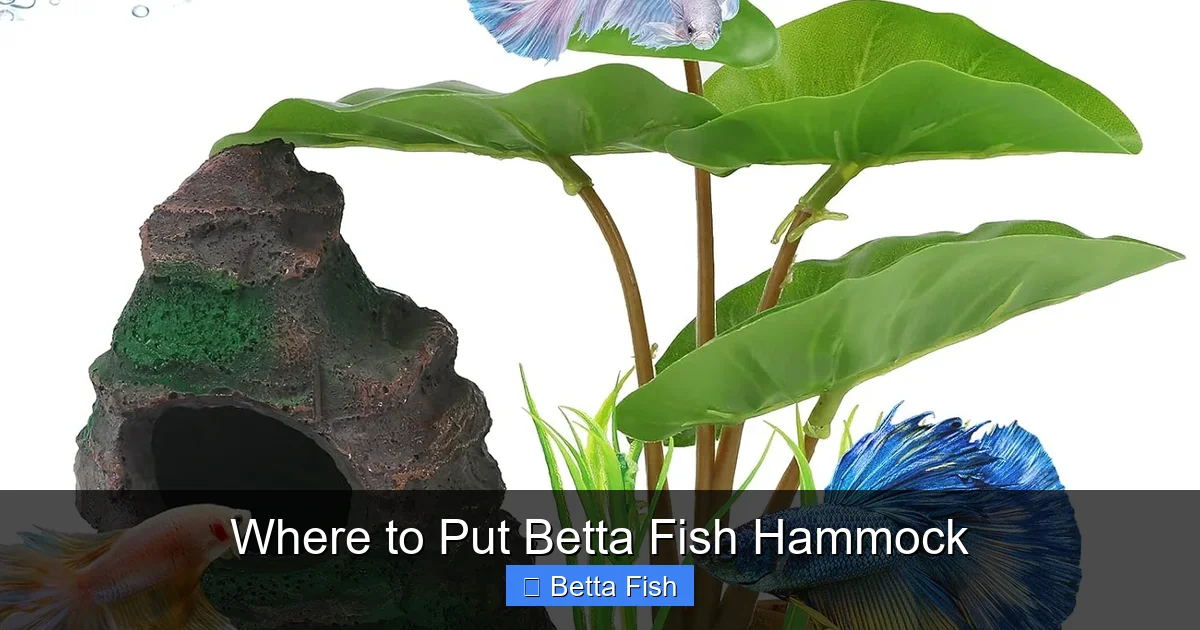
Visual guide about Where to Put Betta Fish Hammock
Image source: gosupps.com
Rule #1: The Surface is Sacred
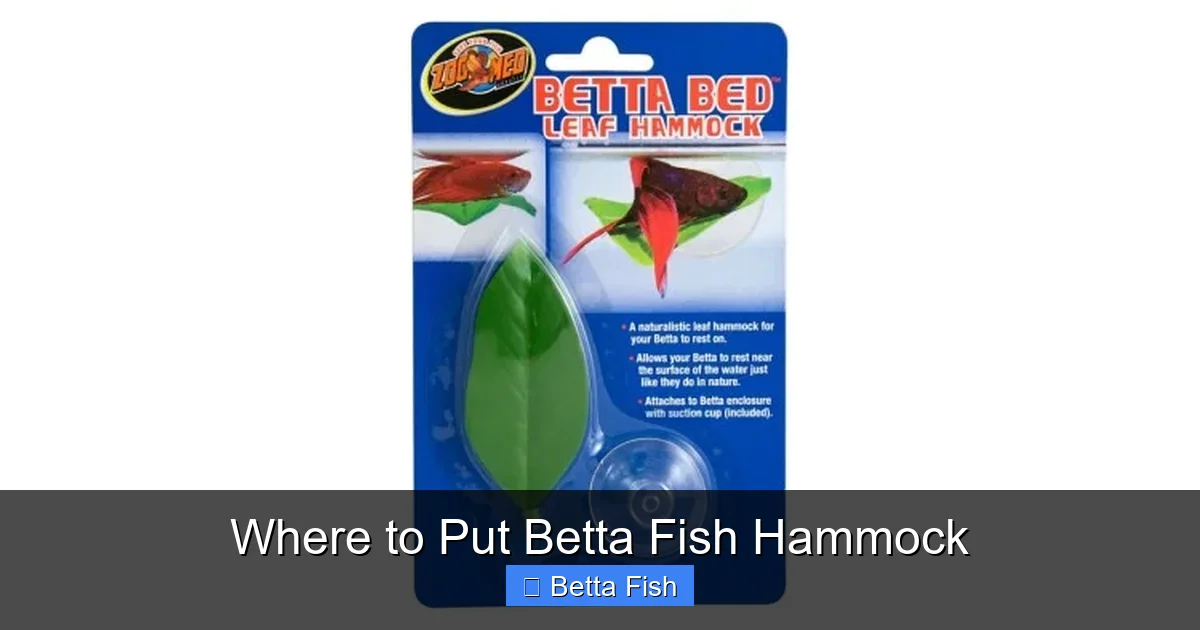
The single most important rule for where to put a betta fish hammock is that it must be at the water’s surface. Not a few inches below. Not “close to the top.” It must be positioned so that when your betta rests on it, their mouth is literally breaking the water’s surface, or at worst, a millimeter below it. This is because their labyrinth organ requires direct access to atmospheric air. A hammock placed mid-tank is just another piece of decor. A surface-level hammock is a breathing station and a bed combined. When attaching the suction cup, press it firmly to the glass and then bend the flexible arm so the leaf pad floats right at the top. Test it by gently pushing it down—it should have some give but spring back to the surface.
Rule #2: Calm Water is Everything
Bettas are from stagnant waters. They are not built for swimming against currents. A strong filter flow doesn’t just stress them; it physically exhausts them and can damage their delicate, flowing fins. Therefore, your hammock must be placed in a dead zone, an area of the tank with virtually no water movement. This means you need to understand your tank’s hydrology. Turn off the lights and watch the water. Where do the leaves on your plants stand still? Where does the water look glassy compared to the rippling elsewhere? That’s your spot. Never, under any circumstances, place a hammock directly in front of a filter spout, powerhead, or in the path of a wave maker. The suction cup might hold, but the current will push your betta off and turn the hammock into a frustrating, swinging trap.
Rule #3: Security Trumps Aesthetics
In the wild, a betta doesn’t rest out in the open. They tuck themselves under lily pads, behind overhanging reeds, or in dense thickets. This provides cover from predators (like birds) and a psychological sense of safety. Your aquarium, even with no predators, is a stressful environment for a prey animal. Bright lights, movements outside the tank, and the open water column all feel dangerous. Therefore, the best betta fish hammock placement is always adjacent to a form of cover. This could be a tall background plant, a piece of driftwood that breaks the surface, a castle with an upper platform, or simply the corner of the tank where two walls meet. The goal is to have the hammock positioned so your betta can approach it from behind or beside something solid, not from the vast, exposed middle of the tank.
Prime Real Estate: 5 Optimal Locations in Your Tank
Now that we have the foundation, let’s talk specific square footage. Every tank is different, but these five locations are consistently the best real estate for a betta fish hammock. You might need to try one or two before finding the perfect spot for your specific setup.

Visual guide about Where to Put Betta Fish Hammock
Image source: gosupps.com
The Corner Cove (The Classic)
This is the go-to, failsafe location for most standard rectangular tanks. Choose a corner, preferably one that is not directly opposite the main viewing side if you have a very active betta who spooks easily. Attach the suction cup to the glass in the corner, positioning the hammock so it sits diagonally or parallel to the walls. The two tank sides themselves become the “cover,” creating a cozy, enclosed feeling. This spot is naturally calm because corner currents are minimal. It’s also easy to combine with a tall, background plant like a Amazon sword or java fern that you’ve anchored in the substrate nearby. The plant’s leaves will drape over or next to the hammock, enhancing the security. Pro tip: If your tank has a black background, the corner will feel even more enclosed and safe.
The Plant Canopy (The Natural Look)
If you have a well-planted tank with floating plants like dwarf water lettuce, red root floaters, or even a single piece of hornwort, this is paradise for a betta. Attach the hammock suction cup to the glass just behind or beneath the floating plant roots. The plant’s dense root system or leaf mat will create a beautiful, natural canopy over the hammock. This does three things: it diffuses harsh overhead lighting, creating a dappled, shaded rest spot; it provides supreme visual cover from above; and it mimics the lily pad environment bettas evolved in. Your betta will often choose to rest on the hammock nestled under this green roof. Ensure the plant’s roots aren’t so dense they block the hammock’s surface entirely—your betta needs to be able to land on it.
The Driftwood Perch (The Architectural Choice)
For a more structured, natural aquascape, a large piece of driftwood that breaks the water surface is a perfect anchor point. Instead of attaching the hammock to the glass, you can often tuck the suction cup arm or the hammock’s own straps onto a horizontal branch of the driftwood that sits just above the water. Alternatively, attach it to the glass immediately behind or beside the driftwood. The wood becomes a visual barrier and a familiar, natural texture. This setup looks incredibly organic and works wonderfully in blackwater or biotope-style tanks. The key is ensuring the driftwood is stable and the hammock isn’t so close that the betta’s long fins get snagged on any rough patches on the wood.
The “Quiet Zone” Behind Decor (The Strategic Hide)
Sometimes, the best spot is hidden in plain sight. Look at your tank’s layout. Where is the largest piece of decor—a big rock, a resin cave, a log? Now, look at the water flow *behind* that object, on the side opposite the filter current. This is often a pocket of perfectly still water. Attach the hammock to the glass in this pocket, with the decor item serving as a windbreak. Your betta can swim around the side of the decor to access the hammock, and once there, they have the solid mass of the decor on one side and the tank wall on the other. This is an excellent choice for bettas that are particularly skittish, as it maximizes the feeling of being hidden.
The Surface Film Breaker (The Filter Adjacent Pro)
Here’s a more advanced placement for those with strong surface agitation. Some filters (especially hang-on-back styles) create a ripple or film on the water’s surface that can make it difficult for a betta to rest comfortably. If your tank has a calm corner but the surface film is disturbed by the filter’s return, you can use the hammock strategically. Attach it in the calm corner, but position it so the leaf pad is *just* above the water line, with the very tips of the leaf breaking the surface. The suction cup holds it in the calm water, but the hammock itself rises into the air layer just above the ripple. This gives your betta a perfectly dry(ish), stable resting spot that’s untouched by the filter’s surface disturbance. It’s a subtle but game-changing tweak for certain filter setups.
Common Mistakes and How to Avoid Them
Even with the best intentions, it’s easy to misplace a betta fish hammock. Here are the most frequent errors and their fixes.
Visual guide about Where to Put Betta Fish Hammock
Image source: bettafish.org
Mistake: The Mid-Tank Ornament
This is the #1 error. Someone attaches the hammock to the side of the tank at mid-level because it “looks nice” or they didn’t read the instructions. A betta will almost never use it. They might inspect it, but they won’t rest on it for more than a second because it’s not at the surface and it’s not secure. Fix: Always, always, always place it at the absolute top of the water column. If your tank is tall, that means the hammock should be within the top 1-2 inches of water.
Mistake: The Current Trap
The hammock is attached to the front glass, right where the filter output creates a gentle current. The betta tries to land, gets pushed off, tries again, gets pushed off. It becomes a source of immense frustration and exhaustion. Fix: Do the “cereal test.” Turn off all lights, sprinkle a few bits of cereal or a pinch of food coloring on the surface. Watch where it drifts. The areas where it sits still are your dead zones. Place the hammock there.
Mistake: The Lone Island
The hammock is placed in the middle of a vast, open expanse of water with no plants or decor nearby. It’s a bright, exposed spotlight. A betta in the wild would never rest in such a dangerous spot. Fix: Always pair the hammock with cover. If your tank is currently sparse on plants, use the hammock as an excuse to add a tall, fast-growing plant like a java fern or anubias tied to a rock right next to it. The cover doesn’t have to be massive; even a single tall stem makes a difference.
Mistake: The Insecure Attachment
The suction cup is old, cracked, or not pressed firmly enough. The hammock slowly sinks throughout the day, or worse, detaches completely. A sinking hammock is useless. Fix: Use a high-quality suction cup (many hammocks come with good ones). Clean the glass and the suction cup with a little vinegar and water before attaching to ensure a perfect seal. Press firmly for 30 seconds. Give it a gentle tug after an hour to test its hold. Replace suction cups every 6-12 months as the silicone degrades.
Mistake: The Wrong Material
While not strictly a placement issue, using a hammock made of rough fabric or a stiff, unnatural material can deter use. Bettas have very sensitive skin and fins. Fix: Opt for a soft, silicone leaf hammock. It’s inert, easy to clean, and feels natural to rest on. Avoid anything with sharp edges or stiff plastic.
Integrating with Your Overall Tank Setup
Placing the betta fish hammock doesn’t happen in a vacuum. It’s part of your holistic tank design. Here’s how to make it work with your other equipment and decor.
Working With (Not Against) Your Filter
Your filter is the heart of the tank’s flow. You need to place the hammock in complete opposition to its output. For a hang-on-back (HOB) filter, the calm zone is typically on the opposite side of the tank from the return spout, and often in the corners. For internal filters, the dead zone is usually directly behind the filter body, in the corner it’s tucked into. For canister filters with spray bars, you can often angle the spray bar to create a gentle flow along one side, leaving the opposite side calm. In a sponge filter setup, you have the most flexibility, as the current is very gentle and localized; you can place the hammock almost anywhere except directly on top of the sponge itself.
Lighting Considerations
Bettas, especially those with heavy finnage like halfmoons, can be sensitive to bright light. A hammock placed directly under a powerful LED light will be uncomfortably bright and may even cause algae growth on the leaf itself. Solution: Place the hammock in a shaded spot created by a tall plant, or on the side of the tank that receives less direct light. You can also use a dimmer on your light fixture or choose a light with a more focused spread. The goal is a soft, dappled light over the resting spot, not a spotlight.
Compatibility with Tank Mates
If you have a community tank, hammock placement gets trickier. You must ensure no other fish (like barbs, danios, or tiger barbs) will see the slow-moving betta on its hammock as a target for nipping. Place the hammock in a location that is difficult for faster, mid-level swimmers to access—like a corner tightly hemmed in by plants. Also, ensure no curious fish (like some loaches or dwarf corydoras) will constantly bump into it, startling your betta. The betta needs to feel it has exclusive access to this prime real estate.
Reading Your Betta: Is It Working?
Placement is a science, but the final verdict comes from your betta. After installing the hammock in what you think is the perfect spot, observe for 24-48 hours. Here are the signs of success and failure.
The Green Lights: Your Betta is Using It
You see your betta swimming calmly to the spot, gently settling onto the broad leaf, and remaining there for extended periods (minutes to hours). They might flare their gills slightly as they settle—this is often a sign of contentment, not aggression. They may take a series of quick gulps of air from the surface while resting. This is the ultimate goal. They might also use it as a launchpad, resting there before swimming off to explore. Another great sign? They sleep on it! Bettas will often rest on a hammock at night, sometimes even on their side, which can look alarming but is perfectly normal. If you see this, your placement is a winner.
The Red Flags: Your Betta is Ignoring or Avoiding It
If after a few days your betta hasn’t even inspected the hammock, or worse, actively swims away from it, something is wrong. First, check the basics: is it at the surface? Is there a strong current? Is it in a bright, open area? If all those are correct, the issue might be cover. Try adding a tall plant or piece of decor immediately next to it. Another possibility: the hammock itself is new and smells of factory. Rinse it thoroughly in dechlorinated water before installing. Sometimes, a betta just needs time. Leave it for a week before concluding it’s a failure. If they use it occasionally but not for long rests, the current might still be too strong—try a different corner or move it further from the filter.
Conclusion: It’s About Empathy, Not Just Equipment
In the end, where to put a betta fish hammock is a question of empathy translated into action. It’s about looking at your aquarium from the perspective of a small, surface-breathing fish that craves security. That simple leaf, placed correctly at the tranquil intersection of air and water, shielded by a plant, becomes a cornerstone of welfare. It’s an inexpensive investment that pays dividends in reduced stress, vibrant health, and the simple joy of watching your betta truly *rest*. Don’t just stick it anywhere and forget it. Treat hammock placement as a critical piece of habitat design. Observe, adjust, and watch as your betta claims their perfect little piece of the surface world. That quiet moment when you see them draped over their leaf, fins gently fluttering, is the ultimate sign you’ve gotten it right. You’ve not just built them a tank; you’ve given them a home.
Frequently Asked Questions
Do all betta fish need a hammock?
While not a strict survival requirement, a hammock is one of the best forms of enrichment you can provide. It directly supports their instinct to rest at the surface, reduces stress, and can prevent fatigue from constant swimming. For a betta’s long-term well-being, it’s highly recommended.
Can I use a real plant leaf as a hammock instead of a store-bought one?
You can, but it’s not ideal. Natural leaves (like from an Amazon sword) decompose quickly, foul the water, and can have sharp edges. A commercial silicone hammock is sterile, durable, easy to clean, and specifically designed with the right shape and texture for a betta to rest on comfortably.
How often should I clean my betta’s hammock?
During your regular water change (weekly for most tanks), gently rinse the hammock with old tank water (not tap water, which can harm beneficial bacteria). Once a month, you can soak it in a dilute hydrogen peroxide solution (1:4 ratio) for a few minutes to disinfect it, then rinse thoroughly with tank water.
My betta ignores the hammock. What should I do?
First, verify the placement follows all the golden rules: surface-level, no current, with cover. Try moving it to a completely different corner or location. Ensure your lighting isn’t too bright over it. Sometimes, a betta just needs days or even a week to discover and trust it. Patience and adjustment are key.
Can I put more than one hammock in the tank?
Absolutely! In larger tanks (10+ gallons), having two hammocks in different calm zones gives your betta options. This is especially useful if you have a very active or territorial betta who might guard one spot. Just ensure both are placed according to the core principles.
Is the suction cup safe for my betta?
Yes, as long as you use a proper silicone suction cup and attach it correctly. The flexible arm should never be so tight that it could potentially pinch a fin. Always check the suction daily for the first week to ensure it’s secure. A falling hammock can startle or even injure a fish.