
Where to Put a Betta Fish Tank
Choosing the right spot for your betta’s tank is the single most important factor in its long-term health and happiness. Avoid direct sunlight, drafts, high-traffic zones, and unstable surfaces. The ideal location is a quiet, temperature-stable area with gentle, indirect light and easy access for maintenance. Proper placement prevents stress, temperature swings, and algae blooms, setting the foundation for a thriving, colorful companion.
Key Takeaways
- Stable Temperature is Critical: Betta fish are tropical fish requiring a constant 78-80°F (25.5-26.5°C). Avoid spots near windows, radiators, air vents, or exterior doors where temperatures fluctuate wildly.
- Light Must Be Indirect and Controlled: Direct sunlight cooks your betta and causes explosive algae growth. Use natural light from a window across the room or, better yet, rely on a controlled aquarium LED light on a timer.
- Minimize Stress from Activity: Place the tank away from high-traffic areas like hallways, kitchens, or next to loud electronics (TVs, speakers). Sudden movements and vibrations scare bettas and weaken their immune systems.
- Surface Must Be Level, Sturdy, and Safe: The tank needs a completely flat, level, and weight-bearing surface. Avoid wobbly tables, direct sunlight on glass, and locations where it could be easily bumped or knocked over by children or pets.
- Accessibility for You is Key: You must be able to easily reach the tank for daily feeding, weekly water changes, and filter maintenance. A spot that’s too high, too low, or too cramped will lead to neglected care.
- Consider the Room’s Purpose: A betta’s tank is a living piece of art, not a decoration. Place it where you can appreciate it, but not where room activities (like sleeping or intense gaming) directly disturb the fish’s peace.
- Safety from Hazards is Non-Negotiable: Keep the tank far from cords it could chew, toxic fumes (like from cleaning supplies or aerosols), and out of reach of curious cats or dogs who might try to “play” with it.
📑 Table of Contents
- Why Tank Location is Your Betta’s First Line of Defense
- The Cardinal Sins: Locations to Avoid at All Costs
- The Ideal Betta Tank Location: A Checklist for Success
- Special Considerations for Different Rooms
- The “It Seemed Like a Good Idea…” Horror Stories
- Your Betta Tank Placement Final Checklist
- Conclusion: Placement as the Foundation of Care
Why Tank Location is Your Betta’s First Line of Defense
So you’ve done the research. You know your betta needs a filtered, heated tank of at least 5 gallons, not a tiny bowl. You’ve picked out the perfect vibrant-colored fish and a stylish tank that fits your aesthetic. But before you fill that tank with water, you need to answer one crucial question: where are you going to put it?
The location of your betta’s home is arguably the most overlooked yet fundamental aspect of its care. It’s the environmental foundation that dictates everything else—water temperature stability, stress levels, algae control, and even your ability to provide proper maintenance. A poorly placed tank, even with perfect equipment, will lead to a stressed, sick, or prematurely dying betta. A brilliantly placed tank, with the same equipment, can help your fish live its full 3-5 year lifespan (or more!) with vibrant colors and active curiosity. Think of it this way: you wouldn’t build a house on a floodplain or a cliff edge. Don’t build your betta’s home in a hazardous spot either.
This guide will walk you through every single factor to consider, from the science of light and heat to the practicalities of your daily life. We’ll debunk common myths, highlight dangerous “cute” spots, and give you a clear checklist to find the perfect, permanent home for your aquatic friend.
The Cardinal Sins: Locations to Avoid at All Costs
Let’s start with the absolute no-go zones. These are the classic mistakes new betta owners make because they seem logical or convenient. Understanding why these spots are deadly is key to making better choices.
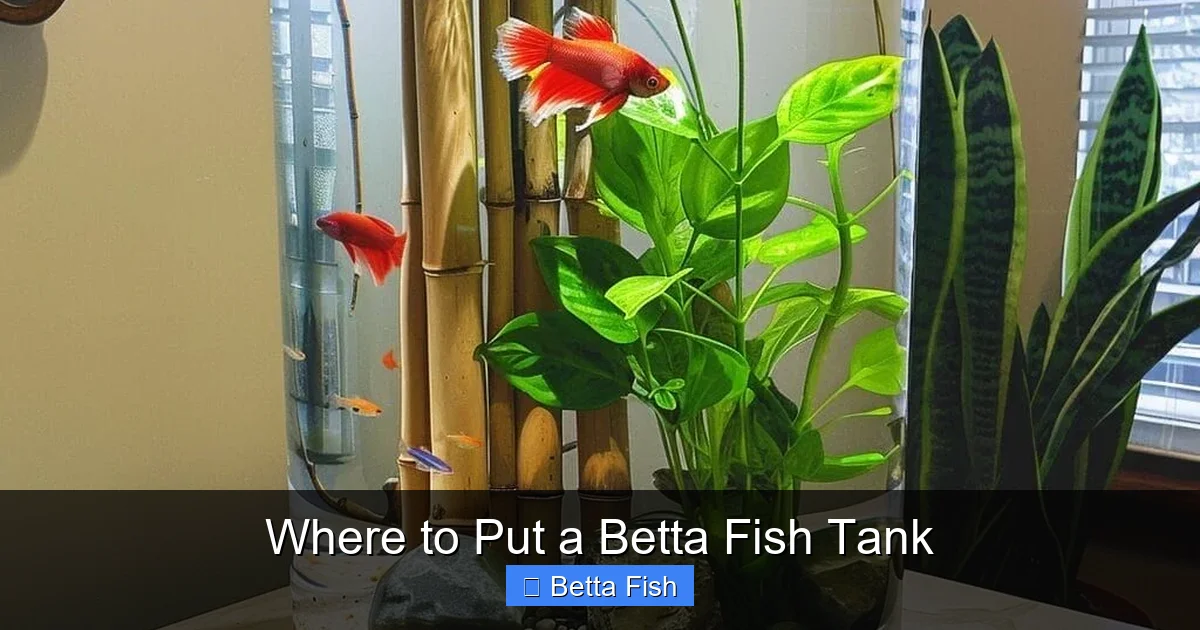
Visual guide about Where to Put a Betta Fish Tank
Image source: i.pinimg.com
In Direct Sunlight (The “Natural Light” Trap)
This is the #1 mistake. The idea that a fish tank needs “natural light” is a persistent myth. While some ambient light is fine, placing your tank right in a sunny window is a recipe for disaster. Sunlight through glass acts like a magnifying glass. It will rapidly overheat your tank’s water, even on seemingly cool days. Betta fish are from warm, shallow waters in Thailand, but those waters are shaded by vegetation and have massive thermal mass. A few gallons of water in a glass tank can spike from 78°F to 95°F+ in under an hour in direct sun. This thermal shock is lethal. Furthermore, that intense, full-spectrum light is the ultimate algae fertilizer. You will battle green water, hair algae, and black beard algae constantly, turning your beautiful tank into a murky swamp within weeks. The solution? No direct sun. Ever.
Near Heat Sources or Drafts (The Temperature Rollercoaster)
Betta fish are extremely sensitive to temperature fluctuations. Their immune systems collapse when water temperature drops below 76°F or spikes above 82°F. This means you must avoid:
- Radiators, baseboard heaters, or fireplaces: These create violent, localized heating that will cook the water in the tank’s immediate vicinity.
- Air conditioning vents or fans blowing directly on the tank: This creates dangerous cold spots and drafts.
- Exterior walls or old windows/doors: These are cold spots in winter and hot spots in summer, creating a constant cycle of heating and cooling that forces your heater to work overtime and fail frequently.
- Kitchens or laundry rooms: These rooms have frequent temperature and humidity swings from cooking, appliances, and exterior doors.
The goal is a room with a stable ambient temperature, typically between 70-78°F, where your aquarium heater can do its job efficiently without constant cycling.
In a High-Traffic Zone (The Stress Factory)
Imagine your entire world is a small apartment. Now imagine people constantly slamming the door, stomping past your window, shaking the walls with loud music, and pointing at you. That’s life for a betta in a hallway, entryway, or next to a busy kitchen. Bettas are intelligent, territorial fish with excellent vision. Constant movement, vibrations through the stand, and shadows overhead trigger their fight-or-flight response. Chronic stress releases cortisol, which suppresses the immune system and makes them susceptible to diseases like fin rot and ich. They may become lethargic, hide constantly, or flare (gill and fin spreading) at every passing shadow, which is exhausting. Place their tank in a room with calm, predictable activity.
On an Unstable or Unsafe Surface (The Tsunami Waiting to Happen)
Water is incredibly heavy. A single gallon of water weighs 8.34 lbs. A fully loaded 10-gallon tank with substrate, rocks, and decor can easily weigh 120-150 lbs. Your surface must be rated for this weight and be perfectly level. Avoid:
- Wobbly tables, dressers, or antique furniture: Even a slight rock can gradually crack the tank’s seal or cause a catastrophic failure.
- Directly on carpet: This can trap moisture, promote mold under the stand, and make cleaning difficult. Use a solid, waterproof mat or board under the tank and stand.
- Near the edge of a table: A single bump from a child, pet, or you walking by can send the tank crashing down.
- On top of other electronics or fragile surfaces.
Test the surface by placing a level on it. A properly leveled tank distributes weight evenly and prevents stress on the glass seams.
The Ideal Betta Tank Location: A Checklist for Success
Now that we’ve covered what to avoid, let’s build the positive criteria. The perfect spot is a balance between the betta’s biological needs and your household’s practical reality.
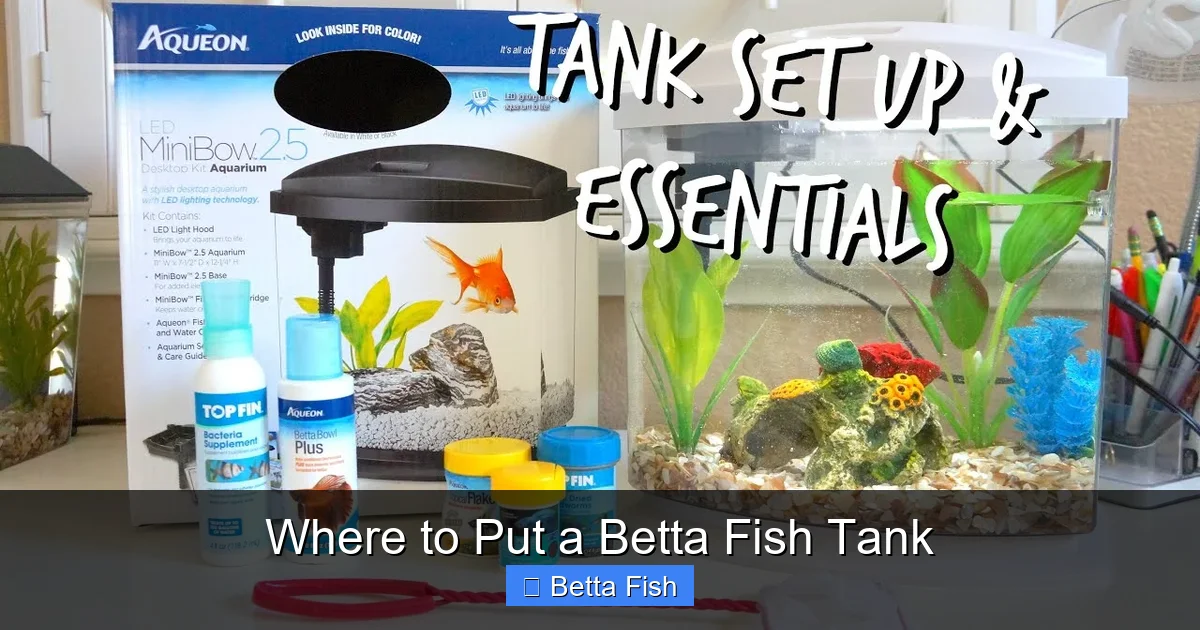
Visual guide about Where to Put a Betta Fish Tank
Image source: i.ytimg.com
Light: The “Good Light” vs. “Bad Light” Balance
Bettas don’t need sunlight; they need a consistent day/night cycle. The best light source is a dedicated aquarium LED light on a timer (8-10 hours on, 14-16 hours off). This mimics natural rhythms without the heat and UV damage of the sun. When choosing a room location:
- Ideal: A room with ambient, indirect natural light from a window that does not shine directly on the tank. For example, a tank placed on a wall perpendicular to a window, or in a room with north-facing light (in the Northern Hemisphere).
- Acceptable: A room with no windows at all, relying entirely on your artificial light. This gives you total control.
- Pro Tip: If you must have the tank in a brighter room, use blackout curtains or blinds to block direct rays. Consider a dimmable light so you can run it at lower intensity if the room is already bright.
Remember, more light = more algae. Control the source, control the problem.
Temperature Stability: The Goldilocks Zone
You are looking for a spot where the room’s temperature is as close to your target (78-80°F) as possible year-round. This usually means:
- Interior rooms: A bedroom, living room, or den away from exterior walls is best. These rooms are buffered by the rest of the house.
- Away from windows and doors: As mentioned, these are thermal weak points.
- Not on the floor: Cold air sinks. A tank on a cold basement or ground-floor concrete floor will be colder than the room’s air temperature, making your heater work much harder.
- Not on a high shelf: Heat rises. A tank near the ceiling of a room will be warmer than the rest of the space.
- Can I easily reach the top to feed without stretching or using a stool?
- Can I comfortably pull the tank forward (if needed) to clean the back glass or service the filter?
- Is there enough space around the tank to place a bucket for water changes, hang a towel, and set tools down?
- Is the height appropriate? Tanks on the floor are hard on your back; tanks over 24 inches high require a step stool to see the top clearly.
- DO: Place the tank on a sturdy, dedicated stand against an interior wall, away from the TV, main seating area, and exterior doors/windows. Use a high-quality, quiet filter to overcome room noise.
- DON’T: Put it on a flimsy coffee table, in the direct path between the kitchen and couch, or right next to a sliding glass door. Avoid placing it where sunlight from a west-facing window will blast it in the afternoon.
- Pro-Tip: If your living room is your only option, invest in a heavy, solid wood stand with doors to hide cords and supplies, making the area look tidier and reducing visual stress for the fish from constant movement.
- DO: Place the tank on a solid dresser or dedicated stand. The gentle hum of a good filter can be a soothing white noise. Ensure your alarm clock or other electronics aren’t causing vibrations on the same surface.
- DON’T: Place it on a wobbly nightstand. Avoid having the tank light on a bright, blue-rich “night mode” while you try to sleep; use a warm white or red light if you need a nightlight, or simply turn the tank light off.
- Consideration: If you are a light sleeper, ensure your filter choice is truly silent (canister filters are often quieter than hang-on-back filters). Test the filter’s sound at night before committing.
- DO: Place the tank on a bookshelf or cabinet on the opposite side of the room from your desk. This allows you to glance over and enjoy it without your constant movement and typing vibrations disturbing the fish.
- DON’T: Put it directly on your desk. The vibrations from typing, the glare from your monitor, and the lack of a true “away” space for the fish will cause chronic stress.
- Bonus: A betta tank can be a fantastic tool for taking short, mindful breaks from screen work—the perfect reason to step away and just watch.
- Why to Avoid: Temperature and humidity fluctuate wildly from cooking, the dishwasher, and the oven. It’s a high-traffic area with vibrations from appliances and people. There is a constant risk of toxic fumes (aerosol cleaners, cooking sprays) and chemical contamination. Food debris can fall in. It’s a noisy, stressful environment.
- The Only Exception: If you have a separate, closed-off breakfast nook or a kitchen that is rarely used and has a stable temperature away from the stove, it *might* work. But for 99% of homes, choose another room.
- Temperature: Is the spot away from windows, doors, vents, radiators, and exterior walls? Is the room temperature stable (use a thermometer for 48 hours)?
- Light: Does the tank receive only indirect, ambient natural light? Will I use a timed artificial light as the primary source?
- Traffic & Stress: Is this a quiet room or a quiet corner of a room? Will the fish see constant movement and hear loud noises?
- Surface: Is the stand/cabinet perfectly level, sturdy, and rated for the tank’s full weight (water + everything else)? Is it on a solid, waterproof base?
- Safety: Is the tank out of reach of children/pets who might bother it? Is it far from cords it could chew, chemical fumes, and potential knock-over hazards?
- Accessibility: Can I easily reach the top for feeding and the front for cleaning? Is the height ergonomic? Is there space to perform water changes comfortably?
- Enjoyment: Can I see the tank clearly from my common seating areas? Does it enhance the room’s ambiance?
Use a simple room thermometer to monitor the ambient temperature of your chosen spot for a week before setting up the tank. If it stays in the mid-70s consistently, you’ve found a winner.
Traffic and Vibration: Finding the Quiet Corner
Think about the daily rhythm of your home. Where do people congregate? Where do doors slam? Where is the TV or stereo? Your betta’s tank should be in a sanctuary. A quiet bedroom, a home office corner, or a living room wall that isn’t a main walkway are excellent choices. The tank should be out of the direct line of sight from the most common paths in the room to reduce the “predator above” feeling. If you have a busy household, placing the tank on a sturdy cabinet against an interior wall, slightly tucked away, can provide a sense of security for your fish.
Accessibility and Maintenance: The Human Factor
This is where your needs come in. You are the caretaker. If the tank is a pain to service, you will skip maintenance, and your betta will suffer. Ask yourself:
Aim for a height between your waist and chest when standing. This is ergonomic for feeding and observing. Ensure there’s at least 2-3 feet of clear space in front of the tank for your water change workflow.
Special Considerations for Different Rooms
Let’s apply the rules to specific rooms in a typical house. Each has pros and cons.
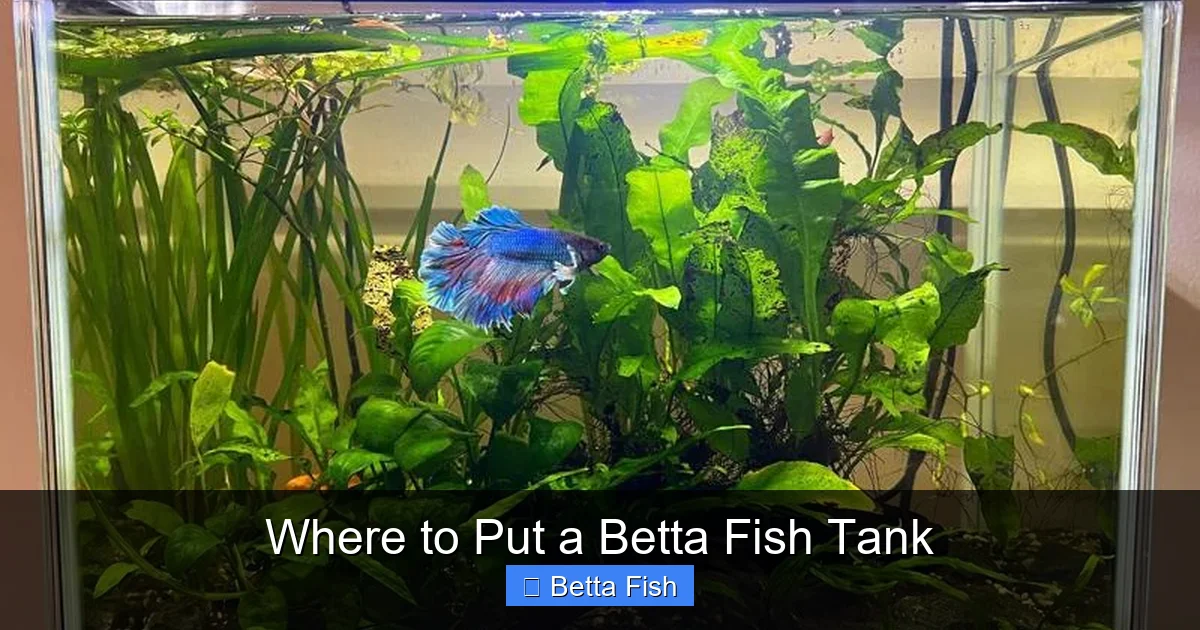
Visual guide about Where to Put a Betta Fish Tank
Image source: acaquarium.com
The Living Room: The Showcase Spot (With Caveats)
This is the most common choice because it’s a central gathering place where you can enjoy your fish. However, it’s also a high-risk zone. To make it work:
The Bedroom: The Peaceful Sanctuary
This is often an excellent location. Bedrooms are typically quiet, have stable temperatures (especially if not on an exterior wall), and are used at predictable times. The soft light of a bedside lamp can provide a gentle cycle. However:
The Home Office/Study: The Focus-Friendly Zone
Another top contender. The room is quiet during work hours, and you can enjoy your betta’s calming presence while you work. The key is distance from your workstation.
The Kitchen: The Land of Temptation (Generally Avoid)
This is usually the worst possible location, despite its convenience.
The “It Seemed Like a Good Idea…” Horror Stories
To really drive the point home, let’s look at some real-world placement scenarios that seem clever but end in tears.
The “Above the Fishbowl” Mistake
Scenario: “I put my new 5-gallon tank on the same shelf where my old betta bowl was, right next to my sunny kitchen window. It looks so pretty with the natural light!” Reality: The tank is now overheating in the morning sun, the water is turning pea-green with algae by Wednesday, and your new betta is hiding behind the filter intake, clamped and pale. The old bowl was a death trap; the new tank in the same spot is just a bigger, faster death trap. Move it across the room, away from the window.
The “Kids’ Table” Compromise
Scenario: “We got the kids a betta for their room! We put the tank on their low play table so they can see it.” Reality: The table is wobbly from toy trucks driving over it. The tank is at eye-level for a 4-year-old, who now taps the glass daily, startling the fish. The room is a chaotic tornado of noise and sudden movements. The betta becomes perpetually stressed, loses its appetite, and develops fin rot. Solution: The tank belongs on a high, stable, out-of-reach surface in a common area where an adult can supervise all care. Kids can watch, but not touch or disturb.
The “Desk Tank” Distraction
Scenario: “I thought a little betta tank on my home office desk would be relaxing.” Reality: Every time you type an email, the vibrations travel through the desk and into the tank. Your constant leaning in to look disrupts the fish. The bright monitor light adds to the tank light, extending the “day” cycle. The betta never gets a moment of peace. Solution: Move it to a bookshelf across the room. You’ll still see it, but it will be a true oasis for the fish.
Your Betta Tank Placement Final Checklist
Before you add a single drop of water, walk through this list with your chosen spot in mind:
If you answered “yes” to all of these, you have found the perfect spot. If you have even one “no,” keep searching. Your betta’s life depends on it.
Conclusion: Placement as the Foundation of Care
Setting up a betta fish tank is a joyful act of creation. You’re building a miniature world for a creature that will recognize you, flare at your reflection, and dance for food. But that world must be built on solid ground—both literally and figuratively. The location you choose is the bedrock of that world. It dictates the stability of the water, the peace of mind of your fish, and the ease of your own care routine.
Don’t rush this decision. Live with the empty stand in the proposed spot for a few days. Observe the light patterns, feel the temperature, note the traffic. Is it calm? Is it stable? Is it convenient? When the answer is a resounding yes, then and only then should you bring your tank home, fill it with conditioned water, and finally introduce your betta to its forever home. By getting the location right from day one, you’ve already won 80% of the battle in ensuring a long, healthy, and spectacularly colorful life for your finned friend. You’re not just placing a tank; you’re designing a sanctuary.
Frequently Asked Questions
Can I put my betta tank on a dresser or shelf?
Yes, if the dresser or shelf is specifically sturdy, level, and designed to hold heavy weight. Test it by pushing on it—it should not wobble. Ensure the surface is flat and use a tank-safe foam pad or sheet ofplywood under the tank to distribute weight and prevent glass stress fractures.
Is a bedroom a good place for a betta tank?
Often, yes! Bedrooms are typically quiet, have stable temperatures (if not on an outside wall), and allow for a peaceful day/night cycle. Just ensure the filter is quiet enough for sleeping and avoid placing the tank on a wobbly nightstand.
What about putting a betta tank in the kitchen?
Generally, avoid it. Kitchens have temperature/humidity swings from cooking, high traffic, risk of chemical fumes (aerosols, cleaners), and food debris. The constant activity is also highly stressful for bettas. Choose a calmer room.
Can I use natural sunlight instead of a tank light?
No. Direct sunlight will overheat the water rapidly and cause uncontrollable algae blooms. Betta tanks need a consistent, controlled photoperiod from an artificial LED light on a timer. Use only indirect, shaded natural light as a supplement.
How close can a betta tank be to a TV or speakers?
As far away as possible. Loud, sudden noises and deep vibrations from subwoofers are extremely stressful for fish. The constant sound and movement from a TV can also cause chronic anxiety. Place the tank in a separate, quieter area of the room.
Is it okay to put the tank on a carpeted floor?
Not directly. Carpet traps moisture, promotes mold under the stand, and makes cleaning difficult. Always place a solid, waterproof plastic or vinyl mat (cut to size) under the entire tank and stand to protect the floor and provide a stable, level base.