Where to Put Betta Fish Tank

Placing your betta fish tank correctly is crucial for its long-term health and well-being. The ideal location provides stable temperature, minimizes stress from vibrations and reflections, and ensures safe, convenient access for maintenance. Avoid direct sunlight, high-traffic areas, and unstable surfaces to create a thriving aquatic environment for your vibrant companion.
So you’ve decided to bring a betta fish into your home. You’ve picked out a beautiful tank, perfect decorations, and a vibrant little fish with a personality all its own. But before you even fill that tank with water, there’s one of the most critical decisions you’ll make for your betta’s entire life: where to put the betta fish tank. It might seem like a simple choice—a empty spot on a shelf or a corner table. However, the location you choose will directly impact your betta’s stress levels, health, and longevity. An improperly placed tank can lead to constant anxiety, illness, and a shortened lifespan, while the right spot creates a calm, stable sanctuary where your betta can truly thrive.
Think of it this way: your betta’s tank is its entire world. It cannot swim away from a cold draft, hide from a glaring sunbeam, or escape the vibrations of a slamming door. Everything within that glass box is controlled by you, and that control begins with placement. This isn’t about interior design; it’s about environmental husbandry. We’re going to walk through every single factor you need to consider, from the physics of surface stability to the psychology of fish stress. By the end, you’ll know exactly how to evaluate every room in your house to find that one perfect, peaceful spot for your aquatic friend.
Key Takeaways
- Stability is paramount: Place the tank on a sturdy, level surface away from door slams, heavy foot traffic, and vibrations that can stress your betta.
- Avoid direct sunlight: Never place the tank in a window’s direct path to prevent dangerous temperature swings and excessive algae growth.
- Consider temperature control: Keep the tank away from drafts (AC vents, windows) and heat sources (radiators, fireplaces) to maintain a consistent tropical temperature (78-80°F).
- Minimize reflective surfaces: Position the tank so your betta cannot see its own reflection or other aggressive fish in nearby tanks, which can trigger constant flaring and stress.
- Prioritize accessibility: Ensure you have clear space in front and above the tank for feeding, water changes, and equipment adjustments without moving the tank itself.
- Protect from predators: Keep the tank away from the reach of cats, dogs, or small children who can tap on the glass or attempt to touch the fish.
- Plan for the long term: Choose a location that considers the full-grown size of the tank’s footprint, including stand and equipment clearance.
📑 Table of Contents
The Foundation of Health: Environmental Stability
Before we talk about walls and windows, we must start with the most fundamental principle: stability. Bettas, like all fish, are ectothermic (cold-blooded) and incredibly sensitive to changes in their environment. Their health is a direct reflection of the stability of the water around them, and that stability is first determined by where the tank sits.
The Non-Negotiable: A Perfectly Level, Sturdy Surface
This is your first and most important task. Your tank must sit on a surface that is completely level. An uneven stand causes the tank’s weight to distribute unevenly, putting immense pressure on one seam or panel. This is a leading cause of catastrophic tank failure, especially with glass aquariums. Use a spirit level on all four sides of the tank’s top rim once it’s filled with water. Any significant dip or tilt must be corrected with shims under the stand legs.
But level isn’t enough. The surface must also be sturdy enough to hold the immense weight. A fully stocked 10-gallon betta tank with water, substrate, rocks, and decorations can easily weigh over 120 pounds. A flimsy particleboard shelf from a big-box store will sag, warp, and eventually give way. Your best bets are:
- A dedicated aquarium stand designed for the specific tank size.
- A solid wood cabinet or dresser with legs that go directly to the floor.
- A reinforced, load-bearing wall-mounted bracket system (for very large tanks).
Test the surface by pressing down firmly. If it flexes or creaks, it’s not suitable. Always err on the side of over-engineering the support. Your betta’s life—and your carpet—depends on it.
The Silent Killer: Temperature Fluctuations
Bettas are tropical fish, native to the warm, shallow waters of Southeast Asia. They require a consistent water temperature between 78°F and 80°F (25.5°C – 26.5°C). Rapid drops or spikes of even 2-3 degrees can suppress their immune system, making them susceptible to diseases like fin rot or velvet. Where you place the tank is your primary tool for temperature control.
Heat Sources to AVOID: Never place your tank directly next to or above a radiator, fireplace, heating vent, or even a sunny window that acts as a solar heater. These create “hot spots” in the water that can scald your fish. The heater will also work overtime, shortening its lifespan and creating dangerous cycling.
Cold Drafts to AVOID: Equally dangerous are cold drafts. Keep the tank away from exterior doors that are frequently opened, air conditioning vents, and single-pane windows on a cold night. A draft can create a layer of cold water at the surface that your betta, which is a labyrinth breather, will have to work harder to navigate, leading to stress and exhaustion.
The Ideal Zone: An interior wall, away from both heating and cooling sources, is usually the gold standard. The ambient room temperature will provide a stable baseline for your heater to maintain, making its job easy and efficient.
Safety First: Protecting Your Betta from Stressors
Fish don’t get “bored” like we do, but they absolutely experience stress. Chronic stress is a silent killer in aquariums, flooding the body with cortisol and weakening the immune system. A big part of your betta’s stress comes from its visual and vibrational environment. Proper placement is your first and best line of defense.
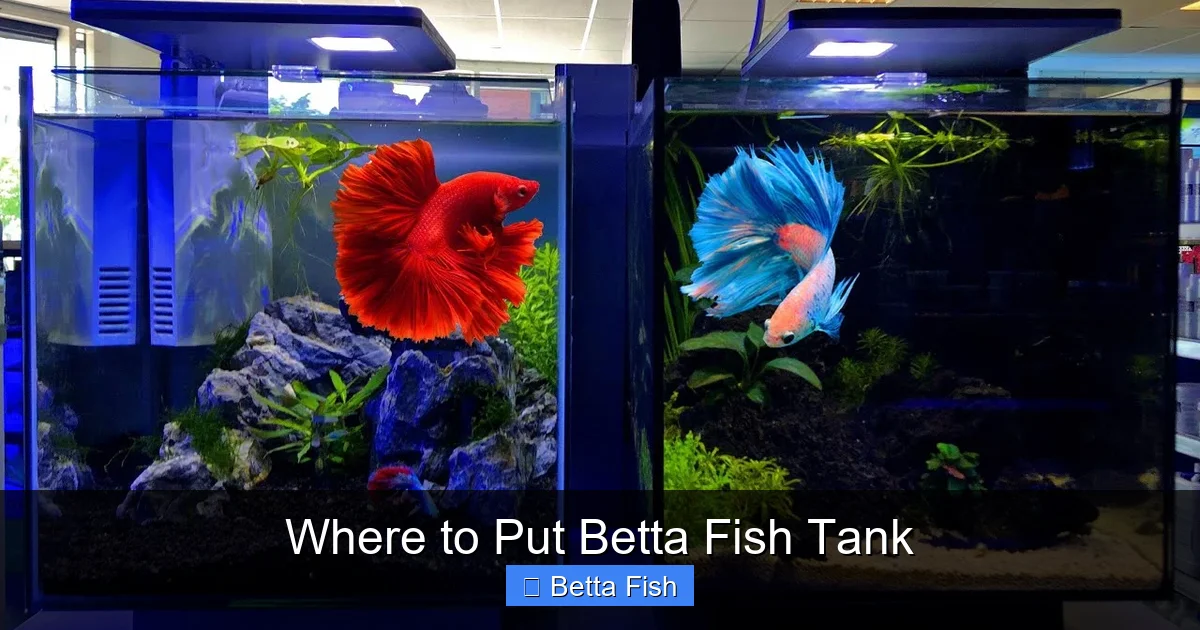
Visual guide about Where to Put Betta Fish Tank
Image source: i.ytimg.com
The Reflection Problem: A Betta’s Worst Enemy
Betta fish are famously territorial and will flare (spread their gills and fins aggressively) at what they perceive as a rival. Their own reflection in the tank glass is the most common and relentless rival. If your tank is placed where bright light hits the glass at a certain angle—often from a nearby window or overhead light—your betta will see its reflection and spend hours, days, or even weeks in a constant state of high alert and flaring. This is physically exhausting and leads to torn fins, loss of color, and a weakened state.
The Solution: Position the tank so the primary light source (your room light or tank light) does not cause a strong reflection on the front glass. Often, having the tank’s “front” face a wall or a dimmer part of the room, rather than a bright window, helps. You can also use a background (a printed aquarium background or dark paper) on the back and sides to reduce light penetration and reflections from those angles. Periodically check from your betta’s perspective—crouch down and look at the glass from the outside. Do you see a clear reflection? If so, adjust the lighting or tank angle.
Vibrations and Sudden Movements
Fish feel vibrations through the water with incredible sensitivity. A slamming door, a heavy footstep on a floorboard, a vacuum cleaner running nearby—these are all perceived as threats or earthquakes. In the wild, such vibrations signal predators or disaster, triggering a frantic fight-or-flight response. In a confined tank, there is no flight, only perpetual fear.
High-Traffic Zones to Avoid: Hallways, entryways, directly in front of frequently used doors, and underneath staircases are terrible locations. The constant commotion will keep your betta in a state of panic, hiding constantly and refusing to eat.
Furniture Caution: Placing the tank on a bookshelf that gets bumped, a wobbly table, or a stand that sits directly on a floor that transmits vibrations (like old hardwood) is problematic. A thick, dense foam mat or piece of carpet cut to size under the tank stand can absorb minor vibrations and also protect your flooring from condensation or spills.
The Predator in the House: Cats, Dogs, and Children
This seems obvious, but it’s often overlooked. A betta tank is a fascinating attraction for other pets and small children. A cat’s paw batting at the glass, a dog’s nose pressed against it, or a child’s fingers trying to touch the fish are not just annoying—they are terrifying for the betta and can be physically harmful (cat claws can puncture the glass from the outside if it’s thin, and fish can be injured by fingers or stressed to death by persistent harassment).
Placement Rule: The tank must be on a surface that is completely out of reach. This means not on a low coffee table in a family room with toddlers, or on a bench a cat can jump onto. A high, stable dresser or a dedicated stand in a room that can be closed off to pets is ideal. This also protects your betta from being startled by sudden movements right outside the glass.
Lighting and the Day-Night Cycle
The lighting over your betta tank serves two purposes: it illuminates your beautiful setup and, more importantly, it regulates your betta’s circadian rhythm. A consistent day-night cycle is essential for hormonal regulation, rest, and overall health. The placement of your tank relative to natural and artificial light sources is key to managing this cycle correctly.
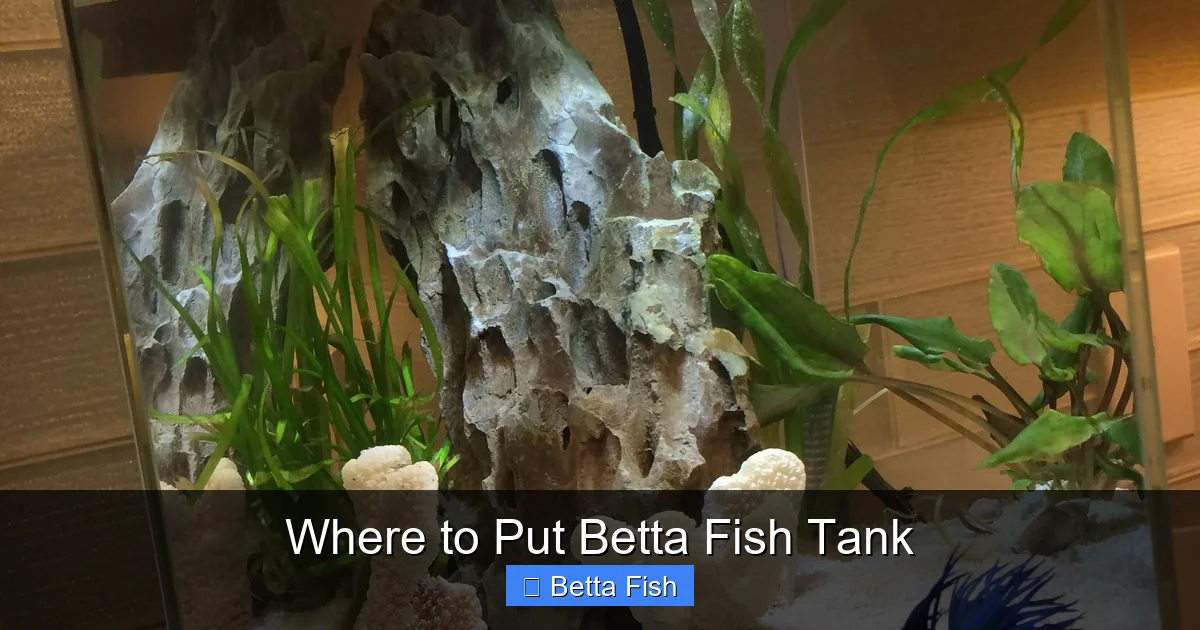
Visual guide about Where to Put Betta Fish Tank
Image source: i.pinimg.com
The Dangers of Direct Sunlight
This cannot be stressed enough: no aquarium should ever be placed in direct sunlight. The sun is an uncontrolled, intense heat source. Even on a seemingly cool day, a beam of sunlight can raise the water temperature in a small betta tank by 5-10 degrees in under an hour. This can cook your fish. The second, equally devastating problem is algae. Sunlight fuels explosive algae growth that will turn your water green, coat your plants and decorations, and cloud your view, creating a massive maintenance headache. The “natural sunlight” myth is one of the most common and deadly mistakes new aquarists make.
Safe Lighting Practices: If you want natural light in the room, position the tank so it receives indirect, ambient light only. For example, in a room with east-facing windows, placing the tank on the west wall would give it bright morning light indirectly. Use blinds or curtains to diffuse the light. Your primary light source should be the dedicated aquarium LED light you install on the tank’s hood or rim. This allows you to control exactly how many hours of “day” your betta gets (typically 8-10 hours) and provides the full-spectrum light needed for any live plants.
Creating a Peaceful Dark Period
Fish need complete darkness to sleep and rest. Bettas will often rest on a leaf or the substrate at night. If your tank is in a room where lights are on late (a living room with a TV, a hallway with a nightlight), or if it receives streetlight or moonlight through a window, your betta’s sleep will be disrupted.
Strategic Placement for Darkness: Choose a room that can be darkened at night. A bedroom, home office, or even a quiet corner of a living room where you can turn off the main lights is good. If the tank must be in a room with ambient night light, use a solid black background on the back and sides of the tank to block light from those angles, and consider a tank cover or towel draped over the back part of the hood to create a darker “sleeping area” for your fish. Consistency is key—try to keep the “lights on” and “lights off” schedule the same every day.
Accessibility and the Human Factor
Your betta’s health also depends on your ability to care for it easily and consistently. A tank that is a pain to access will lead to skipped water changes, overfeeding, and neglected equipment checks. When choosing a spot, you are also choosing a spot for your own workflow.
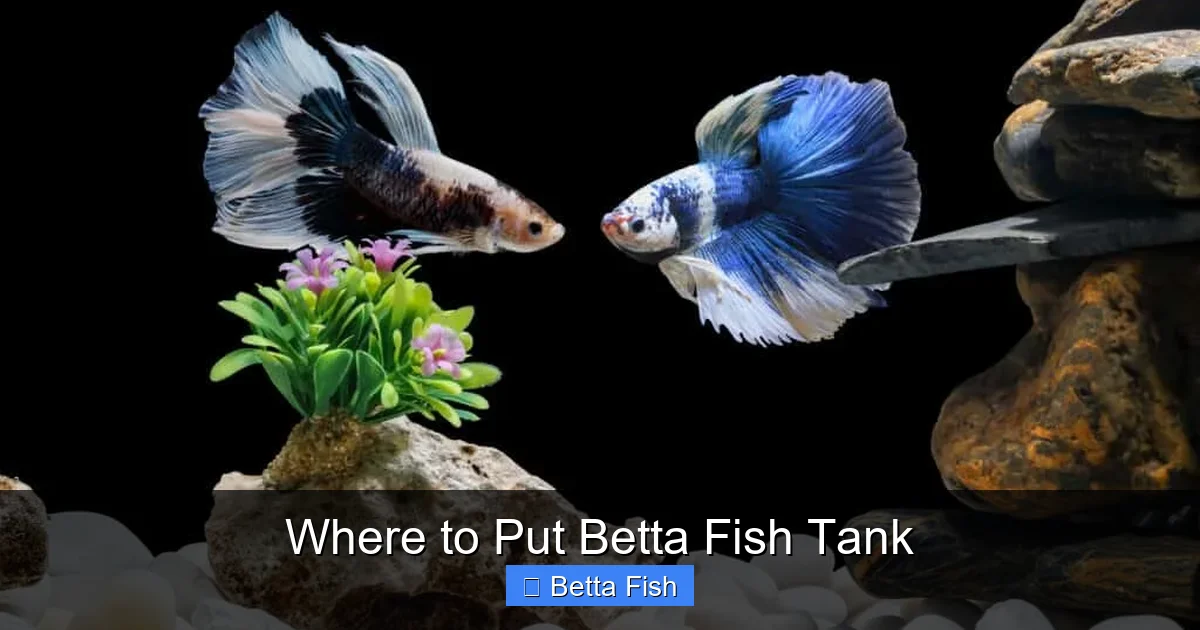
Visual guide about Where to Put Betta Fish Tank
Image source: bettasource.com
The Golden Triangle: Space for Maintenance
Think about the three main tasks you’ll perform:
- Feeding: You need to be able to easily reach the top of the tank to gently drop food in without startling your betta. Can you do this without moving furniture or stretching awkwardly?
- Water Changes: This involves siphoning gravel, wiping the glass, and refilling. You need clear space in front of the tank to stand or sit, and room to place your buckets, hoses, and other supplies. A tight corner where you have to squeeze in will make this chore miserable and less frequent.
- Equipment Adjustment: Your heater, filter, and thermometer need occasional checking and adjustment. Can you see the heater’s indicator light or the thermometer’s readout without moving the tank or using a mirror?
The Rule: Leave at least 18-24 inches of clear, open space directly in front of the tank. This is your maintenance zone. If the tank is pushed against a wall with a sofa or table immediately in front, you are setting yourself up for failure.
Height Matters
The ideal tank height is roughly waist-high for an average adult (30-36 inches from the floor to the top of the tank). This allows you to easily see inside, perform tasks without excessive bending or reaching, and gives your betta a sense of security—being too high up can make some fish feel exposed, while being on the floor puts them at eye-level with potential predators (pets and children) and makes viewing awkward.
If you are using a dresser or cabinet, ensure the tank sits squarely on the top surface, not hanging over the edges. The entire base of the tank must be supported. Also, consider the weight! A filled 10-gallon tank on a second floor requires a very sturdy floor and support joists directly beneath it. When in doubt, consult a builder or place the tank on a ground floor or basement concrete slab.
Common Placement Mistakes (And How to Fix Them)
Now, let’s tour the common pitfalls in home layouts and how to either avoid or mitigate them.
The Kitchen Catastrophe
The kitchen seems logical: a water source is nearby for water changes. But kitchens are among the worst possible locations. They are high-traffic, full of vibrations from appliances (dishwasher, blender, refrigerator compressor), temperature swings from cooking and the oven, and chemical fumes from cooking sprays, cleaners, and non-stick cookware (which can be toxic to fish). The constant activity is also a major stressor.
Fix: Do not place the tank in the kitchen. Use the kitchen sink only for filling buckets, which you then carry to the tank’s location. A better spot is near a bathroom (for water access) but in a quiet bedroom or hallway.
The Window Wonder (Algae Factory)
We’ve touched on this, but it bears repeating. That beautiful south-facing window with the morning sun? It’s a death sentence for your tank’s clarity and your betta’s comfort. The sun will overheat the water and grow algae at an exponential rate. You’ll spend more time scraping green glass than enjoying your fish.
Fix: Use that sunny window for a comfortable reading chair, not your aquarium. If it’s the only spot with a suitable wall, use blackout curtains or blinds to completely block direct rays, and rely solely on your aquarium light for illumination.
The Doorway Dash
A tank placed directly beside a frequently used door (interior or exterior) is a recipe for stress. Every time the door opens or closes, a gust of air (draft) and a vibration hit the tank. Every time someone walks past, there’s movement and shadow. Your betta will learn to hide the moment someone approaches the door.
Fix: Move the tank at least 6-8 feet away from the door’s swing path. If that’s impossible, create a physical barrier—a tall, stable bookshelf or room divider—between the door and the tank to absorb vibrations and block the line of sight.
The Entertainment Center Distraction
Tucked neatly below the TV, the tank becomes a background object. But the flashing lights and loud sounds from the television, the frequent people coming and going to grab snacks, and the general chaos of a family room can be overwhelming. The constant visual stimulation can stress a fish that needs periods of calm.
Fix: If this is your only option, invest in a high-quality, fully enclosed tank hood with a tight-fitting lid to block sound vibrations and some light. Use the tank’s background heavily to create a “quiet” visual wall. Be extra vigilant about ensuring the stand is incredibly stable on a solid surface, as entertainment centers can be rickety.
The Final Decision: A Room-by-Room Guide
Let’s apply these principles to typical rooms in a house.
Bedroom: Often the best choice. Typically quiet, temperature-stable, and can be darkened easily at night. The main considerations are space (many bedrooms are small) and the risk of tank noise (filter hum) disturbing light sleepers. A quiet, adjustable filter is key. Also, ensure the stand is not on a squeaky floorboard.
Home Office/Study: Another excellent option. Usually quiet, temperature-controlled, and you’re already in there for long periods, making maintenance convenient. The only caution is to keep the tank away from computer monitors and their power strips to avoid electrical issues, and ensure your chair’s movement doesn’t bump the stand.
Living Room/Family Room: The most common but trickiest location. It’s a high-traffic, variable environment. If you must place it here, choose a corner away from the main entrance, on a solid wall opposite the TV (not below it), and on the most heavy-duty furniture you own. Make sure it’s out of the direct path of people walking through the room.
Hallway or Entryway: Generally a poor choice. These are the highest traffic, most vibration-prone, and draftiest areas in a home. Avoid.
Kitchen/Dining Room: The kitchen is a hard no. A formal dining room, if used only for special occasions, can be acceptable if it’s quiet, has no direct sun, and the table is extremely sturdy. But the temperature and chemical risks remain higher than in other rooms.
Basement: Can be great for temperature stability (often cool and constant) but watch for humidity. Basements can be damp, leading to mold on the tank stand or excessive evaporation. Also, ensure the floor is level and concrete (ideal) and that the area is not prone to flooding. Lighting may need to be entirely artificial.
Conclusion: Your Betta’s Sanctuary Awaits
Choosing where to put your betta fish tank is the foundational act of responsible betta ownership. It’s not about finding the prettiest spot; it’s about engineering a stable, safe, and stress-free micro-habitat. You are the architect of your betta’s world. By prioritizing a level, sturdy surface on an interior wall, far from drafts, heat, and direct sun, you control the temperature. By facing the tank away from high-traffic areas and reflective surfaces, you minimize vibrational and visual stress. By ensuring clear access for maintenance, you secure your own ability to provide consistent, high-quality care.
Take the time to walk through your home with this new checklist. Sit in the potential spot for a few minutes. Listen for vibrations. Feel for drafts. Observe the light patterns throughout the day. Imagine yourself performing a water change there. This thoughtful approach before you even add water will pay dividends in the form of a vibrant, active, and long-lived betta that greets you with curious flares instead of hiding in fear. Your perfect, peaceful spot is out there. Now you have the map to find it.
Frequently Asked Questions
Can I put my betta tank near a window if I use a curtain?
It’s still risky. Even with a curtain, ambient light and temperature can fluctuate more than in an interior location. It’s best to place the tank on a wall that does not receive any direct or strong indirect sunlight. Use your aquarium light as the sole controlled light source.
Is it okay to put the tank in my bedroom if my filter is noisy?
It depends on your sensitivity and the filter model. Many modern hang-on-back (HOB) and sponge filters are very quiet. Test the filter in a store if possible. A good canister filter is often the quietest option for a bedroom. The benefits of a stable, low-traffic bedroom environment often outweigh the minor hum of a quality filter.
What about placing the tank on a regular table or bookshelf?
Only if the table/bookshelf is specifically built to hold heavy weight and is perfectly level. Most standard furniture is not. The risk of sagging, tipping, or collapse is too high. It’s always safer to invest in a dedicated aquarium stand or use a very solid, heavy-duty piece of furniture like a solid wood dresser.
My only good spot is next to my heating vent. What should I do?
This is a poor location due to temperature fluctuations. If it’s absolutely your only option, you must create a barrier. Use a sturdy room divider or a bookshelf to block the direct blast of air from hitting the tank. You will also need to monitor your water temperature very closely with a separate thermometer to ensure your heater can compensate without short-cycling.
Does the color of the wall behind the tank matter?
Yes, for your betta’s stress and algae control. A dark blue, black, or dark green background on the back and sides of the tank is ideal. It reduces reflections, makes your betta’s colors pop, and helps block ambient light from those angles, which can slightly reduce algae growth on the back glass.
Can I put my betta tank on the second floor of my house?
Yes, but with major precautions. You must be absolutely certain the floor joists beneath the tank’s location can support the weight (100+ lbs for a 10-gallon). The tank must be on a dedicated, sturdy aquarium stand placed perpendicular to the joists for best support. Avoid placing it in the middle of a span between joists; instead, place it where a joist runs directly under the stand’s legs for maximum support. When in doubt, consult a structural engineer or builder.