When to Change Water in Betta Fish Tank
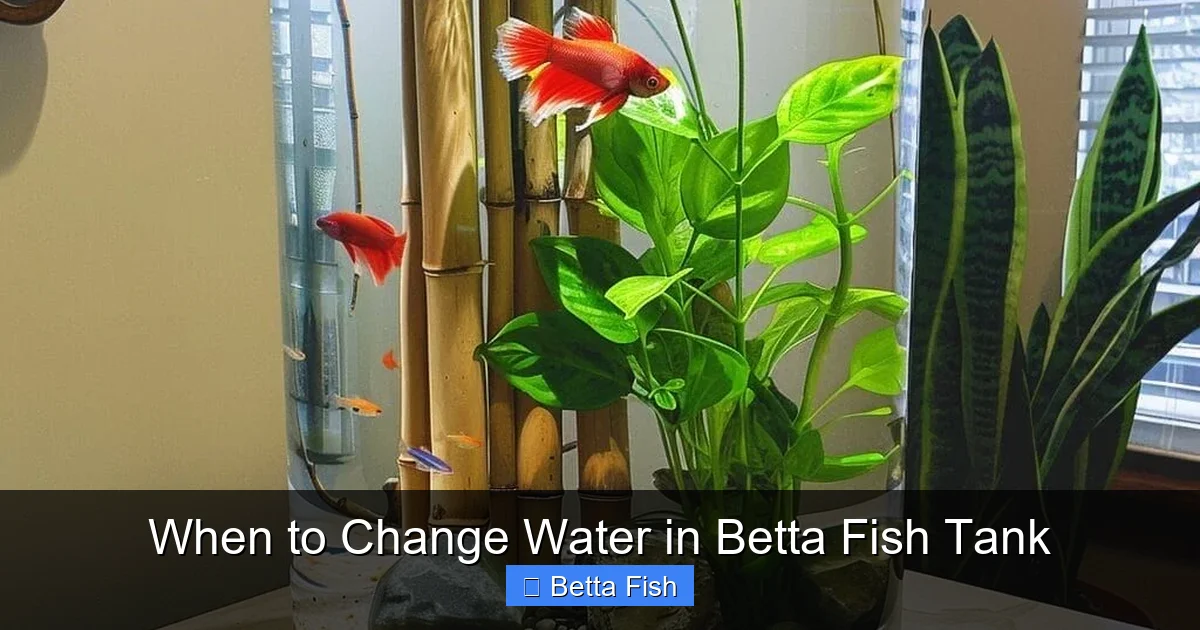
Regular water changes are the single most important maintenance task for a betta fish tank, directly impacting your fish’s health, color, and lifespan. The timing isn’t fixed—it depends on tank size, filtration, and bioload. A 25-50% partial water change once or twice a week is the gold standard for most setups, using properly treated water at the same temperature. Never skip this routine, as toxic ammonia and nitrite build-up from fish waste and decaying food will inevitably lead to stress, disease, and premature death.
Key Takeaways
- Frequency is Paramoun: There is no universal “once a month” rule. The need for a water change is dictated by the accumulation of fish waste (bioload), decaying food, and toxic chemicals like ammonia and nitrite.
- Partial Changes are Best: Performing a 25-50% partial water change weekly or bi-weekly is far superior to a rare, full 100% change, which disrupts the essential bacterial colony and stresses the fish.
- Water Quality is King: A liquid water test kit is your most valuable tool. The goal is to keep ammonia and nitrite at 0 ppm and nitrates below 20 ppm. Changes must happen before these spike.
- Conditioner & Temperature are Non-Negotiable: All new water must be treated with a dechlorinator/water conditioner to neutralize chlorine and chloramines. The new water must also match the tank’s temperature within 1-2 degrees to prevent thermal shock.
- Tank Size & Setup Matter: A larger, filtered tank (5+ gallons) with live plants has a more stable bioload and may require slightly less frequent changes than a small, unfiltered bowl, but changes are still absolutely required.
- Observe Your Betta: Your fish is the best indicator. Lethargy, faded colors, clamped fins, gasping at the surface, or frequent hiding are classic signs of poor water quality demanding an immediate change.
- Process Over Speed: Take your time during a water change. Stirring the substrate to release trapped debris, cleaning the glass, and siphoning gently are more effective than a rushed, incomplete job.
📑 Table of Contents
- The Lifeline of Your Betta: Why Water Changes Are Non-Negotiable
- Decoding the Schedule: How Often Should You Really Change the Water?
- The Science of Clean: A Step-by-Step Guide to the Perfect Water Change
- Critical Mistakes That Undermine Your Water Change
- Special Scenarios: Adjusting Your Routine
- Conclusion: Making It a Habit for a Thriving Betta
The Lifeline of Your Betta: Why Water Changes Are Non-Negotiable
Let’s be honest. When you bring home that stunning, flowing-finned betta fish, the first thing on your mind is probably choosing the perfect decor or the most vibrant food. The less glamorous, but critically more important, topic of water changes often gets pushed to the bottom of the list. It’s easy to think, “It’s just one little fish in a small tank, how dirty can it really get?” This mindset is the number one reason bettas suffer and die prematurely. Understanding when to change water in a betta fish tank isn’t just maintenance—it’s the core of responsible fishkeeping and the direct line to your betta’s vitality.
Your betta’s world is a closed ecosystem. Everything it excretes, every uneaten pellet that sinks, every decaying leaf from a live plant, stays in that water. These organic wastes begin to break down immediately through a process called the nitrogen cycle. First, they produce ammonia (NH3/NH4+), a deadly toxin that burns a fish’s gills and poisons its system. Beneficial bacteria then convert ammonia to nitrite (NO2-), which is also highly toxic. Finally, another bacteria converts nitrite to nitrate (NO3-), which is far less toxic but still a pollutant that causes stress and algae growth at high levels. The only way to remove these accumulated nitrates and other organic pollutants like phosphates is by physically removing a portion of the old, dirty water and replacing it with fresh, clean water. Without this dilution, the cycle grinds to a halt, toxins build up, and your betta lives in a progressively more poisonous soup.
The Domino Effect of Neglect
Think of your betta’s immune system as a battery. In clean, stable water, that battery is fully charged. As pollutants rise, the battery drains. The fish becomes stressed. Stress suppresses the immune system, making the betta susceptible to common diseases like fin rot, velvet, or dropsy. You might then treat the disease with medication, but if you don’t address the underlying poor water quality, it’s like trying to put out a fire while simultaneously pouring gasoline on it. The treatment will fail, and the fish will perish. Consistent, proper water changes are preventive medicine. They keep that immune battery charged, your betta’s colors brilliant, and its flowing fins pristine.
Decoding the Schedule: How Often Should You Really Change the Water?
This is the million-dollar question, and the frustratingly honest answer is: it depends. There is no one-size-fits-all calendar. The frequency hinges on several interconnected factors. Using a rigid “every Sunday” rule without checking your tank’s actual conditions is like prescribing the same medicine to every patient—it might work for some, but harm others. The true determinant is your water parameters, which are a direct reflection of your tank’s bioload.
Visual guide about When to Change Water in Betta Fish Tank
Image source: images.nexusapp.co
The Goldilocks Zone: 25-50% Weekly/Bi-Weekly
For the vast majority of betta keepers—those with a filtered tank of at least 5 gallons—the proven, safe starting point is a 25-50% partial water change once per week. For a smaller, unfiltered tank (2.5-3 gallons), you may need to lean toward 50% twice a week. This range is the “Goldilocks Zone.” It’s frequent enough to consistently dilute nitrates and other organics before they reach harmful levels, but not so drastic that it wipes out your beneficial bacteria colony or causes significant stress from environmental fluctuation. A full 100% water change should be reserved for emergencies (like severe contamination) or when completely resetting a tank, as it resets the nitrogen cycle and removes all that good bacteria from your filter media and substrate.
The Role of Tank Size and Filtration
A common misconception is that a filter means “no water changes.” This is dangerously false. A filter’s job is to mechanically trap solid debris and chemically adsorb some toxins (via carbon), and to house beneficial bacteria. It does not remove dissolved nitrates. A 10-gallon filtered tank with a single betta and a few live plants has a much lower bioload per gallon than a 2.5-gallon unfiltered bowl. The larger volume dilutes wastes more effectively, and the plants help consume nitrates. Therefore, the larger, planted, filtered tank might comfortably sustain a 30% change every 10-14 days, while the small bowl demands 50% changes every 3-4 days. Always start with the conservative weekly recommendation and adjust only after monitoring your water tests.
Reading the Signs: When Your Betta is Begging for a Change
Sometimes, the schedule is less important than the signs. Your betta will communicate poor water quality through behavior and appearance. If you observe any of the following, perform an immediate 50% water change, regardless of when your last change was:
- Lethargy and Clamped Fins: Your active, curious betta is now resting listlessly at the bottom or top of the tank, with fins held tightly against its body.
- Loss of Appetite: It ignores food or spits it out.
- Faded or Dull Colors: The vibrant reds, blues, or iridescence appear washed out or grayish.
- Gasping at the Surface: Frequent trips to the top to take gulps of air. While bettas are labyrinth fish and do this occasionally, constant or frantic gasping signals low oxygen levels or high toxins irritating the gills.
- Frequent Hiding: spending all day under a plant or in a cave, avoiding any activity.
- Visible Debris or Cloudiness: The water is visibly murky, or you see food and waste settled on the substrate.
The Science of Clean: A Step-by-Step Guide to the Perfect Water Change
Knowing when to change water in a betta fish tank is only half the battle. How you do it is equally critical. A poorly executed change can cause more stress than the dirty water itself. Let’s walk through the flawless process.
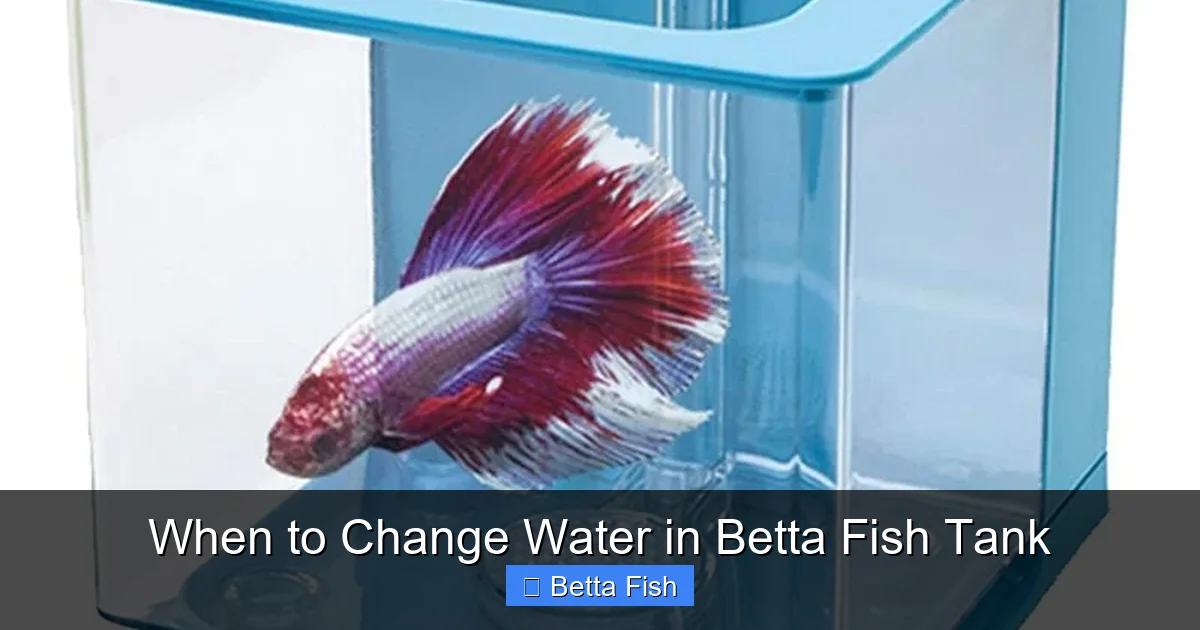
Visual guide about When to Change Water in Betta Fish Tank
Image source: images.nexusapp.co
Gather Your Arsenal: Essential Tools
You need the right tools for the job. Scrambling around mid-change leads to mistakes.
- Water Conditioner: A high-quality dechlorinator (like Seachem Prime, API Stress Coat+, or any reputable brand). This is absolutely mandatory. Do not skip it.
- Siphon/Gravel Vacuum: A simple plastic siphon with a wide, angled nozzle. This is your best friend. It removes debris from the substrate while siphoning water.
- Two Clean Buckets: Designate one “dirty” bucket for old tank water and one “clean” bucket for fresh, conditioned water. Never use buckets that have held soap or chemicals.
- Algae Scraper or Pad: For cleaning the glass.
- Thermometer: To ensure temperature matching.
- Towel: For inevitable drips.
The Ritual: A Calm, Systematic Approach
Step 1: Prepare the New Water. Fill your clean bucket with fresh tap water. Add the correct dose of water conditioner according to the bottle’s instructions (often 1 drop per gallon, but double-check). Stir well. Set this bucket aside. If your tap water is very cold, you may need to pre-mix some warm water to get it to the correct temperature (78-80°F / 25.5-27°C is ideal for bettas). Never add conditioner to the tank directly.
Step 2: Disable Equipment (Optional but Recommended). For a filter that creates a strong current, you might gently lift the intake out of the water during the siphon to prevent it from sucking up air or debris. For a heater, you can leave it on but be mindful not to let the water level drop below the heating element. Many keepers simply perform changes quickly enough that this isn’t an issue.
Step 3: The Siphon and Substrate Clean. Place the wide end of your gravel vacuum into the substrate. Start the siphon by sucking on the tubing (or using a pump starter). Gently plunge the vacuum into the gravel, moving it in small circles. You’ll see debris and fish waste get sucked up. This is the goal. Focus on areas with visible buildup, especially under decorations and in corners. Siphon out the required amount of water (e.g., 5 gallons from a 10-gallon tank for a 50% change) into your “dirty” bucket. The water should become clearer as you remove the suspended solids.
Step 4: Quick Tank Tidy. While the water level is lower, use your algae scraper to clean the glass. Wipe down any decor. This is the perfect time to remove any floating plant leaves or obvious debris you see.
Step 5: The Replenishment. Check the temperature of your conditioned “clean” water with your thermometer. It must be within 1-2 degrees of your tank’s temperature. Slowly pour the new water into the tank. You can pour it against the glass or over a clean decoration to minimize disturbance and stress to your betta. Do not dump it in a torrent.
Step 6: Restart and Observe. Ensure your filter is submerged and restart it if you turned it off. Wipe up any spills. Watch your betta for a few minutes. It might be curious or slightly startled by the new flow, but it should resume normal activity quickly. Do not feed immediately; wait at least an hour.
Critical Mistakes That Undermine Your Water Change
Even with the best intentions, several common pitfalls can turn a beneficial water change into a harmful event. Avoiding these is key to mastering when to change water in a betta fish tank and how.
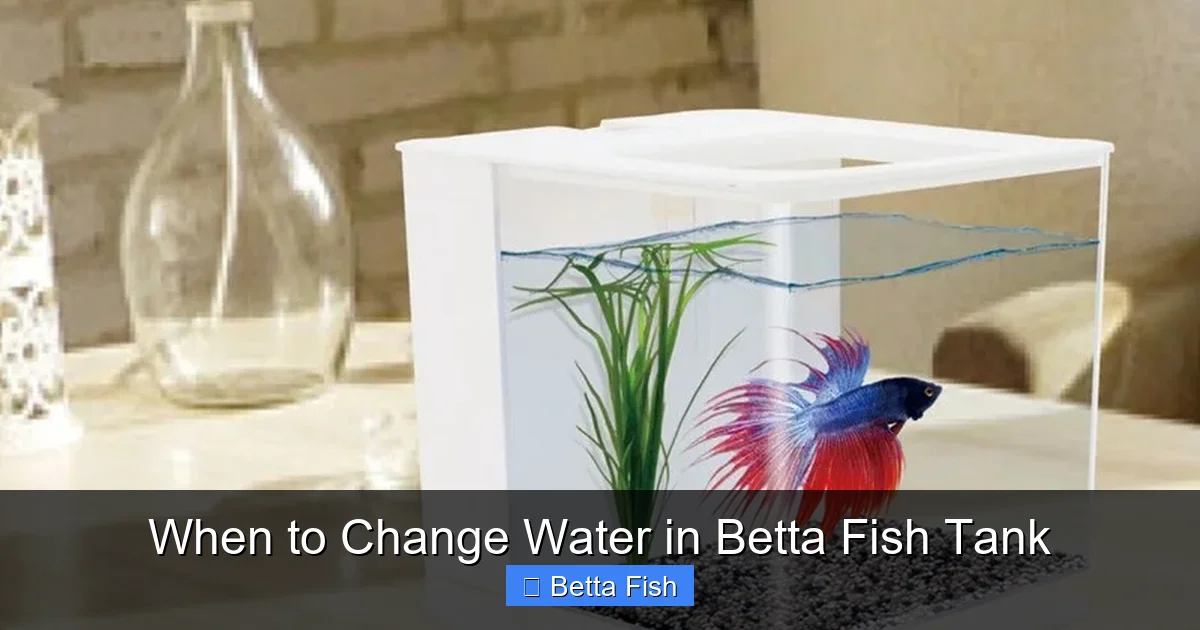
Visual guide about When to Change Water in Betta Fish Tank
Image source: images.nexusapp.co
Mistake #1: The Full Flush (100% Changes)
As mentioned, draining and refilling the entire tank is a massive shock. It removes all the beneficial bacteria from your filter media, substrate, and surfaces, crashing the nitrogen cycle. Your tank will then have to restart the cycle from scratch, subjecting your betta to a new period of toxic ammonia and nitrite spikes. Stick to partial changes.
Mistake #2: Temperature Shock
Pouring in cold tap water into a warm tropical tank is a surefire way to cause shock, leading to a weakened immune system and susceptibility to disease like Ich. Always match temperatures. In a pinch, you can float the sealed bag of new water in the tank for 20-30 minutes to equalize temperature, but using a thermometer is faster and more reliable.
Mistake #3: Forgetting the Conditioner
Tap water contains chlorine and/or chloramines to make it safe for human consumption. These are lethal to fish and will destroy your beneficial bacteria. Never, under any circumstances, add untreated tap water to your aquarium. The conditioner must be added to the new water before it touches your tank or fish.
Mistake #4: Cleaning Everything in the Tank
When you do a water change, resist the urge to scrub every surface, wash all the gravel, or sterilize the decorations. You need to preserve the colony of beneficial bacteria that lives on these surfaces, especially in your filter media. Only clean your filter media (sponges, bio-balls) in the old tank water you just siphoned out—never under chlorinated tap water—and only if it’s becoming severely clogged (once a month or less). Rinsing it lightly in old tank water removes large debris but keeps the bacteria intact.
Mistake #5: Changing the Wrong Amount
Changing too little (e.g., 10%) too often is ineffective at controlling nitrates. Changing too much (e.g., 75%) too often causes significant parameter swings. The 25-50% range is the sweet spot for stability and effectiveness. Use a marked bucket or know your tank’s volume to be precise.
Special Scenarios: Adjusting Your Routine
The standard advice is a guideline. You must adapt it to your specific situation. Here’s how to tailor your water change schedule for unique circumstances.
The New Tank Cycle (First 4-6 Weeks)
During the initial nitrogen cycle, your tank is establishing its bacterial colony. Water changes work differently here. You do need to perform water changes, but for a different reason: to remove excess ammonia and nitrite that are building up faster than the bacteria can process them, protecting your betta from poisoning. During cycling, you may need to do 25-50% changes daily or every other day to keep toxins at bay until the cycle completes (signified by consistent 0 ppm ammonia/nitrite and rising then falling nitrates). Once fully cycled, you revert to the maintenance schedule.
Overfeeding or Extra Mess
Did you accidentally overfeed? Did a plant leaf die and start decaying? These events create a sudden spike in organic waste. Treat it as an emergency and perform a 30-50% change immediately, even if it’s “not your day.” Clean up the excess food or decaying matter during the process. This proactive change prevents a mini-cycle or toxin spike.
When Your Betta is Sick
If your betta is diagnosed with a bacterial or fungal infection (like fin rot), pristine water is part of the treatment. You should increase your water change frequency to 25-50% every day for the duration of the treatment, as per your medication’s instructions. This removes pathogens and their waste products, giving your fish’s immune system the best chance to fight. Always use the proper medication dosage based on the *actual* water volume after the change, not the tank’s total capacity.
Planted Tanks and the “Walstad Method”
A heavily planted tank, especially one using the soil-based “Walstad” method, can be remarkably stable. The plants actively consume ammonia and nitrates as fertilizer. In such a well-balanced, low-tech planted tank with a low fish load (just a betta), you might find you can extend to a 30% change every 2-3 weeks while still keeping nitrates below 20 ppm. However, you must test your water to confirm this. Never assume; test. If nitrates creep up, increase frequency.
Conclusion: Making It a Habit for a Thriving Betta
Ultimately, knowing when to change water in a betta fish tank boils down to commitment and observation. It’s the one task that cannot be automated or delegated. Your betta’s health is in your hands every single week. Set a recurring calendar alert if you need to. Invest in a liquid test kit (the API Freshwater Master Test Kit is a fantastic, affordable start) and test weekly before your change. This simple act tells you exactly what your tank needs. Pair that data with watching your fish’s behavior, and you become a proactive, not reactive, caretaker.
That beautiful betta, with its personality and grace, is entirely dependent on you to maintain its world. Those 15-30 minutes spent on a proper, partial water change once a week are not a chore; they are an investment. An investment in clearer water, brighter colors, more active exploration, and a companion that will grace your life for three, four, or even five years. Start with the 25-50% weekly rule, perfect your technique, and adjust based on what your eyes and your test kit tell you. Your betta will thank you with every flare of its fins and every curious glance from its palace of clean water.
Frequently Asked Questions
Can I use bottled spring water for my betta tank water changes?
Generally, no. Bottled waters vary wildly in mineral content and pH, and many lack essential minerals bettas need. They are also expensive and not sustainable. Properly conditioned tap water is almost always the best, most stable choice. If your tap water is exceptionally poor, consider a reverse osmosis (RO) system with a remineralizer, but this is a advanced solution.
Do I need to change the water if my filter is running and looks clean?
Yes, absolutely. A filter traps solid debris but does not remove dissolved nitrates, phosphates, or other invisible toxins. The filter’s mechanical media may look clean, but the biomedia is housing bacteria that process waste into nitrates. Those nitrates accumulate in the water column until physically removed via a water change. A clean-looking filter is not an indicator of water quality.
What’s the difference between a water conditioner and a water purifier?
For practical purposes, they are the same thing. “Water conditioner” or “dechlorinator” is the standard term. These products neutralize chlorine and chloramines instantly. Some also detoxify ammonia and nitrite for 24-48 hours (like Seachem Prime), which is a bonus during cycling or emergencies, but the primary function is always chlorine/chloramine removal.
Can I clean my betta’s tank decorations during the water change?
Yes, and you should! While the water level is low, wipe down the inside glass with an algae pad and rinse any decorations in the old tank water you just siphoned out (not under tap water). This removes algae and biofilm without killing beneficial bacteria. Avoid using soap or any chemical cleaners, as residues are fatal to fish.
My betta is in a 1-gallon unfiltered bowl. How often must I change the water?
>For a small, unfiltered container like a 1-gallon bowl, water quality deteriorates very rapidly due to the tiny water volume. You should be performing a 50% water change every 2-3 days. This is a significant commitment and is why such small setups are not recommended for bettas. A filtered 5-gallon tank with weekly 25-50% changes is far easier to maintain and much healthier for the fish.
Is it okay if the new water is a little colder/hotter than the tank?
No. A temperature difference of more than 1-2 degrees Fahrenheit (0.5-1°C) can cause thermal shock, stressing your betta and potentially leading to disease. Always use a thermometer to confirm the new, conditioned water matches the tank temperature exactly before adding it. If your tap is too cold, mix in some warm pre-treated water to reach the correct temp.