
When Is Betta Fish Mating Season
Betta fish do not have a traditional “mating season” dictated by the calendar. Unlike many animals, they can breed year-round when their tropical environment provides the right conditions, primarily a consistent water temperature between 78°F and 82°F (25.5°C – 28°C). The key trigger is environmental stability and warmth, not the time of year. Male bettas are the primary architects of reproduction, building bubble nests on the water’s surface when they feel conditions are optimal. Therefore, with a heated aquarium, your betta may show breeding behaviors at any time.
Key Takeaways
- No Calendar Season: Betta fish are not seasonal breeders; they can spawn any month if tank conditions are ideal.
- Temperature is King: A stable water temperature between 78°F and 82°F (25.5°C – 28°C) is the single most important trigger for mating behavior.
- Male Builds the Nest: The male betta is solely responsible for creating the bubble nest, a sign he is ready to breed.
- Year-Round Possibility: In a heated home aquarium, bettas can and will attempt to mate during winter, summer, or any season.
- Conditioning is Crucial: Both male and female need high-quality, protein-rich foods for weeks prior to spawning to be in proper breeding condition.
- Aggression is Natural: The courtship often involves chasing and flaring; the male may become aggressive toward the female even after spawning.
- Wild vs. Captive: In the wild, monsoonal rains and warmer floodplain waters create seasonal opportunities, but this is largely removed in captivity.
📑 Table of Contents
- Debunking the Myth: Betta Fish Don’t Read Calendars
- Temperature: The Ultimate Trigger for Betta Mating Behavior
- Year-Round Breeding: How Your Aquarium Defies Nature’s Calendar
- The Male’s Role: Nest Building and Courtship Displays
- The Female’s Role: Ripeness, Selection, and Sacrifice
- Environmental Cues Beyond Temperature: Setting the Stage
- Responsible Breeding: It’s Not Just About “When” But “If”
- Conclusion: It’s About Conditions, Not a Date on the Calendar
Debunking the Myth: Betta Fish Don’t Read Calendars
If you’ve just welcomed a beautiful betta fish, or Siamese fighting fish, into your home, you might be wondering, “When is betta fish mating season?” It’s a common question, often fueled by images of birds nesting in spring or deer rutting in autumn. The simple, and perhaps surprising, answer is that betta fish do not have a fixed, annual mating season in the way many mammals or birds do. Their reproductive cycle is not tied to the changing of the seasons on a calendar. Instead, it is a continuous, opportunistic process triggered by specific environmental cues. In the warm, stable waters of their native Southeast Asia—the rice paddies and slow-moving streams of Thailand, Cambodia, and Vietnam—conditions can be favorable for breeding for much of the year. When we replicate those ideal, stable tropical conditions in our aquariums, we essentially give our bettas a perpetual “green light” for reproduction. This means that with a properly heated tank, your male betta might start blowing a bubble nest in January, and your female might become ripe with eggs in July. The concept of a “season” is more relevant to wild populations experiencing dramatic dry and wet cycles, but for the domesticated betta in your living room, it’s all about the thermostat.
The Wild Blueprint: Monsoons and Floodplains
To understand why captive bettas don’t follow a strict season, it helps to look at their natural history. In the wild, bettas inhabit shallow, warm waters that are heavily influenced by the monsoon climate. During the hot, dry season, these habitats can shrink to small, isolated, and warm pools. When the monsoon rains arrive, they flood the landscape, creating vast new areas of shallow, warm, plant-filled water. This sudden expansion of habitat and abundance of food (insects, larvae, algae) in the rainy season is the closest thing to a “breeding season” for wild bettas. The rising water levels and consistent warmth signal that conditions are safe and plentiful for raising offspring. However, even in the wild, if a particularly warm, stable pond exists outside the peak rainy period, spawning can occur. This inherent flexibility is baked into their biology.
The Captive Reality: Your Heater is the Boss
In our aquariums, we remove the wild betta’s primary environmental stressors: drought, temperature crashes, and food scarcity. We provide consistent, warm water 365 days a year, a steady food supply, and stable water parameters. This consistency is the great enabler of year-round breeding. The single most critical factor you control is water temperature. If your tank temperature drops below the mid-70s°F (around 24°C) for an extended period, a betta’s metabolism slows, and breeding behaviors will cease. But as long as that heater maintains a steady 78°F to 82°F (25.5°C – 28°C), you are mimicking the warm, rainy-season floodwaters that signal “now is the time.” Therefore, the question isn’t “what month?” but “is my tank at the right temperature and is my fish in good condition?”
Temperature: The Ultimate Trigger for Betta Mating Behavior
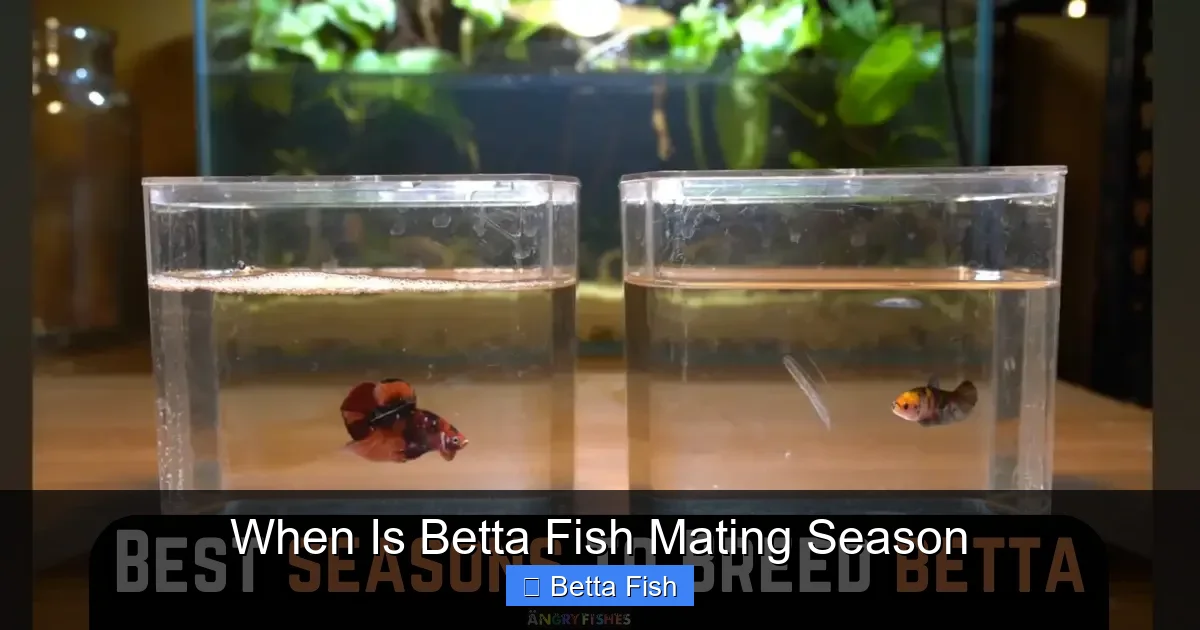
Let’s hammer this point home because it’s the cornerstone of understanding betta reproduction. Water temperature is the master switch for betta breeding activity. It directly influences their metabolism, hormone production, and overall vitality. Think of it like this: a cold betta is a sluggish betta. A warm betta is an active, vibrant, and hormonally primed betta. The optimal temperature range for triggering and supporting the entire spawning process is between 78°F and 82°F (25.5°C – 28°C). Within this range:
Visual guide about When Is Betta Fish Mating Season
Image source: angryfishes.com
- Metabolism Soars: Digestion is efficient, allowing fish to convert food into energy and eggs/sperm effectively.
- Hormones Activate: Production of gonadotropins and sex steroids increases, driving the development of breeding bars (vertical stripes on the female) and the nuptial embrace behavior.
- Male Nest-Building Instinct Kicks In: The urge to build a bubble nest is strongly correlated with warm, oxygen-rich water. You’ll often see this behavior intensify after a partial water change that introduces warmer, fresher water.
- Sperm and Egg Viability: Both male sperm and female eggs develop properly and are more viable at these tropical temperatures. Spawning success rates plummet in cooler water.
Practical Tip: Invest in a reliable, adjustable aquarium heater and a high-quality thermometer. Do not guess. Keep a consistent temperature. A fluctuation of more than 1-2 degrees in a short period can stress fish and disrupt breeding preparations. If you want to encourage breeding, slowly (over 24-48 hours) raise the temperature to the upper end of this range, around 81°F-82°F (27°C-28°C).
Temperature Fluctuations: The Silent Mood Killer
It’s not just the absolute temperature that matters, but its stability. A tank that cycles between 76°F at night and 80°F during the day is stressful. This constant adjustment taxes the fish’s system and can inhibit the sustained hormonal response needed for courtship and spawning. A consistent 80°F is far better than an average of 78°F with wild swings. Ensure your heater is fully submerged (if submersible) and not near a filter outlet or window to prevent uneven heating. For breeding setups, many enthusiasts use a separate, small heater in a breeding tank to have absolute control.
Seasonal Adjustments in Your Home
Here’s a practical reality: your home’s ambient temperature changes with the seasons. In winter, your heater works harder. In summer, your air conditioner might cool the room. This directly impacts your aquarium’s baseline temperature. You must adjust your aquarium heater’s setting accordingly to maintain that golden 78°F-82°F range year-round. The betta doesn’t know it’s December; it only knows if the water feels warm and stable. This is why a betta in a heated tank in Minnesota can be just as ready to spawn in February as one in Florida in June. The “season” is whenever your thermostat says it is.
Year-Round Breeding: How Your Aquarium Defies Nature’s Calendar
Given the right conditions, betta fish are essentially perennially ready to reproduce. This doesn’t mean you should force breeding constantly—it’s a stressful process for the fish, especially the female—but it means the biological potential is always there. Several factors in the captive environment contribute to this year-round capability:
Visual guide about When Is Betta Fish Mating Season
Image source: angryfishes.com
- Constant Warmth: As established, the heater removes the cold-water barrier.
- Abundant, High-Quality Food: In the wild, a betta might only get a good meal during the rainy season when insects are plentiful. In your tank, you can provide daily servings of high-protein foods like brine shrimp, daphnia, and quality pellets, keeping both sexes in excellent condition.
- Stable Water Chemistry: Regular maintenance keeps ammonia and nitrite at zero and maintains consistent pH and hardness, reducing stress.
- Absence of Predators and Habitat Loss: The primary wild pressures that create a “season” are gone. The betta’s only job is to eat, grow, and reproduce.
Important Caveat: Just because a betta can breed year-round doesn’t mean it should. Frequent spawning is energetically draining, particularly for females who produce eggs. Responsible breeders allow for significant rest periods between spawnings, often several months, to let the female recover her body condition. Constantly conditioning a female for breeding is unhealthy. For the casual hobbyist, the takeaway is: if you see bubble nests or breeding bars, it’s a sign your fish are happy and healthy, not necessarily that you need to initiate a breeding project.
The “Always On” Male: Bubble Nests as a Health Indicator
Have you ever woken up to find your lone male betta has built a neat raft of bubbles at the water’s surface? This is not necessarily a cry for a mate; it’s often just a sign of contentment and robust health. A male betta in prime condition, in warm, clean water, will periodically build or maintain a bubble nest as an instinctual activity. It’s like a bird preening its feathers. You might see this behavior peak after a water change (the fresh water stimulates him) or if he sees his own reflection (triggering territorial/display instincts). So, a bubble nest is a positive sign of well-being, but it is not a definitive calendar marker for a “mating season.” It simply means your male is ready if a suitable, ripe female were to be introduced.
When “Year-Round” Isn’t Practical: Commercial Breeding
Even large-scale commercial betta breeders often operate on more of a “seasonal” or batch-oriented schedule, but this is for logistical and economic reasons, not biological ones. They may heat all their breeding rooms to the optimal temperature year-round, but they will condition batches of breeders, spawn them, raise the fry, and then give the broodstock a rest period. They might stagger spawns to have fish of different sizes ready for sale at different times of the year, aligning with market demand (e.g., more sales around holidays). This human-imposed schedule further blurs the line of any natural season. For them, it’s a production cycle, not a response to spring.
The Male’s Role: Nest Building and Courtship Displays
Understanding the betta’s “mating season” requires a deep dive into the distinct and dramatic roles of each sex. The male is the undisputed leader of the reproductive process, and his behaviors are the most visible indicators that breeding conditions are perceived as favorable.

Visual guide about When Is Betta Fish Mating Season
Image source: m.media-amazon.com
The Architecture of Love: Building the Bubble Nest
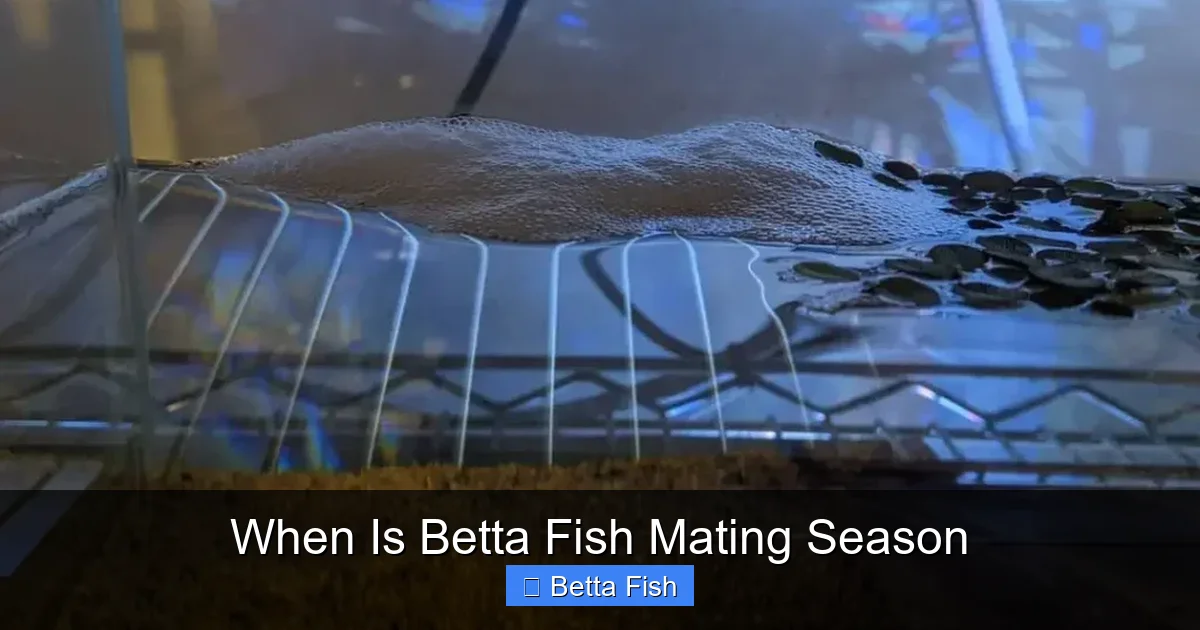
The male betta’s bubble nest is an engineering marvel of instinct. Using a specialized mouthpart, he gulps air from the surface, coats it with a saliva-like mucus that makes it more stable, and spits it back out to form a cluster of bubbles. He then meticulously gathers and arranges these bubbles, often incorporating small plant matter or debris to anchor the structure. This nest can be small and scrappy or a large, impressive raft spanning several inches. The nest’s location is crucial—it must be at the water’s surface in a calm area, away from filter outputs. The act of building can take hours or days. A male actively building or tending a bubble nest is sending a clear signal: his environment is warm, his body is conditioned, and he is anticipating a female. If you introduce a ready female into his tank and he has a nest, the courtship ritual can begin.
The Courtship Dance: Flaring, Chasing, and Display
Once a female is present (usually in a separate container within his tank or in a breeding tank), the male’s performance begins. He will flare his gills and fins dramatically to appear large and impressive. He may perform a “dance” in front of her, leading her toward the nest site. This phase is a delicate balance. The female, if receptive, will darken in color, develop vertical stripes called “breeding bars,” and may also flare back modestly. She will often approach the nest and examine it. However, this courtship is rife with risk. The male’s excitement can quickly turn to aggression. It is absolutely normal for him to chase the female relentlessly, nip at her fins, and try to drive her toward the nest. This is not always mating; it can be true aggression. This is why many breeders use a “double-container” method or a divided breeding tank for the initial introduction, allowing visual contact without physical harm until the female shows clear signs of readiness and the male is focused on the nest.
The Nuptial Embrace: A Fragile Moment
The actual spawning act is called the “nuptial embrace.” The male wraps his body around the female, and she releases her eggs. He simultaneously releases his sperm to fertilize them externally. This embrace is often clumsy and can look like the male is trying to crush the female. He then quickly retrieves the sinking eggs with his mouth and spits them into the bubble nest. This process can repeat dozens of times over several hours. Critical Point: The male’s protective instincts over the nest are now at their peak. Even if the spawning was successful, he may continue to chase and harass the female afterward, now viewing her as a threat to his precious eggs. This is why the female must be removed from the breeding tank immediately after spawning is complete, usually once she is no longer being chased and is hiding. Leaving her in will almost certainly result in her being injured or killed by the now-fiercely paternal male.
The Female’s Role: Ripeness, Selection, and Sacrifice
The female betta’s role is often misunderstood as passive. In reality, she holds significant power through choice and has a demanding physical burden to bear.
Signs of a Ripe, Receptive Female
A female betta is only ready to spawn when her body is full of mature, buoyant eggs. This is called being “ripe” or “in breeding condition.” The signs are clear:
- Swollen Abdomen: Her belly will become noticeably rounder and heavier, often looking like a small grape. This is not bloating from constipation (which is usually accompanied by other symptoms); it is a firm, egg-filled swelling.
- Breeding Bars: Vertical, light-colored stripes will appear on her body, reminiscent of a tiger’s stripes. These are a clear hormonal signal of readiness.
- Receptiveness: She will actively approach the male’s bubble nest, inspect it, and may even display to him. She will not excessively flee from his courtship flares.
- Submissive Posture: During the embrace, she will be passive, allowing the male to wrap her body.
If a female is not fully ripe, she may reject the male’s advances, hide constantly, or even fight back. Forcing a spawn with an unripe female is stressful and often unsuccessful.
Female Choice and Mate Selection
While we place them together, the female does exert some choice. A healthy, vibrant male with a large, well-constructed bubble nest is more likely to be accepted. She may inspect multiple nests if given the option (in a sorority tank with multiple males, for example). Her assessment is instinctual: a good nest suggests a strong, resourceful male capable of protecting offspring. A scrappy, poorly-built nest might be rejected. This is why male conditioning and providing optimal nest-building conditions (calm surface, floating plants like Indian almond leaves) are so important for the breeder.
The Physical Cost of Spawning
Producing a clutch of 100-500+ eggs is an enormous physiological task for the female. It drains her energy reserves and body mass. After spawning, she is severely depleted. This is why the immediate removal and high-quality recovery diet are non-negotiable. She must be placed in a pristine, warm, quiet hospital tank and fed powerhouse foods like live or frozen daphnia, brine shrimp, and high-protein pellets to rebuild her strength. She is vulnerable to infections like dropsy or fungal infections during this time. A breeder must be prepared to give her at least 2-4 weeks of dedicated recovery before even considering another conditioning period.
Environmental Cues Beyond Temperature: Setting the Stage
While temperature is the primary trigger, it doesn’t act alone. A suite of environmental factors works in concert to tell a betta, “This is a perfect, safe place to raise babies.” Replicating these in your breeding tank increases your chances of success exponentially.
Water Quality: The Foundation of Safety
Imagine a murky, ammonia-filled puddle. Would you want to raise your children there? Neither do bettas. Impeccable water quality is paramount. The spawning process is messy—eggs, sperm, and mucus cloud the water. The male will also tend the nest, adding more bubbles and mucus. If the water is already loaded with toxins, the eggs and newly-hatched fry (which absorb their yolk sac for the first 24-36 hours) are extremely susceptible to death. The breeding tank must be fully cycled *before* introducing any breeders. Perform large (50%+) water changes in the days leading up to spawning to ensure pristine conditions. Many breeders use bare-bottom tanks for easy cleaning and to prevent eggs from getting lost in substrate.
The Calm Surface: A Non-Negotiable for Bubble Nests
A bubble nest is a fragile structure. Any surface agitation from a strong filter outflow will destroy it. The water surface must be perfectly still. This is why breeding tanks often use sponge filters (which provide gentle biological filtration without a current) or have the filter output directed at the tank wall. Additionally, floating plants or synthetic spawning mops are not just decoration; they provide anchor points for the nest, break up the water surface tension slightly to make building easier, and give the male a sense of security. Indian almond leaves are a favorite, as they also release tannins that can mildly condition the water and have antifungal properties.
Lighting and Photoperiod
In the wild, the rainy season often coincides with slightly overcast skies and longer days. In the aquarium, a consistent photoperiod of 10-12 hours of light and 12-14 hours of darkness helps regulate the fish’s internal clock. Some breeders simulate a “rainstorm” by performing a large, warm water change and then dimming the lights for a period, which can sometimes trigger nest-building and spawning. However, this is an adjunct, not a replacement, for proper temperature and conditioning.
Diet: Fuel for Reproduction
You cannot build a bubble nest or produce hundreds of eggs on a diet of cheap flakes alone. Conditioning is the process of feeding high-quality, protein-rich foods for 2-4 weeks prior to introducing the pair. For males: quality pellets, frozen or live brine shrimp, bloodworms, and daphnia. For females: the same, but with extra focus on foods that promote egg development, like daphnia (which is also a mild laxative, helping to clear the digestive tract before spawning). Well-conditioned fish have vibrant colors, energetic displays, and in the female’s case, a visibly swollen, soft abdomen.
Responsible Breeding: It’s Not Just About “When” But “If”
Knowing that bettas can breed year-round might make the idea sound simple. It is not. Betta spawning is a hands-on, stressful, and space-intensive endeavor with a high responsibility quotient. Before you ever try to encourage a spawn, you must ask “why?”
The Overpopulation Problem
Betta fish are one of the most commonly abandoned pets. shelters and rescues are full of them. A single successful spawn can yield 200+ fry. Raising betta fry is a monumental task requiring:
- Infusoria or commercial fry food for the first week.
- Gradual transitions to baby brine shrimp, microworms, etc.
- Frequent, tiny water changes with perfectly aged, temperature-matched water.
- Numerous small grow-out tanks as the fry develop and males must be separated at around 8-12 weeks to prevent fighting.
- Months of care before the fish are large enough to sell or rehome.
Breeding bettas should only be undertaken by those with a clear plan for the lifetime care of all offspring. It is not a way to “make money” (the costs far outweigh any potential income from selling a few fish). It should be done to improve the health and vigor of a specific line, to experience the wonder of the process, or with a pre-arranged commitment to homes for every fry.
Genetic Health and Pet Store Bettas
The bettas you buy from large chain stores are often the product of decades of selective breeding for extreme fin length (like half-moons) and vibrant colors. This has come at a cost: many have compromised immune systems, skeletal deformities (like a curved spine), and poor stress tolerance. Breeding these fish can perpetuate genetic weaknesses. If you are interested in breeding, seek out reputable, ethical breeders who prioritize health, temperament, and genetic diversity over extreme show standards. These breeders’ fish are often hardier and better suited for successful, less stressful spawns.
Ethical Alternatives to Breeding
For the vast majority of betta keepers, the best course of action is to enjoy the beauty and personality of their fish without attempting to breed. You can still provide excellent care, observe fascinating behaviors, and even see the natural instinct of a male building a bubble nest—a rewarding sight in itself. If you love betta fry, consider volunteering with a rescue that may have pregnant females or orphaned fry to foster. This allows you to help the overpopulation problem directly without adding to it. Remember, the fact that your betta can mate year-round in your heated tank does not create an obligation for you to make it happen. Responsible fishkeeping means understanding and managing natural instincts for the welfare of the animals in your care.
Conclusion: It’s About Conditions, Not a Date on the Calendar
So, when is betta fish mating season? The definitive answer is: whenever you make it so. The concept of a traditional, calendar-based mating season is largely irrelevant for the domesticated betta. Their reproductive drive is a constant, simmering potential, waiting for the right environmental key to unlock it. That key is a combination of consistently warm water (78°F-82°F), excellent water quality, abundant high-quality nutrition, and a calm, secure environment. When these conditions are met, a male will build his bubble nest, a female will ripen with eggs, and the spectacular, ancient ritual of the nuptial embrace can unfold—be it in the heat of summer or the depths of winter.
This knowledge empowers you as a keeper. If you see bubble nests, it’s a compliment to your husbandry. If you wish to breed, you now know the precise environmental levers to pull. But with that power comes profound responsibility. Breeding bettas is a serious commitment to the future of dozens of lives. For most, appreciating the betta’s beauty and feisty personality without intervening in their reproduction is the kindest and most sustainable choice. Your heated aquarium has created a perpetual springtime for your fish. It is up to you to decide what, if anything, grows from that eternal warmth.
Frequently Asked Questions
Can betta fish mate any time of the year?
Yes, absolutely. In a heated aquarium with stable tropical temperatures (78°F-82°F), bettas are biologically capable of breeding throughout the entire year. Their reproduction is triggered by environmental conditions, not the calendar.
What water temperature triggers betta mating?
The optimal temperature range to trigger and support betta spawning is between 78°F and 82°F (25.5°C – 28°C). Consistency is crucial; fluctuations can stress the fish and inhibit breeding behaviors.
Why does the male betta attack the female during mating?
Male aggression during and after spawning is common and instinctual. He is driven to protect his bubble nest and may see the female as a threat to the eggs. This is why the female must be removed from the breeding tank immediately after spawning is complete.
What does a bubble nest mean for mating?
A bubble nest built by a male betta is a strong sign he is in good health and feels his environment is suitable for breeding. However, a male may build nests periodically even without a female present, so it is an indicator of readiness, not a guarantee a spawn will occur.
How do I condition betta fish for breeding?
Conditioning involves feeding high-protein, high-quality foods (like brine shrimp, daphnia, and premium pellets) for 2-4 weeks while maintaining pristine, warm water. This diet helps the female develop a swollen abdomen full of eggs and the male build energy for nest-building and spawning.
How long does it take for betta eggs to hatch?
Betta fish eggs typically hatch within 24-36 hours after fertilization, depending on water temperature (warmer water speeds development). The tiny fry will remain in the bubble nest for another 2-3 days, absorbing their yolk sacs, before becoming free-swimming and needing their first feeding.