When Do Betta Fish Mate

Betta fish do not have a strict breeding season and can mate year-round under optimal conditions. Their readiness is primarily triggered by environmental factors like water temperature, quality, and tank setup, rather than a specific time of year. Key indicators include the male building a bubble nest, vibrant color changes in both sexes, and specific courtship behaviors. Success depends entirely on meticulous preparation and understanding their aggressive, territorial nature to prevent injury.
Key Takeaways
- No Fixed Season: Unlike many fish, bettas are not seasonal spawners; they can breed any time if water parameters and conditions are ideal.
- Male’s Bubble Nest is the Primary Signal: A male betta building a bubble nest is the most reliable sign he is ready to mate, regardless of the calendar.
- Condition Over Calendar: Proper nutrition, stable warm water (78-80°F), and excellent water quality are the true triggers for breeding behavior.
- Aggression is a Constant Risk: Even during courtship, bettas can be fiercely territorial. The female must be removed immediately after spawning to prevent the male from killing her.
- Fry Care is Intensive: Successful mating leads to 30-100+ eggs, but the tiny, fragile fry require specialized infusoria food and pristine water for the first week.
- Observation is Critical: The mating dance can last hours. Constant, discreet observation is necessary to intervene if aggression escalates beyond flaring and chasing.
- Separate Tanks are Non-Negotiable: A dedicated, cycled spawning tank with minimal water flow and hiding spots for the female is essential for safety and success.
📑 Table of Contents
- Understanding the Betta Breeding Cycle: It’s Not About the Calendar
- The Tell-Tale Signs: How to Know Your Betta is Ready to Mate
- Setting the Stage: The Critical Role of the Breeding Tank
- The Mating Dance: A Step-by-Step Guide to the Spawning Process
- After the Spawn: The Male’s Guardianship and Fry Development
- Common Pitfalls and Why Betta Mating Fails
- Conclusion: Patience, Preparation, and Observation
Understanding the Betta Breeding Cycle: It’s Not About the Calendar
When you first bring home a beautiful betta fish, also known as a Siamese fighting fish, a common and exciting question arises: “When will my betta fish mate?” The popular image might be of fish spawning only in springtime, like many other species. However, the reality for Betta splendens is wonderfully different. Betta fish are opportunistic, non-seasonal spawners. This means they don’t wait for longer daylight hours or specific water temperature changes tied to a season. Instead, their繁殖 cycle is a direct response to their immediate environment and physical condition. If you provide the perfect setup, your bettas could be ready to mate tomorrow, next month, or any time in between. This flexibility is a hallmark of their tropical origins in the shallow, warm waters of Thailand, where conditions are relatively stable year-round. Therefore, the answer to “when” is less about a date on a calendar and all about creating a set of specific, stable conditions that tell your fish’s biology, “Now is the time.”
Decoding Seasonal Misconceptions
Many new aquarists are influenced by breeding information for temperate fish, which is tied to spring. For bettas, this is a myth. In their native habitat, the rainy season can trigger breeding due to cooler surface water and insect influx, but in the controlled environment of an aquarium, we replicate the *result* of that rain—clean, slightly cooler top water and an abundance of food—not the season itself. Your home aquarium has no “seasons” in the wild sense. The heater maintains a constant temperature. The lights are on a timer. Therefore, you are the sole regulator of their breeding cues. Once you master the environmental triggers, you hold the key to their mating readiness.
The Tell-Tale Signs: How to Know Your Betta is Ready to Mate
So, if there’s no calendar, how do you know? You must become a skilled observer of betta behavior and physical changes. Readiness manifests in a clear sequence of events, primarily led by the male. The most iconic and unambiguous sign is the bubble nest. This is the male’s construction project, a floating mat of saliva-coated bubbles often built in a corner or under a leaf. A male in breeding condition will invest energy in this nest, sometimes over several days. Its size and quality vary; some are small and sparse, others are large and dense. The presence of a bubble nest is your green light to begin serious preparations for a potential spawn. However, a nest alone isn’t enough. Both sexes undergo dramatic physical transformations.

Visual guide about When Do Betta Fish Mate
Image source: bettasource.com
Physical Transformations: The “Breeding Glow”
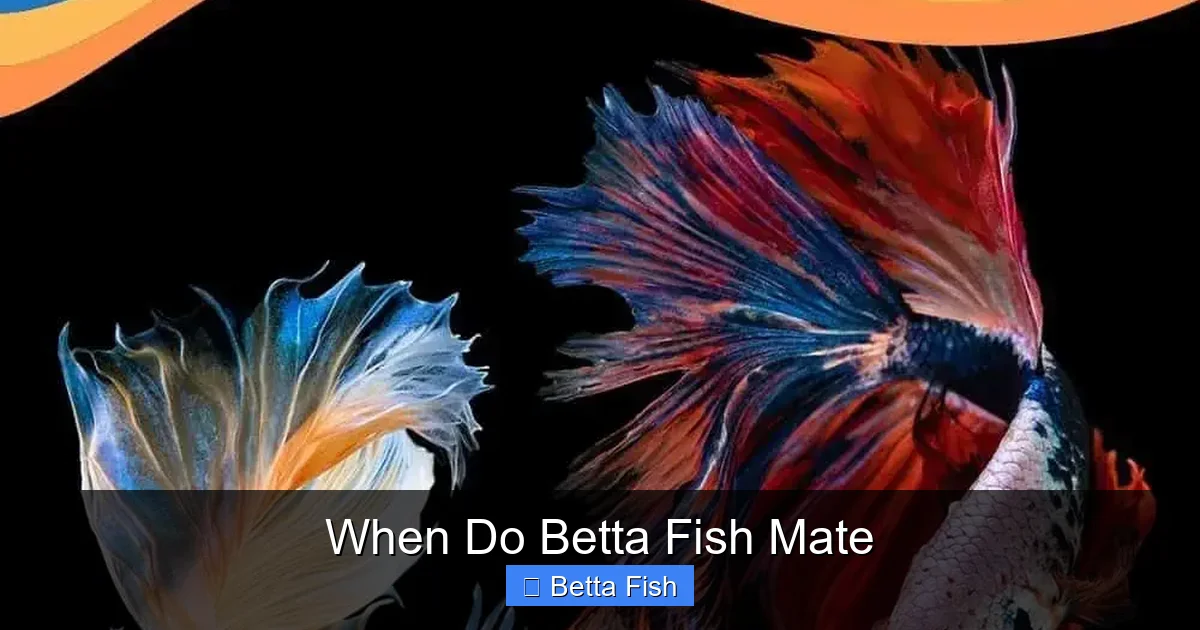
When in prime condition, bettas exhibit what hobbyists call “breeding colors.” The male’s already vibrant hues often become even more intense, with reds deepening, blues shimmering with iridescent green, and patterns sharpening. His gills (opercula) will flare more readily, not just in aggression but in display. The female, who is usually more subdued in color, will also show changes. Her body becomes more rounded, particularly in the belly, as she fills with ripe eggs. You might see a small, white ovipositor (a small bump) protruding from her vent. Her colors can also intensify, sometimes developing vertical bars called “breeding bars” on her body, which is a signal of readiness. These changes are fueled by a high-protein diet and optimal water conditions.
Behavioral Shifts: The Courtship Dance Begins
Once the male has his nest and the female is introduced (or present in a divided tank), the behavioral ritual starts. The male will perform a vigorous courtship display. He will flare his gills, spread his fins wide (especially his impressive caudal fin), and perform a zig-zagging dance in front of the female. He may also lead her to the bubble nest site. The female’s response is key. A receptive female will “submissively” darken in color, often becoming a pale, washed-out tan or brown. She will also perform her own version of the dance, arching her body and quivering. She may gently nibble at the male’s fins or tail. This exchange can go on for hours. It is a delicate balance. If the female is not fully ready, or if the male is overly aggressive, she will hide, clamp her fins, and show no interest. This is your signal to separate them and try again later.
Setting the Stage: The Critical Role of the Breeding Tank
You cannot simply introduce a male and female betta into your main display tank and hope for the best. Doing so is a recipe for disaster, almost certainly ending in the death of the female. The breeding tank is a specialized, controlled environment designed for one purpose: to facilitate a safe spawning and allow the male to guard the eggs without threat. Its setup is the single most important factor in determining “when” mating can occur, because without it, mating cannot happen safely at all.

Visual guide about When Do Betta Fish Mate
Image source: bettasource.com
Tank Size and Environment: Less is More
A spawning tank for a pair of bettas can be surprisingly small—a 5 to 10-gallon tank is often sufficient. The key is to minimize open swimming space so the male cannot chase the female relentlessly. The tank must be fully cycled with a mature biological filter. You cannot use a brand-new tank; toxic ammonia and nitrite spikes would kill the sensitive eggs and fry. The water should be clean but not current-heavy. Use a sponge filter set to very gentle flow or no filter at all, relying on frequent water changes. The water depth should be shallow, around 5-6 inches, to mimic their natural puddle habitat and make it easier for the male to retrieve eggs.
Essential Additions: The Nest Site and Hiding Spots
The centerpiece of the tank is the bubble nest site. Provide a broad, floating leaf (real or silk) or a piece of almond leaf. This gives the male a perfect anchor point for his nest and a sense of security. For the female, you must provide multiple hiding spots. Live plants like Java moss, floating water lettuce, or spawning mops are ideal. They offer visual barriers where the female can escape the male’s constant attention. Without these, the male will harass the female until she is exhausted and stressed, which can lead to her death before spawning even occurs. The goal is to allow courtship while giving the female places to rest and regroup.
Water Parameters: The Scientific Recipe
Precise water conditions are non-negotiable. The temperature should be a stable 78-80°F (25.5-26.5°C). Slightly warmer (82°F) can speed up development but increases aggression. Use a reliable heater. The pH should be neutral to slightly acidic, around 6.5-7.0. Water hardness is less critical but softer water is often preferred. The most crucial parameter is pristine water quality. Ammonia and nitrite must be at 0 ppm. Perform a 25-50% water change with temperature-matched, dechlorinated water daily in the days leading up to and during spawning to keep it perfect. This high level of cleanliness mimics the rain that would flush their natural habitat and triggers the instinct to reproduce in the fresh, clean water.
The Mating Dance: A Step-by-Step Guide to the Spawning Process
Once your prepared breeding tank is ready, the male has built a substantial bubble nest, and you have a conditioned, gravid female, it’s time for the introduction. This is the moment you’ve been waiting for, but it requires careful management. The actual spawning event is a fascinating, intricate, and sometimes brutal ballet that can last from a few minutes to several hours. Understanding each phase helps you know when to intervene and when to simply observe.
Visual guide about When Do Betta Fish Mate
Image source: bettasource.com
Phase 1: Introduction and Initial Assessment
Gently introduce the female into the breeding tank. Do not drop her in; use a cup to slowly acclimate her to the tank water over 15-20 minutes. Once released, she will likely dart to a hiding spot. The male will immediately become aware of her presence. He will patrol the tank, flare at her hiding spot, and may begin to intensify his bubble nest building. This initial period can be tense. If the male relentlessly hunts her and she never emerges, separate them after 24 hours. She is not ready, or he is too aggressive. If she comes out and they begin the courtship dance described earlier, you are on the right path.
Phase 2: The Nudge and the Embrace
As courtship progresses, the male will herd the female towards the bubble nest. He may mouth her gently to guide her. When she is positioned directly under the nest, the male will perform a characteristic “S” shape, quivering. This is the signal. The female will respond in kind. Then, in a synchronized movement, the male will wrap his body around the female’s midsection—this is the “embrace.” This is not a romantic hug; it’s a physical compression that forces the female to release her eggs. The male simultaneously releases his sperm (milt) into the water, fertilizing the eggs externally. This embrace may happen multiple times. You will see small, white, tapioca-like pearls drift downwards.
Phase 3: The Egg Collection
This is the male’s most critical job. As the fertilized eggs sink, the male will dart down, retrieve them one by one (or in small clusters) with his mouth, and spit them up into the safety of the bubble nest. He is incredibly diligent at this. Any egg that falls to the substrate is a loss. The female, once her eggs are spent, may try to help or may simply rest, exhausted. Her role is complete. At this moment, the female becomes a threat. Her presence can confuse the male, and he may see her as a predator to the eggs. You must now carefully net her out and return her to her own recovery tank. This is the most important intervention you will make. Hesitation risks the male attacking her or her eating the eggs herself.
After the Spawn: The Male’s Guardianship and Fry Development
With the female removed, the male is now a devoted, single parent. He will hover meticulously over the bubble nest, repairing any damaged bubbles, retrieving any stray egg that falls, and fiercely guarding the territory. This period lasts for about 24-72 hours. During this time, you should not disturb him. Do not feed him in the spawning tank, as uneaten food will foul the water. His focus is absolute. The eggs will develop inside the nest. Within 24-36 hours, you will see tiny, dark specks inside the eggs—the developing embryos’ eyes. At the 48-72 hour mark, the fry will hatch. They will look like tiny, transparent commas, still attached to the nest by a yolk sac. They will wriggle but not swim freely yet.
The Critical First Feed
The moment the fry become free-swimming and have absorbed their yolk sacs (usually 3-4 days after hatching) is the most vulnerable point in their lives. They are so tiny they can barely be seen. They require microscopic food. The standard first food is infusoria—a culture of microscopic protozoa. You must start this culture at least a week before expected hatching. Alternatives include commercial liquid fry food or a very fine sprinkle of hard-boiled egg yolk (though this can foul water quickly). Feed tiny amounts 3-4 times a day. The water must remain impeccably clean. Begin performing tiny (10-20%) daily water changes with a turkey baster or sponge to remove detritus, being extremely careful not to suck up the fry.
Raising the Next Generation
As the fry grow over the next 2-3 weeks, you can gradually introduce slightly larger foods: newly hatched brine shrimp (the gold standard), microworms, and eventually finely crushed high-quality fry food. Their growth will be staggered; some will be larger than others. At about 4-6 weeks, you will begin to see the males develop their characteristic long, flowing fins and aggressive behaviors. At this stage, they must be separated into individual containers (like small kritter keepers) to prevent them from fighting to the death. This is the beginning of the long, rewarding, but demanding process of raising betta fry to adulthood.
Common Pitfalls and Why Betta Mating Fails
Even with the best intentions, betta breeding attempts fail frequently, especially for beginners. Understanding these common pitfalls is crucial for knowing “when” not to try, or how to adjust your “when” by fixing the setup.
Aggression That Spills Over
The number one reason for failure is misjudging aggression. The courtship dance involves flaring and chasing, but it crosses the line into lethal aggression if the male relentlessly bites the female’s fins or body, causing physical damage. The female will become listless, hide constantly, and may have torn fins. If you see this, separate them immediately. Sometimes, a male simply will not accept a particular female, no matter how ready she is. Personality and individual preference play a huge role. You may need to try a different female. Conversely, some females can be surprisingly aggressive and may attack the male. Always have a divider ready in the spawning tank for a quick separation if a true fight erupts.
Environmental Stressors
Poor water quality is a silent killer. Elevated ammonia or nitrite will stress the fish, dull their colors, and suppress breeding behaviors. Fluctuating temperature is another major stressor. A stable 79°F is far better than a range of 76-82°F. Inadequate nutrition for the broodstock is also critical. Bettas need a varied, high-protein diet for weeks before spawning—include quality pellets, frozen or live brine shrimp, daphnia, and bloodworms to build up their reserves. A thin, undernourished betta will not build a good nest or produce healthy eggs.
Fry Failure: The First Week is the Hardest
Assuming a successful spawn, the highest mortality occurs in the first week of fry life. This is usually due to one of three things: 1) No food—the fry starve because the infusoria culture wasn’t ready or was insufficient. 2) Bad water—infrequent water changes lead to ammonia buildup from uneaten food and waste, which is lethal to the tiny fry. 3) Improper feeding—food that is too large or not nutritious enough. The fry’s yolk sac must be fully absorbed before you start feeding, and the first feed must be microscopic. Patience and meticulous water management are the only cures.
Conclusion: Patience, Preparation, and Observation
So, when do betta fish mate? The definitive answer is: when you make it happen. There is no mystical season. The clock starts when you commit to providing the pristine, warm, stable environment and the specialized breeding tank they require. It starts when you invest in high-quality, protein-rich food to condition your pair. It starts when you learn to read the subtle language of their flares, color shifts, and nest-building. Mating bettas is one of the most rewarding experiences in the aquarium hobby, a front-row seat to a dramatic and ancient biological ritual. But it is also a serious responsibility that demands research, preparation, and constant vigilance. By focusing on the environmental triggers—the bubble nest, the water parameters, the safe tank—and respecting their fierce, instinctual nature, you move from asking “when” to confidently saying, “now.” Remember, the goal is not just to see eggs, but to raise healthy fry. Take your time, master each step, and enjoy the incredible journey of betta reproduction.
Frequently Asked Questions
Can betta fish mate without a bubble nest?
No, a bubble nest is an absolute requirement for a male betta. The nest is where he collects and guards the fertilized eggs. If a male does not build a nest, spawning will not occur. If a nest is destroyed during courtship, the male may abandon the attempt.
How old do betta fish need to be to mate?
Betta fish should be sexually mature before breeding. This is typically between 4 and 12 months of age. Breeding fish that are too young (under 4 months) often results in poor egg quality, small spawns, and high fry mortality. Fish older than 2-3 years may have reduced fertility.
How many times can a betta fish mate in its life?
A healthy, well-cared-for betta can spawn multiple times throughout its life, potentially every few weeks or months if reintroduced to a conditioned female. However, frequent spawning is extremely taxing on the male, who may lose condition and color. Responsible breeders limit spawns to 2-3 times per year for any given pair to allow for proper recovery.
What temperature triggers betta fish to mate?
The optimal and consistent water temperature for betta breeding is 78-80°F (25.5-26.5°C). This warm, stable temperature mimics their tropical habitat and speeds up metabolic processes, encouraging breeding behavior. A sudden drop in temperature, like a cold rainstorm would cause, can sometimes trigger spawning in the wild, but in an aquarium, a consistent warm temperature is the reliable trigger.
Do betta fish mate for life?
No, betta fish do not form pair bonds. They are solitary, territorial animals. The male and female only come together for the brief act of spawning, which lasts a few hours. Immediately after, the female must be removed for her own safety. They should never be housed together long-term, as the male will inevitably attack and kill the female.
How can you tell if betta eggs are fertilized?
Fertilized betta eggs will appear slightly larger, more opaque, and develop a small dark spot (the embryo’s eye) within 24 hours. Unfertilized eggs, often called “fungus eggs,” will remain small, white, and milky. They quickly turn fuzzy with fungus and must be removed by the diligent male (or by you if he fails) to prevent the fungus from spreading to the good eggs.