When Can You Put Betta Fish in New Tank
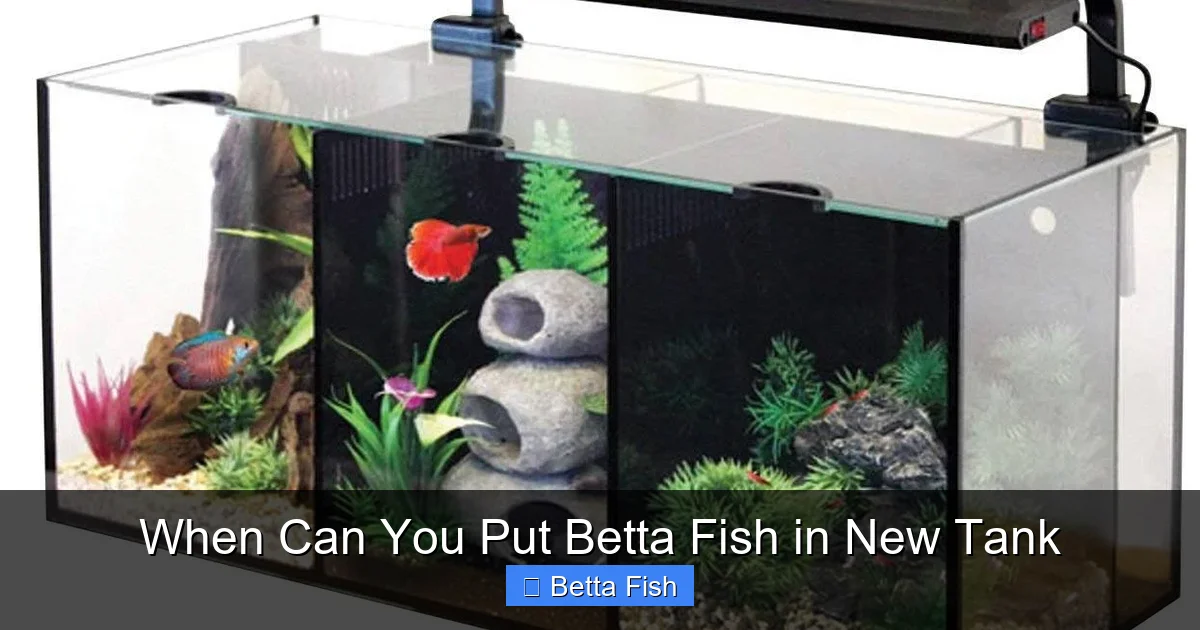
You should never put a betta fish in a new tank immediately after filling it with water. A new aquarium must first complete the nitrogen cycle, a 2-6 week process where beneficial bacteria establish to process toxic fish waste. Only once the tank shows 0ppm ammonia, 0ppm nitrite, and stable nitrates (under 20ppm) is it safe. Rushing this process is the leading cause of “new tank syndrome” and betta death.
Key Takeaways
- The Nitrogen Cycle is Non-Negotiable: A new tank is a toxic wasteland until beneficial bacteria colonize the filter and surfaces to convert ammonia to nitrite and then to less harmful nitrates. This takes 2-6 weeks.
- Water Testers are Essential Tools: You must use a liquid water test kit (like API Freshwater Master Test Kit) to monitor ammonia, nitrite, nitrate, and pH. Do not guess or use test strips.
- Fishless Cycling is the Safest Method: Add an ammonia source (pure ammonia or fish food) to the empty tank to grow bacteria before introducing any fish, preventing unnecessary stress or harm to your betta.
- Cycle Completion = Safe Water Parameters: The tank is ready only when tests show 0 ppm ammonia, 0 ppm nitrite, and low, stable nitrates (ideally below 20 ppm) for at least a week.
- Acclimation is Still Required: Even in a perfect cycled tank, you must slowly acclimate your betta to the new water’s temperature and chemistry using the drip or float method over 30-60 minutes.
- Never Add Bettas to Uncycled Tanks: “Seeding” with water or filter media from an established tank can speed up the cycle but does not make an uncycled tank instantly safe. The cycle must still complete.
- Patience Prevents Suffering: Waiting for the cycle to complete is the single most important thing you can do for your betta’s long-term health and lifespan. Rushing leads to poisoning, stress, and disease.
📑 Table of Contents
- The Critical Question: Is Your Tank Truly Ready?
- Understanding the Nitrogen Cycle: The Foundation of a Safe Tank
- Step-by-Step: Setting Up for a Safe Cycle (Before You Buy the Betta)
- The Moment of Truth: Confirming Your Tank is Cycle-Complete
- Acclimation: The Final, Gentle Introduction
- Common Myths and Dangerous Shortcuts
- Ongoing Maintenance After Adding Your Betta
- Conclusion: Patience is the Ultimate Act of Love
The Critical Question: Is Your Tank Truly Ready?
So you’ve set up a beautiful new aquarium for your betta fish. The filter is humming, the heater is keeping the water at a perfect 78-80°F (25.5-26.5°C), and you’ve added some silk plants and a hiding cave. It looks perfect. But the most important question—the one that determines life or death—is: when can you put betta fish in new tank? The tempting, wrong answer is “right now!” The correct answer requires understanding one of the most fundamental concepts in fishkeeping: the nitrogen cycle. This guide will walk you through every single step, from setting up an empty tank to the moment you can safely introduce your vibrant betta. We’ll debunk myths, provide clear timelines, and give you the practical tools to avoid the heartbreak of “new tank syndrome.”
Many new betta owners, eager to see their fish explore its new home, make the fatal mistake of adding their pet to an uncycled tank. A new tank is not a clean, safe environment; it is a sterile chamber with no biological filtration. The moment your betta excretes waste or uneaten food decays, toxic ammonia begins to build up. Without a colony of beneficial bacteria to process this poison, ammonia will burn your betta’s gills, damage its internal organs, and lead to a swift, painful death. This article will ensure you never make that mistake.
Understanding the Nitrogen Cycle: The Foundation of a Safe Tank
Before we talk about “when,” we must understand “why.” The nitrogen cycle is nature’s way of breaking down organic waste. In your betta’s tank, it’s a three-step biological process carried out by specific bacteria. Think of it as installing an invisible, living waste treatment plant inside your aquarium.
Visual guide about When Can You Put Betta Fish in New Tank
Image source: i.ytimg.com
The Three Toxic Steps (And the Safe End Goal)
1. Ammonia (NH3/NH4+): This is the first, most deadly toxin. It comes directly from your betta’s gills, urine, and decomposing food/plant matter. Ammonia burns gills and is highly stressful. In a new tank, it spikes immediately after adding a fish.
2. Nitrite (NO2-): As the first type of bacteria (Nitrosomonas) establishes, they consume ammonia and convert it into nitrite. Nitrite is even more deadly than ammonia. It binds to hemoglobin in the blood, preventing oxygen transport, leading to internal suffocation—a condition called methemoglobinemia or “brown blood disease.”
3. Nitrate (NO3-): A second bacteria (Nitrobacter and others) then converts nitrite into nitrate. Nitrate is far less toxic and is the end product of the cycle. It can be tolerated by fish at low levels but must be managed through regular water changes (keeping it below 20-40 ppm for bettas).
The Goal: To have a robust population of both bacterial colonies working simultaneously so that as soon as ammonia is produced, it’s converted to nitrite, and that nitrite is immediately converted to nitrate. A “cycled” tank means this process is established and stable, keeping ammonia and nitrite at 0 ppm at all times.
How Long Does Cycling Take?
There is no exact calendar. The cycle typically takes 2 to 6 weeks, sometimes longer. The speed depends on temperature (warmer, within safe limits, speeds it up), surface area for bacteria to grow (more filter media, decorations, and substrate are better), and whether you “seed” the tank with bacteria from an established source. A betta’s small bioload means a small, well-filtered tank can cycle faster than a large, sparsely filtered one. Patience is the rule.
Step-by-Step: Setting Up for a Safe Cycle (Before You Buy the Betta)
The clock starts ticking the moment you add an ammonia source to your filled, dechlorinated tank. Here is the definitive pre-fish checklist.
Visual guide about When Can You Put Betta Fish in New Tank
Image source: m.media-amazon.com
1. Assemble the Tank & Treat the Water
Place your tank on a stable, level surface away from direct sunlight and drafts. Install the filter and heater. Add your dechlorinated water—never use untreated tap water. Chlorine and chloramine in tap water will kill the beneficial bacteria you are trying to grow. Use a reliable water conditioner that neutralizes both. Add your substrate (sand or smooth gravel) and decorations. At this stage, no fish, no live plants that require cycling (most do), no snails.
2. Introduce an Ammonia Source (Fishless Cycling)
This is the gold standard. You are purposefully adding toxic ammonia to an empty tank to feed the bacteria. This is cruel to no one and guarantees your future betta enters a safe home.
- Option A (Pure Ammonia): Use plain, unscented household ammonia (ensure it is 100% ammonia, no additives). Add drops to reach a test reading of 2-4 ppm ammonia. This will need to be topped up as bacteria consume it, maintaining that level until the cycle completes.
- Option B (Fish Food): Add a pinch of flake food or a few frozen bloodworm bits. This decays and produces ammonia. It’s less precise and can cloud the water, but it works.
- Option C (Seeding): Add a handful of used filter media, gravel, or decorations from a healthy, disease-free established tank (from a friend or store). This introduces a starter culture of bacteria, potentially cutting cycle time in half. This does NOT mean you can skip testing. The cycle still needs to complete.
3. Boost Bacteria Growth
Use a commercial bacterial supplement (like Seachem Prime *with* bacteria, or Microbe-Lift). Add it according to the label. While not a magic solution, it can help establish colonies faster, especially when combined with seeding. Keep the filter running 24/7 and maintain a stable temperature of 78-80°F.
4. Monitor the Cycle with a Liquid Test Kit
Buy the API Freshwater Master Test Kit. It is the industry standard and far more accurate than strips. Test every 24-48 hours. You will see this progression:
- Days 1-7: Ammonia rises (1-2 ppm).
- Week 2: Ammonia starts to fall as nitrite appears and rises. This is the dangerous phase—high ammonia AND high nitrite.
- Week 3-4: Ammonia drops to 0. Nitrite peaks and then begins to fall. Nitrate starts to appear.
- Week 4-6: Nitrite drops to 0. Ammonia remains at 0. Nitrates continue to rise.
The cycle is complete when you have consistent readings of 0 ppm ammonia and 0 ppm nitrite, with nitrates present (and manageable). Perform a large water change (50%) to bring high nitrates down below 20 ppm before adding your betta.
The Moment of Truth: Confirming Your Tank is Cycle-Complete
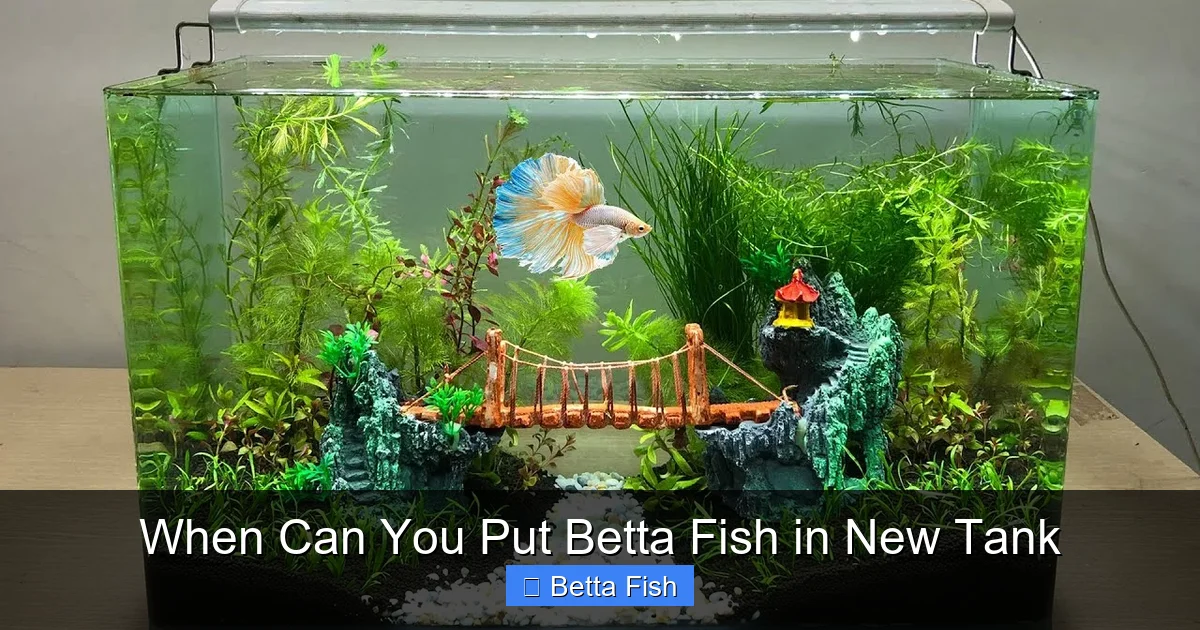
Do not guess. Do not rely on time passed. Rely only on your test kit. Your tank is safe for your betta when:
Visual guide about When Can You Put Betta Fish in New Tank
Image source: smallfishtank.com
- Ammonia = 0 ppm for at least 5-7 consecutive days.
- Nitrite = 0 ppm for at least 5-7 consecutive days.
- Nitrates are low and stable (ideally under 20 ppm, certainly under 40 ppm).
- You have performed a final water change to adjust nitrates and temperature to match your betta’s current habitat.
If you see any trace of ammonia or nitrite (even 0.25 ppm), the cycle is not complete. Wait. It is better to wait an extra week than to risk your fish’s life.
Acclimation: The Final, Gentle Introduction
Your tank is cycled and pristine. Now, you must carefully transition your betta from its temporary cup or bag to its new home. This is about temperature and water chemistry.
The Float Method (For Temperature Only)
Place the sealed betta cup/bag in the tank for 15-20 minutes to equalize temperature. This prevents thermal shock.
The Drip Acclimation Method (For Chemistry – Highly Recommended)
This is the safest method, especially if your betta came from vastly different water (e.g., a pet store cup with high ammonia vs. your pristine tank).
- After floating, empty the bag/cup water into a clean bucket or bowl (do not add store water to your tank).
- Use airline tubing to create a slow drip (2-4 drips per second) from your main tank into the acclimation container.
- Allow the water volume to double or triple over 30-60 minutes.
- Gently net your betta from the acclimation container and place it in the tank. Do not pour store water into your tank.
- Dispose of the acclimation water.
Observe your betta closely for the first few hours. It may hide, which is normal. Do not feed for 24 hours to allow its digestive system to settle and to avoid adding excess ammonia before you’re sure the tank’s bacteria load can handle it.
Common Myths and Dangerous Shortcuts
Let’s bust the myths that get bettas killed.
“I Used Bottled Water/Spring Water, So It’s Safe.”
Wrong. These waters lack essential minerals (carbonates and GH) that buffer pH and are crucial for fish osmoregulation and biological filtration. They also have no beneficial bacteria. Use properly treated tap water for cycling and water changes.
“I Added Bacteria Supplements, So I Can Add Fish Today.”
Supplements add bacteria, but they need time (days/weeks) to reproduce and form a stable colony. They accelerate but do not instantaneously create a cycle. Testing is still mandatory.
“My Friend Gave Me Filter Media from Their Tank, So It’s Cycled.”
Seeding provides a huge head start, but the bacteria need time to adapt to your tank’s specific ammonia load and multiply. You might shave 1-3 weeks off the cycle, but you still must test for ammonia and nitrite before adding fish.
“I Have Live Plants, So They’ll Cycle the Tank.”
Established plants can absorb some ammonia and nitrates, but they do not host the specific nitrifying bacteria in the quantities needed to handle a fish’s waste. A tank with only new plants is still uncycled. Plants are a great supplement, not a replacement for the nitrogen cycle.
Ongoing Maintenance After Adding Your Betta
Once your betta is home, your job continues. A cycled tank is a living system.
- Test Weekly: Check ammonia, nitrite, nitrate, and pH. In a healthy, cycled tank with a single betta, ammonia and nitrite should always be 0.
- Water Changes: Perform 25-50% water changes weekly or bi-weekly to dilute nitrates and remove any other dissolved wastes. Use dechlorinated water that matches the tank temperature and pH closely.
- Never Overfeed: Overfeeding is the fastest way to crash a cycle. Feed your betta no more than it can eat in 2-3 minutes, once or twice a day. Remove uneaten food immediately.
- Clean the Filter Carefully: When rinsing filter media, use old tank water (not chlorinated tap water) to preserve bacteria. Never replace all filter media at once.
Conclusion: Patience is the Ultimate Act of Love
So, when can you put betta fish in new tank? The unwavering answer is: only after the nitrogen cycle has fully completed, as confirmed by a series of 0 ppm ammonia and 0 ppm nitrite readings over one week. This waiting period—often the most difficult for eager new owners—is the most critical investment you will make in your betta’s life. It transforms a dangerous, toxic box into a thriving aquatic home. By respecting this natural process, you are not just setting up a tank; you are building a stable, healthy foundation that will allow your betta’s colors to flourish, its fins to flow, and its personality to shine for years to come. Your betta cannot thank you for your patience now, but its vibrant, active life will be your reward. Do the work. Wait for the cycle. Then, and only then, welcome your new friend home.
Frequently Asked Questions
Can I use a water conditioner that also says it detoxifies ammonia during the cycle?
Products like Seachem Prime do detoxify ammonia into a less toxic form for 24-48 hours, which is useful for emergency situations with fish present. However, during a fishless cycle, you want ammonia to be present as a food source for the bacteria. Using such a product will interfere with your cycle progression and test results. Use a basic dechlorinator during cycling and save ammonia detoxifiers for after your betta is in the tank.
My tank has been running for 3 weeks with fish food as the ammonia source, but I still see nitrites. Is that normal?
Yes, this is a normal part of the cycle progression. Seeing nitrites means the first bacteria colony (Nitrosomonas) is established and working. The second colony (Nitrobacter) is now growing to catch up. Continue adding your ammonia source to keep the first bacteria fed, and test daily. Once nitrites start to fall and hit 0 ppm, you are nearing the finish line.
Can I add my betta to a tank that has 0 ammonia and 0 nitrite but nitrates at 40 ppm?
It’s not ideal. While ammonia and nitrite are the immediate killers, high nitrates (above 20-40 ppm for the long term) are stressful and can lead to health issues. Perform a 50% water change with properly conditioned water to bring nitrates down below 20 ppm before introducing your betta. This ensures the cleanest, healthiest start.
I have a heavily planted tank with root tabs and liquid fertilizer. Does this change the cycling process?
Live plants can help by absorbing some ammonia and nitrates as they grow, which may slightly lower the levels you see on tests. However, they do not replace the nitrifying bacteria cycle. You must still cycle the tank properly with an ammonia source and test for 0 ammonia/0 nitrite before adding your betta. The plants are a wonderful addition to a stable system, not a shortcut to creating one.
What if I accidentally add my betta to an uncycled tank?
Act immediately. Perform a 50% water change with dechlorinated water that matches temperature. Add a water conditioner that detoxifies ammonia (like Prime). Continue daily 25-50% water changes, testing ammonia and nitrite daily. You are essentially doing an emergency “fish-in cycle,” which is highly stressful and risky for your betta. Be prepared for potential health issues like clamped fins, lethargy, or loss of appetite. The goal is to keep ammonia/nitrite as close to 0 as possible until the cycle completes naturally.
My tank cycled quickly in 10 days with filter media from a friend. Can I add my betta now?
If your tests have shown 0 ppm ammonia and 0 ppm nitrite for at least 5-7 consecutive days, and nitrates are under 20 ppm, then yes, it’s safe. A quick cycle due to seeding is fantastic, but you must still verify with tests. Do not assume the cycle is complete just because time has passed or because the water is clear. The only proof is your test kit.