When Can I Add Betta Fish to New Tank
You cannot safely add a betta fish to a new tank immediately. The tank must first undergo a complete nitrogen cycle to establish beneficial bacteria that process toxic fish waste. This process typically takes 4-6 weeks. Adding your betta before the cycle is complete exposes it to lethal ammonia and nitrite spikes. You must use a water test kit to confirm ammonia and nitrite are at 0 ppm and nitrate is present (below 20 ppm) before any fish introduction. Patience and proper testing are non-negotiable for your betta’s survival.
So you’ve set up a beautiful new aquarium. The substrate is perfectly raked, the silk plants are arranged just so, and the little castle is standing proud. You’ve picked out the most stunning betta fish at the store—a vibrant halfmoon with flowing, jewel-toned fins. The excitement is palpable, and the biggest question on your mind is screaming: when can I add betta fish to new tank? It’s the moment you’ve been waiting for. But here is the single most important piece of advice you will ever receive about betta fish care: you must not add your betta yet. Not today. Not tomorrow. Not until your tank is fully cycled. I know, I know. The anticipation is brutal. You want to see your new pet explore its home. But rushing this step is the number one reason new bettas get sick and die within weeks. Let’s break down exactly what “cycled” means, why it’s so critical for your sensitive fish, and the precise, test-kit-verified steps to know when your tank is truly ready.
Key Takeaways
- The Nitrogen Cycle is Mandatory: A new tank is a sterile, toxic environment. Beneficial bacteria must colonize the filter and surfaces to convert fish waste (ammonia) into less harmful substances.
- Test, Don’t Guess: You must use a liquid water test kit (like API Master Test Kit) to verify water parameters. Never add a betta based on time estimates alone.
- Target Parameters for Betta: Safe water requires 0 ppm ammonia, 0 ppm nitrite, and low nitrate (ideally <20 ppm). Temperature must be stable between 78-80°F (25.5-26.5°C).
- Cycling Takes 4-6 Weeks: This biological process cannot be rushed. Using bacterial supplements may speed it up slightly but does not eliminate the waiting period for bacterial colonies to mature.
- Never Cycle with the Betta: “Fish-in cycling” is extremely stressful and risky for a betta, often leading to ammonia poisoning, burns, and death. Always cycle a tank fishless.
- Acclimation is Still Required: Even in a perfectly cycled tank, your betta must be slowly acclimated to the new water’s temperature and chemistry via the drip method.
- Proper Equipment is Foundational: A filtered, heated tank with substrate and hiding places is essential for a stable cycle and a healthy betta environment from day one.
📑 Table of Contents
The Nitrogen Cycle: Your Tank’s Invisible Ecosystem
Before we talk about your betta, we need to talk about waste. Every living thing produces it, and your betta is no exception. When a betta fish eats, it excretes ammonia (NH3/NH4+) through its gills and in its waste. In a confined space like an aquarium, this ammonia rapidly accumulates. Ammonia is incredibly toxic, even at very low concentrations. It burns gills, damages tissue, suppresses the immune system, and causes immense stress and pain. In a new, clean tank, there is nothing to remove this ammonia. It’s a toxic soup waiting for a fish.
The Role of Beneficial Bacteria
Nature provides a solution: a specific group of bacteria called Nitrosomonas. These bacteria are everywhere in the environment but need a surface to colonize—your filter media, gravel, and decorations are perfect. They consume toxic ammonia and convert it into another compound: nitrite (NO2-). Nitrite is also highly toxic. It binds to a fish’s hemoglobin, preventing it from carrying oxygen, essentially suffocating the fish from the inside out. This is where a second group of bacteria, Nitrospira, comes in. They colonize the same surfaces and consume the nitrite, converting it into nitrate (NO3-). Nitrate is much less toxic and can be safely removed from the system through regular water changes. This entire process—ammonia to nitrite to nitrate—is the famed nitrogen cycle. It is not a chemical process you “do” to the tank; it is a biological population boom of bacteria that must be allowed to establish itself fully.
Why Betta Fish Are Especially Vulnerable
Betta fish are anabantoids, meaning they have a labyrinth organ that allows them to breathe atmospheric air. This adaptation lets them survive in poorly oxygenated, stagnant water in the wild. A common misconception is that this makes them hardy to poor water quality. This could not be further from the truth. While they can survive in bad conditions longer than some fish, they are incredibly sensitive to ammonia and nitrite. Their large, flowing fins are also prone to fin rot, which is often precipitated by poor water quality and the stress of fighting toxins. A betta in an uncycled tank is like a person living in a room filling with carbon monoxide—the damage is silent, cumulative, and often fatal. The goal is to have a robust bacterial population ready to process the moment your betta starts producing waste.
Understanding the Target Water Parameters
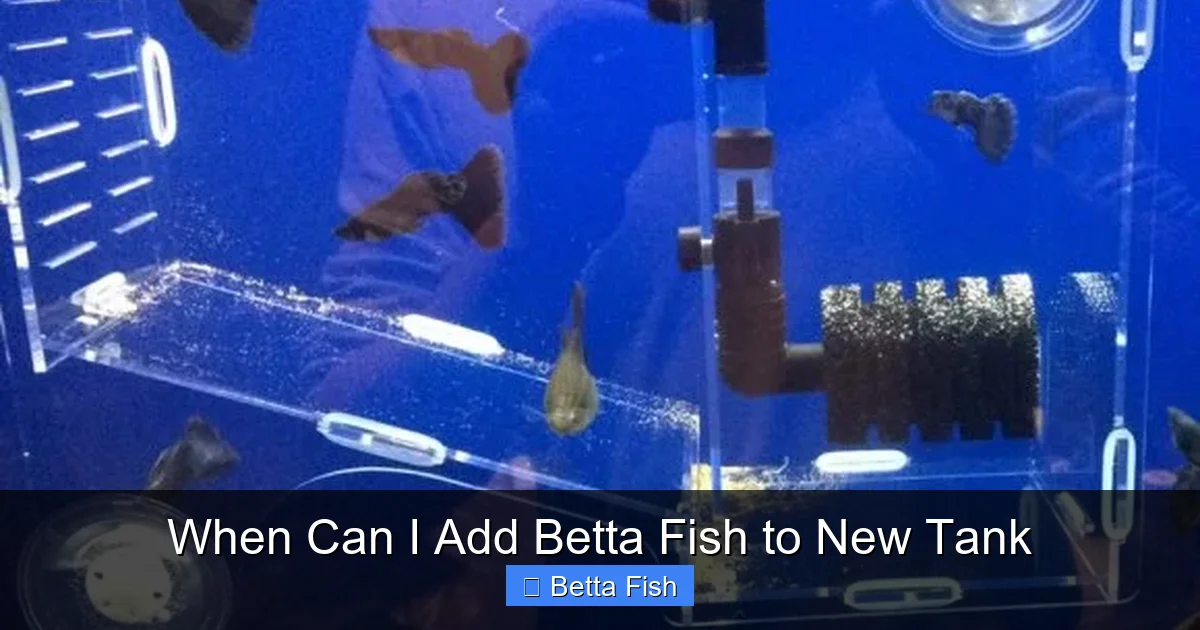
Knowing you need a cycle is one thing; knowing when it’s complete is another. You cannot see ammonia or nitrite. You cannot smell a healthy bacterial colony. The only way to know your tank’s status is to test the water. Investing in a reliable liquid test kit, such as the API Freshwater Master Test Kit, is the single most important purchase you will make for your betta’s health. Test strips are notoriously inaccurate and will give you false confidence.
Visual guide about When Can I Add Betta Fish to New Tank
Image source: acaquarium.com
The “Big Three” Toxins to Monitor
Your focus during the cycling process is on three parameters:
- Ammonia (NH3/NH4+): Must read 0 ppm before adding fish. Any detectable ammonia means the cycle is not complete or has crashed.
- Nitrite (NO2-): Must read 0 ppm before adding fish. The presence of nitrite indicates the first stage of the cycle (ammonia conversion) is working, but the second stage (nitrite conversion) is not yet established.
- Nitrate (NO3-): This is the end product. Its presence (even at low levels like 5-20 ppm) is a key indicator that the cycle is progressing and the second stage of bacteria is active. However, before adding fish, you want to see nitrate appear and then go through a full spike and decline, proving the system can handle and process a load of waste.
Supporting Parameters: pH and Temperature
While not part of the cycle itself, pH and temperature are critical for your betta’s immediate health and for the efficiency of the bacterial cycle.
- pH: Bettas prefer a neutral to slightly acidic pH (6.5-7.5). The cycling bacteria operate within a wide pH range but are most efficient near neutral. A very low pH (<6.0) can stall the cycle, while a very high pH (>8.0) makes any ammonia present exponentially more toxic.
- Temperature: Keep your heater set to a stable 78-80°F (25.5-26.5°C) during cycling. Beneficial bacteria are living organisms and work much faster in warmer water (within this safe range for bettas). A stable temperature is also crucial for your betta’s immune system once added.
Setting Up the Tank for Success Before the Cycle
The cycle doesn’t happen in a vacuum. Your tank setup provides the home for the bacteria. Getting this right from the start makes the cycle smoother and creates a better environment for your future betta.
Visual guide about When Can I Add Betta Fish to New Tank
Image source: petshun.com
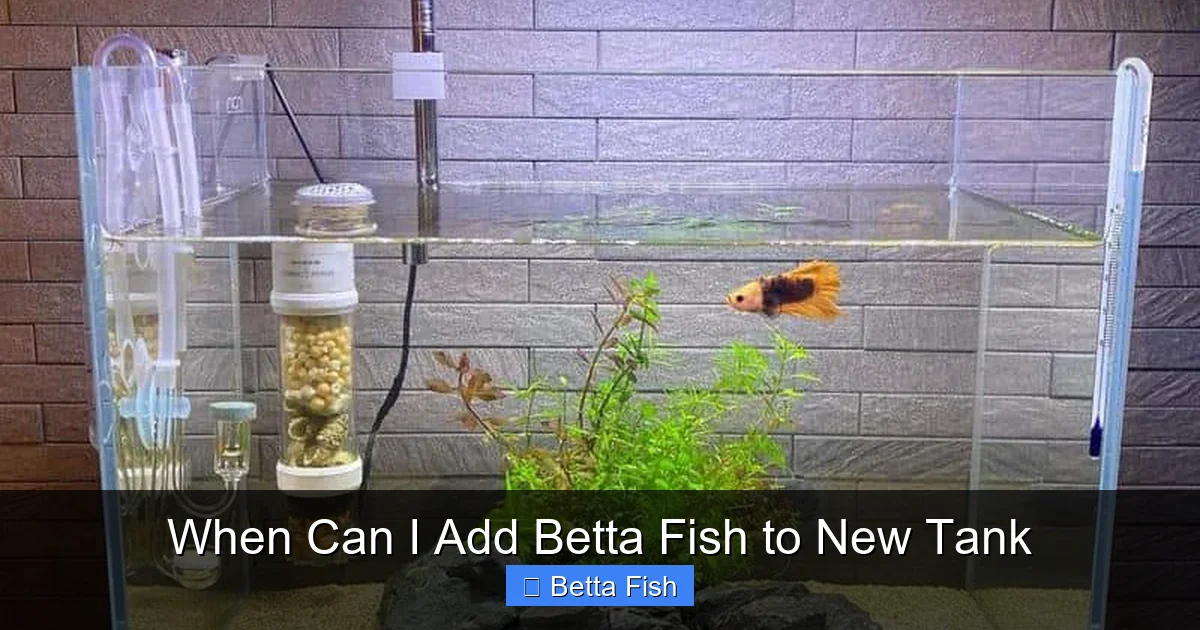
Essential Equipment: Filter and Heater
Filter: You absolutely need a filter. It does two critical jobs: it provides massive surface area (in the filter media—sponges, ceramic rings, bio-balls) for bacteria to grow, and it creates water flow and aeration. For a betta, choose a filter with an adjustable, gentle flow. A strong current will stress your betta and potentially damage its delicate fins. Sponge filters are an excellent, betta-friendly option as they provide superb bio-filtration with minimal flow. Do not use filter cartridges that need monthly replacement. These often contain activated carbon which removes toxins but also removes the ammonia the bacteria need to eat, and replacing them wipes out your bacterial colony. Use permanent, rinseable media like foam and ceramic.
Heater: Bettas are tropical fish. A reliable, fully-submersible heater with a thermostat is non-negotiable. Small tanks (under 5 gallons) can have dramatic temperature swings without one, stressing the fish and slowing bacterial growth. Use a heater appropriate for your tank size and always use a separate thermometer to verify the temperature.
Substrate, Plants, and Décor
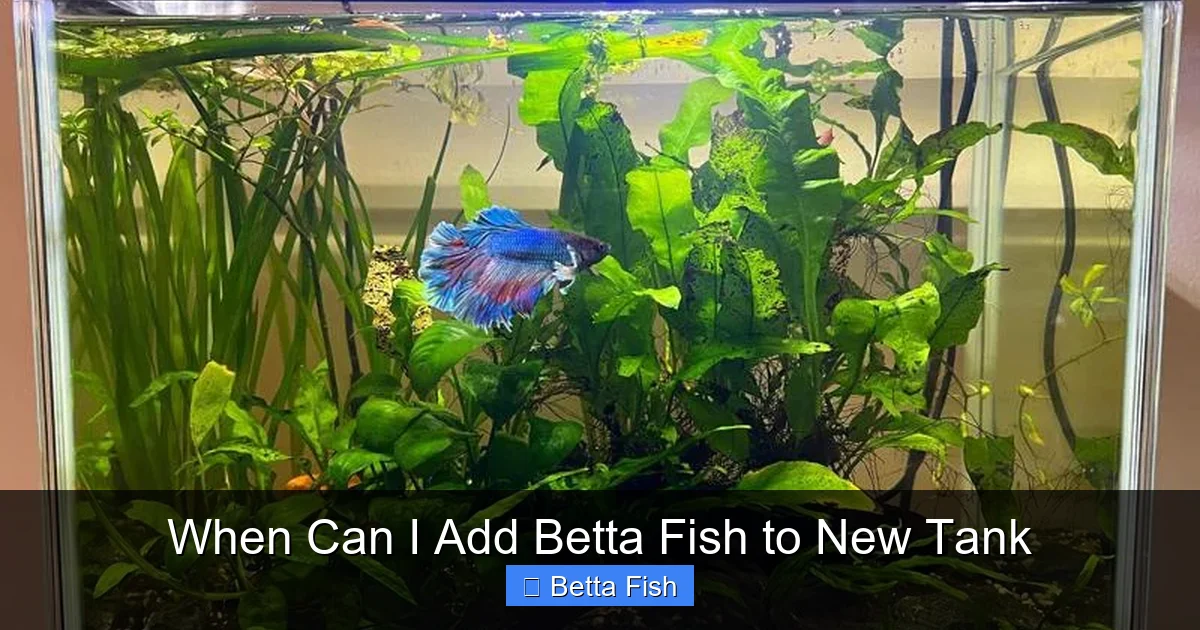
Any surface is a potential bacterial home. Gravel, sand, bare bottom—they all work. However, a larger gravel or sand substrate provides more total surface area than a smooth bare bottom. Live plants (like Java fern, Anubias, Marimo moss balls) are fantastic. They can absorb some ammonia and nitrate directly, speeding the process slightly and improving water quality long-term. They also provide essential enrichment and hiding spots for your betta. Silk or live plants are mandatory; plastic plants with sharp edges can tear betta fins. Add your decorations (caves, logs, etc.) during setup so they can also be colonized by bacteria. Do not use soap or chemical cleaners on anything that will go in the tank. Simply rinse with dechlorinated water.
The Cycling Process: Methods and Timelines
Now for the waiting game. You have a filtered, heated tank with dechlorinated water (always use a water conditioner like Seachem Prime to remove chlorine/chloramines—they kill bacteria). How do you introduce the ammonia source the bacteria need to eat? There are two primary methods, and only one is suitable for a betta.
Visual guide about When Can I Add Betta Fish to New Tank
Image source: ouraquariumlife.com
Fishless Cycling (The Only Safe Method for Bettas)
This is the gold standard. You add an ammonia source to the tank without any fish present. This allows bacterial colonies to grow to a massive, stable size that can handle the waste load of a betta from the moment it arrives.
- Using Pure Ammonia: The most controlled method. Use plain, unscented ammonia hydroxide (usually 5-10% solution, found in hardware stores). Add a few drops (start with 2-3 ppm concentration) and test daily. As ammonia drops, add more to keep a small, consistent level (1-2 ppm) going. This feeds the growing bacteria.
- Using Fish Food: A simpler but less precise method. You add a small pinch of flake food or a few frozen bloodworms daily. As it decomposes, it produces ammonia. This can be messy and lead to other water quality issues, but it works.
- Using a Bacteria Starter: Products like Seachem Stability or Fritz Zyme 7 contain live cultures of nitrifying bacteria. Following dosing instructions can significantly shorten the cycle (sometimes to 7-14 days), but you must still test. These products add bacteria but don’t eliminate the need for an ammonia source and time for them to reproduce and colonize.
The Timeline: You will see ammonia spike first (days 1-5). Then, as Nitrosomonas bacteria grow, ammonia will start to drop. As nitrite-producing bacteria develop, nitrite will spike (often around days 7-14). This is the most dangerous phase if fish were present. Finally, as Nitrospira bacteria establish, nitrite will drop, and nitrate will begin to rise. The cycle is complete when you can add 2-3 ppm of ammonia and see it convert to nitrite and then to nitrate within 24 hours, with both ammonia and nitrite reading 0 ppm at the end of that period. This entire process typically takes 4-6 weeks.
Why “Fish-In Cycling” is a Terrible Idea for Bettas
Some sources suggest adding the betta immediately and using heavy water changes and chemical additives (like ammonia detoxifiers) to control toxins while the cycle establishes. Do not do this with a betta. This method, called “fish-in cycling,” subjects your betta to daily, fluctuating levels of ammonia and nitrite. Even with detoxifiers (which only bind toxins temporarily), the stress is immense. Betta fins will likely develop rot, the fish will gasp at the surface, become lethargic, and its immune system will collapse. The “convenience” of adding the fish early is vastly outweighed by the high probability of severe illness or a premature, painful death. The ethical and safe choice is always fishless cycling.
The Testing Protocol: Your Roadmap to Readiness
Testing is not optional. It is your only source of truth. Here is a day-by-day testing guide during a fishless cycle:
Daily Testing and Interpretation
- Days 1-7: Test daily. You should see ammonia appear and rise (from your added source). Nitrite should still be 0. Nitrate may start to appear (5-10 ppm). If ammonia doesn’t rise, your ammonia source isn’t working.
- Days 8-21: This is the critical phase. You will see ammonia start to fall as the first bacteria population explodes. Shortly after, nitrite will spike sharply, often reaching very high levels (1-5 ppm or more). Nitrate will continue to rise. This is normal. Do not do water changes to lower nitrite unless it is extremely high (>5 ppm) and you have no plants, as it is food for the next bacteria. If nitrite never appears after ammonia has been present for a week, your cycle may be stalled.
- Days 22-35+: You should see nitrite begin to fall from its peak. As it falls, nitrate will rise more slowly. The cycle is nearing completion when both ammonia and nitrite read 0 ppm consistently for several days, and nitrate is present (often 20-40 ppm at this stage).
The Final Confirmation Test
Once you have 0 ppm ammonia and 0 ppm nitrite, do not add your betta yet. Perform a final confirmation test. Add a small, measured dose of ammonia (enough to raise it to 2 ppm). Test exactly 24 hours later. If the ammonia has been completely converted (reading 0 ppm) and nitrite is also 0 ppm (it may have spiked and dropped in that time), your tank is cycled and ready. If any ammonia or nitrite remains, wait another day or two and test again. This test proves your bacterial colony is mature and can handle a sudden influx of waste.
The Moment of Truth: Adding Your Betta
Your test kit shows 0 ppm ammonia, 0 ppm nitrite, and a manageable level of nitrate (ideally <20 ppm after a pre-addition water change). The heater has been running for days, stabilizing the temperature. The filter is humming. It’s finally time.
Pre-Addition Water Change and Final Checks
Do a 25-50% water change with dechlorinated, temperature-matched water to lower nitrate to a safe level (<20 ppm) and refresh the system. Re-test the water after the change to confirm parameters are still perfect. This is your last chance to catch any issues. Ensure your filter and heater are working flawlessly.
The Drip Acclimation Method
Even in perfect water, your betta needs to adjust slowly to your tank’s specific chemistry (pH, GH, KH). The fastest way to shock and kill a betta is to dump it in. Always use the drip acclimation method.
- Float the sealed betta bag in your tank for 15-20 minutes to equalize temperature.
- Gently pour the betta and its store water into a clean bucket or large container.
- Using airline tubing and a control valve (or by tying a knot), start a very slow siphon from your tank into the bucket. Aim for 1-2 drips per second.
- Over 60-90 minutes, the tank water will slowly mix into the bucket, diluting the store water.
- Once the water volume in the bucket has roughly doubled, use a net to gently transfer your betta into the tank. Do not add the store water from the bucket into your tank, as it may contain pathogens or medication residues.
- Turn off the lights for the first few hours and do not feed for 24 hours to let your betta recover from the move and explore its new home without stress.
Monitoring the First Few Weeks
For the first month, test the water every 2-3 days. You are looking for any spike in ammonia or nitrite, which would indicate your bacterial colony is not yet large enough to handle the betta’s waste (this can happen if you cycled with a very low ammonia load). Be prepared to do small, frequent water changes (25%) if you see any reading above 0.25 ppm. Maintain a regular water change schedule (25% weekly) to keep nitrate low.
Frequently Asked Questions
Can I use bottled bacteria to cycle the tank instantly?
Bacterial supplements can help seed your tank and may shorten the cycling process, but they do not make it instantaneous. They add bacteria, but those bacteria still need time (often 1-2 weeks) to reproduce and colonize surfaces in sufficient numbers. You must still use a test kit to verify the cycle is complete before adding your betta.
My tank has been running for a week with a filter and plants. Is it ready?
Almost certainly not. One week is far too short for a mature bacterial colony to establish. The nitrogen cycle takes a minimum of 4 weeks. Even with live plants that absorb some ammonia, you must still test for ammonia and nitrite to confirm the biological filtration is complete. Patience is key.
Can I do a partial water change during the cycling process?
Yes, but with caution. During the nitrite spike, large water changes can remove the nitrite that the second stage of bacteria needs to grow, potentially stalling the cycle. If nitrite gets dangerously high (>5 ppm) for an extended period, a 25% water change is acceptable. Otherwise, wait until the cycle is complete to begin your regular water change schedule.
What if I accidentally add my betta too early?
If you’ve already added the betta to an uncycled tank, you are in emergency mode. You must use a water conditioner that detoxifies ammonia (like Seachem Prime) with every water change. Perform 25-50% water changes daily or every other day to keep ammonia and nitrite as close to 0 ppm as possible. This is extremely stressful for the fish and is a last-resort measure while you rapidly try to establish bacteria (by adding supplements and an ammonia source). The goal is to perform enough water changes to keep the fish alive until the cycle catches up.
Do I need to cycle a tank with a filter but no heater for a betta?
No. A betta requires a stable, warm temperature (78-80°F). Cycling a tank without a heater at room temperature will establish bacteria that are adapted to that cooler temperature. When you add the heater and raise the temperature for the betta, you will shock and potentially kill the bacterial colony, crashing the cycle. Always cycle the tank with the heater running at the target betta temperature.
How often should I test the water after adding my betta?
For the first month, test 2-3 times per week. This monitors the system as the bacterial colony adjusts to the new fish’s waste output. After a month of stable 0 ppm ammonia and nitrite, you can reduce testing to once a week, coinciding with your water change schedule. Always test before and after a water change.