What’s the Difference Between Male and Female Betta Fish

Male betta fish are renowned for their spectacular, flowing fins and vibrant colors, but they are solitary and aggressive towards other males. Female betta fish, while often smaller with shorter fins, can display stunning colors too and may tolerate tankmates or sorority living under the right conditions. Understanding these core differences in physiology, temperament, and social needs is absolutely essential for choosing the right betta and providing proper care.
Key Takeaways
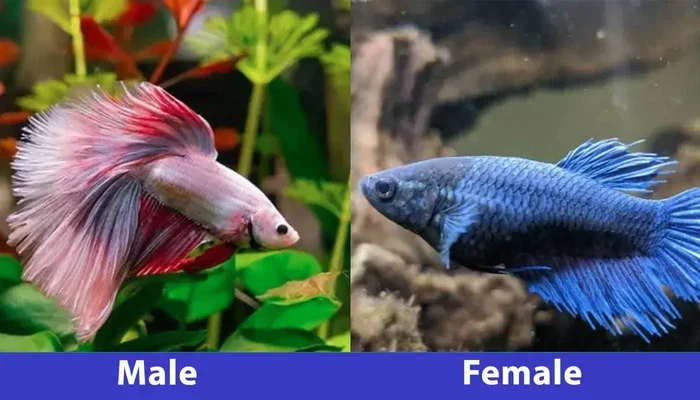
- Physical Dimorphism: Males have dramatically longer, more flowing fins and often brighter, more extensive coloration. Females are smaller, with shorter fins and a more streamlined body, and may have a small white “egg spot” (ovipositor) under their chin.
- Temperament & Aggression: Males are famously territorial and aggressive, requiring solitary housing. Females are generally less aggressive and can sometimes be kept in peaceful groups (sororities) or with select community tankmates.
- Bubble Nesting: Both sexes can build bubble nests, but it is a nearly universal and vigorous behavior in males, especially when a female is present. Females may build simpler nests or not at all.
- Tank Setup Needs: Male bettas need a secure, solo tank with gentle filtration and ample hiding spots. Female sororities require larger, heavily planted tanks (minimum 20+ gallons) to diffuse aggression and establish hierarchies.
- Health & Lifespan: With identical care, lifespans are comparable (2-5 years). However, the stress of constant aggression in improperly housed males can lead to a shortened, poorer-quality life.
- Myth Busting: Not all females are drab—many display brilliant colors and finnage. Not all males are relentless fighters; individual personalities vary widely.
[FEATURED_IMAGE_PLACEHOLDER]
📑 Table of Contents
- Introduction: The Great Betta Debate
- Physical Differences: More Than Just a Pretty Face (or Fin)
- Behavioral Differences: Mind Over Matter
- Breeding Considerations: The Reproductive Dance
- Tank Setup and Compatibility: Building the Right Home
- Health and Care: Are There Differences?
- Debunking Common Myths
- Conclusion: Choosing Your Perfect Betta
Introduction: The Great Betta Debate
So, you’ve fallen in love with the stunning, jewel-like beauty of the betta fish. You’re mesmerized by those flowing fins that look like silk robes and colors that defy belief. Then you head to the pet store or browse online listings, and a critical question pops up: “What’s the difference between male and female betta fish?” This isn’t just academic trivia—it’s the single most important piece of information you need before bringing one home. Choosing the wrong sex for your goals can lead to heartbreak, a stressed fish, or a tank full of trouble.
Betta splendens, the scientific name for the common betta, is a species with extreme sexual dimorphism. This means males and females look and behave quite differently. These differences are the result of centuries of selective breeding for the males’ fighting spirit and ornamental beauty, while females were largely overlooked until recent years. Today, thanks to dedicated breeders, female bettas are stepping into the spotlight with their own right to gorgeousness. Let’s dive deep into the world of betta sexual dimorphism, covering everything from finnage to finagling a peaceful community tank.
Physical Differences: More Than Just a Pretty Face (or Fin)
When you first glance at a betta, the most obvious clue to its sex is its physical appearance. The differences are pronounced and, for the most part, reliable. However, there are always fascinating exceptions that challenge the rules.

Visual guide about What’s the Difference Between Male and Female Betta Fish
Image source: nicebettathailand.com
The Crown Jewel: Fins and Finnage
This is the most dramatic and defining difference. Male bettas are the showstoppers. Through selective breeding, their fins have been transformed into elaborate, flowing works of art. A male Halfmoon betta’s caudal (tail) fin can flare to a perfect 180-degree semi-circle. A male Rosetail’s fin branches are so numerous they overlap like a rose petal. The dorsal fin along the back and the anal fin under the belly are long and graceful, often matching the tail in splendor. The ventral fins (the two long ones under the gills) are typically very long and flowing.
Female bettas, in contrast, have much shorter, more practical fins. Their caudal fin is more rounded or slightly spade-shaped, rarely exceeding a 120-degree flare. Their dorsal and anal fins are shorter and thicker, closer to the body. The ventral fins are notably shorter and stubbier. This isn’t to say females can’t be beautiful—their elegance lies in a sleek, athletic silhouette rather than a flowing gown. In recent years, breeders have developed females with significantly improved finnage, sometimes called “Plakat” (short-finned) or even “Halfmoon” females, but they still generally lack the extreme length and flow of their male counterparts.
A Palette of Possibilities: Color and Patterns
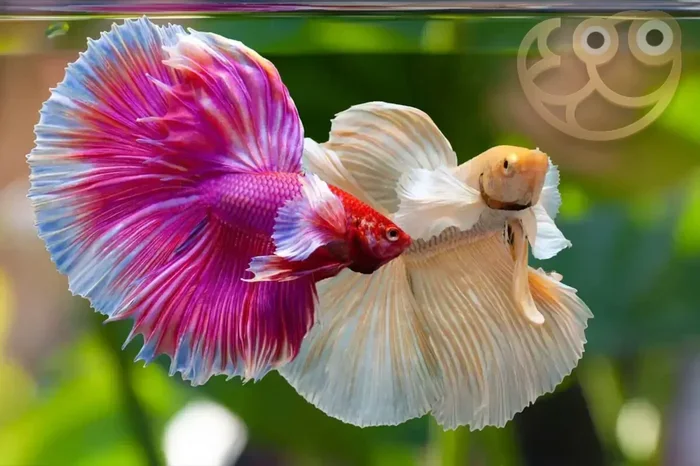
Here’s where a major myth gets busted: female bettas are NOT inherently less colorful than males. While the historical focus was on coloring males, modern breeding has produced females in every color and pattern imaginable—Koi, Nemo, marble, butterfly, solid reds, blues, and metallic shades. You can absolutely find a female that is just as vibrantly hued as a male. The key difference is often in the distribution and intensity of color. Males frequently have more extensive, iridescent coloration that covers their bodies and fins more uniformly, creating a “painted” look. Females might have stunning color concentrated in their fins or in specific patterns, with a slightly plainer body. A female’s color can also intensify when she’s ready to spawn, becoming almost shockingly bright.
Body Shape and Size: The Subtle Tell
If you hold two bettas of the same age and health side by side, the male’s body is often slightly longer and more torpedo-shaped, built for the dramatic flair displays. The female’s body is typically rounder and fuller, especially in the abdominal area, even when not gravid (carrying eggs). This roundedness becomes very pronounced when she is egg-bound. On average, a mature male will be about 2.5 to 3 inches in total length (including fins), while a female is usually 2 to 2.5 inches. The difference is subtle but noticeable with practice.
The “Egg Spot”: The Most Reliable Indicator
This is the gold standard for sexing bettas, especially when they are young or have ambiguous finnage. The ovipositor, commonly called the “egg spot,” is a small, white, rice-grain-sized bump located on the underside of the female’s body, just in front of the anal fin. It’s the opening through which she will later expel eggs during spawning. Males never develop a true egg spot. Sometimes, a stressed or poorly conditioned male might show a tiny white mark, but it will not be a defined, raised ovipositor. Gently lifting the betta (using a soft net, never your fingers) to view the ventral area is the surest way to see this feature. In mature, healthy females, it’s always present.
The Beard: It’s Not Just for Males
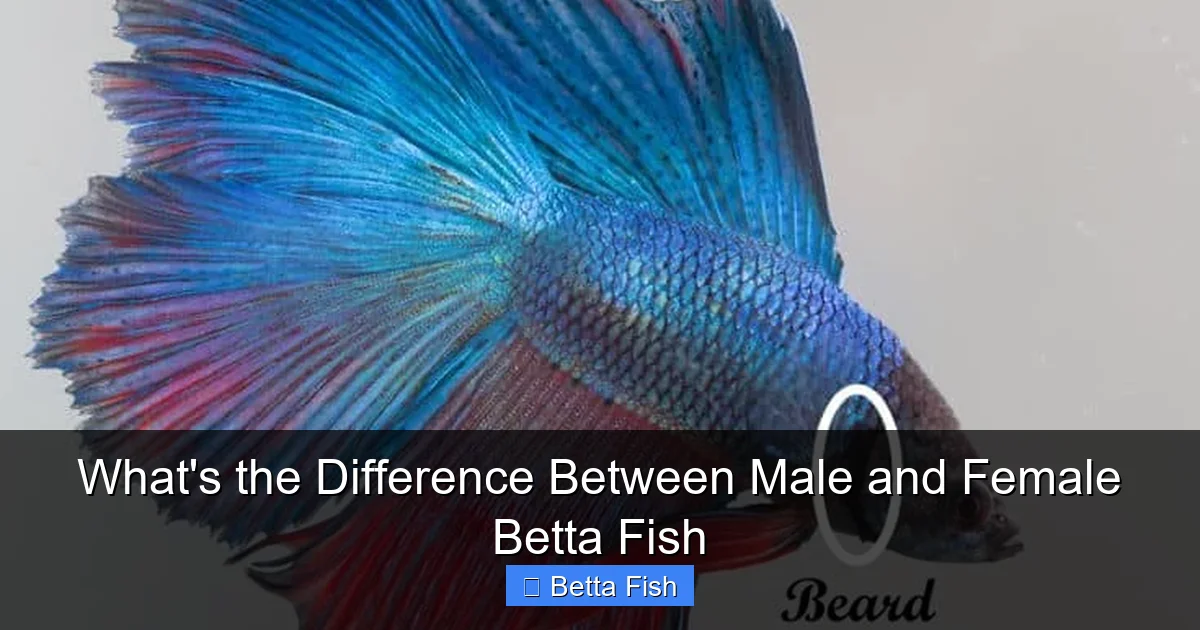
The “beard” is the membrane that extends from the gill cover and becomes visible when the betta flares its gills, usually in a display of aggression or courtship. It’s a common misconception that only males have beards. Both sexes have a beard. However, the male’s beard is typically much larger, more pronounced, and often brightly colored to match his fins. A female’s beard is smaller, less flashy, and may be a different color. When flaring, a male’s beard can make his head look massive and intimidating; a female’s flare looks more modest by comparison.
Behavioral Differences: Mind Over Matter
Choosing a betta based on looks alone is a recipe for disaster. Their behavior is arguably more important than their finnage when deciding which sex is right for you. This is where the legendary “Siamese fighting fish” reputation comes into play, and it’s primarily a male trait.

Visual guide about What’s the Difference Between Male and Female Betta Fish
Image source: i.pinimg.com
Aggression and Territory: The Solo Act vs. The Social Club
Male bettas are solitary by nature. Their aggression is deeply ingrained, a legacy of their history as fighting fish. A male betta will perceive another male betta—or even his own reflection—as a rival and will flare, chase, and attack relentlessly. This isn’t just posturing; it can lead to torn fins, severe injury, or death. Therefore, male bettas must always be housed alone in a species-only tank, or with extreme caution using permanent, secure dividers in a community setup. They can sometimes coexist with specific, fast-moving, non-aggressive tankmates like harlequin rasboras or corydoras catfish, but their tank must be heavily planted and spacious (20+ gallons) to provide escape routes.
Female bettas are not peaceful by default, but their aggression is different. It’s more about establishing a pecking order within a group. This allows for the famous “betta sorority”—a tank of 4-6 females. Success depends on a large, heavily planted tank (minimum 20 gallons, ideally 29+), where plants and decorations break lines of sight and provide countless hiding spots. Females will establish a hierarchy through brief chases and flares, but serious, sustained injury is less common than with males if the tank is correctly set up from the start. A single female can also often be kept in a peaceful community tank with similar non-aggressive species as a male.
Activity Levels and Personality
You might assume all bettas are lazy, floating at the surface. While they do enjoy resting on leaves or the tank bottom, their activity patterns differ. Males, especially those bred for show, can sometimes be a bit more “showy” and less constantly active, preferring to display their fins from a chosen perch. Females, with their more athletic build, are often more consistently curious and active swimmers, exploring all levels of the tank. However, individual personality is huge in bettas. You’ll find laid-back males that are curious explorers and feisty, hyper-active females. Spending time observing a betta before purchase is the best way to gauge its temperament.
Bubble Nest Building: An Instinctive Behavior
Seeing a cluster of shiny bubbles at the water’s surface is a classic betta sign. Both males and females possess the instinct to build bubble nests, but there’s a clear difference in frequency and effort. Males are prolific and dedicated bubble nesters. Even without a female present, a healthy male will often build a nest, especially when water conditions are good and he feels secure. The nest can be a small patch or a massive, intricate structure spanning a corner of the tank. The arrival of a gravid female will trigger a male to build or dramatically expand his nest in preparation for spawning.
Females may build a bubble nest, but it’s less common and usually much smaller and messier—a few scattered bubbles rather than a cohesive structure. Some females never build one. If you see a betta meticulously constructing a large, organized bubble nest, the odds are very high it’s a male.
Breeding Considerations: The Reproductive Dance
If you’re considering breeding bettas, understanding the differences is non-negotiable. The process is a delicate dance dictated by the distinct roles of each sex.
Visual guide about What’s the Difference Between Male and Female Betta Fish
Image source: tankarium.com
Conditioning and Readiness
Both sexes need to be in prime health before breeding. This involves feeding high-quality, protein-rich foods (like brine shrimp, daphnia, and high-protein pellets) for several weeks. For the male, you’ll watch for intense bubble nest building and vibrant color flare. He will also begin to “court” any movement outside the tank, flaring aggressively at his reflection. For the female, the key sign is the pronounced egg spot (ovipositor) and a visibly swollen, soft abdomen as eggs develop. She may also develop vertical light-colored “breeding bars” on her body, like stripes, which is a signal of readiness.
The Spawning Process: A Precise Performance
When the female is fully gravid and the male has a satisfactory nest, they are introduced (usually with a divider in the same tank initially). The male performs an elaborate courtship dance, flaring his fins and leading the female to the nest. The actual spawning is an embrace where the male wraps around the female, she releases eggs, and he fertilizes them externally before scooping them into his mouth and placing them into the bubble nest. This embrace can be rough, and the female may be injured or even killed if the male is too aggressive or she is not truly ready. This is why close supervision is critical.
After spawning, the male takes sole responsibility for the nest, tending to the eggs, retrieving any that fall, and fanning them with his fins. The female, now exhausted and egg-bound, must be removed immediately to prevent her from eating the eggs or being attacked by the now-territorial male. The male cares for the hatchlings (fry) for 2-3 days until they become free-swimming, at which point he should also be removed to prevent him from eating his own young.
Tank Setup and Compatibility: Building the Right Home
Your tank setup will be completely different based on whether you choose a male or female betta. This is where many new hobbyists make costly mistakes.
The Male’s Kingdom: A Solo Sanctuary
A male betta’s tank is his entire world and must be a secure, enriching fortress. The minimum size is 5 gallons, but bigger is always better. The filter must be adjustable to create a gentle flow; strong currents damage their long fins and cause stress. A secure lid is mandatory—they are skilled jumpers. Decor should include plenty of soft, leafy plants (live or silk) for shade and resting spots, as well as caves, driftwood, and other hiding places to break up the open water. Avoid sharp decorations that can tear fins. Lighting should be moderate to subdued. The goal is to minimize reflections (which trigger aggression) and provide a calm, stimulating environment. For more detailed habitat guidelines, always review the terms and conditions of any reputable seller, which often outline proper husbandry standards.
The Female Sorority: A Delicate Balance
Setting up a female sorority is an advanced betta-keeping endeavor, not for beginners. The rule of thumb is: the bigger, the better. Start with a 20-gallon long tank, but 29 gallons or more is ideal. It must be extremely heavily planted with a mix of tall background plants, mid-ground bushy plants, and floating plants to create dense vertical and horizontal barriers. Every inch of open sightline is an opportunity for aggression. Introduce all females at the same time to a fully set-up, cycled tank. Having a backup “hospital” tank ready is crucial in case one becomes a persistent target. Monitor closely for the first few weeks. Chasing and flaring is normal; constant nipping, hiding, or missing fins means the hierarchy isn’t settling or the tank is too small, and a fish must be rehomed.
Health and Care: Are There Differences?
In terms of basic care—water parameters, temperature, diet—male and female bettas are identical. They are tropical fish requiring stable water temps between 78-80°F (25.5-26.5°C), a pH around 7.0, and zero ammonia/nitrite. They are carnivores needing a high-quality pellet diet supplemented with frozen or live foods.
The health differences arise from their living situations. A male betta suffering from chronic stress due to being housed with another betta, or from swimming against a strong current in a bare tank, will have a compromised immune system, making him more susceptible to common diseases like fin rot or ich. A well-housed male in a proper solo tank can live just as long—2 to 5 years—as a female. A poorly managed sorority, where one fish is relentlessly bullied, will see that individual’s health and lifespan decline. Therefore, the “difference” in health is not biological but environmental, directly tied to providing the correct social and physical setup for the sex you choose.
Debunking Common Myths
Let’s clear the air on some persistent betta myths.
- Myth: Female bettas are plain and boring. Fact: As covered, modern female bettas come in every color and pattern. A well-bred female Koi or Nemo can be just as dazzling as a male.
- Myth: All male bettas are relentless killers. Fact: While they cannot cohabit with other males, their aggression towards other species varies by individual. Many males live peacefully in well-planned community tanks.
- Myth: You can tell the sex of a baby betta (fry) easily. Fact: Sexing young fry is notoriously difficult. The egg spot appears in females at about 8-12 weeks, but before that, it’s a guessing game based on subtle body and fin shape differences that even experts can misjudge.
- Myth: Females don’t make bubble nests, so they’re less intelligent. Fact: Bubble nesting is an instinct, not a measure of intelligence. Both sexes are intelligent and can be trained to do simple tasks.
Conclusion: Choosing Your Perfect Betta
So, what’s the difference between male and female betta fish? In summary: males are the flamboyant, solitary performers, built for visual spectacle and territorial defense. Females are the sleek, socially-complex athletes, capable of both breathtaking beauty and nuanced social structures when given the space to thrive. Your choice shouldn’t be about which one is “better,” but which one is right for you.
Ask yourself: Do you want a single, dazzling centerpiece fish to admire in a beautifully aquascaped 5-gallon tank? A male is your classic choice. Are you intrigued by the challenge and reward of setting up a lush, 30-gallon planted community or sorority, observing complex social dynamics? Then a female or group of females might be your path. Always prioritize the fish’s needs first. A stunning male in a 1-gallon bowl will have a miserable, short life, while a group of females in a properly set up 29-gallon sorority can thrive for years.
Whether you choose a king or a queen, your commitment to understanding their differences is the first and most important step to being a responsible, successful betta keeper. For more detailed care sheets and ethical purchasing advice, be sure to review our comprehensive terms and conditions.
Frequently Asked Questions
Can male and female betta fish live together?
No, they should not be housed together long-term. The male will see the female as a rival and may attack her relentlessly, or he may harass her constantly to spawn, causing severe stress. They should only be temporarily placed together in a breeding tank under strict supervision for the purpose of spawning, with the female removed immediately afterward.
Do female bettas get as colorful as males?
Absolutely. With modern selective breeding, female bettas are available in all the same vibrant colors and patterns as males, including metallic, Koi, and butterfly patterns. While their finnage is typically shorter, their body color can be just as intense and beautiful.
How can I be 100% sure of a betta’s sex?
The only foolproof method is to look for the ovipositor, or “egg spot.” This is a small, white, raised bump on the underside of the female’s body, just in front of the anal fin. Males never have this. For young bettas without a clear egg spot, sexing can be very difficult and is often best left to experienced breeders.
Are female bettas less aggressive than males?
Generally, yes, but with a crucial caveat. A single female is often less likely to flare at her own reflection or attack other species than a male. However, when housed in groups (sororities), females establish a hierarchy and can still be quite aggressive towards each other. Their aggression is social rather than purely territorial like a male’s.
Can I keep a female betta with other fish?
Yes, a single female betta can often be a successful community tank member, following the same guidelines as a male: choose peaceful, fast-moving, non-fin-nipping tankmates like harlequin rasboras, neon tetras (in a large school), or corydoras catfish. The tank must be heavily planted and at least 20 gallons to provide ample space.
Do male bettas always build bigger bubble nests than females?
Practically, yes. Male bettas are obsessive bubble nest builders, constructing large, organized nests even without a female present. Females may occasionally build a small, loose cluster of bubbles, but it is rare, messy, and never on the same scale as a male’s elaborate construction. A large, tidy bubble nest is a strong indicator of a male.