What All Do I Need for a Betta Fish
Setting up a home for your betta fish doesn’t have to be hard. This guide covers every essential supply you need, including the right betta fish tank, heater, filter, food, and water conditioner. You’ll learn exactly what all do i need for a betta fish so your new pet stays healthy and happy for years to come.
So you just got a betta fish. Maybe you saw one at the pet store and fell in love with those beautiful flowing fins. Or maybe you’ve been thinking about adding a colorful companion to your home. Either way, the first question is the same: what all do i need for a betta fish?
The truth is, betta fish are more delicate than they look. Many people assume these fish can survive in a tiny bowl with no equipment. That’s a myth. Betta fish need a proper setup to live a long, healthy life. In this guide, we’ll walk through every single item you need to get started. By the end, you’ll feel confident and ready to build the perfect home for your new finned friend.
Let’s dive right in.
Key Takeaways
- A proper tank size: A minimum 5-gallon tank gives your betta room to swim and thrive.
- Heater and filter are essential: Betta fish need warm, clean water to stay healthy.
- The right water setup: Use treated water with the correct temperature and pH levels.
- Quality food matters: Feed your betta a balanced diet with pellets and occasional treats.
- Decorations and hiding spots: Plants and caves reduce stress and make your fish feel at home.
- Regular maintenance: Weekly water changes and cleaning keep the tank environment stable.
📑 Table of Contents
Choosing the Right Tank for Your Betta Fish
The tank is the foundation of your betta fish setup. Getting this right makes everything else easier. Many beginners start with a small bowl, but that’s a mistake. Betta fish need space to swim and explore. A tiny bowl restricts their movement and causes stress.
So what size tank should you get? The minimum recommended size is 5 gallons. This gives your betta enough room to move around comfortably. A 10-gallon tank is even better if you have the space. Larger tanks are easier to maintain because water parameters stay more stable.
Why Tank Size Matters
Small tanks fluctuate in temperature and chemistry fast. Even a 1-gallon bowl can turn toxic within hours. A 5-gallon tank gives you a buffer. It takes longer for harmful substances to build up. This means less frequent water changes and a healthier environment for your fish.
If you’re wondering about the ideal setup, check out our guide on what all do I need for a betta fish tank for a complete list of tank essentials.
Tank Shape and Material
Betta fish are surface breathers. They need easy access to the water’s surface. Choose a tank that is wider than it is tall. This gives them more surface area to breathe from. Standard rectangular tanks work best. Avoid tall, narrow vases or bowls.
Glass tanks are durable and scratch-resistant. Acrylic tanks are lighter and insulate heat better. Both work well for bettas. Pick whichever fits your budget and space.
Heating and Filtration Essentials
Betta fish are tropical fish. They need warm water to survive. Room temperature water is almost always too cold. This is why a heater is non-negotiable for a betta fish setup.
Do You Need a Heater for Betta Fish?
The short answer is yes. Betta fish need a heater to maintain stable water temperatures. The ideal range is between 76 and 82 degrees Fahrenheit. Without a heater, your fish becomes sluggish and prone to illness.
Choose a small, adjustable heater rated for 5 to 10 gallons. A submersible heater with a thermostat is the easiest option. You can also check our article on do I need a heater for betta fish for more details on choosing the right one.
Filter Options for Betta Tanks
Betta fish produce waste just like any other fish. A filter keeps the water clean and removes harmful toxins. But here’s the catch: bettas don’t like strong currents. They’re slow swimmers and hate being pushed around.
Choose a gentle filter. Sponge filters work great because they provide biological filtration without creating a strong flow. Hang-on-back filters with a baffle also work well. The goal is clean water without stressing your fish.
Water Quality and Treatment
Water quality is one of the most important parts of betta fish care. Tap water contains chlorine and chloramine that are harmful to fish. You can’t just fill the tank straight from the faucet.
Water Conditioner Is a Must
A good water conditioner removes harmful chemicals from tap water. It makes the water safe for your betta fish immediately. Add conditioner every time you do a water change. This is a simple step that makes a huge difference.
For more information on the best water choices, visit our guide on what water do I use for betta fish. It covers everything from tap water to distilled and spring water options.
Testing Water Parameters
You should test your water regularly. Key parameters to watch include:
- Ammonia: Should be 0 ppm at all times
- Nitrite: Should be 0 ppm
- Nitrate: Should be below 20 ppm
- pH: Ideal range is 6.5 to 7.5
A basic liquid test kit is more accurate than test strips. Invest in one and test your water weekly. Catching problems early prevents fish loss.
Essential Supplies and Decorations
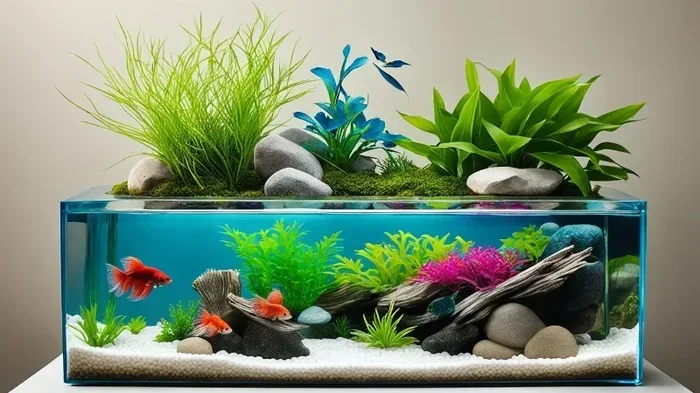
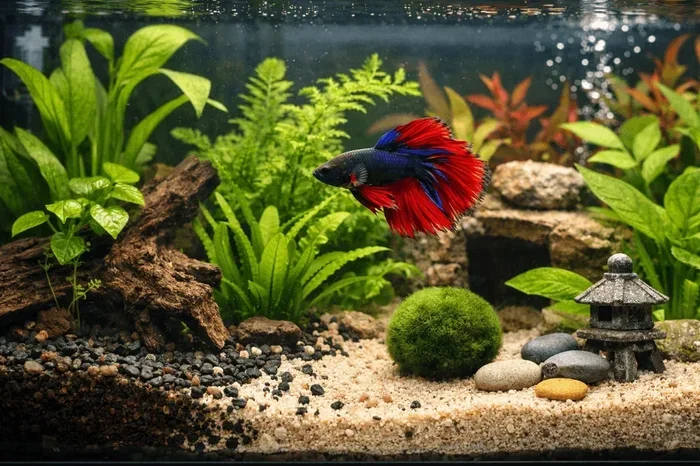
A bare tank looks boring. It also stresses out your betta fish. Decorations make the tank feel natural and give your fish places to explore and hide.
Substrate Options
Gravel is the most popular substrate choice. It comes in many colors and sizes. Sand is another option that looks natural and is easy to clean. Avoid sharp substrates that could damage your betta’s fins. Smooth gravel or fine sand works best.
Live Plants and Fake Plants
Live plants improve water quality by absorbing nitrates. They also provide natural hiding spots. Some great low-light options for betta tanks include:
- Java fern
- Anubias
- Amazon sword
- Betta bulbs
If you prefer fake plants, choose silk ones. Plastic plants with rough edges can tear delicate betta fins. Silk plants look just as good and are much safer.
Other Must-Have Supplies
Here’s a quick list of other items you’ll need:
- Tank lid: Betta fish are jumpers. A lid prevents escapes.
- Air pump (optional): Helps with water circulation but isn’t always necessary with a filter.
- Thermometer: Lets you monitor water temperature easily.
- Net: For gentle handling during water changes.
- Bucket: Dedicated to tank water changes only.
Feeding Your Betta Fish Properly
Feeding seems simple, but it’s one of the areas where most new betta owners make mistakes. Overfeeding is the number one killer of pet bettas. These fish have small stomachs and don’t need much food.
What to Feed Your Betta
High-quality betta pellets should be the staple of their diet. Look for pellets with protein as the first ingredient. You can also offer frozen or freeze-dried foods like bloodworms and brine shrimp as treats.
For more details on feeding, check out how often you should feed your betta and how much food is appropriate. If you’re considering alternative food options, our article on can I use tetra food for a betta fish has helpful insights.
Feeding Schedule and Portions
Feed your betta 2 to 3 pellets twice a day. That’s it. Don’t give in to those big adorable eyes begging for more. Excess food sinks to the bottom and rots, polluting the water. Remove any uneaten food after a few minutes.
One day of fasting per week is also beneficial. It helps their digestive system stay healthy and prevents constipation.
Setting Up Your Tank: Step by Step
Now that you know what supplies you need, let’s talk about the setup process. Doing things in the right order saves time and prevents problems.
Step 1: Rinse and Prepare the Tank
Rinse the tank with clean water. No soap or detergent. Soap is deadly to fish. Set the tank on a sturdy, level surface away from direct sunlight and drafts.
Step 2: Add Substrate and Decorations
Spread your chosen substrate across the bottom. Rinse it first to remove dust. Then add your plants, rocks, and decorations. Create open swimming areas as well as hiding spots. Your betta will appreciate the variety.
Step 3: Fill with Water and Add Conditioner
Fill the tank slowly to avoid disturbing the substrate. Add water conditioner according to the product instructions. Let the water sit for a few minutes to reach room temperature before adding your fish.
Step 4: Install Equipment
Attach your heater and filter. Set the heater to the appropriate temperature. Turn on the filter and make sure the flow is gentle. Adjust if needed.
Step 5: Cycle the Tank Before Adding Your Fish
This is a crucial step many beginners skip. Cycling means establishing beneficial bacteria that break down waste. This process takes 2 to 4 weeks. Use a liquid ammonia source or fish food to kickstart the cycle. Test the water regularly until ammonia and nitrite levels read zero.
Adding your betta too early can lead to dangerous water conditions. Patience here pays off big time.
Step 6: Acclimate and Release Your Betta
When the tank is fully cycled, it’s time to add your fish. Float the bag your betta came in on the water surface for 15 to 20 minutes. This equalizes the temperature. Then slowly add small amounts of tank water to the bag over 10 minutes. Finally, gently release your betta into the tank using a net.
Common Mistakes to Avoid
Even with the best intentions, new betta owners often make preventable errors. Here are the most common ones:
- Keeping bettas in bowls under 5 gallons: This leads to poor water quality and stress.
- Skipping the heater: Cold water weakens the immune system.
- Overfeeding: Leftover food fouls the water quickly.
- Using untreated tap water: Chlorine and chloramine harm fish gills.
- Not cycling the tank: Adding fish to an uncycled tank is a death sentence.
- Placing the tank in direct sunlight: This causes algae blooms and temperature swings.
Avoid these mistakes and your betta will have a much better chance at a long, healthy life.
Quick Tips for a Happy Betta Fish
Here are some bonus tips to keep your betta thriving:
- Keep the water temperature stable. Fluctuations cause stress and illness.
- Do 25% water changes weekly. This maintains water quality without disrupting the cycle.
- Observe your fish daily. Watch for changes in color, appetite, or behavior.
- Don’t house bettas with aggressive fish. Their long fins make them targets for nippers.
- Give your betta enrichment. A mirror briefly or a new plant can provide mental stimulation.
For a deeper dive into betta fish care routines, our article on how do you care for a betta fish covers daily, weekly, and monthly maintenance tasks in detail.
Conclusion
Setting up a home for your betta fish is a rewarding experience. When you know what all do i need for a betta fish, the process becomes straightforward and even enjoyable. Start with a proper tank size, add a heater and gentle filter, treat your water, and provide a balanced diet. Decorate the tank to make it comfortable and stimulating. Avoid the common pitfalls that trip up new owners.
Your betta fish depends on you for everything. A well-planned setup shows your fish you care. Follow the steps in this guide, stay consistent with maintenance, and you’ll have a happy, healthy betta for years to come. Enjoy the journey of being a betta fish owner!
Frequently Asked Questions
What size tank do I need for a betta fish?
A minimum 5-gallon tank is recommended for a single betta fish. This size provides enough swimming space and makes it easier to maintain stable water conditions. Tanks smaller than 5 gallons are too small and cause stress and health problems for your fish.
Do betta fish need a heater?
Yes, betta fish absolutely need a heater. They are tropical fish that require water temperatures between 76 and 82 degrees Fahrenheit. Without a heater, the water becomes too cold, which weakens their immune system and can lead to serious illness or death.
What kind of water should I use for my betta fish?
Always use treated tap water with a water conditioner that removes chlorine and chloramine. You can also use spring water or RO water if you adjust the minerals properly. Never use distilled water without adding minerals, and never use untreated tap water directly.
How often should I feed my betta fish?
Feed your betta fish 2 to 3 pellets twice a day. That’s a small amount, but it’s all they need. Overfeeding is the most common mistake new betta owners make and it can lead to serious health and water quality problems.
Do betta fish need a filter?
Yes, betta fish need a filter to keep the water clean. However, the filter should produce a gentle flow since bettas are slow swimmers. Sponge filters and hang-on-back filters with baffles work great for betta tanks without creating too much current.
Can I keep my betta fish in a bowl?
While bettas can survive in bowls, they thrive much better in a proper tank of at least 5 gallons. Bowls have limited water volume, which causes rapid changes in water chemistry and temperature. A proper tank setup gives your betta a much healthier and happier life.