Is Nylon Leader Better Than Monofilament Fishing Line
Choosing between a nylon leader and monofilament fishing line can make or break your day on the water. Both options have unique strengths that suit different fishing situations, and understanding those differences helps you make smarter decisions. This guide breaks down everything you need to know about leader material, from abrasion resistance to knot strength, so you can pick the best option with confidence.
Key Takeaways
- Nylon leaders offer superior shock absorption: They stretch more than mono, which helps absorb hard-hitting fish strikes.
- Monofilament is more affordable and widely available: You can find mono spools at almost any tackle shop.
- Nylon has better abrasion resistance in rough conditions: It holds up well against rocks, reefs, and sharp teeth.
- Mono is nearly invisible in clear water: Its refractive index makes it a great choice for spooky fish.
- Nylon leaders handle larger species better: The extra strength and durability make them ideal for big game fishing.
- Both materials work well for freshwater and saltwater: Your choice depends on the specific fishing environment.
- Knot tying differs between the two: Nylon requires different knots than mono for optimal holding power.
📑 Table of Contents
- What Is a Nylon Leader and Why Does It Matter?
- Nylon Leader vs Monofilament: The Core Differences
- Strength and Durability: Which One Wins?
- Visibility and Stealth Underwater
- Knot Strength and Tying Techniques
- Freshwater vs Saltwater: Which Leader Works Best?
- Quick Tips for Choosing the Right Leader
- Common Mistakes Anglers Make with Leaders
- Expert Insights on Leader Selection
- Conclusion
What Is a Nylon Leader and Why Does It Matter?
When you tie on a nylon leader, you are adding a short section of heavy-duty line between your main line and your hook or lure. Think of it as a protective buffer. The leader material takes the beating so your main line stays safe.
Nylon leaders have been around for decades. They started as a simple solution for anglers who needed something tougher than their regular fishing line. Today, they remain a go-to choice for many freshwater fishing and saltwater fishing enthusiasts.
The beauty of nylon is its flexibility. It stretches under pressure, which gives you a built-in shock absorber. This matters a lot when you are fighting a strong fish that makes sudden runs. A nylon leader can handle that shock without snapping.
But here is the thing. Not all fishing situations call for a nylon leader. Some setups work better with other materials. That is why understanding the pros and cons is so important before you make your choice.
How Nylon Leaders Are Made
Nylon leaders are created through a process called extrusion. Manufacturers heat nylon pellets and push them through tiny holes to form thin, strong strands. The result is a line that is both flexible and durable.
Most nylon leaders come in different pound-test ratings. You can find them in strengths ranging from 8 pounds all the way up to 80 pounds or more. The thicker the diameter, the stronger the line. This gives you plenty of options depending on what you are targeting.
Nylon Leader vs Monofilament: The Core Differences
People often confuse nylon leaders with monofilament fishing line. While they share some similarities, they are not the same thing. A nylon leader is typically a short, thick section of line. Monofilament is the long spool of line you spool onto your reel. But both are made from nylon material, which adds to the confusion.
Here is a quick comparison to clear things up:
- Stretch: Nylon leaders stretch more than regular mono. This extra stretch absorbs shock from strong fish.
- Diameter: Leaders are usually thicker than the mono on your reel. This adds visibility but also strength.
- Durability: Nylon leaders hold up better against abrasion from rocks, logs, and sharp teeth.
- Cost: Leaders cost a bit more per foot because they are heavier-duty material.
- Visibility: Mono is less visible underwater. Leaders can be more noticeable to wary fish.
If you want to dive deeper into the broader comparison of line types, check out which is better braided or mono fishing line for a full breakdown of mono versus braided options.
When to Use a Nylon Leader
You should reach for a nylon leader when you are fishing in rough conditions. If you are casting near rocky shorelines or coral reefs, the abrasion resistance of nylon saves the day. It also shines when you are targeting toothy predators like pike or musky that can cut through thinner lines.
Another great time to use a nylon leader is when you are fighting large fish. The extra stretch gives you more cushion during the battle. You are less likely to lose a big catch because of a snapped leader.
When Monofilament Is the Better Choice
Mono fishing line works best in clear water situations. Because it is nearly invisible underwater, fish are less likely to spot your setup. This matters a lot when you are targeting spooky trout or finicky bass in calm lakes.
Mono is also more affordable. If you go through a lot of line, mono spools cost less in the long run. For casual weekend anglers, mono is often the practical choice. It is easy to find, simple to use, and gets the job done.
Want to learn more about choosing the right line for your fishing style? Read is a longer or shorter fishing rod better to understand how your rod and line work together.
Strength and Durability: Which One Wins?
Strength is where the nylon leader really shines. Compared to standard mono, nylon leaders can handle more punishment. They resist breaking when rubbed against rough surfaces. This is called abrasion resistance, and it is a huge deal when you are fishing in tough environments.
Let us talk about tensile strength. This is the amount of force a line can handle before it breaks. Nylon leaders typically have higher tensile strength than regular mono of the same diameter. That means you can go after bigger fish without worrying about your line giving out.
Testing Leader Strength in Real Conditions
In real-world fishing, nylon leaders prove their worth again and again. Whether you are fighting a large catfish in a river or a saltwater redfish on the flats, nylon leaders hold strong. They do not kink or weaken as quickly as thinner mono lines.
One thing to keep in mind. Nylon leaders lose strength over time if they are exposed to sunlight and saltwater. You should replace your leader regularly, especially after heavy use. A worn-out leader is just as bad as a weak one.
How Abrasion Resistance Affects Your Catch Rate
When your line rubs against rocks or sharp edges, it weakens. Mono lines tend to fray faster in these situations. A nylon leader acts as a sacrificial layer that protects your main line. It takes the damage so your setup stays intact.
This means fewer lost fish and fewer broken lines. Over a long fishing trip, that adds up to more fish in the cooler. For fly fishing enthusiasts, abrasion resistance is especially important because you are constantly casting near structure.
Visibility and Stealth Underwater
Fish have excellent eyesight. In clear water, they can spot your line from a distance. This is where line visibility becomes a real concern. If fish see your leader, they might avoid your lure altogether.
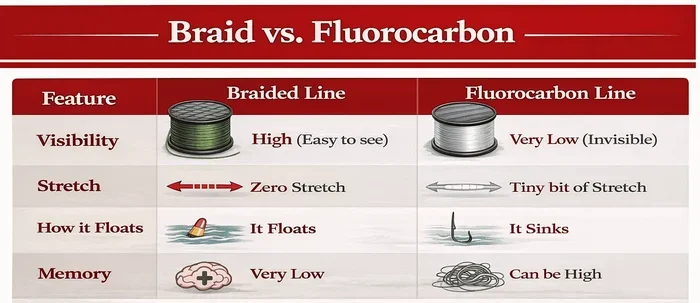
Mono fishing line has a natural advantage here. It bends light in a way that makes it nearly invisible underwater. The refractive index of mono closely matches that of water. This means your presentation looks more natural to the fish.
Nylon leaders, on the other hand, can be more visible. They are thicker and often have a slight tint. In murky water, this does not matter much. But in crystal-clear lakes or streams, it can make a difference.
Tips to Reduce Leader Visibility
You can reduce the visibility of your nylon leader in a few simple ways:
- Choose a clear or green nylon leader: These colors blend better with the water.
- Use a shorter leader: Less line in the water means less chance of spooking fish.
- Tie a fluorocarbon tippet: Fluorocarbon is even less visible than nylon and mono.
- Match the leader color to water conditions: Dark water? Use a dark leader. Clear water? Go lighter.
For more tips on choosing the right line for visibility, see is clear or green fishing line better for a detailed guide on line color choices.
Knot Strength and Tying Techniques
How you tie your knots matters more than most anglers think. A weak knot can cost you a big fish, no matter how strong your leader material is. Nylon and mono require slightly different approaches to knot tying.
Nylon leaders are thicker and less stiff than mono. This affects how knots seat and hold. You need to use knots that work well with the stretch and texture of nylon. Common choices include the improved clinch knot, the Albright knot, and the FG knot.
Best Knots for Nylon Leaders
Here are the top knots to use with nylon leaders:
- Improved Clinch Knot: Simple and reliable. Works great for attaching lures and hooks to nylon leaders.
- Albright Knot: Perfect for joining your main line to the nylon leader. It seats well and holds strong.
- FG Knot: The strongest connection knot. It works best for heavy-duty fishing situations.
- Surgeon’s Knot: Great for joining two pieces of nylon leader together.
Always wet your knots before tightening. This reduces friction and prevents the nylon from weakening under heat. A dry knot is a weak knot, and a weak knot means lost fish.
Common Knot Mistakes to Avoid
Many anglers make the same mistakes when tying knots with nylon leaders. Pulling too hard without wetting the line is one of the biggest errors. Another mistake is using the wrong knot for the line thickness. Always match your knot to the diameter of your leader.
Take a few minutes before your next trip to practice your knots. It makes a huge difference when a big fish hits and you need that connection to hold.
Freshwater vs Saltwater: Which Leader Works Best?
The water you fish in plays a big role in choosing the right leader. Freshwater fishing and saltwater fishing present different challenges. Your leader choice should match those challenges.
In freshwater, you often deal with structure like fallen trees, rocks, and weeds. A nylon leader protects your main line from abrasion in these environments. It also handles the sharp teeth of freshwater predators like pike and gar.
Saltwater fishing adds another layer of difficulty. Salt is corrosive and weakens lines over time. Nylon leaders hold up better against saltwater damage than regular mono. They also provide the strength needed to fight powerful saltwater species like tarpon, snapper, and striped bass.
Saltwater-Specific Leader Considerations
When fishing in the ocean, you need a leader that can handle both the salt and the size of the fish. Nylon leaders are thicker and stronger, which makes them ideal for saltwater setups. They also resist the damaging effects of saltwater better than standard mono.
If you fish in both freshwater and saltwater, consider keeping separate leaders for each. A dedicated saltwater leader lasts longer and performs better when it is designed for that environment.
For more insights on fishing in different water conditions, check out is fishing better when water is rising or falling to understand how water conditions affect your fishing success.
Quick Tips for Choosing the Right Leader
Still not sure which leader to use? Here are some quick tips to guide your decision:
- Match the leader to your target species: Big fish need strong leaders. Small fish do fine with lighter ones.
- Consider water clarity: Clear water calls for less visible leaders or fluorocarbon tippets.
- Think about the environment: Rocky or structured areas need abrasion-resistant nylon leaders.
- Check your reel setup: Make sure your leader works well with your spinning reel or baitcaster.
- Replace your leader often: Fresh leaders perform better. Do not reuse old, worn leaders.
- Test your knots: Always test knots before you hit the water to make sure they hold.
Common Mistakes Anglers Make with Leaders
Even experienced anglers make mistakes when it comes to leaders. Here are the most common ones to avoid:
- Using a leader that is too light: Underpowered leaders snap under pressure. Always go one or two sizes heavier than you think you need.
- Ignoring line memory: Nylon leaders can develop memory, which causes tangles. Store your leaders properly to avoid this.
- Not checking for nicks and cuts: Even small damage weakens your leader. Inspect it before every trip.
- Tying knots dry: Dry knots weaken the nylon. Always wet your line before cinching it down.
- Using the wrong knot: Not all knots work well with nylon leaders. Stick to the proven ones listed above.
Avoiding these mistakes will save you fish, time, and frustration on the water. A little preparation goes a long way.
Expert Insights on Leader Selection
Professional anglers often spend a lot of time choosing their leader material. They know that the right leader can mean the difference between landing a trophy fish and going home empty-handed.
Many guides recommend using a nylon leader as the default choice for most fishing situations. It provides a good balance of strength, stretch, and durability. But experienced anglers also carry fluorocarbon and other leader types for specific situations where those materials excel.
The key is to have options. Bring different leader lengths and strengths on your trips. You never know what conditions you will face, and having the right leader ready can save your entire day.
Conclusion
So, is a nylon leader better than monofilament fishing line? The answer depends on your fishing situation. Nylon leaders offer superior strength, abrasion resistance, and shock absorption. They are perfect for rough conditions, large fish, and structured environments. Mono fishing line is more affordable, less visible, and easier to find. It works great for clear water and casual fishing.
The best approach is to understand both options and choose based on what you need for that particular day on the water. Carry a nylon leader for tough situations and mono for straightforward setups. With the right choice, you will be ready for whatever the fish throw at you.
Next time you tie on your line, take a moment to think about your leader. It is a small piece of tackle that makes a big difference. Choose wisely, fish smart, and enjoy every cast.
Frequently Asked Questions
Is a nylon leader better than monofilament for bass fishing?
Yes, a nylon leader can be better for bass fishing when you are fishing around heavy structure or targeting larger bass. The extra abrasion resistance and shock absorption help prevent break-offs. However, in clear water with pressured bass, a thinner mono or fluorocarbon leader might be the better choice for stealth.
Can I use monofilament as a leader instead of nylon?
You can use monofilament as a leader, but it will not perform as well in rough conditions. Mono has less abrasion resistance and stretch compared to a dedicated nylon leader. It works fine for light fishing but may not hold up against toothy or powerful fish.
What pound test nylon leader should I use?
The right pound test depends on your target species and fishing conditions. For freshwater bass and panfish, 10 to 20 pound test works well. For saltwater or large predatory fish, go with 30 to 80 pound test. Always go slightly heavier than you think you need.
How long should a nylon leader be?
A nylon leader is typically 2 to 4 feet long for most fishing situations. Longer leaders work better in clear water or when using finesse techniques. Shorter leaders are ideal for heavy cover or when you need more casting distance. Adjust the length based on conditions.
Does a nylon leader affect casting distance?
Yes, a thicker nylon leader can reduce casting distance slightly. The added weight and diameter create more air resistance. However, the trade-off is worth it when you need the extra strength and durability. Use the thinnest leader that still provides adequate protection.
How often should I replace my nylon leader?
Replace your nylon leader after every few fishing trips or whenever you notice nicks, fraying, or stiffness. UV exposure and saltwater damage weaken nylon over time. A fresh leader performs better and reduces the risk of losing fish at the end of your line.