Is My Betta Fish Laying Eggs
Is my betta fish laying eggs? If you own a female betta, spotting the signs of egg laying can feel confusing at first. This guide covers everything from bubble nest behavior to changes in your betta’s body shape. You will learn how to identify whether your betta is actually producing eggs and what steps to take next.
Have you ever stared into your betta fish tank and wondered, “Is my betta fish laying eggs?” It is a question many fish owners ask, especially when they notice changes in their betta’s behavior or body. Maybe your fish seems more rounded lately, or you spotted a tiny white dot near her belly. Whatever caught your attention, you are in the right place.
This article breaks down every sign, symptom, and step you need to know about betta fish egg laying. We will cover how to tell if your female betta is actually producing eggs, what a bubble nest has to do with it, and how to keep your fish safe during the process. Whether you are a beginner or a seasoned betta keeper, this guide will give you clear, practical answers.
Key Takeaways
- Spotting the Signs: A female betta fish may show a white dot (ovipositor), a rounded belly, and increased appetite when laying eggs.
- Bubble Nests Matter: A male betta building a bubble nest is a strong signal that breeding and egg laying are happening in the tank.
- Not All Lying Down Means Eggs: Many betta behaviors mimic egg-laying signs, so it is important to check for specific clues.
- Separate the Fish: Removing the female after egg laying protects her from aggression by the male betta fish.
- Egg Care Requires Patience: Proper water temperature and tank conditions are essential for healthy egg development and hatching.
- When in Doubt, Observe: Monitoring your betta fish behavior daily helps you catch the early signs of egg production.
📑 Table of Contents
- How to Tell If Your Betta Fish Is Laying Eggs
- The Role of the Male Betta Fish in Egg Laying
- What Betta Fish Eggs Look Like
- Common Signs Your Betta Is Laying Eggs vs. Just Lying Down
- What to Do When Your Betta Is Laying Eggs
- Common Mistakes Betta Owners Make During Egg Laying
- When to Be Concerned About Your Betta Fish
- Conclusion
How to Tell If Your Betta Fish Is Laying Eggs
Figuring out if your betta is laying eggs starts with observation. Bettas do not lay eggs the way birds do. Instead, a female betta releases eggs into the water, and the male betta fish fertilizes them externally. This process is called betta fish breeding, and it involves some very specific signs.
Here are the most common clues that your female betta may be producing eggs:
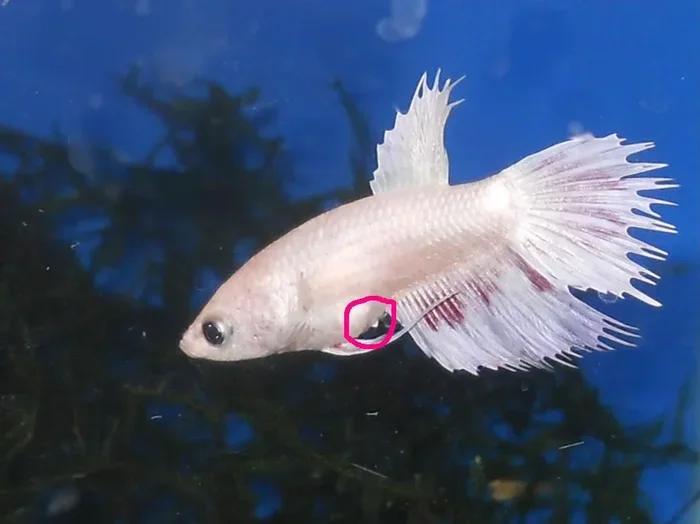
- A white dot near the belly: This is called the ovipositor. It is where the eggs will come out. It looks like a tiny grain of salt.
- A rounder, wider belly: A female carrying eggs often looks plumper than usual. This is one of the most visible betta fish signs of egg production.
- Increased appetite: Some female bettas eat more right before releasing eggs.
- Restlessness or pacing: Your betta may swim more actively or hover near the surface of the tank.
- A bubble nest appearing: If a male betta is in the same tank, he may start building a bubble nest. This is a strong signal that betta fish breeding is underway.
Keep in mind that not every female betta shows all of these signs. Some fish are subtle, while others are very obvious. The key is to watch your fish daily and compare her current behavior to her normal routine.
What Does the Ovipositor Look Like?
The ovipositor is a small, white speck located near the vent (the opening between the fins on the underside of the fish). It is easy to miss if you are not looking closely. Use a flashlight to get a better view. If you see this dot and your betta has a round belly, there is a good chance she is ready to release eggs.
Sometimes the ovipositor is harder to see in darker-colored bettas. White or light-colored fish make this much easier to spot. If you are unsure, try dimming the tank lights and observing your fish from different angles.
The Role of the Male Betta Fish in Egg Laying
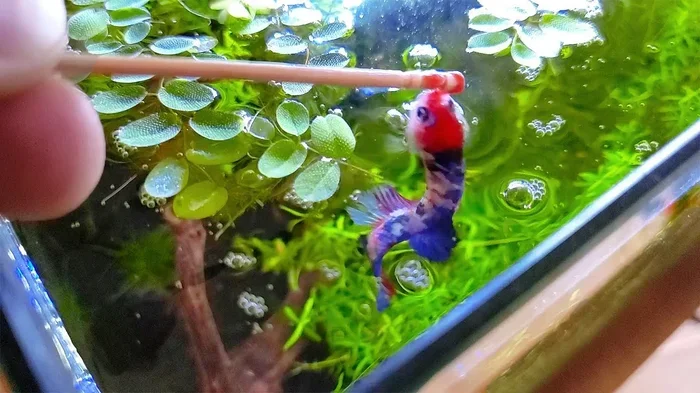
Here is something that surprises many owners: the male betta fish plays the biggest role in the egg-laying process. While the female produces the eggs, the male is responsible for building a bubble nest, fertilizing the eggs, and protecting them until they hatch.
When a male betta is ready to breed, he will swim to the surface and blow tiny bubbles that stick together. This cluster of bubbles is the bubble nest. It serves as a safe place for the eggs to land after the female releases them.
Why Is My Male Betta Making a Bubble Nest?
A bubble nest is one of the clearest signs that breeding is happening. If you have both a male and female in the same tank, the male will likely start building a nest when the female is carrying eggs. You can read more about why your male betta makes bubbles here.
- The nest is usually found near the surface of the water.
- It looks like a foamy, messy cluster of bubbles.
- The male will guard the nest constantly during breeding.
- If the nest falls apart, he will rebuild it.
Not all male bettas build bubble nests, though. Some males are less interested in breeding, and others may do it only under the right conditions. Water temperature and tank setup both play a big role.
What Betta Fish Eggs Look Like
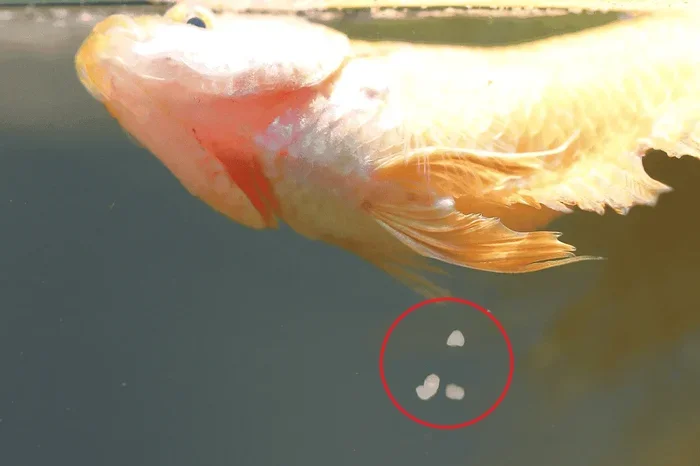
If you have ever seen betta fish eggs up close, you know they are tiny. Each egg is about the size of a small pinhead and looks like a tiny white bead. They are not round like bird eggs. Instead, they are slightly oval and translucent.
A single female betta can release anywhere from 30 to 500 eggs in one spawning session. That is a lot of tiny eggs! The number depends on the age, size, and health of the fish.
| Detail | Description |
|---|---|
| Egg Size | About 1-2 mm in diameter |
| Egg Color | White or translucent |
| Egg Shape | Slightly oval, not perfectly round |
| Number Per Spawn | 30 to 500 eggs |
| Hatching Time | 24 to 48 hours after fertilization |
If you notice small white specks floating near the bubble nest or sinking to the bottom of the tank, those could be betta fish eggs. The male will usually scoop any fallen eggs back into the nest with his mouth.
Common Signs Your Betta Is Laying Eggs vs. Just Lying Down
One of the biggest confusions for betta owners is telling the difference between a fish that is laying eggs and a fish that is just resting. Many behaviors overlap, and it is easy to jump to conclusions.
For example, a betta lying on the plants might look like she is preparing to lay eggs, but she could also just be tired or sick. If you are unsure, check for the specific signs of egg laying we covered above. You can also read about why bettas lay on plants here for more clarity.
Here is a quick comparison:
- Laying eggs: Female has a white ovipositor, round belly, and may release eggs into the water. A bubble nest is often present.
- Just resting: The fish is still, may lie on the gravel or plants, and shows no other breeding signs. Her belly is not noticeably larger than normal.
- Laying on the bottom: This can mean many things, from stress to illness. It does not automatically mean egg laying.
If your betta is showing signs of lethargy, loss of color, or refusal to eat, these are not typical egg-laying behaviors. They could point to a health problem. Always rule out sickness before assuming your fish is breeding.
Quick Tips for Telling the Difference
- Watch for the ovipositor — it is the most reliable sign.
- Check if a bubble nest has appeared recently.
- Observe feeding habits — increased appetite often accompanies egg production.
- Look at the belly shape from above — a rounded, plump belly suggests eggs.
- Compare behavior over several days — egg laying follows a pattern, while sickness tends to get worse.
What to Do When Your Betta Is Laying Eggs
So your betta is actually laying eggs. Now what? The steps you take next depend on whether you have a male in the tank and whether you want to raise the fry (baby bettas).
If you are keeping the male and female together for breeding, the male will handle the eggs. He will collect them and place them in the bubble nest. During this time, he may become aggressive toward the female. It is important to watch for any signs of chasing or fin damage.
If you do not want to breed your bettas, the best move is to separate the female after she releases the eggs. You can read more about keeping bettas in cold water here to learn about tank temperature management during this time.
Step-by-Step: Handling Eggs in Your Tank
- Confirm the eggs are actually present. Look for tiny white specks near the bubble nest.
- Monitor the male betta closely. He should be tending to the nest.
- Remove the female to a separate tank to prevent aggression from the male.
- Keep the water temperature stable, ideally between 78 and 80 degrees Fahrenheit.
- Do not disturb the bubble nest. Avoid strong filter currents near the nest area.
- Wait 24 to 48 hours for the eggs to hatch.
- Once fry appear, the male will continue to care for them for a few days.
After the fry are free-swimming, you should remove the male from the breeding tank. He may eat the babies if left too long. This sounds harsh, but it is natural betta behavior.
Common Mistakes Betta Owners Make During Egg Laying
Even experienced fish keepers make mistakes when it comes to betta egg laying. Here are some of the most common errors and how to avoid them.
Mistake 1: Ignoring the female after egg release. Many owners focus only on the male and the bubble nest. But the female needs care too. She may be stressed or injured after spawning. Give her a quiet space to recover.
Mistake 2: Disturbing the bubble nest. The bubble nest is fragile. Strong filter currents, tapping on the glass, or frequent water changes can destroy it. Keep the tank environment calm and stable.
Mistake 3: Leaving the male with the fry too long. The male will guard the fry for the first few days, but he can turn aggressive. Remove him once the babies are swimming freely.
Mistake 4: Overfeeding during breeding. Extra food can foul the water quickly. Feed small amounts 2 to 3 times a day and remove any uneaten food within a few minutes.
Expert Insight: Breeding Betta Fish Requires Patience
Breeding bettas is not a one-day process. It can take weeks of preparation and careful monitoring. If this is your first time, start by learning the basics of betta fish care and behavior. Understanding your fish’s normal habits makes it much easier to spot when something is different.
When to Be Concerned About Your Betta Fish
Not every change in behavior means your betta is laying eggs. Sometimes, the signs point to something else entirely. A betta that is lethargic, refusing food, or losing color may be sick. If you notice any of these symptoms, it is important to act quickly.
You can check if your betta is sick by looking for other signs like clamped fins, bloating, or white spots on the body. For a more detailed guide on identifying illness, read our article Is My Betta Fish Sick. Catching health problems early gives your fish the best chance of recovery.
Also, if your female betta is not eating and you suspect she might be carrying eggs, consider whether she could be pregnant. Bettas are not technically pregnant in the mammalian sense, but the term is sometimes used loosely. You can learn more about this topic here.
Another helpful resource is our article on Did My Betta Fish Lay Eggs, which covers the aftermath of egg laying and what to expect in the days following spawning.
Conclusion
So, is my betta fish laying eggs? Now you have the tools to answer that question with confidence. Watch for the ovipositor, a round belly, increased appetite, and bubble nest activity. These are the clearest signs that your female betta is producing eggs. Remember that a male betta fish plays a key role in the process, and proper tank conditions make all the difference.
Whether you want to breed your bettas or simply understand what is happening in your tank, knowing the signs of egg laying helps you provide better care. Keep observing, keep learning, and most importantly, enjoy the process of watching these beautiful fish thrive.
Frequently Asked Questions
How can I tell if my betta fish is actually laying eggs?
Look for a small white dot near the belly (the ovipositor), a rounded belly shape, and increased appetite. If a male betta is present, watch for a bubble nest forming at the surface. These are the most reliable signs that egg laying is happening.
Can a female betta fish lay eggs without a male present?
Yes, a female betta can release eggs even without a male in the tank. However, the eggs will not be fertilized and will not hatch. The female may reabsorb the eggs or they may float away. This is normal and not a cause for concern.
How often do betta fish lay eggs?
A healthy female betta can lay eggs every few weeks if conditions are right. However, breeding too frequently can stress the fish. It is best to allow at least a few weeks of rest between breeding sessions to keep your betta healthy.
What should I do if my betta is lying on the bottom and I think she is laying eggs?
Lying on the bottom is not always a sign of egg laying. It can also indicate stress, illness, or tiredness. Check for other signs like the ovipositor and a round belly. If your fish shows no other breeding signs, consider whether she might be unwell.
Do betta fish eat their own eggs?
Male bettas rarely eat their own eggs. They are devoted parents during the breeding process. However, if the male is inexperienced or stressed, he may accidentally eat some eggs. Female bettas will eat unfertilized eggs if given the chance, which is why it is important to remove her after spawning.
How long does it take for betta fish eggs to hatch?
Betta fish eggs typically hatch within 24 to 48 hours after fertilization. The male betta guards the bubble nest during this time. Once the fry hatch, they will stay near the nest for a few days before becoming free-swimming.