Is High Tide or Low Tide Better for Fishing
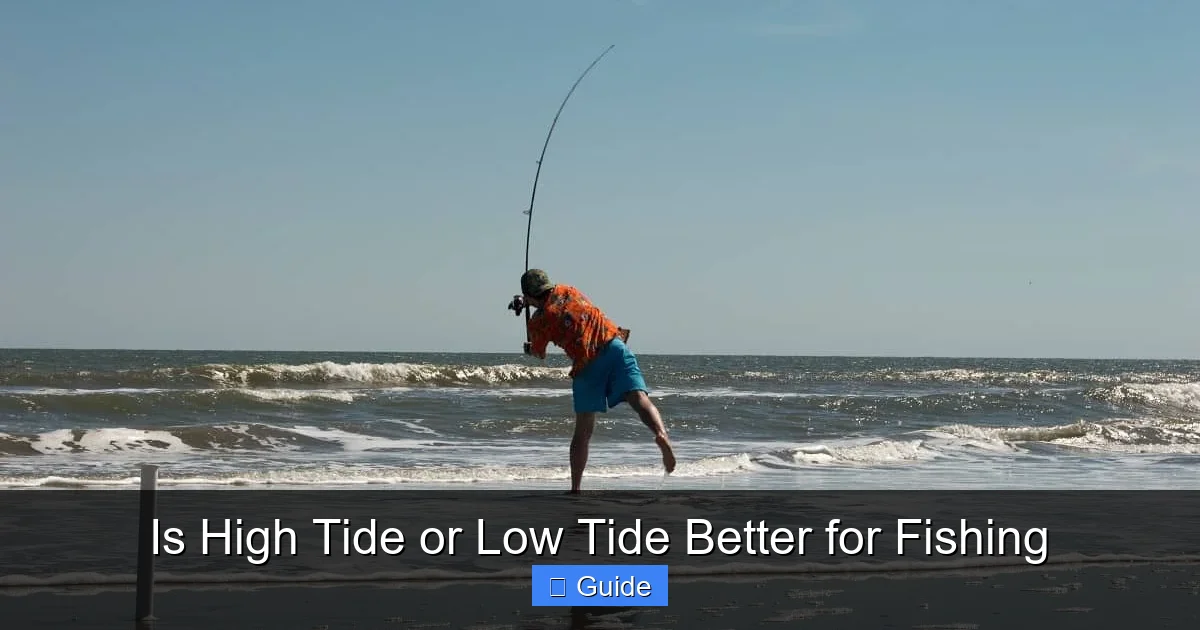
The truth is, neither high tide nor low tide is universally “better” for fishing. The key is understanding tide movement—the incoming and outgoing flow—and how it influences fish feeding in your specific location. Certain species and spots excel during specific tide phases, making local knowledge and observation your most powerful tools.
Key Takeaways
- Tide Movement is Crucial: Fish are most active during moving tides (incoming or outgoing), not at the absolute high or low stand.
- Species Have Preferences: Predators like stripers often feed on incoming tide, while bottom-dwellers like flounder may be more active on outgoing tide.
- Location Dictates the Best Tide: A jetty might fish best on an outgoing tide, while a shallow flat could be prime on a high incoming tide.
- Slack Tide is Generally Slow: The period around high and low tide when water is still is often the least productive time.
- Learn Your Local Water: The “best” tide for your favorite spot is a pattern you must discover through repeated trips and note-taking.
- Consider the Moon and Sun: Spring tides (new/full moon) create more extreme water movement, often leading to more aggressive feeding.
- Safety Comes First: Always prioritize safety, as strong tidal currents during big moves can be dangerous, especially from shore or in small boats.
📑 Table of Contents
- The Eternal Angler’s Question: High Tide or Low Tide?
- Understanding the Basics: What Tides Actually Are
- The Case for the Incoming (Flood) Tide
- The Power of the Outgoing (Ebb) Tide
- Species-Specific Strategies: Matching the Tide to the Fish
- The Location Factor: Where You Fish Changes Everything
- Putting It All Together: Your Action Plan
- Conclusion: Become a Tide Reader, Not a Tide Follower
The Eternal Angler’s Question: High Tide or Low Tide?
If you’ve ever stood on a shoreline, rod in hand, watching the water creep in or rush out, you’ve asked yourself this question. It’s one of the most fundamental—and debated—topics in fishing. The short, frustrating answer is: it depends. But that “depends” is everything. It’s the difference between a frustrating day and a memorable one. The real secret isn’t about the tide’s height (high or low), but its motion. Fish are creatures of opportunity. They use the moving water to their advantage—to ambush prey, to access new feeding grounds, or to conserve energy. This article will break down the science, the strategies, and the practical know-how so you can stop guessing and start predicting.
Understanding the Basics: What Tides Actually Are
Before we pick a side, we need to understand the battlefield. Tides are the rise and fall of sea levels caused by the gravitational pull of the moon and sun, and the rotation of the Earth. For most coastal and estuarine anglers, we deal with two high tides and two low tides roughly every 24 hours and 50 minutes (a lunar day). The difference in height between a high and the subsequent low is called the tidal range.
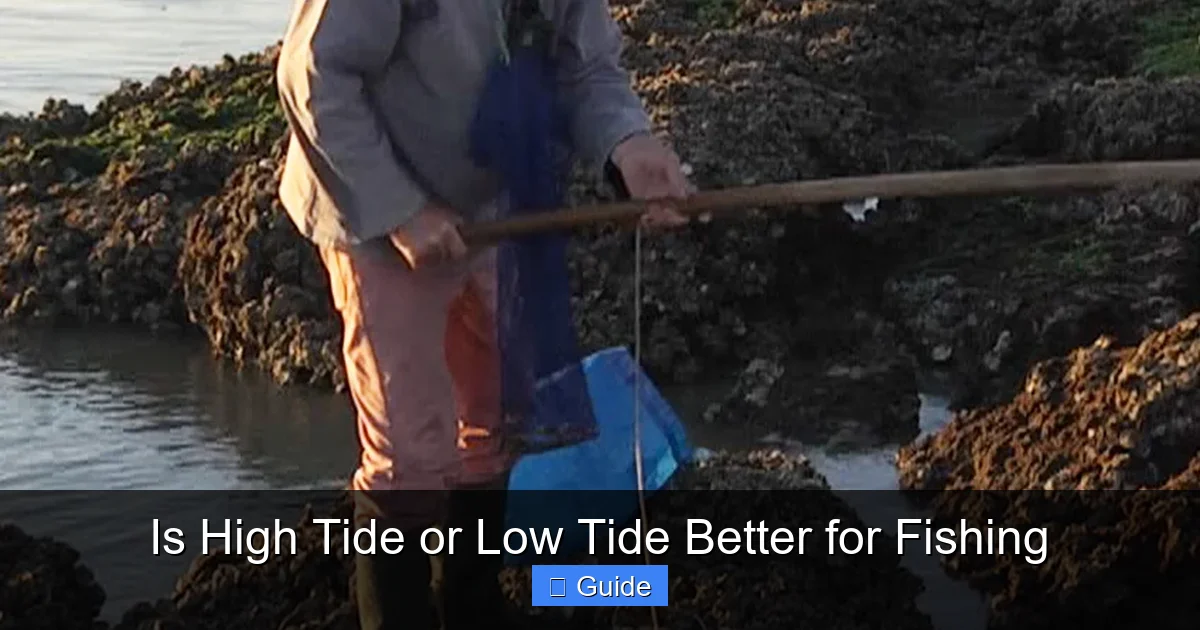
Visual guide about Is High Tide or Low Tide Better for Fishing
Image source: gad-distribution.com
The Critical Concept: Tide Movement vs. Tide Stage
This is the most important distinction. The stage is the point: it’s high tide, it’s low tide. The movement is the flow: the water is rising (incoming/flood tide) or falling (outgoing/ebb tide). Fish almost universally respond to the movement, not the static stage. A rising tide pulls baitfish and crustaceans from the depths or from shallow pools into newly flooded areas. A falling tide pulls them out of hiding and concentrates them in channels and holes. The periods of slack tide—the brief pause at the very top and bottom of the cycle—are when the water is dead still. This is often the slowest fishing period, as the current that stimulates feeding has ceased.
The Case for the Incoming (Flood) Tide
Many anglers swear by the incoming tide, and for good reason. It’s often called the “feeding tide” for a reason. As the water rises:
Visual guide about Is High Tide or Low Tide Better for Fishing
Image source: outdoortroop.com
- New Habitat Opens Up: Flats, marsh edges, and backwaters that were exposed or too shallow become accessible. Predatory fish follow the water’s edge to ambush baitfish, shrimp, and crabs that are swept off the mudflats.
- Bait is Displaced and Concentrated: The rising water pushes bait out of their hiding spots and into predictable lanes, making them easy targets for gamefish.
- Oxygenated Water: Moving water is typically better oxygenated, which can make fish more active.
Best For:
- Shallow Water Specks (Spotted Seatrout): They are classic flood tide predators, tailing on shallow flats as the water covers the grass.
- Redfish (Red Drum): They often push into the very tips of points and marsh edges on a strong incoming tide to trap fleeing bait.
- Striped Bass & Bluefish: In estuaries and along beaches, they use the incoming tide to push into creeks and along sandbars where bait is carried in.
- Surf Fishing: An incoming tide can bring bait and predators closer to the beach, improving your chances from the sand.
Practical Tip: For flood tide fishing, position yourself so the tide is moving toward you or along a structure you’re fishing. This allows your bait to drift naturally into the “zone” where fish are waiting.
The Power of the Outgoing (Ebb) Tide
Don’t discount the outgoing tide. It has a different, but equally powerful, appeal. As the water falls:
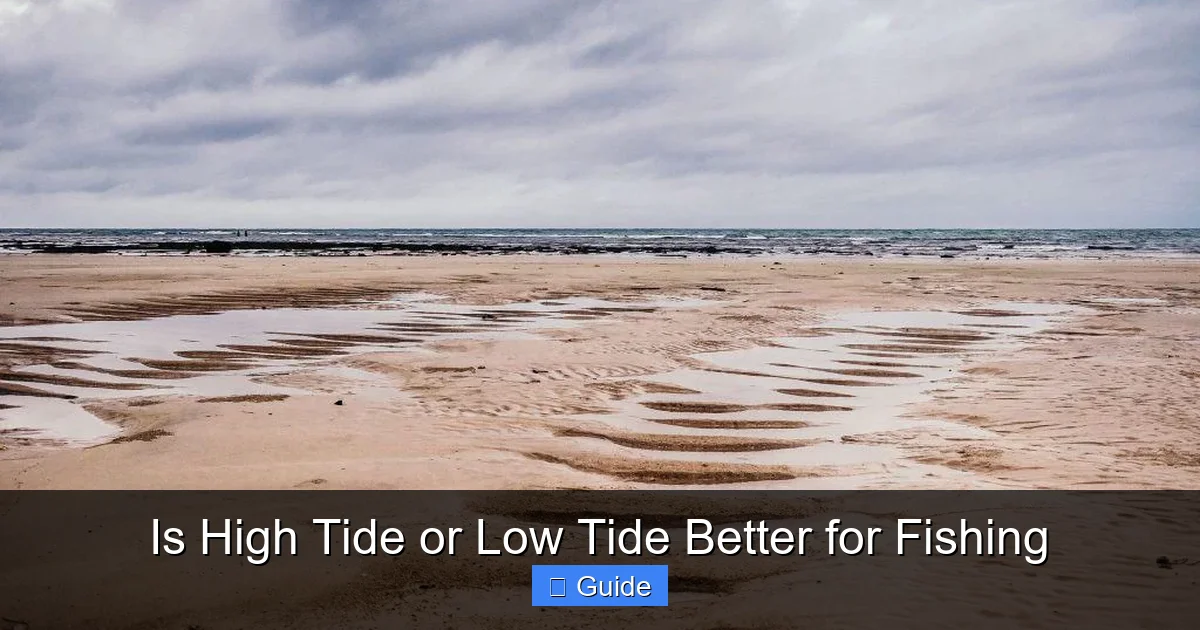
Visual guide about Is High Tide or Low Tide Better for Fishing
Image source: outdoortroop.com
- Concentration Effect: Water drains out of shallow areas, funneling baitfish and crustaceans into deeper holes, channels, and along drop-offs. Predators set up at these “drains” to pick off the exiting buffet.
- Structure Becomes Key: Jetties, bridge pilings, channel edges, and oyster bars become ambush points as current flows past them.
- Cleaner Water: Outgoing tides often pull cleaner, ocean water into estuaries (in some regions), which can stimulate feeding.
Best For:
- Bottom Fish (Flounder, Grouper, Snapper): They often sit in sandy holes or on channel edges, waiting for bait swept by the outgoing current to drift right by.
- Jetties & Riprap: The current flowing around rocks creates eddies and seams where predators like stripers, blues, and sheepshead hold.
- Surf Fishing (Specific Beaches): An outgoing tide can pull bait off sandbars and into deeper troughs closer to your casting range.
- River Mouths & Inlets: The strongest current flow occurs here on the outgoing tide, attracting large predatory fish.
Practical Tip: For ebb tide fishing, position yourself down-current of a likely holding spot. Cast upstream and let your bait drift naturally with the current past the fish.
Species-Specific Strategies: Matching the Tide to the Fish
General rules are helpful, but species behavior is the ultimate guide. Here’s a breakdown for popular targets:
Striped Bass (East Coast)
Stripers are incredibly tide-sensitive. They often feed most aggressively on a strong moving tide, either incoming or outgoing, depending on the structure. At ocean beaches and jetties, the outgoing tide is often prime as it pulls bait from the backside of sandbars. In large estuaries like the Chesapeake Bay, they may feed on both moves but show a strong preference for the last two hours of the outgoing tide and the first two hours of the incoming tide. The absolute best fishing is usually during the major tidal movement of a spring tide (new or full moon).
Spotted Seatrout & Redfish (Gulf & South Atlantic)
These are the kings of the tidal flat. For spotted seatrout, the high incoming tide is legendary. They will “tail” (show their tails) while foraging on the shallowest grass flats as the water first covers them. For redfish, both tides can be productive, but they often become more aggressive and push further into the marsh on a strong incoming tide. On the outgoing tide, both species will relocate to the edges of the flat, along the last remaining deep water, picking off bait being flushed out.
Flounder
Flounder are ambush predators of the bottom. They prefer to sit on sandy or muddy bottoms, often near some structure. The outgoing tide is frequently more productive because the current sweeps small fish and shrimp right over their buried heads. They will set up on the down-current side of a channel edge, sand drop-off, or an oyster bed.
Surf & Pier Fishing
Tide here dictates where the bait and predators are. An incoming tide often brings baitfish like mullet or anchovies into the surf zone, attracting blues and stripers. An outgoing tide can pull bait from the inner sandbars into deeper troughs. The key is to match your tackle and location to the tide. On a big incoming, you might wade farther out. On an outgoing, you might focus on the edges of sandbars or cuts in the bar.
The Location Factor: Where You Fish Changes Everything
The same tide that is magical at Spot A might be dead at Spot B. Your location is the final piece of the puzzle.
Inlets, Passes, and Jetties
These are areas of maximum water exchange. The strongest current flow occurs on the outgoing tide (water leaving the bay) and the incoming tide (water entering the bay). Fish like stripers, blues, and jacks use this current to rest and ambush. Often, the outgoing tide is slightly more consistent for these hard-current spots because it’s a cleaner, more defined flow. The incoming can be more turbulent and mixed.
Shallow Flats & Marshes
Here, the incoming tide is king. Fish are literally “fishing the tide.” As the water rises, it floods the flat. Fish follow the leading edge. You want to be on the flat just as it becomes flooded, not hours later when the water is already high and the initial push of bait has passed. The outgoing tide forces them off the flat, concentrating them on the edges.
Deep Channels & Holes
These are resting and ambush areas for many species. Fish will move into these holes at slack tide to rest. Then, as the current begins to move (either in or out), they will position themselves at the up-current edge of the hole to intercept bait. The bite can be very sharp during the first hour of moving water after slack.
Rocky shores and Reefs
Tide movement affects water clarity and current speed. An outgoing tide might clear the water, making sight-fishing possible. An incoming might dirty it slightly, which can sometimes trigger bigger predators. The flow around structure creates eddies where bait collects, so both moving tides can be good, but the direction of the current relative to the structure (e.g., which side of the reef is up-current) matters most.
Putting It All Together: Your Action Plan
So how do you actually use this information? It’s a process of observation and adaptation.
1. Consult the Tide Charts and Know the Numbers
This is your starting point. Use a reliable tide chart app or website for your exact fishing location. Note the times of high and low tide and the predicted range (e.g., 4.2 feet). A larger range (spring tide) means more water movement and often a better bite. A smaller range (neap tide) means less movement and potentially tougher fishing.
2. Define Your Target and Spot
Are you going for flounder in a channel? Then plan to be there on the outgoing tide, focusing on the last two hours of the drop. Are you hunting redfish on a marsh point? Plan your arrival for the incoming tide, aiming to be there an hour before high and fishing the moving water as it floods the point.
3. Fish the “Prime Window”
The absolute best fishing is almost always during the strongest moving water. This is typically:
- The 3 hours leading into high tide (incoming)
- The 3 hours leading out of high tide (outgoing)
Slack tide (the hour around the actual high/low) is often a dead period. Plan your trip around the moving water, not the static high/low time.
4. Observe and Adapt
Your first trip to a new spot is a data-collection mission. Fish it on an incoming tide. Note what happened. Fish it on an outgoing. Did the fish bite on the current? Did they bite at the change of current? Did they bite at slack? Keep a simple log: date, tide stage/movement, wind, species caught, location on the spot. Patterns will emerge.
5. Don’t Ignore Other Factors
Tide is the master regulator, but it works with others:
- Wind: A strong onshore wind can negate an outgoing tide, keeping water high and muddy. Wind direction relative to tide flow is critical.
- Time of Day: Dawn and dusk are often magical hours regardless of tide, but a moving tide during these times is doubly powerful.
- Water Clarity: This affects your lure choice and presentation more than the tide itself.
- Season & Water Temperature: In summer, fish may seek cooler, oxygenated moving water. In winter, they may be less active regardless of tide.
Conclusion: Become a Tide Reader, Not a Tide Follower
The question “is high tide or low tide better for fishing?” is the wrong question. The right question is: “How is the tide moving right now, and how does that movement affect the structure and bait in my specific spot?” By shifting your mindset from the tide’s height to its motion, and by learning the preferences of your target species and your local waters, you transform from a guesser into a predictor. You’ll learn that the magic isn’t at high tide or low tide. It’s in the push and pull of the water itself—the relentless, rhythmic conveyor belt that dictates the underwater dance between predator and prey. So check your charts, study your spots, and get on the water during the moving tide. That’s where the action lives.
Frequently Asked Questions
Is fishing better on a high tide or low tide for beginners?
For a beginner, an incoming tide is often easier and more productive. The rising water gives fish more area to feed and often makes them more aggressive and easier to locate along the moving edge. It’s a more consistent bite pattern to learn.
What is the worst tide for fishing?
The least productive period is typically slack tide—the 30-60 minute window around the absolute high or low tide when the water is dead still. The lack of current reduces bait movement and oxygen exchange, making fish less active.
Do fish bite better during a full moon or new moon?
This relates to spring tides (more extreme high/low). Many anglers find the stronger tidal currents during full and new moons trigger more aggressive feeding, especially for species like striped bass and sharks. However, the extreme current can also make fishing difficult, so it’s a trade-off.
What is the “major” feeding period in a tide?
The major feeding period is usually the middle two hours of the moving tide—either the middle of the incoming flood or the middle of the outgoing ebb. This is when water movement is strongest and most consistent, bait is most active, and predators are most focused.
Can you catch fish at slack tide?
Yes, but it’s often more challenging. Some species, like certain bottom fish, may bite better at slack when they can rest on structure without fighting current. However, for most active pelagic predators, the bite significantly slows during slack water.
How far in advance should I plan a fishing trip based on tides?
Always plan your trip around the tide movement, not just the high/low time. If you want to fish the incoming tide, arrive 1-2 hours before high tide to fish the best of the moving water. If you want the outgoing, arrive at high tide to fish the first hour of the drop. Check your charts the day before.