How to Tell If a Betta Fish Is Asleep
Figuring out if your betta fish is asleep is easier than you think. Betta fish have unique sleep habits that differ from humans. This guide will show you the clear signs of a sleeping betta, how to tell if a betta fish is asleep, and when sleep changes signal a problem. You’ll learn what normal rest looks like, how to create a good sleep environment, and simple tips to keep your fish healthy. Knowing these signs helps you avoid mistaking sleep for illness or death.
Betta fish are beautiful, lively pets that bring color to any room. But have you ever watched your betta sit perfectly still and wondered, how to tell if a betta fish is asleep? It is a common question among new fish owners. Bettas sleep differently than humans, and their rest can look strange at first glance. This guide will help you spot the clear signs of a sleeping betta. You will learn what normal sleep looks like, when sleep changes mean trouble, and how to set up a tank that helps your fish rest well. By the end, you will know exactly what to look for and feel confident about your betta’s health.
Understanding your betta’s sleep is one of the easiest ways to keep it happy. A well-rested betta has bright colors and swims with energy. A betta that sleeps too much or too little may be telling you something is wrong. In this article, we break down everything you need to know. We cover the physical signs, behavior clues, and simple steps you can take tonight. So let us dive in and explore the world of betta sleep.
Many people think fish never sleep. That is not true. Fish do rest, but they do not close their eyes because they lack eyelids. A betta fish will enter a state of reduced activity. Its body slows down, and it becomes less responsive. You might see it hover in one spot or rest on a leaf. Some bettas even sleep vertically with their heads pointing down. All of these are normal. However, if your betta is sleeping all the time and ignoring food, it could be a red flag. Unusual sleep patterns can be a sign that your betta fish is sick, so always watch for other symptoms.
Key Takeaways
- Betta fish sleep with their eyes open: They lack eyelids, so stillness is the sign, not closed eyes.
- A sleeping betta may lie still near the bottom or float near the surface: Both are normal positions.
- Normal sleep patterns include daytime naps and nighttime rest: Bettas need 12-14 hours total.
- Changes in sleep can indicate sickness or stress: Watch for other symptoms like loss of appetite.
- A dark, quiet tank with gentle lighting helps your betta sleep better: Use a timer for the lights.
- Never mistake a sleeping betta for a dead fish: Check for breathing and slow response.
- If your betta sleeps too much or too little, check water quality and temperature: These are common causes.
📑 Table of Contents
Understanding Betta Fish Sleep Cycles
Betta fish are crepuscular, which means they are most active at dawn and dusk. In the wild, they rest during the hottest part of the day and become active in the cooler hours. In a home tank, their sleep schedule can shift based on lighting and routine. Knowing this helps you interpret what you see.
How Much Sleep Does a Betta Need?
A healthy betta sleeps about 12 to 14 hours a day. That includes nighttime sleep and daytime naps. Just like us, they need rest to stay healthy. If your betta is sleeping more than 16 hours a day, it may be a warning sign. On the other hand, a betta that never rests might be stressed or kept under bright lights 24 hours a day.
Daytime Napping vs. Nighttime Sleep
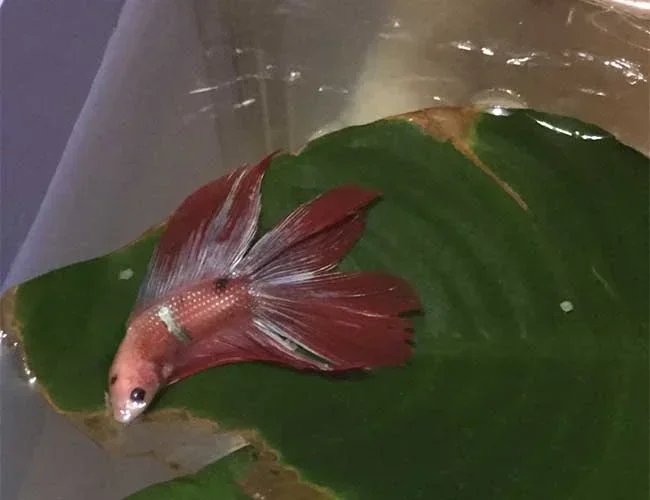
You might notice your betta taking short naps during the day. This is completely normal. Bettas often rest on broad plant leaves or hide behind decorations. At night, they usually settle into a deeper sleep. They may hover in one place or lie on the substrate. Both daytime naps and nighttime sleep are part of a healthy cycle. If you turn off the tank light at night, your betta will naturally start to wind down.
Why Bettas Sleep with Their Eyes Open
One of the first surprises for new owners is that bettas sleep with their eyes open. Fish do not have eyelids, so they cannot close their eyes. This does not mean they are awake. It simply means their rest looks different from a human’s sleep. Do not be alarmed if you see your betta perfectly still with its eyes wide open. That is a sleeping betta.
How to Tell If Your Betta Fish Is Asleep
This section answers the main question directly. If you want to know how to tell if a betta fish is asleep, look for these clear signs. A sleeping betta will show a combination of physical stillness and reduced response. Let us break it down into simple checks you can do right at the tank.
Physical Signs of a Sleeping Betta
- Still body: The betta stays in one spot without swimming. Its fins may be slightly folded or completely still.
- Slow breathing: The gills move gently and slowly. A resting betta breathes less often than an active one.
- Color changes: Some bettas become slightly paler or duller when they sleep. This is normal and temporary.
- Lying on the side or bottom: Many bettas rest on a leaf or the tank floor. They may even lie on their side for a short nap.
Behavioral Clues to Watch For
Behavior tells you a lot about your betta’s sleep state. A sleeping betta will not react to food or movement outside the tank. If you tap the glass or drop a pellet near it, a sleeping betta will slowly wake up or ignore it completely. An active betta will dart toward the food. Here are some behavioral cues:
- No response to food: If you feed your betta at the same time each day and it ignores the food, it is likely asleep.
- Slow or no fin movement: The betta holds its fins close to its body and does not flare them.
- Hovering in place: Some bettas hover in the water column without moving up or down.
- Curling up on a leaf: Betta fish often tuck themselves under broad leaves to feel secure while resting.
Common Sleeping Positions and What They Mean
Betta fish have quirky sleeping positions that can look alarming if you do not know what they mean. Here are the most common ones:
- Floating near the surface: The betta rests just below the water line, sometimes with its mouth near the surface to breathe easily.
- Lying on the bottom: The betta rests on the gravel or a plant. This is normal, especially at night.
- Vertical head-down position: The betta points its head toward the substrate and hovers. This looks like the betta is sleeping upside down, but it is a normal rest position for many bettas.
- Hiding in a cave or plant: The betta feels safe and sleeps in a sheltered spot. This is a sign of a happy, relaxed fish.
Quick Tips for Spotting a Sleeping Betta
- Watch the tank at the same time each day to build a routine.
- Turn off the tank light for a few hours to see if your betta settles.
- Use a flashlight on low setting to peek at your betta without disturbing it.
- Take note of how long your betta stays still before assuming something is wrong.
- If you are unsure, wait 30 minutes and check again. A sleeping betta will eventually move.
Normal Sleep vs. Problem Sleep: A Quick Comparison
It can be hard to know if your betta’s sleep is healthy. This table helps you spot the difference between a well-rested betta and one that needs attention.
| Sign | Normal Sleep | Problem Sleep |
|---|---|---|
| Activity Level | Still but responsive after a while | Completely unresponsive for hours |
| Position | Curled on a leaf or hovering | Lying on side at the bottom, not moving |
| Response to Food | Ignores food while asleep, eats when awake | Refuses food even when awake |
| Breathing | Slow, steady gill movement | Rapid breathing or gasping at the surface |
| Color | Slightly dull but returns to bright when awake | Faded, pale, or developing white spots |
| Duration | 12-14 hours total per day | Sleeping 18+ hours or showing no sleep at all |
If your betta shows several signs in the Problem Sleep column, it is time to investigate further. If your betta is completely motionless, not breathing, and lying on its side, it could be a sign that a betta fish is dying. Do not panic, but act quickly by checking water parameters and looking for other symptoms.
When Sleeping Becomes a Warning Sign
Sleep changes are one of the earliest signals that something is off. Bettas are good at hiding illness, so sleep patterns are often the first clue. Let us look at what too much or too little sleep can mean.
Excessive Sleeping: Causes and Concerns
If your betta sleeps more than 16 hours a day and seems lethargic when awake, something is wrong. Common causes include poor water quality, low temperatures, and disease. Cold water slows a betta’s metabolism, making it sleepy. High ammonia or nitrite levels can also cause fatigue. Always test your water if you notice a sudden increase in sleep.
Lethargy and Loss of Appetite
A sleeping betta that also refuses food is a betta in trouble. Healthy bettas get excited at feeding time. If your betta ignores food for more than two days, you need to act. Check the water temperature first. Bettas need a temperature between 78 and 80 degrees Fahrenheit. If the water is too cool, use a heater. If the temperature is fine, look for other illness signs like clamped fins, white spots, or bloating.
Could It Be a Sign of Dying?
It is a scary thought, but a betta that will not move and seems to be sinking may be dying. A dying betta often lies at the bottom of the tank, barely breathing. It may not respond to food or light. If your betta is completely unresponsive and lying motionless, it could be a sign that a betta fish is dying. In this case, check the water for ammonia and nitrite spikes. Perform a small water change and consider a quarantine tank. If there is no improvement, consult a vet who specializes in fish.
Creating the Perfect Sleep Environment for Your Betta
A good sleep environment is just as important as good food and clean water. Your tank setup can encourage healthy rest and reduce stress. Here is how you can help your betta sleep better.
Lighting: Mimicking Natural Day and Night
Betta fish need a regular day-night cycle. Use a timer for your tank light so it turns on and off at the same time every day. A good schedule is 8 to 10 hours of light and 12 to 14 hours of darkness. Avoid placing the tank in a room where a television or lamp shines on it all night. Light at night disrupts their sleep and can lead to stress. A dark, quiet room is best for your betta’s rest.
Water Temperature and Its Role in Sleep
Temperature plays a big role in how well your betta sleeps. A betta kept in water that is too cold will become sluggish and sleep too much. Water that is too warm can cause restlessness. Use a reliable heater to keep the temperature steady between 78 and 80 degrees Fahrenheit. A stable temperature helps your betta maintain a natural sleep-wake cycle.
Plants and Hideouts for Safe Resting
Betta fish love to sleep on plants and in hiding spots. Live or silk plants provide soft places to rest. Avoid sharp plastic plants that can tear their fins. A betta will often choose a large leaf or a cave to nap in. Adding a few floating plants also creates shaded areas that make your betta feel secure. When your betta feels safe, it sleeps more deeply and wakes up refreshed.
Is Your Betta Happy and Resting Well?
A happy betta fish will have a regular sleep schedule and plenty of energy when awake. If your betta sleeps well and swims eagerly at feeding time, you are doing a great job. Sleep is a key indicator of overall health. To learn more about what a content betta looks like, check out how to know if your betta fish is happy. A happy betta will also show bright colors and interact with you.
Here are a few signs that your betta is well-rested and content:
- Active swimming: The betta moves around the tank with purpose and curiosity.
- Healthy appetite: The betta eats eagerly and finishes food within a few minutes.
- Bright, vibrant colors: A well-rested betta displays rich, intense colors.
- Fin flaring: The betta may flare its fins at its reflection or when it sees you, which is a sign of confidence.
- Regular nap schedule: The betta takes short naps during the day and sleeps deeply at night.
Common Mistakes People Make About Betta Sleep
- Thinking a sleeping betta is dead: This is the most common mistake. A sleeping betta is still alive. Check for slow gill movement and a slight response to light.
- Keeping the light on 24/7: This confuses the betta’s internal clock and leads to stress and insomnia.
- Ignoring water quality: Dirty water can cause lethargy and excessive sleep. Test your water weekly.
- Overfeeding before lights out: A heavy meal right before the lights go off can disrupt sleep and cause bloating.
- Disturbing the betta during naps: Turning on bright lights or tapping the glass wakes the betta and adds stress. Give it peace during rest hours.
Expert Insights from Experienced Betta Keepers
Many seasoned betta owners share one simple tip: watch your fish every day. Once you know your betta’s normal behavior, you will notice changes right away. One keeper recommends, “Spend five minutes each morning just watching your betta. You will learn its sleep spots, its favorite plants, and its daily rhythm. That knowledge is your best tool for catching problems early.” Another expert advises, “A consistent routine is everything. Feed your betta at the same time, turn the lights on and off at the same time, and do water changes on a schedule. Bettas thrive on predictability.”
Learning how to tell if a betta fish is asleep is a simple skill that makes a big difference in your fish care. You now know the physical signs, behavior clues, and common sleeping positions. You also know how to tell the difference between normal rest and a warning sign. A happy, well-rested betta is a healthy betta. Keep the tank clean, the water warm, and the lighting consistent. Pay attention to your betta’s sleep patterns every day. If you ever notice something that does not look right, trust your instincts and check for illness or stress. With the tips in this guide, you are ready to give your betta the restful, happy life it deserves. Sweet dreams to you and your fish.
Frequently Asked Questions
How many hours a day does a betta fish sleep?
A healthy betta fish sleeps about 12 to 14 hours a day. This includes nighttime sleep and daytime naps. If your betta sleeps significantly more or less, it may be a sign of stress or illness.
Do betta fish sleep with their eyes open?
Yes, betta fish sleep with their eyes open because they do not have eyelids. This is completely normal. A sleeping betta will still be still and less responsive even with its eyes open.
Why is my betta fish sleeping at the bottom of the tank?
Betta fish often rest on the bottom or on plants when they sleep. It is a normal behavior. However, if your betta is lying on the bottom and not moving for a long time, it could be a sign of sickness or dying. Check for breathing and other symptoms.
Can a betta fish die from lack of sleep?
While lack of sleep alone is rarely fatal, chronic sleep deprivation from constant light or stress can weaken a betta’s immune system. This can lead to illness. Always provide a dark, quiet period for your betta to rest.
How can I tell if my betta is sleeping or dead?
A sleeping betta will have slow gill movement and may respond slowly to food or light. A dead betta will be completely unresponsive, may float or sink, and will have no gill movement. If you are unsure, wait a few minutes and check again.
What should I do if my betta fish sleeps too much?
First, test your water for ammonia and nitrite. Check the temperature to ensure it is between 78 and 80 degrees Fahrenheit. If the water is clean and warm, observe for other symptoms like loss of appetite. If the excessive sleep continues, consult a fish veterinarian or look into how to tell if a betta fish is sick.