How to Prevent Algae Growth in Betta Fish Tank
Preventing algae growth in your betta fish tank is easier than you think. With the right light schedule, regular water changes, and smart tank setup, you can keep your aquarium clean and your betta happy. This guide covers proven algae prevention tips every fish keeper needs.
There is nothing more frustrating than walking up to your betta fish tank and seeing a green film coating every surface. Algae is a common problem for fish keepers of all levels. But here is the good news: preventing algae growth in betta fish tank setups is totally doable. You do not need expensive equipment or a chemistry degree. A few simple habits make a huge difference.
In this guide, we will walk you through everything you need to know about algae control in your betta aquarium. From light management to feeding habits, we cover it all. By the end, you will have a clear plan to keep your tank looking beautiful. Let us dive in.
Key Takeaways
- Control light exposure: Limit tank light to 8-10 hours daily to stop algae from thriving.
- Perform regular water changes: Replace 25-30% of tank water weekly to reduce nutrients algae feed on.
- Avoid overfeeding: Excess food raises phosphate and nitrate levels that fuel algae growth.
- Add live plants: Live plants compete with algae for nutrients and keep your tank balanced.
- Use the right filter: A good filter removes waste and keeps water parameters stable.
- Clean your tank regularly: A consistent tank cleaning routine prevents buildup.
- Test water often: Monitor nitrate and phosphate levels to catch problems early.
📑 Table of Contents
- Why Algae Grows in Betta Fish Tanks
- Control Light Exposure to Stop Algae
- Master Your Water Change Routine
- Feed Your Betta the Right Way
- Add Live Plants to Compete with Algae
- Maintain Your Filter and Tank Equipment
- How to Remove Algae When It Appears
- Create a Weekly Tank Maintenance Schedule
- Expert Insights on Algae Prevention
- Common Mistakes That Cause Algae
- Final Thoughts
Why Algae Grows in Betta Fish Tanks
Before we fix the problem, we need to understand the cause. Algae is a living organism. Like plants, it needs light, water, and nutrients to grow. When any of these are out of balance, algae takes over fast.
Why is algae growing in my betta fish tank? The most common reasons are simple:
- Too much light: Leaving your tank light on for hours each day gives algae energy to spread.
- Excess nutrients: Fish waste, uneaten food, and decaying plants release nitrates and phosphates.
- Poor water changes: Stale water builds up nutrients that feed algae colonies.
- Direct sunlight: Placing your tank near a window invites natural light that algae loves.
- Overfeeding: Extra food sinks to the bottom and breaks down into algae fuel.
Understanding these causes helps you target your efforts. You do not need to fight every factor at once. Start with the biggest culprit and build from there.
Control Light Exposure to Stop Algae
Light is the number one driver of algae growth. Your betta fish does not need constant light. In fact, too much light causes more harm than good. Setting a proper light schedule is one of the easiest ways to prevent algae.
Set a Daily Light Schedule
Keep your tank light on for 8 to 10 hours per day. That is enough for your betta and any live plants. Use a timer to automate this. A simple outlet timer costs just a few dollars and takes the guesswork out of it.
Avoid Direct Sunlight
Never place your betta fish tank near a window. Direct sunlight creates hot spots and feeds algae nonstop. Even a few hours of direct sun can trigger a green water bloom. Pick a spot in your room that gets indirect light only.
Choose the Right Tank Light
Not all aquarium lights are equal. LED lights with adjustable brightness work best. They let you control intensity and duration. Avoid cheap lights with high wattage. They produce excess heat and light that encourages algae.
Quick Tip: If you notice algae forming on the glass, your first step should be checking your light schedule. Cut the daily hours and see if it slows the growth.
Master Your Water Change Routine
Regular water changes are the backbone of algae prevention. They remove excess nutrients before algae can use them. A consistent tank maintenance routine keeps your water clean and your betta healthy.
How Often Should You Change the Water?
For most betta tanks, a 25 to 30 percent water change each week works well. This removes built-up nitrates and phosphates. It also refreshes trace minerals your fish needs.
Use the Right Water Temperature
Always match the temperature of your new water to the tank water. Sudden temperature changes stress your betta. Use a thermometer to check both before mixing. How to keep betta fish warm in winter is also important during water changes, since colder tap water can drop tank temps.
Dechlorinate Every Time
Tap water contains chlorine that harms your fish. Always use a water conditioner before adding new water to the tank. This simple step protects your betta and keeps the tank ecosystem stable.
If you are ever unsure about your routine, check out our guide on how to change water in betta fish tank for a detailed walkthrough.
Feed Your Betta the Right Way
Overfeeding is one of the sneakiest causes of algae. Uneaten food sinks to the bottom and decays. This releases ammonia, nitrates, and phosphates into the water. All of these nutrients feed algae.
How Much Should You Feed?
Feed your betta small amounts twice a day. Only give what your fish can eat in 2 to 3 minutes. Bettas have small stomachs. A few pellets or a pinch of flakes is plenty.
What Happens If You Overfeed?
Excess food rots quickly. It clouds the water and raises ammonia levels. This creates the perfect environment for algae to explode. Your betta may also become bloated or lethargic from too much food.
Choose Quality Food
High-quality betta pellets sink slowly and are easy to portion. Avoid cheap flakes that dissolve fast and leave debris. Look for food with real ingredients and low filler content.
Quick Tip: If you accidentally drop extra food in the tank, use a small net to remove it within a few minutes. This prevents it from breaking down and feeding algae.
Add Live Plants to Compete with Algae
Live plants are your secret weapon against algae growth. They absorb the same nutrients algae feeds on. When your plants are healthy, algae has less to feed on. This natural competition keeps your tank balanced.
Best Live Plants for Betta Tanks
Not all plants work well with bettas. Bettas like gentle flow and soft leaves. Here are some great options:
- Java Fern: Grows slowly and thrives in low light. Perfect for betta tanks.
- Anubias: Tough and hardy. It attaches to rocks and driftwood easily.
- Amazon Sword: Grows larger and adds a lush look to bigger tanks.
- Java Moss: Great for carpeting the bottom and absorbing extra nutrients.
Do Live Plants Help with Filtration?
Yes, they do. Live plants absorb nitrates and carbon dioxide. They release oxygen into the water. This creates a healthier environment for your betta. Plants also provide hiding spots and resting places that bettas love.
If you are setting up a new tank, our guide on how to set up a fish tank for betta fish covers the best plant choices and tank layouts.
Maintain Your Filter and Tank Equipment
A good filter does more than just clean debris. It hosts beneficial bacteria that break down waste. Without a working filter, nutrients build up fast and algae takes advantage.
Choose the Right Filter for Your Tank
For a betta tank, a gentle sponge filter works best. Bettas prefer slow water flow. Strong filters can stress them out. A sponge filter provides mechanical and biological filtration without harsh currents.
Clean Your Filter Properly
Never rinse your filter media with tap water. The chlorine in tap water kills beneficial bacteria. Instead, swish the media in old tank water during a water change. Replace filter media only when it falls apart.
Check Other Equipment Regularly
Heaters, thermometers, and air pumps all need occasional checks. A broken heater can cause temperature swings. Unstable conditions stress your betta and make the tank more vulnerable to algae blooms.
How to Remove Algae When It Appears
Even with the best prevention, some algae may still appear. That is normal. The key is catching it early and removing it before it spreads.
Clean the Glass Regularly
Use an algae scraper or magnetic cleaner on the glass. A quick pass during your weekly routine keeps buildup under control. Do not let algae harden and crust over.
Use Algae Eaters
Some tank mates can help with algae control. Snails like nerite snails eat algae without reproducing in freshwater. Amano shrimp are also excellent algae grazers. Just make sure any new additions are safe for bettas.
If you are dealing with a serious algae problem, our article on how to clean algae from betta fish tank gives you step-by-step methods for tackling tough algae buildup.
When to Do a Deep Clean
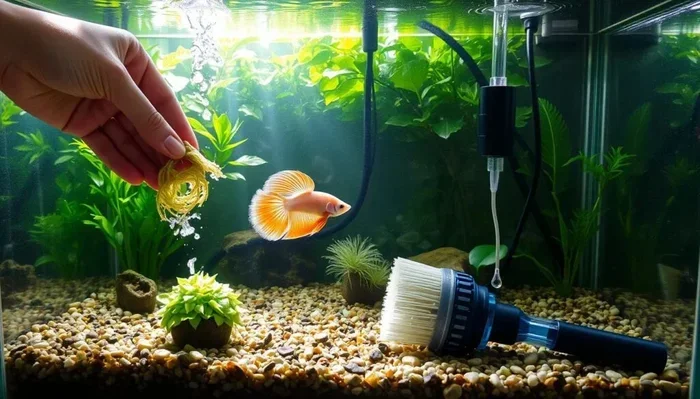
Sometimes a full tank clean is necessary. Remove decorations and scrub them gently. Vacuum the substrate to pull out debris hiding below the surface. Replace filter media if it is worn out. Just remember: do not clean everything at once. You want to keep some beneficial bacteria alive.
Common Mistake: Many beginners do a 100% water change at once. This wipes out all the good bacteria and shocks your fish. Always stick to partial water changes of 25 to 30 percent at a time.
Create a Weekly Tank Maintenance Schedule
Consistency is the key to preventing algae. A weekly routine keeps nutrients in check and your tank looking great. Here is a simple schedule you can follow:
- Monday: Test water parameters (nitrate, nitrite, ammonia, pH).
- Tuesday: Feed your betta and remove any uneaten food.
- Wednesday: Check the heater, filter, and light timer.
- Thursday: Perform a 25-30% water change and vacuum the substrate.
- Friday: Wipe down the glass and inspect decorations.
- Saturday: Trim any dead plant leaves and check for early algae signs.
- Sunday: Rest and enjoy your tank.
Following this routine takes less than an hour per week. It keeps your tank stable and your betta thriving. Over time, you will spot problems before they become serious.
If you want a deeper dive into tank cleaning routines, check out our guide on how often to clean a betta fish tank for expert-backed schedules.
Expert Insights on Algae Prevention
Experienced fish keepers agree on a few key principles. First, patience matters. A new tank will go through a cycling phase where algae is common. This is normal and temporary. Second, balance is everything. Your tank thrives when light, nutrients, and biology are in harmony. Third, observation wins. Watch your tank daily. Catching a small green spot early prevents a full-blown algae outbreak.
Another important factor is tank size. Larger tanks are more stable. They dilute waste and nutrients better than small bowls. If your current setup is too small, consider upgrading. Our article on how big does a betta fish tank need to be can help you choose the right size.
Common Mistakes That Cause Algae
Even experienced keepers make these mistakes. Watch out for them:
- Leaving the light on 24/7: This is the fastest way to trigger an algae bloom.
- Skipping water changes: Nutrient buildup happens fast without regular maintenance.
- Overstocking the tank: More fish means more waste and more food for algae.
- Using the wrong substrate: Some gravel types leach phosphates that fuel algae.
- Ignoring water tests: You cannot fix what you do not measure.
Avoiding these mistakes saves you time, money, and stress. Your betta will thank you with vibrant colors and active behavior.
Final Thoughts
Preventing algae growth in betta fish tank setups comes down to a few simple habits. Control your light, keep up with water changes, feed wisely, and stay consistent. You do not need expensive products or complicated setups. A little daily attention goes a long way.
Remember, a clean tank means a healthy betta. Your fish will enjoy clearer water, better oxygen levels, and a more natural environment. Start with one or two changes today and build from there. Your future self (and your fish) will thank you.
Algae is a natural part of aquarium life. But with the right approach, you keep it under control. Enjoy the process of caring for your betta. Each week you will see your tank looking cleaner and more vibrant. Happy fish keeping.
Frequently Asked Questions
How do I stop algae from growing in my betta fish tank?
Control your light to 8-10 hours per day, perform weekly water changes of 25-30%, and avoid overfeeding. These three steps alone will dramatically reduce algae growth. Adding live plants also helps by competing with algae for nutrients.
Is algae bad for betta fish?
A small amount of algae is not harmful. In fact, it can provide a natural grazing environment. However, heavy algae growth can spike nitrate levels and reduce oxygen in the water. Keeping algae under control protects your betta’s health.
How often should I clean my betta fish tank to prevent algae?
A weekly routine works best for most betta tanks. Do a partial water change every week, wipe the glass, and vacuum the substrate. For deeper cleaning, a full tank maintenance session once a month keeps everything in balance.
Can I use algae eaters in my betta tank?
Yes, but choose carefully. Nerite snails and Amano shrimp are safe and effective algae grazers. Avoid adding fish that may nip at your betta’s fins. Always research any new tank mate before introducing them.
What causes green water in a betta tank?
Green water is usually caused by excess light combined with high nutrient levels. Direct sunlight, too many hours of artificial light, and high nitrate or phosphate counts all contribute. Reducing light and doing a water change typically clears it up.
Does a filter help prevent algae in a betta tank?
Yes, a filter removes debris and hosts beneficial bacteria that break down waste. This reduces the nutrients available for algae. Choose a gentle sponge filter for betta tanks since they prefer low water flow.
=== CONCLUSION ===
Preventing algae growth in betta fish tank environments is well within your reach. With consistent light control, regular water changes, proper feeding, and a solid maintenance routine, you can keep your tank crystal clear. Start small, stay consistent, and your betta will thrive in a clean, beautiful home.