How to Breed Betta Fish at Home

Breeding betta fish at home is easier than most people think. This guide covers everything you need, from choosing the right male and female pair to setting up the perfect breeding tank. You will learn about water conditions, feeding routines, and how to raise betta fry successfully.
Breeding betta fish at home can be a rewarding experience. These colorful fish are popular pets, and watching them reproduce adds a whole new level of excitement. If you have ever wondered how to breed betta fish at home, you are in the right place.
This guide walks you through every step. From selecting the right fish to raising the fry, we cover it all. The process is simpler than most beginners expect. With the right setup and a little patience, you can successfully breed bettas in your own home.
Betta fish breeding requires attention to detail, but it is not overly complicated. You need the right tank, proper water conditions, and healthy fish. This article gives you practical tips and clear instructions. Whether you are a first-time breeder or have some experience, you will find valuable advice here.
Key Takeaways
- Choose healthy adults: Pick a vibrant male and mature female between 4 and 12 months old for the best results.
- Set up a dedicated breeding tank: A 10-gallon tank with gentle filtration and warm water creates the ideal environment.
- Condition the fish properly: Feed live or frozen foods for two weeks before introducing the pair.
- Watch for the bubble nest: This is the clearest sign that your male is ready to breed.
- Separate the female after spawning: The male may become aggressive, so remove her immediately after eggs are released.
- Feed fry frequently: Betta fry need small, live foods like infusoria and baby brine shrimp several times a day.
- Maintain clean water: Regular small water changes keep fry healthy and prevent disease.
📑 Table of Contents
Understanding Betta Fish Breeding Basics
Before you start, it helps to understand the basics. Betta fish are also called Siamese fighting fish. Males build bubble nests at the water surface to hold eggs. The female releases eggs, and the male fertilizes them. He then collects the eggs and places them in the nest.
Not all bettas are ready to breed. Age matters a lot. The best breeding age for betta fish is between 4 and 12 months. Fish older than this can still breed, but success rates drop. Choosing the right pair is the first big step.
Male vs Female Betta Fish for Breeding
You need both a male and a female to breed. The male builds the bubble nest and guards the eggs. The female releases the eggs for him to fertilize. Look for a female with a white egg spot on her underside. This is called the ovipositor, and it shows she is ready to breed.
The male should have bright colors and long fins. A healthy male will build a strong bubble nest. Both fish should be active and eat well. Avoid fish with torn fins or dull coloring. These could be signs of illness or stress.
Setting Up the Breeding Tank
A proper tank setup makes all the difference. You should not breed bettas in a community tank. The male can become aggressive during breeding. A separate tank keeps everyone safe and stress-free.
A 10-gallon tank works well for breeding. Fill it with about 5 to 6 inches of water. This depth allows the male to build a bubble nest comfortably. Set up a fish tank for betta fish with these key items:
- A gentle sponge filter to keep water clean
- A heater to maintain 78 to 80 degrees Fahrenheit
- Soft lighting to reduce stress
- A mesh or divider to separate the fish after spawning
Keep the tank away from drafts and direct sunlight. Stable temperatures help the fish stay healthy. Betta fish breeding conditions need to be consistent. Sudden changes in water temperature or chemistry can stop the breeding process.
Water Parameters for Breeding
Clean water is essential for successful breeding. The pH should be between 6.5 and 7.0. The water should be soft to moderately hard. Use a water conditioner for betta fish to remove chlorine and chloramine from tap water.
Test the water before adding your fish. Ammonia and nitrite levels should be zero. Nitrate should stay below 20 ppm. Do small water changes of about 20 percent every few days. This keeps the water fresh without disrupting the cycle.
Conditioning the Breeding Pair
Conditioning prepares the fish for breeding. This step is often overlooked but very important. Feed both the male and female high-quality foods for two weeks before introducing them. Live or frozen foods work best during this period.
Good conditioning foods include:
- Brine shrimp
- Daphnia
- Bloodworms
- Betta pellets with high protein
- Mosquito larvae
Feed them two to three times a day in small amounts. The goal is to make both fish healthy and full of energy. Well-conditioned females produce more eggs. Males that are well-fed build stronger bubble nests.
During conditioning, you can keep the male and female in separate tanks side by side. This lets them see each other without direct contact. They will start showing colors and behaviors that signal readiness.
The Breeding Process Step by Step
Once your fish are conditioned and the tank is ready, you can introduce the pair. This is the exciting part. Watch closely and be ready to act if needed.
Step 1: Introduce the Pair
Place the female in the breeding tank first. Let her adjust for a few hours. Then add the male. Some breeders use a clear divider between them at first. This lets them see each other without fighting.
You will notice the male flaring his fins and showing off colors. The female may darken in color and develop vertical stripes. These are signs of readiness. If either fish looks too aggressive, separate them and try again later.
Step 2: Watch for the Bubble Nest
The male will start building a bubble nest at the water surface. This is one of the clearest signs that breeding is about to happen. A good bubble nest is dense and covers a wide area. Some males build nests within hours, while others take a day or two.
If the male builds a strong nest, the pair is likely ready. If he does not build one, the conditions may not be right. Check the water temperature and quality. Sometimes a small water change encourages nest building.
Step 3: The Spawning Dance
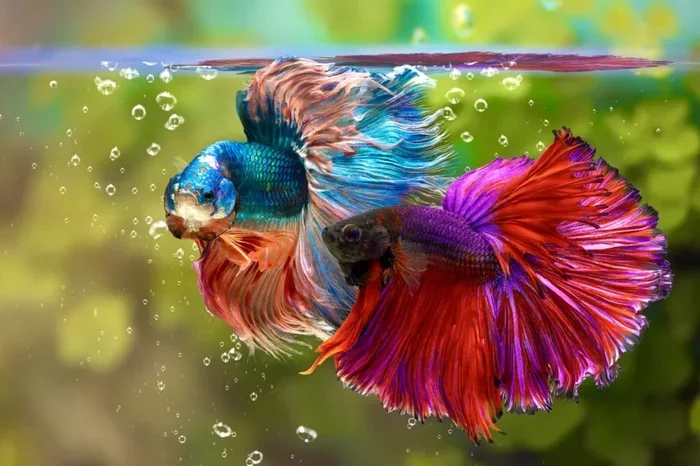
The male and female will perform a courtship dance. The male wraps his body around the female. She releases eggs, and he fertilizes them right away. This can happen several times over a few hours. The male collects each batch of eggs and places them in the bubble nest.
Watch carefully during this process. The female may look tired or pale afterward. Once she stops releasing eggs, remove her from the tank immediately. The male can become aggressive and may harm her.
Step 4: Caring for the Eggs
After spawning, the male takes over. He guards the bubble nest and the eggs. He will pick up any eggs that fall and place them back in the nest. Do not disturb the tank during this time.
The eggs usually hatch within 24 to 48 hours. The male continues to guard the fry for a few more days. During this time, do not feed the male. He will not eat while caring for the eggs. Remove him once the fry are free-swimming.
Raising Betta Fish Fry
Raising betta fry is the most challenging part. The babies are tiny and need very specific care. But with the right approach, you can raise healthy fish successfully.
First Week of Life
Newly hatched fry are too small to eat regular food. They feed on their yolk sac for the first 24 to 36 hours. After that, they need infusoria or liquid fry food. You can buy commercial infusoria or culture your own.
Feed the fry very small amounts several times a day. Overfeeding can dirty the water quickly. Clean water is critical for fry survival. Use a turkey baster to remove uneaten food and waste gently.
Feeding Growing Fry
After about one week, the fry are big enough for baby brine shrimp. This is the best food for growing betta fry. It is packed with protein and helps the fish develop strong bodies and colors.
You can also offer microworms and vinegar eels as alternatives. Rotate between different foods to ensure balanced nutrition. Feeding betta fry properly during the first month makes a huge difference in their growth and health.
Water Maintenance for Fry
Fry are very sensitive to water changes. Do not do large water changes. Instead, remove 10 to 15 percent of the water every day. Replace it with fresh, dechlorinated water at the same temperature.
Keep the tank in a quiet place. Fry get stressed easily, and stress can lead to disease. If you notice any dead fry, remove them immediately to keep the water clean.
When to Separate Fry by Size
As the fry grow, some will be bigger than others. Larger fry may bully or eat smaller ones. After about four weeks, separate them by size into different containers. This ensures all the fish get enough food and space to grow.
By two months old, the fry start to show their colors. You can begin to identify males and females. Males will develop longer fins and more vibrant colors. Females will be smaller with shorter fins.
Common Mistakes to Avoid
Even experienced breeders make mistakes. Knowing what to avoid saves time and fish. Here are the most common errors people make when breeding bettas at home.
- Skipping conditioning: Unconditioned fish produce fewer eggs and may not breed at all.
- Using too large a tank: A huge tank makes it hard for the male to find the eggs. Stick to 10 gallons or smaller.
- Leaving the female too long: The male can hurt the female after spawning. Remove her as soon as eggs are done.
- Overfeeding the fry: Excess food fouls the water fast. Feed small amounts multiple times daily.
- Ignoring water quality: Dirty water causes disease in both adults and fry. Test the water regularly.
- Breeding too young or too old fish: Fish under 4 months or over 12 months breed poorly.
Expert Tips for Better Breeding Success
Breeding betta fish at home gets easier with experience. Here are some expert tips that help improve your success rate.
Use a mirror trick. Placing a mirror near the breeding tank can trigger the male to build a bubble nest. The reflection tricks him into thinking another male is nearby. This natural response often jumpstarts the breeding process.
Keep a log. Write down the dates you introduce the pair, when the nest appears, and when the fry hatch. Tracking these details helps you improve your process over time. You will learn what works best in your specific setup.
Be patient. Not every attempt will be successful. Sometimes the fish need time to adjust. Try again if the first attempt does not work. Each attempt teaches you something new about your fish and their behavior.
Research betta fish colors if you want specific color outcomes. Breeding for particular colors takes planning and knowledge of genetics. Start with healthy fish first, and then experiment with color lines as you gain confidence.
Final Thoughts
Breeding betta fish at home is a fulfilling journey. It requires the right setup, healthy fish, and consistent care. From choosing the breeding pair to raising the fry, each step matters. Follow the tips in this guide and you will give yourself the best chance of success.
Remember that every breeding experience teaches you something new. Do not get discouraged if the first attempt is not perfect. With patience and attention to detail, you will see healthy fry growing in your tank. Start small, learn as you go, and enjoy the process of bringing new life into your home aquarium.
For more detailed information on the full breeding process, check out our guide on how to breed betta fish. You can also learn how to breed betta fish easily with our simplified methods for beginners. If you are curious about breeding for specific traits, explore our article on how to breed betta fish colors to understand the genetics behind beautiful color patterns.
Frequently Asked Questions
What is the best age to breed betta fish?
The ideal breeding age for betta fish is between 4 and 12 months. Fish in this range are healthy, mature, and most likely to breed successfully. Avoid breeding fish that are too young or too old, as this reduces the chances of a successful spawn.
How long does it take for betta fish eggs to hatch?
Betta fish eggs typically hatch within 24 to 48 hours after spawning. The male guards the bubble nest during this time. Once hatched, the fry remain in the nest for another 2 to 3 days before becoming free-swimming.
How many eggs does a female betta fish lay?
A female betta fish can lay anywhere from 30 to 100 eggs per spawning session. The exact number depends on her age, health, and conditioning. Well-fed, healthy females tend to produce more eggs during each spawn.
Do I need a separate tank for breeding betta fish?
Yes, you should always use a separate breeding tank. The male betta can become aggressive during breeding and may harm the female. A dedicated 10-gallon tank with proper setup gives the pair the best chance of success and keeps all fish safe.
What should I feed betta fry?
Start by feeding betta fry infusoria or liquid fry food for the first week. After that, introduce baby brine shrimp, which is the best food for growing fry. Feed small amounts several times a day to support their rapid growth.
Why is my male betta not building a bubble nest?
A male betta may not build a bubble nest if the water conditions are not right. Check the temperature, pH, and water quality first. Sometimes a small water change or adding a gentle current encourages nest building. Patience and stable conditions usually solve this problem.
=== CONCLUSION ===
Breeding betta fish at home is an exciting and educational experience. By following the steps in this guide, you set yourself up for success. Choose healthy fish, prepare the right tank, condition your pair well, and care for the fry with patience. Each step builds on the last, and soon you will see tiny fry swimming in your tank.
Start with the basics and grow your skills over time. The more you practice, the better your results will be. Enjoy the journey of raising beautiful betta fish from eggs to adults. Happy breeding!