How Often Do I Feed My Betta Fish
The key to a healthy betta lies in a simple but often misunderstood routine: feeding small portions once or twice daily. Overfeeding is the single most common mistake new owners make, leading to serious health issues like constipation, swim bladder disease, and severely polluted water. This guide provides a clear, science-backed breakdown of exactly how much and how often to feed your betta, tailored to its age, activity, and environment, ensuring a long, vibrant life.
So, you’ve brought home a dazzling betta fish, with its flowing fins and vibrant colors. You’ve set up a beautiful tank, complete with a heater and gentle filter. You’re ready to be the best betta parent ever. Then, the question inevitably pops into your head, often followed by a frantic Google search: how often do I feed my betta fish? It seems like a simple question, but the answer is packed with nuance, and getting it wrong is the fastest track to a sick fish and a dirty tank. Welcome to the most critical—and most commonly botched—aspect of betta care.
The world of betta feeding is a landscape filled with well-intentioned myths. “Feed them as much as they’ll eat in five minutes!” “They need a big meal to be happy!” “More food means more growth!” These ideas are not just incorrect; they are dangerous. Betta fish, or Siamese fighting fish, are adapted to a lifestyle of opportunistic eating in shallow, sometimes nutrient-poor waters. Their metabolism is not built for lavish, multiple-course meals. In this comprehensive guide, we will dismantle the myths and build a clear, actionable, and science-backed feeding protocol. We’ll dive deep into frequency, portion size, food quality, and the profound connection between what you put in your betta’s mouth and the water that surrounds it. By the end, you will know exactly how often to feed your betta fish and why.
Key Takeaways
- Feed adult bettas once or twice daily, skipping one day per week. This mimics their natural foraging habits and prevents digestive issues.
- A betta’s stomach is roughly the size of its eye. Use this visual guide for portion control—any more is overfeeding.
- High-quality pellets or frozen foods should form the diet’s base. Avoid fillers like wheat or soy in cheap foods and limit treats like bloodworms.
- Fasting for 24 hours once a week is highly beneficial. It clears the digestive system, prevents constipation, and gives internal organs a rest.
- Your feeding schedule directly impacts water quality. Uneaten food decays instantly, creating toxic ammonia and nitrites that harm your fish.
- Observe your betta’s body shape and activity level. A slightly rounded, not obese, belly and active swimming indicate proper feeding.
- Consistency and routine are crucial. Feed at the same times each day in the same location to reduce stress and build a healthy habit.
📑 Table of Contents
- Why Feeding Frequency and Portion Size Are Non-Negotiable
- The Golden Rule: How Often Should You Feed Your Betta?
- Mastering Portion Size: The “Eye-Size” Method and Beyond
- Choosing the Right Foods: Quality Over Quantity
- Common Feeding Mistakes That Harm Your Betta
- Creating and Maintaining Your Betta’s Feeding Schedule
- Conclusion: Feeding as the Foundation of Care
Why Feeding Frequency and Portion Size Are Non-Negotiable
Before we get to the “how many times,” we must understand the “why.” Proper feeding isn’t about satisfying hunger; it’s about maintaining a delicate internal and external ecosystem. Two primary systems suffer when feeding is wrong: your betta’s digestive system and its aquatic environment.
The Delicate Digestive System of a Carnivore
Let’s clear up a major misconception: bettas are carnivores. Their wild diet consists primarily of insects, insect larvae (like mosquito wrigglers), and tiny crustaceans. They are not plant-eaters. Their short, straight digestive tracts are designed for processing protein and fat, not complex carbohydrates and plant matter. This anatomical fact makes them exceptionally prone to two conditions:
- Constipation: A diet high in fillers (common in cheap pellets) or simply too much food at once leads to impacted intestines. A constipated betta will often appear bloated, lethargic, and may develop swim bladder disorder because the swollen gut presses against this vital organ.
- Swim Bladder Disease (SBD): This isn’t a single disease but a symptom. The swim bladder is a gas-filled organ that helps the fish control buoyancy. Overfeeding, constipation, or bacterial infection can cause it to become inflamed or displaced, leading to the classic symptoms: swimming upside down, floating to the top uncontrollably, or sinking and struggling to rise. It’s a direct and severe consequence of poor feeding practices.
Your Tank is a Closed System: The Water Quality Domino Effect
This is the point that shocks new owners. Your aquarium is not a river or a lake. It is a sealed, finite volume of water. Every molecule of food that is not eaten by your betta remains in that water. Fish waste is only part of the pollution equation. Uneaten food is the number one cause of poor water quality in a betta tank.
As that leftover pellet or bloodworm decays, it is broken down by bacteria in a process that consumes vast amounts of oxygen and produces toxic ammonia. Ammonia burns your betta’s gills and damages its internal organs. It then converts to nitrite, which is even more poisonous, and finally to nitrate, which is less toxic but still causes stress and algae blooms at high levels. A single overfeeding can set off a chain reaction, spiking ammonia and nitrite levels within hours, potentially leading to “new tank syndrome” or, in an established tank, a dangerous mini-cycle. Therefore, the question of how often to feed is intrinsically linked to the question of how often to do water changes. Feed less, pollute less, and your maintenance schedule becomes infinitely easier.
The Golden Rule: How Often Should You Feed Your Betta?
Now for the core answer, which has a beautiful simplicity to it: Feed your adult betta fish once or twice a day, and implement a 24-hour fasting period once per week. Let’s break down the variables that might tweak this rule.
Visual guide about How Often Do I Feed My Betta Fish
Image source: cafishvet.com
Age and Life Stage Considerations
The “once or twice” rule primarily applies to adult bettas (over 6-8 months old). Younger bettas—fry (newly hatched) and juveniles—are growing at an incredible rate and have much higher metabolic demands.
- Fry (0-2 months): They need to be fed multiple times a day, often 3-5 small feedings. Their food is typically infusoria, microworms, or newly hatched brine shrimp, available for them 24/7 in a dedicated nursery tank.
- Juveniles (2-6 months): As they grow, you can reduce to 2-3 feedings per day of appropriately sized high-protein foods. They are still building body mass and fin development.
- Adults (6+ months): Growth slows dramatically. Their energy needs stabilize. This is when you transition to the standard once or twice daily routine with a weekly fast.
Activity Level and Tank Environment
Is your betta in a spacious, planted 10-gallon tank with a gentle filter and a variety of hiding spots? Or is it in a small, unheated “betta bowl” on a desk? The environment drastically impacts energy expenditure.
- High Activity / Complex Tank: A betta that actively explores, flares at its reflection, and has room to swim will burn more calories. For these individuals, feeding twice a day (with a slightly larger morning portion) can be appropriate. Always watch for signs of leftover food.
- Low Activity / Small Tank: A betta in a small, bare tank has nowhere to go and nothing to do. Its metabolism slows. For these fish, once-daily feeding is often sufficient and safer. The risk of overfeeding and water pollution is significantly higher in small volumes of water.
Temperature is a critical factor you cannot ignore. Betta fish are tropical fish. Their ideal water temperature is 78-80°F (25.5-26.5°C). Their metabolism is directly tied to this temperature. If the water is too cold (below 76°F), their digestion slows to a crawl. Feeding a betta in cold water is like asking a human to digest a steak while running a marathon in the arctic—it leads to severe constipation and SBD. Always ensure your heater is functioning properly before establishing a feeding schedule. A cold betta should not be fed regularly until its temperature is corrected.
The Indispensable Weekly Fast
Why skip a day? This is not deprivation; it is preventative medicine. In the wild, a betta might go a day or two without a successful hunt. A 24-hour fast once a week (many choose Sunday) provides three major benefits:
- Digestive Reset: It allows the entire gastrointestinal tract to fully empty, sweeping out any potential build-up and dramatically reducing the risk of constipation and the subsequent swim bladder issues.
- Internal Organ Rest: The liver and kidneys, responsible for processing food and filtering toxins, get a vital break from constant work.
- Appetite Stimulation: A hungry betta is a motivated betta. It will be more enthusiastic about its food, making feeding time more interactive and allowing you to better monitor its health. A betta that turns down food on a fasting day is a clear sign something is wrong and warrants close observation.
This practice is endorsed by veteran betta keepers and ichthyologists alike. It is a cornerstone of a robust health regimen.
Mastering Portion Size: The “Eye-Size” Method and Beyond
Knowing how often is only half the battle. The other half is knowing how much. This is where the infamous “eye-size” rule comes in, and it is your most powerful tool.
Visual guide about How Often Do I Feed My Betta Fish
Image source: fishlab.com
The Visual Guide: Your Betta’s Eye is a Measuring Cup
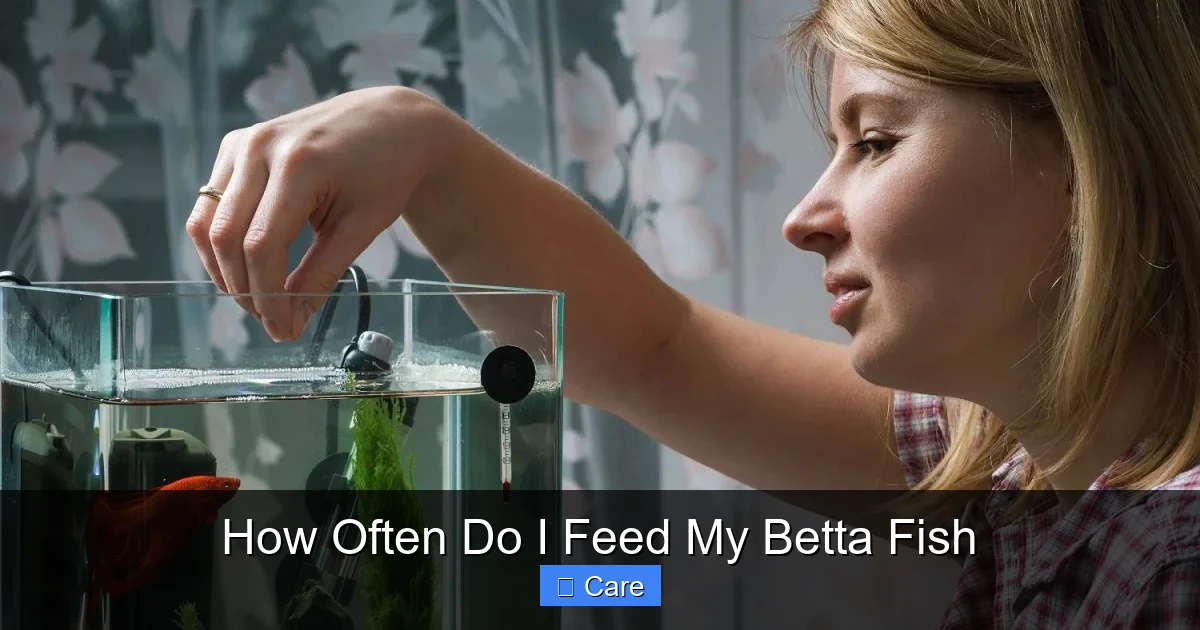
An adult betta’s stomach, when empty, is about the size of its eye. This is not an exaggeration; it’s biological fact. Therefore, the maximum amount of food you should offer at any single feeding is an amount that, when combined, is roughly the size of its eye. For most high-quality betta pellets, this equates to 2-3 pellets per feeding.
Practical Tip: Use a fine-tipped tweezers or your thumb and forefinger to pinch out exactly 2-3 pellets. Place them in the water. If you’re using a food container with a lid, you can tap out a small pile and then use a pipette or spoon to measure. The goal is precision, not guesswork. For frozen or live foods like daphnia or brine shrimp, a small pinch—about the size of a pea—is sufficient.
The 3-Second Rule: Observation is Mandatory
Never, ever dump food into the tank and walk away. You must observe the feeding. Here is the protocol:
- Add the pre-measured portion (2-3 pellets or equivalent).
- Watch your betta consume them. Most healthy bettas will eat them within 10-15 seconds.
- If any food hits the bottom and is ignored after 3-5 seconds, use a net or turkey baster to immediately remove it. Do not assume it will be eaten later. It won’t. It is now pollution.
This “3-second rule” is the single most effective practice for maintaining pristine water quality. It requires you to be present and attentive during feeding, which in itself helps you bond with and monitor your fish.
Adjusting Portion Based on Response
Is your betta a ravenous eater who clears 3 pellets in 2 seconds and still looks hungry? You might be able to offer a tiny additional portion (one more pellet) at that same feeding, but never double the amount. More likely, a constantly hungry betta is either bored, stressed, or not being fed a sufficiently nutritious diet. High-quality, protein-rich foods are more satiating.
Conversely, if your betta consistently ignores 2 pellets, reduce to 1 pellet per feeding. A loss of appetite is one of the first signs of illness or poor water conditions. Use feeding response as a daily health diagnostic tool.
Choosing the Right Foods: Quality Over Quantity
What you feed is just as important as how much. The betta food market is saturated with products, but not all are created equal. Your goal is to mimic a wild diet: high in animal protein, low in carbohydrates and fillers.
Visual guide about How Often Do I Feed My Betta Fish
Image source: thewittyfish.com
Staple Diet: Pellets and Frozen Foods
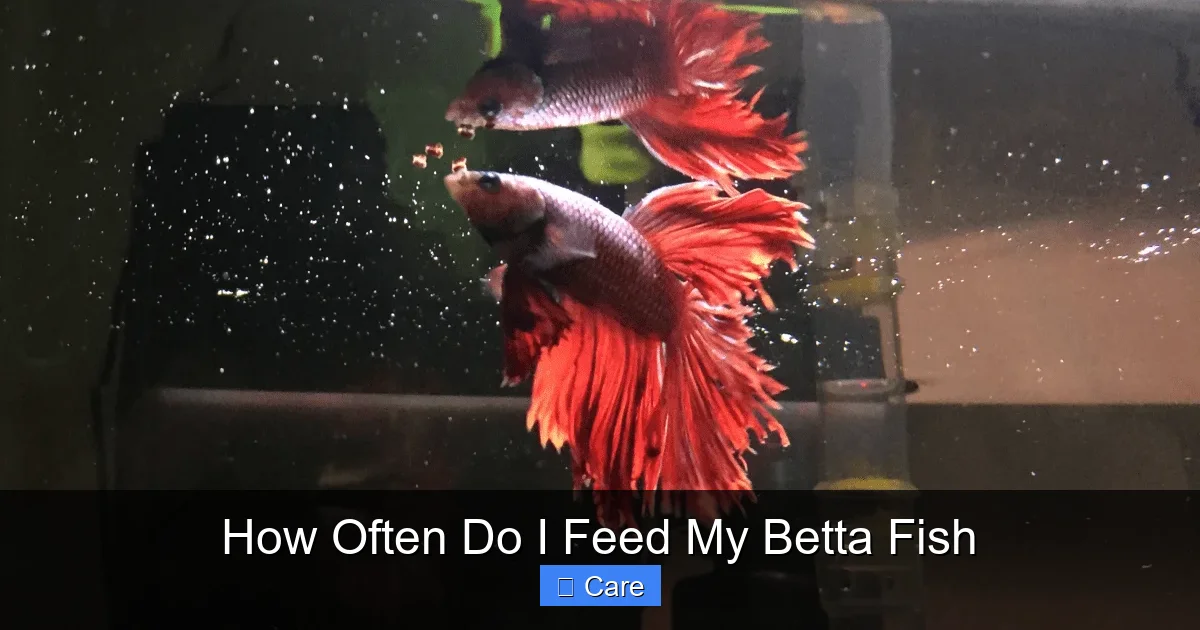
High-Quality Betta Pellets: These should be your daily staple. Read the ingredient label. The first 3-5 ingredients should be specific animal proteins: whole fish meal, salmon meal, shrimp meal, squid meal, krill meal. Avoid pellets where the first ingredients are “wheat flour,” “soybean meal,” “corn gluten meal,” or “brewer’s yeast.” These are cheap fillers that expand in the betta’s gut, causing constipation. Brands like New Life Spectrum Opti-Betta, Hikari Betta Bio-Gold, and Fluval Bug Bites are excellent, protein-forward choices.
Frozen Foods: These are fantastic for dietary variety and are often more palatable. Good options include frozen brine shrimp, daphnia, mysis shrimp, and bloodworms. Crucially, always rinse frozen foods in a cup of tank water before feeding to remove any liquid preservatives that can foul your water. Thaw them in a separate container first. Feed these as a supplement 1-2 times a week, not as a daily staple, as they can be rich.
Live Foods: The Ultimate Treat (With Caution)
Live foods like microworms, grindal worms, or live daphnia are the gold standard for stimulating a betta’s natural hunting instincts. They are nutritionally excellent. However, they carry significant risks: they can introduce parasites or diseases into your pristine tank if not sourced from a trusted, clean culture. For most hobbyists, high-quality frozen foods are a safer and nearly as beneficial alternative.
Foods to Avoid or Limit Severely
- Generic “Tropical Fish Flakes”: These are almost always plant-protein heavy and will float, which bettas often ignore. They are a waste of money and pollute the water.
- Bettas are NOT Vegetarians: Do not feed peas, zucchini, or other vegetables as a primary food. They cannot digest plant matter efficiently. A tiny, cooked pea might be used as a last-resort laxative for severe constipation, but it is not a dietary staple.
- Human Food: Absolutely no bread, crackers, or meat scraps. The salts, oils, and seasonings are toxic.
- Freeze-Dried Foods (as a sole diet): While convenient, they are often less nutritious and can cause digestive issues if not rehydrated. If you use them, always soak them in tank water for 5-10 minutes first to prevent them from expanding in the betta’s stomach.
Common Feeding Mistakes That Harm Your Betta
Even with the best intentions, pitfalls await. Here are the most frequent and damaging errors.
The “All They Can Eat” Myth
This is the #1 mistake. A betta’s instinct is to eat whenever food is available, a trait from the wild where food scarcity is real. In captivity, this instinct becomes a gluttony that poisons them. That frantic, food-seeking behavior is not a sign of hunger; it is a sign of a natural foraging drive. You must be the rational caregiver, not the passive provider of an endless buffet.
Ignoring Leftovers: The Silent Tank Killer
We’ve stressed this, but it bears repeating. That single pellet that sinks into the substrate is not harmless. It will rot. It will fuel a bacterial bloom. It will spike your ammonia. The “clean-up crew” of shrimp or snails will not solve this problem; they just add more bioload. You are the clean-up crew. Use a net or siphon. Your water parameters will thank you.
Feeding the Wrong Type of Food at the Wrong Time
Feeding a large, fatty food like a bloodworm right before your weekly water change is asking for trouble. The digestion process produces waste. Combine that with the physical disturbance of a water change, and you stress your fish unnecessarily. Feed lighter meals (pellets) on water change days, and save richer treats like frozen mysis for days when the tank is stable.
Inconsistent Feeding Times
Bettas are creatures of habit. An unpredictable feeding schedule causes stress. Stress suppresses the immune system, making your fish susceptible to disease. Pick a time—perhaps 8 AM and 5 PM if feeding twice—and stick to it. Your betta will learn to anticipate it, reducing frantic swimming and anxiety.
Creating and Maintaining Your Betta’s Feeding Schedule
Let’s synthesize all this information into a practical, week-long plan you can implement tomorrow.
A Sample Weekly Schedule
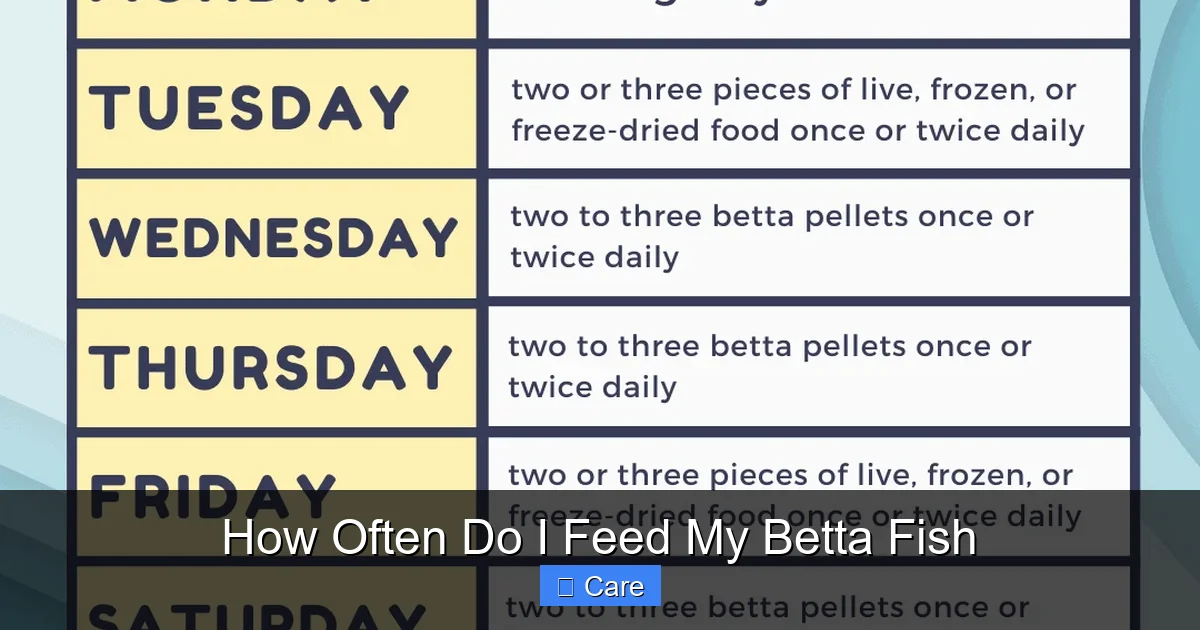
Monday, Wednesday, Friday, Saturday: Feed 2-3 high-quality pellets in the morning. Observe consumption, remove any leftovers. Optional: Offer a small rinsed pinch of frozen daphnia or brine shrimp in the evening (reduce pellet count to 2 if you do this).
Tuesday, Thursday: Feed 2-3 high-quality pellets once in the morning. No evening feeding.
Sunday (Fasting Day): No food. Provide normal lighting and tank conditions. Observe your betta. It may be more active, searching for food. This is normal and beneficial.
Special Considerations for Sick or Stressed Fish
If your betta is showing signs of illness (clamped fins, lethargy, loss of appetite) or has just been introduced to a new tank (new tank syndrome), its appetite may plummet. Do not force-feed. Forcing food into a stressed or sick fish can cause aspiration (food entering the gills) and is extremely traumatic. Instead, ensure pristine water quality (daily tests and water changes if needed), maintain optimal temperature, and offer a tiny amount of its favorite food (e.g., a single frozen bloodworm) after a few days. If it refuses for more than 3-4 days, consult a vet or experienced aquarist.
The Role of Supplements
A high-quality staple pellet diet should be complete. However, occasional supplementation can boost immunity and color. A product like Seachem ImmuneGuard or a small amount of Bettafix (which contains Melafix) can be used as a preventative soak for food 1-2 times a month. For enhancing color, foods containing natural color enhancers like astaxanthin and spirulina (in small amounts) are beneficial. Never rely on supplements to fix a poor base diet.
Conclusion: Feeding as the Foundation of Care
So, how often do you feed your betta fish? The definitive, expert-backed answer is: once or twice daily for adults, with a mandatory 24-hour fast once a week, using no more than 2-3 eye-sized pellets per feeding. This protocol is not arbitrary; it is a direct application of the betta’s natural biology and the physics of a closed aquatic system.
Mastering this simple routine elevates you from a casual pet owner to a conscientious caretaker. You will see the results in your betta’s vivid colors, energetic personality, and flowing fins. You will see it in the clarity of your water and the reduced frequency of your maintenance tasks. You will have preemptively avoided the most common and devastating health problems: constipation, swim bladder disease, and water-quality-induced stress.
Remember, your betta’s health is a daily conversation. Every meal is a sentence in that conversation. Choose your words wisely: small, high-quality, and infrequent. Listen to the response—a hearty appetite, active swimming, and a clean tank. That is the sound of a thriving life. Now, go measure out those two pellets. Your betta is waiting.
Frequently Asked Questions
Can I skip feeding my betta for two days if I’m going on a short trip?
Yes, absolutely. A healthy adult betta can easily go 5-7 days without food. In fact, this extended fast can be beneficial, similar to their weekly fast. Do not have someone overfeed your tank in your absence; that is far riskier than a temporary fast. Ensure the water is clean before you leave.
What is the absolute best food for a betta fish?
There is no single “best” food, but the best approach is a high-quality, protein-forward pellet as a daily staple (like New Life Spectrum or Hikari Bio-Gold), supplemented 1-2 times per week with a rinsed, frozen food like daphnia or brine shrimp for variety and fiber.
How can I tell if I’m overfeeding my betta?
The most obvious sign is visible, undigested waste (long, stringy feces) or a consistently bloated, pinecone-like abdomen. Other indicators include lethargy, clamped fins, and cloudy water that gets dirty quickly between changes. If in doubt, underfeed slightly—it is far safer than overfeeding.
Is it okay to feed my betta bloodworms every day?
No. Bloodworms (whether frozen or live) are a high-fat, low-fiber treat. Feeding them daily will almost certainly lead to constipation, obesity, and swim bladder issues. Think of them as a weekly dessert, not a main course.
Why is my betta spitting out its pellets?
This is very common and usually not a sign of illness. Bettas often “taste test” new foods. It can also mean the pellets are too large for its mouth, or it simply prefers a different food. Try soaking the pellets for a minute to soften them, or switch to a smaller pellet brand. If spitting persists with all foods, monitor for other signs of illness.
My betta is very old or has a chronic illness. Should I still fast it?
Use caution. For an elderly or chronically ill betta with a very low metabolism, a full 24-hour fast might be too much stress. Instead, feed a very small portion (1 tiny pellet or a few frozen daphnia) once every other day. The priority for a sick fish is pristine water quality and minimal stress, which includes not adding excess food to the tank. Consult a veterinarian specializing in fish for specific cases.