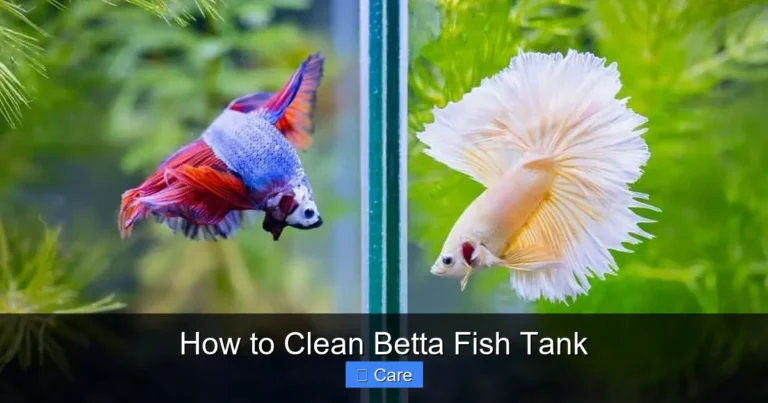
How Often Should I Feed My Betta Fish
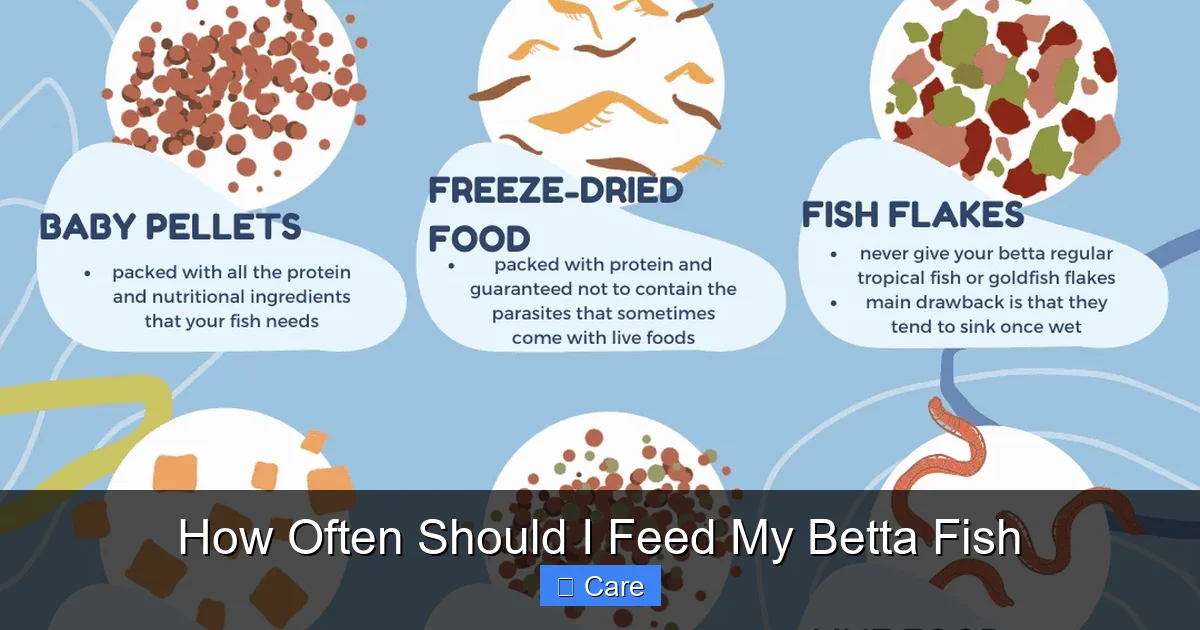
Feeding your betta fish correctly is simple but crucial. The general rule is to feed them once or twice a day, offering only what they can consume in 2-3 minutes—typically 2-3 pellets or a small pinch of frozen food. Overfeeding is the #1 mistake, leading to serious health and water quality issues. Always prioritize high-protein, betta-specific foods and observe your individual fish’s appetite and behavior to fine-tune their diet.
Key Takeaways
- Feed 1-2 Times Daily: Adult bettas thrive on one to two small meals per day. This routine supports digestion and prevents metabolic stress.
- Portion Size is Tiny: A betta’s stomach is about the size of its eye. Feed 2-3 high-quality pellets or a pinch of frozen food per meal—no more.
- High-Protein Diet is Non-Negotiable: Bettas are obligate carnivores. Their diet must be primarily animal-based protein from specialized pellets, frozen, or live foods.
- Observe, Don’t Just Dispense: Watch your betta eat. If food sinks uneaten, you’ve overfed. Adjust portions based on their actual consumption within 2-3 minutes.
- Fasting is Beneficial: Skipping one meal every 7-10 days gives their digestive system a rest and can help prevent constipation.
- Water Quality Directly Links to Feeding: Excess food decays into toxic ammonia. Precise feeding is the most important daily action you take for your tank’s water chemistry.
- Life Stage Matters: Young betta fry need 3-4 tiny meals daily, while seniors may only eat well once a day. Adjust frequency accordingly.
📑 Table of Contents
- The Critical Importance of Proper Feeding for Your Betta
- The Golden Rule: How Often Should You Feed Your Betta Fish?
- Choosing the Right Foods for Your Betta: Quality Dictates Quantity
- Mastering Portion Control: How Much is Enough?
- Common Feeding Mistakes (And How to Avoid Them)
- Special Considerations: Fasting, Breeding, and Seasonal Adjustments
- Conclusion: The Art of Observation
The Critical Importance of Proper Feeding for Your Betta
So, you’ve brought home that stunning, flowing-finned betta fish. You’ve got the perfect tank, the heater, the filter, and maybe even a beautiful plant or two. But here’s the thing that can make or break your betta’s health and vibrancy: what and how often you feed it. The question “how often should I feed my betta fish?” isn’t just a matter of routine; it’s the cornerstone of responsible betta care. Getting it wrong is the single most common mistake new owners make, and its consequences ripple through every aspect of your fish’s life—from the clarity of your tank water to the brightness of its colors and the length of its lifespan.
Bettas, with their bold personalities and jewel-like appearance, are carnivores by nature. In the shallow, warm rice paddies and streams of Southeast Asia, they are micro-predators, snacking on insects, larvae, and tiny crustaceans. This evolutionary fact is your North Star when feeding them. They are not vegetarians; their digestive systems are short and acidic, designed for quick bursts of protein, not constant grazing on plant matter. This biological truth immediately answers part of our question: their food must be high in animal protein, and their feeding schedule must mimic the sporadic, prey-rich meals they would find in the wild. Overfeeding doesn’t just make your betta fat; it pollutes the water, stresses their organs, and can lead to fatal conditions like swim bladder disorder and dropsy. Underfeeding, while less common with commercial pellets, can lead to malnutrition and faded colors. Finding the precise, Goldilocks-zone feeding schedule is an act of observation and understanding, not just following a clock.
Why Feeding Frequency Impacts Everything
Let’s connect the dots. Every morsel of food that enters your betta’s tank either gets eaten or doesn’t. If it gets eaten, it provides energy and nutrients. If it doesn’t, it begins to decompose almost immediately in your warm, filtered water. That decomposing food is a feast for bacteria, which consume oxygen and produce ammonia—the first and most toxic stage of the nitrogen cycle. A single overfed meal can spike ammonia levels, stressing your betta’s gills and compromising its immune system. Furthermore, a constantly full digestive tract can press against the swim bladder, causing the dreaded “swim bladder disease” where your fish floats upside down or sinks and can’t swim properly. This is almost always diet-related. Therefore, how often you feed is directly proportional to how clean and stable your tank environment remains. It’s a daily, direct action you take to control water quality.
The Golden Rule: How Often Should You Feed Your Betta Fish?
Here is the direct, actionable answer you’ve been looking for: For a healthy adult betta fish (over 6 months old), the ideal feeding frequency is once per day. Many experienced keepers successfully feed a small meal twice a day, but the single daily feeding is the safest, most foolproof method to prevent overfeeding and ensure proper digestion. This schedule respects their metabolism and gives their system a full 24 hours to process a meal completely before the next one arrives.
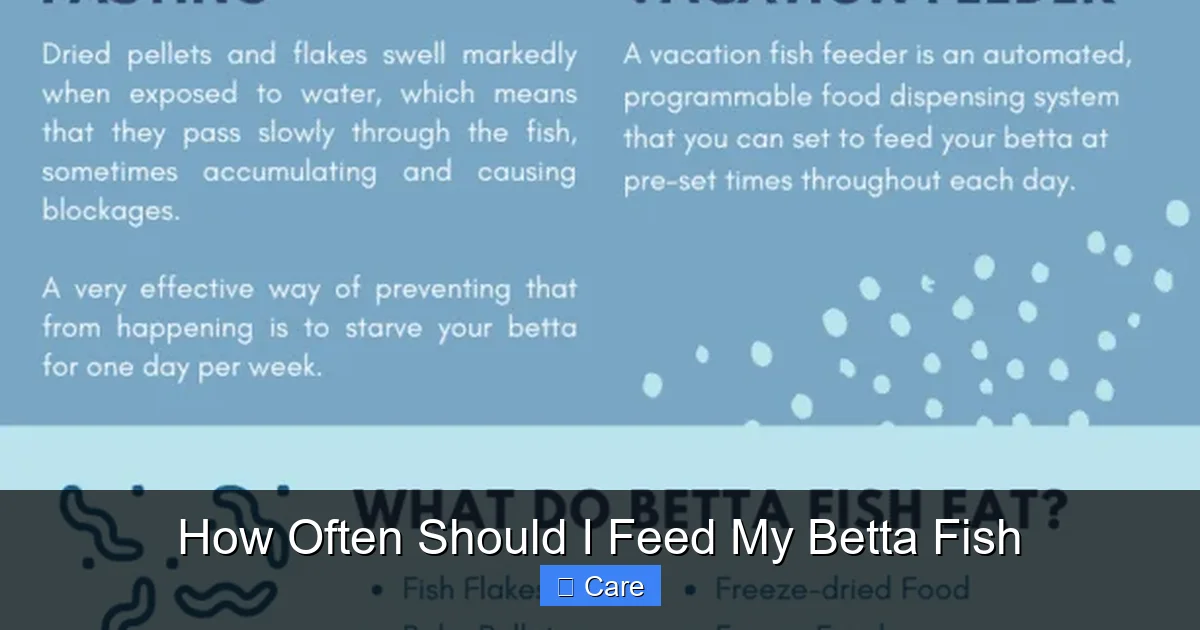
Visual guide about How Often Should I Feed My Betta Fish
Image source: tankarium.com
Think of it this way: in the wild, a betta might not find a substantial meal every single day. Their bodies are adapted to handle periods of fasting. A daily meal is more than sufficient. For younger bettas (fry and juveniles under 6 months), their metabolism is in overdrive as they grow. They require more frequent, smaller meals—typically 3 to 4 times per day—of appropriately sized food (like infusoria, baby brine shrimp, or crushed pellets). As they mature, you can gradually reduce this to the adult schedule. For senior bettas (over 3-4 years), their metabolism slows. Some may only eat enthusiastically once a day, so you might offer a meal every other day, carefully monitoring their body condition. The key is to observe your individual fish. Is it active and alert? Does it come to the front when you approach? Is its body streamlined, not bloated? These are signs your current frequency is working.
The “Once a Day” Philosophy: A Deeper Dive
The once-a-day rule champions simplicity and safety. It eliminates guesswork. You measure one small portion, you feed it, and you’re done. This consistency is less stressful for the fish than unpredictable multiple feedings. It also creates a reliable routine for you, the keeper, making it harder to accidentally overfeed out of a desire to “show love.” Remember, in your betta’s eyes, you appearing at the tank with food is a positive event. They may swim excitedly even if they aren’t truly hungry. Don’t be fooled by their enthusiasm; stick to the plan. If you do choose a twice-daily schedule, you must be exceptionally vigilant with portion control. Each of those two meals should be half the size of a single once-daily meal. Many owners who feed twice end up doubling their total daily food intake inadvertently.
Timing: Morning or Evening?
There is no scientific preference for morning versus evening feedings. The most important factor is consistency within your own daily schedule. Pick a time when you are reliably home and observant—perhaps first thing in the morning or right after you return from work. Feeding at the same general time each day helps your betta anticipate and be ready to eat, reducing stress. Avoid feeding right before lights out. Give them at least an hour of light after their last meal so they are active and you can confirm they’ve eaten everything. Food left to decay in the dark, when you’re not watching, is a surefire way to create water quality issues.
Choosing the Right Foods for Your Betta: Quality Dictates Quantity
You cannot determine how often to feed without first determining what you are feeding. The quality and type of food directly influence how much nutritional value your betta gets from that small portion. A high-protein, nutrient-dense pellet or frozen food means your betta gets what it needs from 2-3 pieces. A low-quality, filler-heavy food might require a larger volume to meet nutritional needs, which is dangerous for portion control. Your betta’s diet should be built on a foundation of specialized betta pellets or flakes, supplemented with variety.
Visual guide about How Often Should I Feed My Betta Fish
Image source: tankarium.com
Staple Foods: Pellets and Flakes
High-quality betta pellets are your best daily staple. Look for brands where the first three ingredients are whole protein sources like “whole salmon,” “krill,” “brine shrimp,” or “bloodworms.” Avoid pellets with “wheat flour,” “soybean meal,” or “potato protein” as primary ingredients. These are fillers with little nutritional value for a carnivore. Pellets are preferred over flakes for two key reasons: they sink slowly, allowing your betta to grab them at the surface (their natural feeding zone), and they are easier to portion accurately. A “pinch” of flakes is hard to judge and often leads to overfeeding. Choose a pellet size that is no larger than the size of your betta’s eye.
The Power of Frozen and Live Foods
This is where you truly mimic a wild diet and provide essential conditioning. Frozen foods like daphnia, bloodworms, and brine shrimp are incredible. They are hygienic (free from parasites that live foods can carry), nutrient-rich, and you can portion them perfectly by simply breaking off a tiny chunk. Offer a small piece of frozen food 1-2 times per week in place of a pellet meal. It provides variety, stimulates natural hunting behavior, and is often more palatable for picky eaters. Live foods are the ultimate treat but carry a higher risk of introducing disease or parasites to your tank. If you use them, source from a reputable supplier and use them sparingly.
What to AVOID
- Standard Tropical Fish Flakes: These are almost always plant-protein based and will not meet a betta’s needs.
- Bread, Peas, or Human Food: Bettas cannot digest carbohydrates. These foods cause severe constipation and digestive blockage.
- Too Many “Betta Bites” or Color-Enhancing Pellets: While fine occasionally, these are often not a complete diet and can contain excessive fat or dyes.
- Earthworms or Large Insects: These are too big and can cause choking or internal injury. Stick to foods sized for their tiny mouths.
Mastering Portion Control: How Much is Enough?
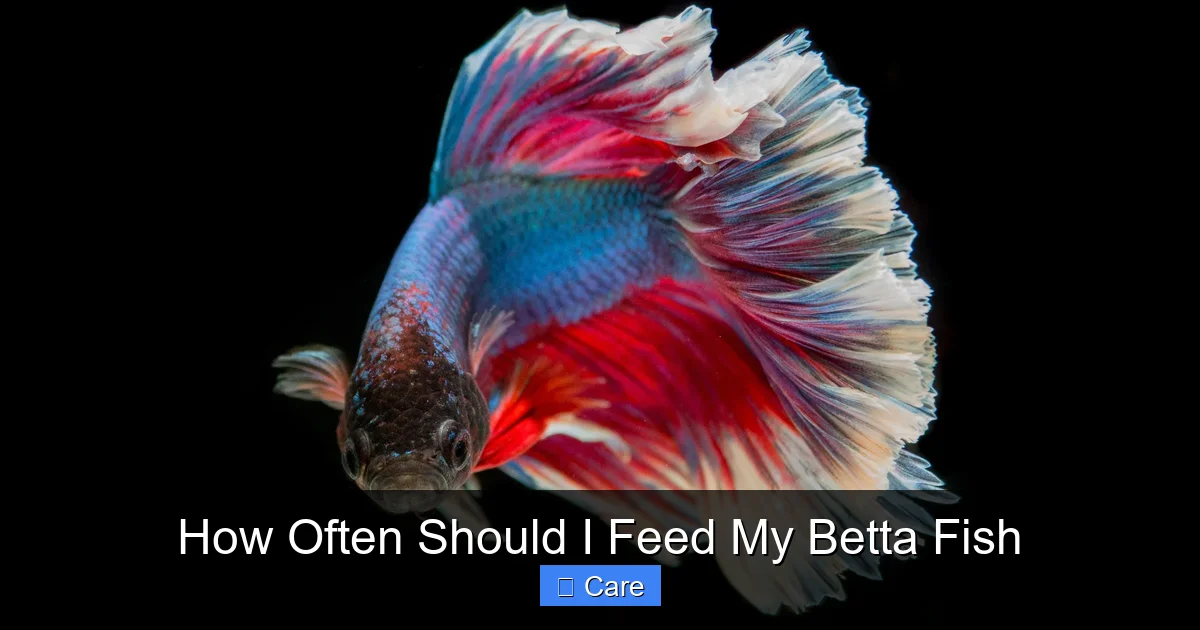
We’ve established the “how often” (once or twice daily). Now, the “how much.” This is the other half of the equation and is arguably more important. The universal visual cue is this: a betta’s stomach is approximately the size of its eye. When you look at your fish, that’s the absolute maximum volume of food it should have in its belly at any one time. For most adult bettas, this translates to 2-3 high-quality pellets or a small pinch of frozen food. If you’re using a food that swells in water (like some pellets), err on the side of less, as the food will expand inside their digestive tract.
Visual guide about How Often Should I Feed My Betta Fish
Image source: yoyipet.com
The 2-3 Minute Rule
Here is your practical, foolproof method: Drop the measured portion into the tank. Set a timer for 2-3 minutes. If your betta has consumed every single morsel by the time the timer goes off, the portion was perfect. If there is food left floating or sinking, you have overfed. That excess must be immediately netted out. This rule is non-negotiable. It turns feeding from guesswork into a measurable science. It also trains you to understand your specific betta’s appetite. Some days they might be ravenous and eat it all in 90 seconds. Other days, they might be slower. Always start with the base portion of 2-3 pellets. If they finish quickly and are still actively hunting, you can offer one more pellet. But never start with a large pile and hope they eat it all.
Signs You’re Overfeeding (The Consequences)
Overfeeding is insidious. Its effects aren’t always immediately obvious on the fish but are catastrophic for the tank ecosystem. Look for these signs:
- Constipation: A swollen, pinecone-like appearance, especially near the vent. The fish may struggle to swim or float abnormally.
- Uneaten Food: Pellets or food particles collecting on the substrate, behind decorations, or clouding the water.
- Rapid Water Deterioration: Your tank gets cloudy or smelly very quickly after a water change.
- Fatty Liver/Organ Damage: Over time, a chronically overfed betta can develop internal organ failure. You might see a visibly fat, lethargic fish with clamped fins.
- Increased Waste: Long, stringy feces that are constant. Normal betta waste should be short and infrequent.
Signs You Might Be Underfeeding
This is rarer with modern pellet foods but can happen with very active, large bettas or if you’re overly cautious.
- Sunken Belly: A concave or hollow appearance behind the pectoral fins.
- Faded Colors: Lack of vibrancy due to nutritional deficiency.
- Constant Hunting Behavior: The fish is perpetually at the glass, searching for food, even shortly after a meal.
- Lethargy and Weakness: Lack of energy due to insufficient calorie intake.
If you suspect underfeeding, simply increase the portion by one pellet at a time for a few days and monitor for a healthy weight gain and normal activity.
Common Feeding Mistakes (And How to Avoid Them)
Even with the best intentions, pitfalls abound. Let’s navigate the most frequent errors betta owners make and how to sidestep them permanently.
Mistake 1: Feeding Too Often
This is the champion of all mistakes. The belief that “more food equals more love” is deadly for bettas. Their systems are not designed for constant grazing. Sticking rigidly to the 1-2 times per day rule is the cure. Use a calendar or reminder if you’re worried about forgetting—but once you see how clean your water stays and how healthy your fish is, you’ll stick to it.
Mistake 2: Ignoring Water Temperature
Betta metabolism is directly tied to water temperature. In cooler water (below 76°F/24°C), their digestion slows dramatically. Feeding them their full portion in a cold tank is a direct path to constipation and swim bladder issues. Always ensure your tank is consistently between 78-80°F (25.5-26.5°C) before feeding. If the heater is off or the temperature drops, skip the meal until it’s back to normal.
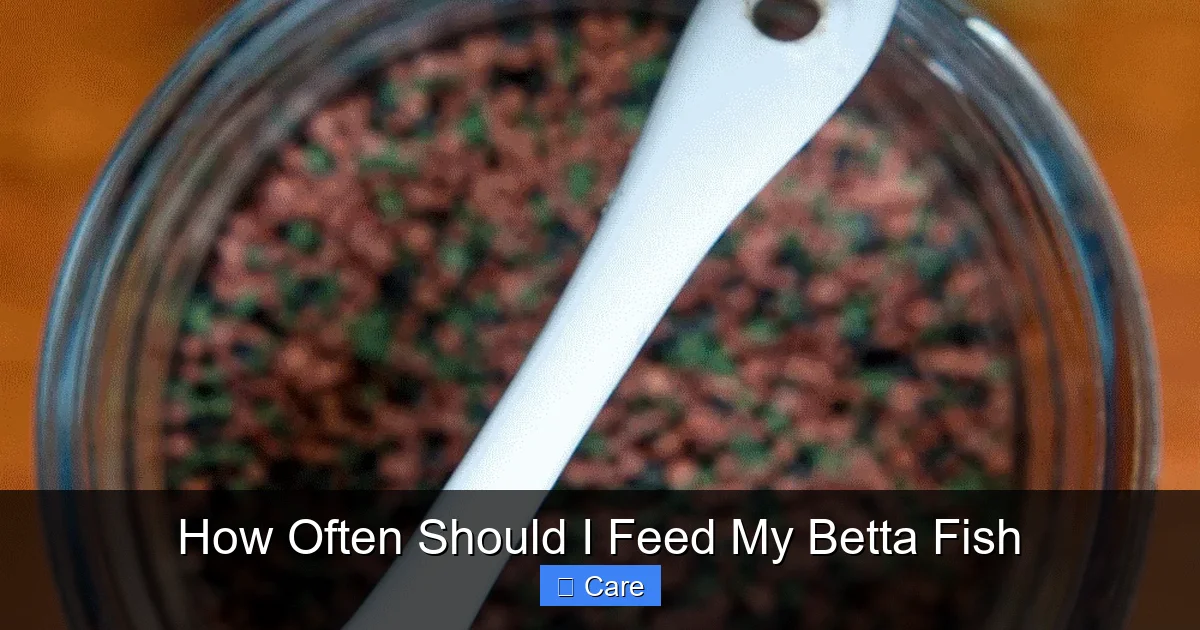
Mistake 3: Not Pre-Soaking Pellets
This is a debated but highly recommended practice. Dry pellets float and can trap air inside your betta’s digestive tract as they eat, leading to buoyancy problems. The simple solution is to pre-soak your measured pellets in a cup of tank water for 5-10 minutes before feeding. They will sink slowly, allowing your betta to eat them from the surface or mid-water without gulping air. It also prevents them from swelling in the fish’s stomach. For frozen foods, simply rinse the chunk in a net under water to remove excess liquid before dropping it in.
Mistake 4: Using the Wrong Size Food
Feeding a large betta with standard “betta bites” is fine. But a young betta or a species with a smaller mouth (like a half-moon with a more compact face) can struggle with big pellets. If your betta is spitting food out repeatedly, the piece is too big. Crush a pellet between your fingers or switch to a smaller pellet size. The food should fit easily in their mouth and be swallowed whole.
Mistake 5: Forgetting to Fast
Constipation is a leading cause of swim bladder disease. A simple, weekly or bi-weekly fast is a powerful preventative measure. Choose one day a week (like a Sunday) to simply not feed your betta. This gives its digestive tract a complete rest, clears out any residual blockages, and is completely natural. Your betta will be fine and will often be more enthusiastic at its next meal. This is not cruel; it’s a health practice.
Special Considerations: Fasting, Breeding, and Seasonal Adjustments
The basic rules are solid, but life happens. Here’s how to adapt your feeding schedule for special circumstances.
Fasting Before and After Travel
If you’re going away for a weekend, the safest approach is to do a thorough water change and feed a good meal the morning you leave. Do not use a “feeder block” or vacation food. These dissolve slowly, pollute the water, and your betta will likely gorge itself, causing major problems. A healthy adult betta can easily go 5-7 days without food. In fact, it’s beneficial. Upon your return, do not immediately offer a large meal. Offer a small portion the first day and resume normal feeding the next.
Feeding for Breeding (Conditioning)
If you are conditioning a betta pair for spawning, you will increase both the frequency and the quality of food. The goal is to pack both fish with protein and fat for egg and sperm production. During the 2-4 week conditioning period, you would feed 2-3 high-quality meals daily, consisting of premium pellets, frozen bloodworms, and brine shrimp. However, this is a short-term, intensive protocol, not a long-term lifestyle. Once spawning is complete, you return to the standard adult feeding schedule.
Adjusting for Temperature and Season
As mentioned, temperature is key. If your home gets cooler in winter and your tank heater is struggling to maintain 78°F, reduce feeding frequency. A betta in 72°F water has a much slower metabolism and needs far less food—perhaps one small meal every other day. Conversely, in the peak of summer if your tank is running warmer (82-84°F), metabolism increases slightly. You might offer a very small second meal, but monitor closely for any signs of overfeeding or water quality decline. The rule of thumb: when in doubt, feed less, especially in cooler water.
Recognizing True Hunger vs. Boredom
A betta that follows your finger along the glass is often just curious or bored, not necessarily starving. True hunger signs are more subtle: a slight flattening of the body as it rests on the substrate, less frequent flaring, and a more subdued demeanor. The most reliable indicator is their reaction to food. If they rush to it and eat eagerly, they were hungry. If they ignore it or eat slowly, they may not be. Never force food. If they don’t eat it within 2-3 minutes, remove it and try again at the next scheduled time.
Conclusion: The Art of Observation
So, how often should you feed your betta fish? The technical answer is once a day for adults, with a tiny portion. But the deeper, more important answer is: feed your betta, not the calendar. The schedule is a guide, but your fish is the ultimate authority. The core principles are unwavering: tiny portions of high-protein food, absolute removal of uneaten food, and a consistent routine that respects their carnivorous biology. Make it a habit to watch your betta during and after meals. Is it eating with gusto? Is its body sleek and torpedo-shaped? Is its waste minimal? Is your water crystal clear between changes? These are the real metrics of success. Feeding time should be one of the most interactive and rewarding parts of your day—a moment of connection where you ensure the health and happiness of your aquatic companion. By mastering this simple yet profound aspect of care, you provide the foundation for your betta to display its full spectrum of colors, its graceful finnage, and its wonderfully personality-filled life for years to come.
Frequently Asked Questions
Can I feed my betta fish once a day?
Yes, absolutely. For adult bettas, once a day is the ideal, safest feeding frequency. It perfectly matches their slow metabolism and drastically reduces the risk of overfeeding and associated health problems like constipation and swim bladder disease.
What time of day is best to feed a betta fish?
The best time is whenever is most consistent for your daily routine. Morning or evening are both fine. The key is to feed at roughly the same time each day and ensure your betta is active and the tank light is on so you can confirm all food is eaten.
Is it okay to skip feeding my betta for a day?
Not only is it okay, it’s highly beneficial. Fasting your betta one day a week (or every 7-10 days) is a crucial health practice. It gives their digestive system a complete rest, helps prevent constipation, and mimics natural eating patterns in the wild.
How do I know if I’m feeding my betta enough?
Your betta should have a streamlined, torpedo-shaped body—not fat or bloated. It should be active, alert, and come to the front of the tank when you approach. If it constantly hunts at the glass and has a slightly sunken belly behind its pectoral fins, you may need to increase its portion by one tiny pellet.
Should I feed my betta right before a water change?
No, it’s best to feed after a water change. Feeding before stirs up debris and increases waste production right when you’re trying to clean the tank. A good practice is to perform the water change first, then feed your betta 30-60 minutes later once the tank is calm and clean.
Can betta fish eat human food like peas or lettuce?
No. Bettas are obligate carnivores and cannot digest plant matter. Foods like peas are often recommended for other fish (like goldfish) to relieve constipation, but for a betta, they are indigestible and can cause severe internal blockages. Stick to high-protein, animal-based betta foods only.