How Many Times Should You Clean a Betta Fish Tank
You should clean your betta fish tank based on tank size, filter type, and stocking levels. Most owners need to do partial water changes every one to two weeks and a full tank cleaning once a month. A proper betta tank cleaning schedule keeps your fish healthy, reduces stress, and prevents harmful buildup. This guide covers everything you need to know about how often to clean a betta tank the right way.
Keeping your betta fish tank clean is one of the most important parts of fish ownership. But the question many new owners ask is, how many times should you clean a betta fish tank? The answer is not as simple as a fixed number. It depends on several factors like tank size, whether you use a filter, and how many fish live in the tank.
A betta tank cleaning schedule that works well for one setup might not work for another. A 1-gallon bowl needs much more attention than a 10-gallon tank with a filter. In this guide, we break down everything you need to know about clean betta fish tank routines. You will learn how often to clean, what to do each time, and how to avoid common mistakes.
Key Takeaways
- Partial water changes: Do these every 7-14 days to remove waste and keep water quality high.
- Full tank cleaning: Only needed once a month or when water parameters drop significantly.
- Tank size matters: Smaller tanks like 1-3 gallons need more frequent cleaning than larger setups.
- Filter maintenance: Clean your filter media monthly without killing beneficial bacteria.
- Watch for warning signs: Cloudy water, bad odor, and algae growth tell you it is time to clean.
- Avoid overcleaning: Too-frequent cleaning strips beneficial bacteria and stresses your betta.
📑 Table of Contents
- Why Cleaning Frequency Matters for Your Betta Fish
- How Often Should You Clean a Betta Fish Tank
- Signs Your Betta Tank Needs Cleaning
- The Step-by-Step Betta Tank Cleaning Process
- Common Mistakes to Avoid When Cleaning a Betta Tank
- Tips for Keeping Your Betta Tank Cleaner Longer
- Expert Insights on Betta Tank Cleaning
- Conclusion
Why Cleaning Frequency Matters for Your Betta Fish
Betta fish are tropical freshwater fish that thrive in clean, stable water. When waste builds up in a tank, it releases ammonia. Ammonia is toxic to bettas even in small amounts. Regular cleaning removes this waste before it becomes dangerous.
But here is the tricky part. Cleaning too often can actually harm your tank. Every time you do a full water change, you wash away beneficial bacteria that help break down waste. These bacteria are the foundation of a healthy tank cycling process. So finding the right balance is key.
A good betta tank maintenance routine keeps water parameters stable. Stable water means a happy, healthy betta with vibrant colors and active behavior. On the other hand, poor cleaning habits lead to cloudy water, algae blooms, and sick fish.
How Often Should You Clean a Betta Fish Tank
The general rule for how often to clean a betta fish tank depends on your setup. Here is a breakdown based on common scenarios.
Partial Water Changes: The Weekly Routine
Most betta tanks need a partial water change every one to two weeks. This means removing 25-50% of the tank water and replacing it with fresh, dechlorinated water. This is the single most important cleaning task you can do for your betta.
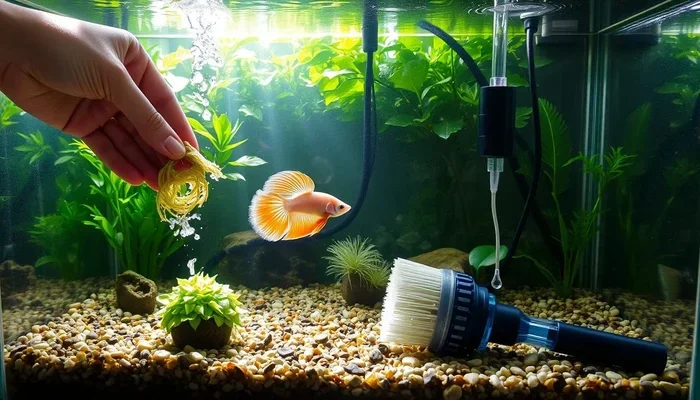
During a partial water change, you also vacuum the gravel to remove debris and fish waste. This is called gravel vacuuming, and it is a quick process that takes about 10-15 minutes. Use a siphon or a gravel vacuum tool to suck up waste from the substrate.
Quick Tip: Always use water that is the same temperature as the tank water. Sudden temperature changes stress your betta fish and can make them sick.
Full Tank Cleaning: When and How Often
A full tank cleaning is different from a partial water change. During a full cleaning, you remove all the water, take out decorations, and scrub the tank walls. You also clean or replace filter media.
You should only do a full tank cleaning once a month at most. Some tanks may even go longer between full cleanings if they have a good filter and live plants. Full cleanings should only happen when water tests show dangerous ammonia or nitrite levels.
For most betta owners, sticking to regular partial water changes means you rarely need a full cleaning. This is good news because full cleanings can disrupt your tank’s ecosystem.
Cleaning Frequency by Tank Size
Tank size plays a big role in how often you need to clean. Smaller tanks get dirty faster because there is less water to dilute waste. Here is a simple comparison table.
| Tank Size | Partial Water Change Frequency | Full Tank Cleaning |
|---|---|---|
| 1-2 gallons | Every 5-7 days | Every 2 weeks |
| 3-5 gallons | Every 7-10 days | Every 3-4 weeks |
| 5-10 gallons | Every 10-14 days | Every 4-6 weeks |
| 10+ gallons | Every 14 days | Every 6-8 weeks |
As you can see, smaller tanks need much more attention. If you keep your betta in a small betta fish tank, plan to clean it more frequently. A 1 gallon betta fish tank or a 3 gallon betta fish tank will need weekly water changes at minimum.
Signs Your Betta Tank Needs Cleaning
Sometimes your tank will tell you it needs cleaning before your schedule does. Watch for these warning signs that your betta tank cleaning routine needs adjustment.
- Cloudy water: This is often caused by bacteria blooms or excess waste. It usually means you need a water change soon.
- Bad smell: A foul odor coming from the tank is a clear sign of ammonia buildup. Do a water change immediately.
- Algae growth: Green or brown algae on the glass and decorations means too much light or excess nutrients in the water.
- Betta acting lethargic: If your betta is staying at the bottom of the tank or not eating, poor water quality could be the cause.
- Elevated ammonia or nitrite levels: Use a liquid test kit to check water parameters. Anything above zero for ammonia or nitrite is dangerous.
If you notice any of these signs, do a water change right away. Do not wait for your scheduled cleaning day. Your betta fish health depends on clean water.
The Step-by-Step Betta Tank Cleaning Process
Now that you know how often to clean, let us walk through the actual process. Whether you are doing a partial water change or a deeper clean, following the right steps makes all the difference.
Step 1: Gather Your Supplies
Before you start, make sure you have everything ready. You will need a siphon or gravel vacuum, a bucket dedicated to fish use only, a algae scraper or magnet, a water conditioner, and a thermometer. Having everything prepared makes the process smooth and fast.
Step 2: Remove Debris from the Substrate
Start by using your siphon to vacuum the gravel. Move slowly and let the siphon pick up fish waste, uneaten food, and decaying plant matter. Focus on areas around decorations and corners where debris tends to collect.
Step 3: Remove and Replace Water
Siphon out 25-50% of the tank water into your bucket. Then, slowly add the new water back in. Make sure the new water is treated with a water conditioner to remove chlorine and chloramine. Match the temperature of the new water to the tank water as closely as possible.
For those with a filter, learning how to clean a betta fish tank with filter requires extra care. Never clean all filter media at once. Rinse some media in old tank water and leave the rest untouched to preserve beneficial bacteria.
Step 4: Clean the Tank Walls and Decorations
Use an algae scraper or magnetic cleaner to remove algae from the glass. Do not use soap or chemical cleaners. Even a small amount of soap residue can be deadly to your betta. If you have live plants, gently wipe their leaves to remove any algae buildup.
If your decorations are heavily covered in algae, you can soak them in a bucket of tank water for a few minutes. This helps loosen the algae without killing the helpful organisms living on them.
Step 5: Check Water Parameters
After the cleaning is done, test your water with a liquid test kit. Check ammonia, nitrite, nitrate, and pH levels. This helps you confirm that your cleaning was effective and that the tank is safe for your betta.
Common Mistakes to Avoid When Cleaning a Betta Tank
Many well-meaning betta owners make mistakes during cleaning that can harm their fish. Here are the most common ones to watch out for.
- Doing too much too often: Overcleaning strips beneficial bacteria and destabilizes water parameters. Stick to your schedule and resist the urge to clean constantly.
- Using soap or chemicals: Never use soap, bleach, or household cleaners on your tank or decorations. These are toxic to fish even in tiny amounts.
- Replacing all filter media at once: Your filter media houses beneficial bacteria. Replacing it all at once crashes your nitrogen cycle and can poison the water.
- Ignoring water temperature: Adding cold or hot water shocks your betta. Always match temperatures before adding new water.
- Skipping water conditioner: Tap water contains chlorine and chloramine that kill fish. Always treat new water before adding it to the tank.
Another mistake is not knowing the difference between routine maintenance and a deep clean. Routine maintenance means partial water changes and gravel vacuuming. Deep cleaning means a full tank overhaul. Most betta tanks only need deep cleaning once a month at most.
If you keep your betta in a bowl rather than a tank, the cleaning frequency changes. You can learn more about how often should you clean your betta fish bowl in our dedicated guide. Bowls have no filter, so they require more frequent water changes and closer monitoring.
Tips for Keeping Your Betta Tank Cleaner Longer
Prevention is always easier than cleaning. Here are some tips that reduce how often you need to do heavy cleaning sessions.
- Do not overfeed your betta. Uneaten food sinks to the bottom and decays, spiking ammonia levels. Feed small amounts once or twice a day and remove any leftover food after a few minutes.
- Add live plants. Live plants absorb nitrates and compete with algae for nutrients. They naturally help keep your tank cleaner between water changes.
- Use a good filter. A filter keeps water moving and hosts beneficial bacteria. If your tank does not have one, consider adding a small hang-on-back filter or sponge filter.
- Keep the tank away from direct sunlight. Sunlight promotes algae growth. Place your tank in a spot with indirect light to reduce green buildup on the glass.
- Do regular water tests. Testing your water weekly helps you catch problems early before they turn into major cleaning jobs.
Following these simple habits means less work for you and a healthier environment for your betta. Your fish will thank you with bright colors and active swimming.
Expert Insights on Betta Tank Cleaning
Experienced betta keepers agree that consistency beats intensity. A small water change done every week is far better than a massive cleaning done once a month. This approach keeps water parameters stable and protects the beneficial bacteria that your tank depends on.
Many experts also recommend keeping a betta tank cleaning log. Write down the date of each water change, how much water you replaced, and any observations about your fish’s behavior. Over time, this log helps you fine-tune your routine and spot patterns that may need attention.
If you are new to betta keeping, start simple. Focus on regular partial water changes and basic gravel vacuuming. As you gain confidence, you can add more advanced maintenance tasks like filter cleaning and water parameter testing.
Remember, every tank is different. What works for a 10-gallon community tank may not work for a single betta in a 5-gallon setup. Pay attention to your specific conditions and adjust your betta tank maintenance routine accordingly.
Conclusion
So, how many times should you clean a betta fish tank? The honest answer is that it depends on your setup, but most betta tanks need a partial water change every one to two weeks and a full cleaning once a month. Smaller tanks need more frequent attention, while larger, filtered tanks can go longer between deep cleans.
The key is consistency. Stick to a regular betta tank cleaning schedule, watch for warning signs, and always use safe cleaning practices. Your betta fish will thrive in a clean, stable environment, and you will enjoy watching them more too.
Start today by checking your tank water and planning your next cleaning session. A little effort goes a long way toward keeping your betta happy and healthy for years to come.
Frequently Asked Questions
How many times a week should I clean my betta fish tank?
You do not need to clean your betta tank every day or even every week. A partial water change every 7 to 14 days is enough for most setups. Only do a full tank cleaning once a month or less. Overcleaning can actually harm your fish by removing beneficial bacteria.
Can I clean my betta fish tank too much?
Yes, overcleaning is a real problem. Washing all the filter media or doing full water changes too often strips the tank of beneficial bacteria. This can cause ammonia spikes that are dangerous for your betta. Stick to partial water changes and only do deep cleans when necessary.
What is the best way to clean a betta fish tank?
The best method is a regular partial water change with gravel vacuuming. Remove 25-50% of the water, vacuum the substrate, and add treated water at the right temperature. For deeper maintenance, clean filter media in old tank water and scrub algae from the glass. You can also learn more about how to clean a betta fish tank for step-by-step guidance.
Does a filter mean I do not need to clean as often?
A filter helps, but it does not eliminate the need for cleaning. Filters remove debris and house beneficial bacteria, but they do not remove dissolved waste completely. You still need to do partial water changes every 10 to 14 days even with a filter running. Check out how to clean a betta fish tank with filter for tips on maintaining both your filter and tank together.
How do I know if my betta tank is dirty?
Cloudy water, a bad smell, algae buildup, and a lethargic betta are all signs that your tank needs attention. Use a liquid test kit to check ammonia and nitrite levels. If either is above zero, it is time for a water change. Regular testing helps you catch problems early.
How often should I clean a betta fish bowl?
Betta fish bowls without filters need much more frequent cleaning. You should do a partial water change every 3 to 5 days. Full bowl cleanings should only happen when the water becomes consistently cloudy or smelly. Learn more about how often should you clean your betta fish bowl to keep your bowl setup healthy.