How Long Can a Betta Fish Go Without Eating
Betta fish are surprisingly resilient and can survive without food for 7-14 days under optimal conditions, thanks to their slow wild metabolism. However, this is not a recommended practice, as prolonged fasting weakens their immune system and can lead to serious health issues. The real danger often comes from chronic overfeeding, which pollutes water and causes life-threatening conditions like swim bladder disorder. Always prioritize consistent, portion-controlled feeding and pristine water quality over testing your betta’s fasting limits.
So, you’re planning a weekend getaway, or maybe you’ve noticed your beautiful Betta splendens turning his nose up at his usual pellet dinner. The question inevitably pops into your head: how long can a betta fish go without eating? It’s a common concern for betta owners, fueled by the fish’s reputation for toughness and those persistent myths about their ability to live in tiny, stagnant jars. Let’s separate fact from fiction, dive deep into the biology of your aquatic companion, and give you the definitive, responsible answer you need to be the best betta parent possible.
First, a truth bomb: Your betta is not a camel. That hardy reputation? It’s real, but it’s often misinterpreted. Bettas are survivors, evolved in the shallow, warm puddles and rice paddies of Southeast Asia, where food can be scarce. This gives them a remarkable ability to endure periods without a meal. But “can survive” is a world away from “should survive” or “thrives.” The goal isn’t to see how long you can stretch the time between feedings; it’s to understand their needs to provide consistent, optimal care that prevents you from ever needing to test that limit. When we talk about how long a betta fish can go without eating, we’re really talking about the intersection of their biological resilience and your responsibility as a caregiver.
Key Takeaways
- Resilience vs. Health: While a betta can survive 1-2 weeks without eating, doing so regularly stresses its body and compromises its immune system, making it susceptible to disease.
- Metabolism Myth: Their ability to fast stems from a slow metabolism adapted to scarce food in the wild, not a dietary requirement. Captive bettas need regular, small meals.
- Water is Paramount: Clean, warm, stable water is infinitely more critical than food during a short absence. Poor water quality kills faster than hunger.
- Overfeeding is the #1 Killer: More bettas die from constipation, bloating, and poisoned water from excess food than from starvation. Feed no more than they can eat in 2-3 minutes, once or twice daily.
- Fasting Can Be Therapeutic: A controlled 24-hour fast once a week or after an overfeeding incident can aid digestion and clear mild constipation.
- Observe Relentlessly: Learn your betta’s normal behavior. Lethargy, clamped fins, or a refusal to eat for more than 3-4 days (when healthy) are red flags requiring investigation.
- Plan for Absences: For trips longer than 3 days, use an automatic feeder (tested beforehand) or a trusted pet sitter. Never rely on “plant food” or slow-release blocks in a small betta tank.
📑 Table of Contents
- The Betta’s Biological Blueprint: Why They Can Fast
- The Variables: What Influences Fasting Duration?
- The Practical Answer: Safe Duration and Red Flags
- The Greater Threat: The Dangers of Overfeeding
- Best Feeding Practices: The Foundation of Care
- Emergency Scenarios: Vacations, Illness, and Appetite Loss
The Betta’s Biological Blueprint: Why They Can Fast
To understand fasting, we must first understand the betta’s engine. Their entire physiology is a masterclass in energy conservation.
A Slow, Purposeful Metabolism
In the wild, a betta’s life is one of calculated energy expenditure. They are not constant swimmers chasing schools of fish. They are ambush predators, often hovering near the surface or nestled among plants, waiting for a tasty insect, tiny crustacean, or mosquito larva to drift by. This sedentary lifestyle means their metabolic rate is naturally slow. They burn calories at a snail’s pace compared to more active fish like tetras or danios. This slow burn is an adaptation for survival in an environment where a hearty meal might be a rare event. Their bodies are exceptionally efficient at conserving energy from the food they do eat and can switch to drawing on stored reserves (primarily fat and muscle tissue) when external calories are absent.
Wild vs. Captive: A Critical Difference
Here’s where the myth diverges from reality. A wild betta’s “fasts” are interspersed with periods of finding food. More importantly, the water it lives in is part of a vast, complex ecosystem with natural filtration, plants, and microorganisms that help maintain water quality. In your tank, the equation changes completely. Your betta lives in a closed, artificial system. Every bit of waste—including the ammonia from its own gills and the waste from digesting its own body tissues during a prolonged fast—stays in that water. The pristine, warm water you provide is a non-negotiable pillar of health. A fast in a clean, well-filtered tank is one thing; a fast in a cycled, stable tank is another. A fast in a tiny, uncycled bowl is a death sentence, regardless of food.
The Variables: What Influences Fasting Duration?
So, if someone asks, “Can my betta go a week without food?” the only honest answer is: “It depends.” The how long can a betta fish go without eating timeline isn’t a fixed number but a range heavily influenced by several key factors.
Visual guide about How Long Can a Betta Fish Go Without Eating
Image source: petshun.com
Age and Life Stage
A young, growing fry has a higher metabolic rate and needs near-constant nutrition. Missing a day for them is a bigger deal. A mature adult (6 months to 2 years) is in its prime and has the most robust energy reserves. A senior betta (3+ years) has a slower metabolism but also less muscle mass and weaker organs. Its ability to withstand a prolonged fast is significantly diminished. For a senior, even 5-7 days without food can be catastrophic.
Health and Body Condition
This is the biggest variable. A betta that is already lean, active, and disease-free has some fat and muscle reserves to draw upon. A betta that is already stressed, recovering from illness (like fin rot or dropsy), or showing signs of being underweight (a visibly concave abdomen, a thin, bony appearance) has no buffer. Its immune system is already compromised, and fasting will only push it over the edge. You should never intentionally fast a betta that is not in perfectly robust health.
Water Quality and Temperature
This cannot be overstated. Imagine trying to survive a drought while locked in a stuffy, dirty room. Your body would fail much faster. For a betta, clean water is oxygen, sanitation, and homeostasis. If the water is warm (78-80°F / 25.5-26.5°C is ideal), its metabolism functions efficiently. If the water is cold (<75°F), its metabolism slows dramatically, which can extend the time it can technically survive without food but also severely depresses its immune function and digestion. However, poor water quality—high ammonia or nitrite, excessive nitrates—is a constant source of stress and toxicity. A betta in pristine water has a far better chance of weathering a short-term food shortage than one in a toxic soup, even if the latter gets fed.
Tank Size and Environment
A betta in a properly sized, heated, filtered 5-gallon tank with plants and hiding spots is living in a stress-minimized paradise. It uses minimal energy navigating its environment. A betta in a 1-gallon unheated bowl is constantly stressed by poor water parameters, temperature fluctuations, and a lack of enrichment. This chronic stress burns energy and weakens its systems, making it far less capable of handling any period without food.
The Practical Answer: Safe Duration and Red Flags
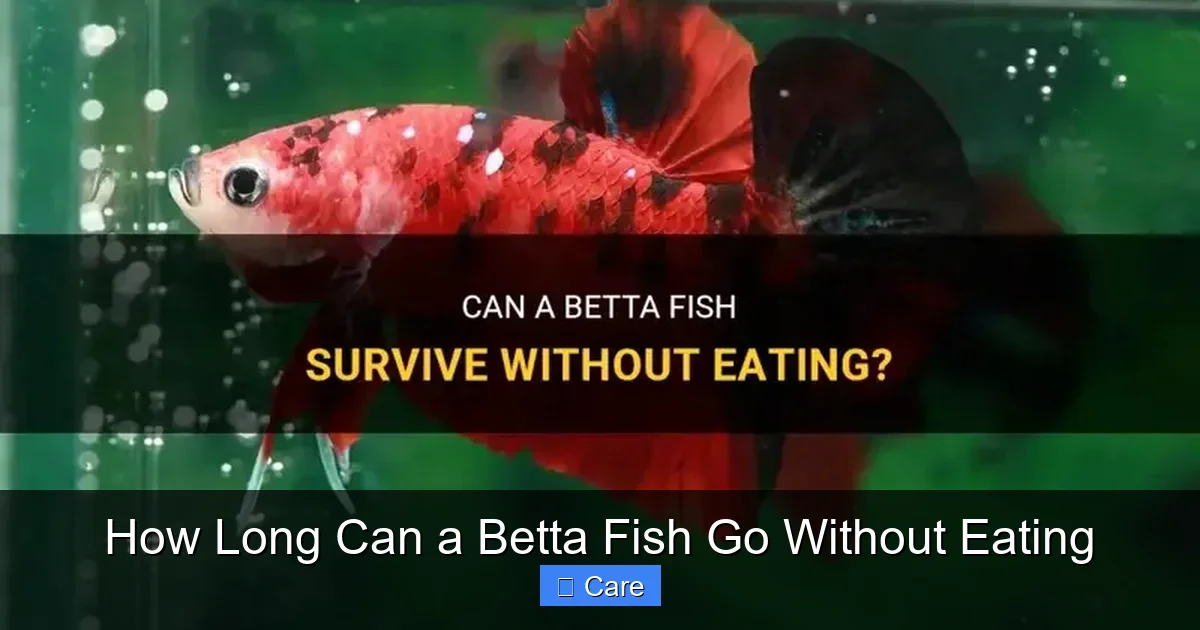
Given all the variables, what is a practical, safe guideline? For a healthy adult betta living in an optimally heated, filtered, and cycled tank, the absolute maximum it can survive without food is generally considered to be 10-14 days. However, this is a survival ceiling, not a target. By day 7, you will see significant physical deterioration: loss of color intensity, pronounced lethargy, sinking to the bottom and staying there, and a visibly emaciated body (the abdomen will look caved in, not just flat).
Visual guide about How Long Can a Betta Fish Go Without Eating
Image source: petshun.com
A much safer and more responsible benchmark is 3-5 days. Within this window, a healthy betta will use its reserves with minimal long-term damage, provided water quality is meticulously maintained. Anything beyond 5 days should be considered an emergency situation requiring immediate action upon your return (a partial water change, close observation, and a very gentle re-feeding).
The 72-Hour Rule of Thumb
For most owners, the rule is simple: do not plan for your betta to be without food for more than 72 hours. This covers most weekend trips. If you’ll be gone longer, you must make proactive plans. This mindset shift is crucial. Instead of asking “how long can it last?” ask “what do I need to do to ensure it’s fed and healthy while I’m gone?”
Recognizing Dangerous Weight Loss
How do you know if your betta is getting too thin? Look at it from above. A well-fed betta has a plump, oval-shaped body, especially in the abdominal area (just behind the gills). As it loses weight, this area flattens and eventually becomes concave, creating a sharp angle where the body meets the tail. The skin may appear thin and translucent, and the fins may become ragged and less full. If you see this, the fast has already gone on too long.
The Greater Threat: The Dangers of Overfeeding
While we’re focused on starvation, the silent killer in most betta tanks is the exact opposite: too much food. This is the single most common cause of betta death in captivity, and it’s almost always preventable.
Visual guide about How Long Can a Betta Fish Go Without Eating
Image source: artofpro.com
Digestive Disaster: Constipation and Swim Bladder Disorder
Bettas have short, primitive digestive tracts. They are not built to process large, bulky meals. Overfeeding, especially with low-quality or high-protein foods, leads to constipation. A constipated betta is a miserable betta: it may float upside down, sink and struggle to rise, or have a visibly swollen, pinecone-like abdomen. This is often misdiagnosed as “dropsy,” but the cause is almost always dietary. The swollen gut presses against the swim bladder, causing the classic “swim bladder disorder” symptoms. Treatment involves fasting and sometimes a cooked pea, but prevention is infinitely better.
Water Quality Catastrophe
What happens to the food your betta doesn’t eat? It decomposes in the tank. Uneaten pellets swell and turn to mush, releasing ammonia directly into the water. Even the food that is eaten produces waste. Overloading the system with excess nutrients causes a bacterial bloom, spikes in ammonia and nitrite, and a rapid decline in water quality. In a small tank, this can become toxic in a matter of hours. You are literally poisoning your fish with kindness. This is why the rule “feed no more than your betta can eat in 2-3 minutes, once or twice a day” is gospel. It’s not about keeping your betta hungry; it’s about keeping its home clean.
Obesity and Organ Stress
Just like humans, bettas can become obese. Chronic overfeeding leads to fat deposits around vital organs, putting strain on the heart and liver. This long-term stress shortens lifespan and makes the fish more susceptible to other diseases. A plump betta is not necessarily a healthy betta; it’s often an overfed one.
Best Feeding Practices: The Foundation of Care
If the goal is to never have to wonder how long a betta fish can go without eating, the answer is to establish a flawless feeding routine that makes the question moot.
Portion Control: The Eyeball Method
Forget measuring cups. The gold standard is this: 2-3 high-quality pellets per day for an adult betta. That’s it. For larger or more active individuals, 3-4 might be appropriate. For a very small or sedentary betta, 1-2. The pellets should be small enough that they are consumed quickly. If you see any food hitting the substrate after 2 minutes, you’ve fed too much. Soak dry pellets in a bit of tank water for a minute before feeding to prevent them from swelling in the betta’s stomach. Supplement with a tiny piece of blanched, deshelled pea (for fiber) or a frozen or live daphnia (a natural laxative) once a week. This variety mimics a wild diet and aids digestion.
Schedule and Fasting Benefits
Consistency is key. Feed at the same time(s) each day. Many experienced keepers implement a weekly 24-hour fast (e.g., no food on Sundays). This gives the digestive system a complete rest, helps clear any minor blockages, and mimics the natural irregularity of food availability. It’s a proactive health measure, not a punishment. For juvenile bettas, feed twice daily but in tiny amounts. For seniors, once a day may be sufficient.
Food Quality Matters
Not all betta food is created equal. Avoid generic “tropical fish flakes.” Invest in a reputable brand of betta-specific pellets or granules where the first few ingredients are whole fish or seafood (like salmon, shrimp, or krill). These are highly digestible and nutrient-dense. Freeze-dried or frozen foods (bloodworms, brine shrimp, daphnia) are excellent treats, making up no more than 10-15% of the diet. They should be rehydrated before feeding to prevent digestive issues.
Emergency Scenarios: Vacations, Illness, and Appetite Loss
Life happens. Here’s how to handle the situations that lead to the how long can a betta fish go without eating question in the first place.
Planning for Vacation (3+ Days Away)
Do not use “weekend feeder blocks” (like the infamous “Betta Bites” or generic “vacation food”). These are designed for larger, community tanks and dissolve way too quickly in a small betta tank, fouling the water. Your options, in order of preference:
- A Trusted Pet Sitter: This is the gold standard. Provide clear, written instructions: “Feed 2-3 pellets once daily. Remove any uneaten food after 3 minutes.” Show them how to do it.
- A Tested Automatic Feeder: Purchase a reliable, battery-operated automatic fish feeder. Load it with high-quality pellets. You must test it thoroughly for at least a week before your trip to ensure it dispenses the correct, small portion and doesn’t jam or dump the entire reservoir.
- For 3-5 Days: A healthy betta in a well-maintained tank can easily handle a long weekend with no intervention. Ensure the water is pristine before you leave and perform a 25% water change immediately upon your return.
When Your Betta Refuses to Eat
A betta not eating for 1-2 days is often normal, especially after a move or a water change. But a consistent refusal (3+ days) is a symptom, not a disease. The cause is almost always environmental or health-related:
- Water Quality: Test your parameters immediately. High ammonia/nitrite is the #1 cause of appetite loss.
- Temperature: Is the water too cold? A betta’s digestion grinds to a halt below 75°F.
- Stress: New tank mates? Bright lights? Constant disturbance? Bettas are sensitive.
- Illness: Internal parasites, bacterial infections, or severe constipation can cause inappetence.
- Food Aversion: Did you recently switch foods? Some bettas are picky. Try offering a live or frozen food like daphnia to stimulate appetite.
Do not starve a betta that is refusing food in an attempt to “make it hungry.” You must diagnose and fix the underlying problem. Start with a 100% water change, ensure perfect temperature, and offer a tempting food like a frozen bloodworm.
Re-Feeding After a Prolonged Fast
If you return from a trip to find your betta very thin but alive, do not immediately offer a full meal. Its digestive system has atrophied. Start with a single, pre-soaked pellet or a tiny piece of pea on day one. On day two, offer one pellet. Gradually increase to a normal portion over 4-5 days. Monitor for bloating or constipation closely. This slow reintroduction is critical to avoid killing it with kindness after it has already survived hardship.
Frequently Asked Questions
Is it okay to fast my betta once a week for health reasons?
Yes, a scheduled 24-hour fast once a week is a common and beneficial practice for adult bettas. It gives the digestive system a rest, helps prevent constipation, and can mimic natural feeding patterns. Ensure your betta is healthy and well-conditioned before starting any fasting routine.
My betta is on a trip for 4 days. Should I use a vacation feeder block?
No. Vacation feeder blocks dissolve too quickly in a small betta tank, polluting the water within 24-48 hours. They pose a greater risk to water quality than the short fast. For 4 days, the best option is to perform a large water change before you leave and another immediately upon return. For longer trips, use a tested automatic feeder or a pet sitter.
My betta hasn’t eaten in 3 days but the water parameters are perfect. What’s wrong?
Perfect water is the first step. Next, check the temperature (must be 78-80°F). Consider recent changes: new decorations, tank mates, or light cycles causing stress? Also, inspect for signs of illness (clamped fins, spots, ragged fins). Try enticing it with a different food like frozen daphnia or a live bloodworm. If refusal continues beyond 5 days, it’s a serious health concern requiring research into common betta diseases.
Can overfeeding cause a betta to stop eating?
Absolutely. Chronic overfeeding leads to constipation and a swollen gut, which is painful and suppresses appetite. The poor water quality from excess waste also makes the betta feel unwell. If your betta is bloated and not eating, stop feeding for 24-48 hours, then offer a small piece of blanched, deshelled pea to act as a laxative.
How can I tell if my betta is losing weight too quickly?
Look at the body profile from above. A healthy betta has a plump, oval abdomen. The first sign of dangerous weight loss is when this area flattens. Severe loss creates a concave, sunken look behind the gills, and the body may look bony and thin. Any visible concave abdomen after just a few days without food indicates the fast has already been too long.
What is the very first thing I should do if I find my betta lethargic after being without food?
The first and most critical step is to test and, if necessary, perform a partial water change to ensure pristine water quality. Hunger alone causes lethargy, but combined with even slightly degraded water, it becomes lethal. Use a water test kit. If ammonia or nitrite is present, do a 25-50% water change with properly dechlorinated, temperature-matched water. Then, offer a single, tiny food portion after a few hours.