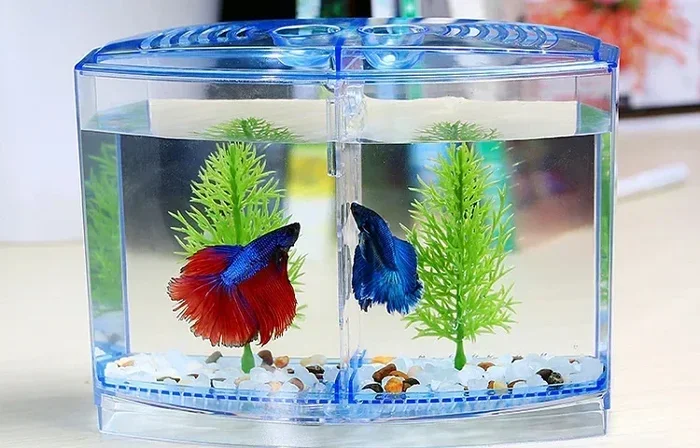
How Large Do Betta Fish Get

Betta fish, or Siamese fighting fish, typically grow to be about 2 to 2.5 inches (5-6 cm) long from snout to tail fin tip when fully mature. However, many factors influence their final size, including genetics, diet, water quality, and tank size. A common misconception is that they thrive in tiny bowls; in reality, a properly sized, heated, and filtered tank of at least 5 gallons is crucial for them to reach their full, healthy potential and live a long life. Understanding their true size needs is the first step to providing excellent care.
If you’ve ever found yourself wondering, “how large do betta fish get?” you’re not alone. It’s one of the most common questions for new and prospective betta owners, and the answer is more nuanced than the tiny, decorative images on a pet store cup might suggest. The iconic, flamboyant Siamese fighting fish, with its flowing fins and vibrant colors, often gives an illusion of grandeur. But what is its actual, physical size? Understanding the true dimensions of a betta fish is not just a matter of curiosity—it’s a cornerstone of proper animal welfare. This guide will dive deep into the factors that determine betta size, debunk pervasive myths, and provide you with the definitive knowledge to appreciate and care for these magnificent creatures appropriately.
We’ll move beyond the simplistic “they get about two inches” answer. We’ll explore how genetics, sex, nutrition, and—most critically—tank environment play intertwined roles in determining how large your betta will grow. You’ll learn why the “betta in a bowl” concept is so harmful and how providing the right space can be the single biggest factor in allowing a betta to achieve its full, healthy size. By the end, you’ll have a clear, practical understanding of betta growth, empowering you to make informed decisions for the aquatic companion you choose to bring into your home.
Key Takeaways
- Average Size: A healthy adult betta fish, male or female, will typically measure between 2 and 2.5 inches (5-6 cm) in total length when fully grown.
- Sexual Dimorphism: Females are often slightly smaller and have less spectacular fins, but both sexes reach a similar body length. Fin length does not equal overall body size.
- Genetics Matter: The specific genetic lineage of a betta (e.g., Halfmoon, Plakat, Dumbo) sets its ultimate potential size, but environment determines if it reaches that potential.
- Environment is Key: Poor water quality, inadequate diet, and severely restricted tank space (like a small bowl) can stunt growth, leading to a smaller, less healthy fish.
- Tank Size Myth: The idea that bettas “stay small” and belong in tiny containers is a dangerous myth. A minimum 5-gallon tank is the widely accepted standard for a single betta’s long-term health and growth.
- Growth Timeline: Bettas are considered fully grown by about 6-8 months of age, though subtle changes can occur with exceptional care over a longer period.
- Measurement Matters: Always measure a betta from the tip of its snout to the very end of its longest fin ray (usually the caudal fin) when it’s fully extended for an accurate “total length.”
📑 Table of Contents
- The Baseline: What’s the Average Betta Fish Size?
- Male vs. Female: Does Sex Affect Size?
- The Crucial Factors That Influence Betta Growth
- Why Tank Size is the Non-Negotiable Factor for Healthy Growth
- Debunking Common Myths About Betta Size
- Practical Tips for Ensuring Your Betta Reaches Its Full Size
- Conclusion: Size is a Symptom of Care
The Baseline: What’s the Average Betta Fish Size?
Let’s start with the hard numbers. For the vast majority of domesticated betta splendens, the average total length—measured from the tip of the snout to the farthest tip of the tail fin when fully extended—is between 2 and 2.5 inches (5 to 6.4 centimeters). This is the standard you can reliably expect for a well-cared-for adult betta. It’s important to note this is a measurement of the entire fish, including its fins. The actual body length (the “standard length” from snout to base of the tail) is much shorter, often around 1.5 inches (3.8 cm). The spectacular fins that make bettas so famous contribute significantly to their perceived size but are not indicative of a larger skeletal structure.
Comparing Bettas to Other Common Fish
To put this into perspective, a 2.5-inch betta is roughly the same length as a standard adult male guppy or a small neon tetra. It is significantly smaller than a common goldfish, which can easily surpass 12 inches, or even a typical adult angelfish, which reaches 4-6 inches. This comparison is crucial because it highlights the profound misunderstanding in the “tiny bowl” myth. While a betta’s body is indeed small, its swimming needs, territorial nature, and bioload (waste production) are not proportional to a cup. Its size does not equate to a minimal spatial requirement.
It’s also worth mentioning that within this average range, there is variability. Some exceptionally large, well-cared-for males from robust genetic lines might nudge just past 3 inches in total length, though this is uncommon. Conversely, a stunted or chronically stressed betta may never reach 2 inches. The 2-2.5 inch figure is the healthy, achievable target for nearly all bettas given proper conditions.
Male vs. Female: Does Sex Affect Size?
A frequent point of confusion is whether male or female bettas grow larger. The answer is subtle but important. In terms of body length (the actual fish meat and bone), males and females are very similar, with females sometimes having a slightly stockier or deeper body, especially when gravid (carrying eggs). However, the dramatic difference lies in their fins.

Visual guide about How Large Do Betta Fish Get
Image source: fishlab.com
Male bettas have been selectively bred for centuries for their extravagant finnage. A healthy adult male Halfmoon or Crowntail betta will have caudal (tail) fins that can be as broad as his body is long, dramatically increasing his “total length” measurement. A female of the same genetic strain might have fins that are only half as long, making her total length measurement significantly less even if her body is nearly identical in size. Therefore, when asking “how large do bettas get,” you must specify: are we talking about body size or total fin-included size? For body size, they are similar. For the visual spectacle of total length, males almost always win due to their fins.
The “Plakat” Exception
The Plakat (or “Plakad”) betta is a variety bred for short, aggressive fins, resembling the wild-type form. In Plakats, the fin length is minimal, so the total length measurement is much closer to the actual body length. A large, healthy male Plakat might measure 2.25 inches total, with perhaps only 0.5 inches of that being fin. This makes them an excellent example for understanding the separation of body size from finnage. Their care requirements and growth potential are identical to any other betta variety; only the fin shape differs.
The Crucial Factors That Influence Betta Growth
Why do some bettas seem to max out at 1.8 inches while others proudly stretch to 2.5 inches? The answer lies in a combination of factors, most of which are within the owner’s control. Think of a betta’s genetic potential as a ceiling, and its environment as the ladder that determines how close it gets to that ceiling.

Visual guide about How Large Do Betta Fish Get
Image source: cdn.mos.cms.futurecdn.net
1. Genetics and Lineage
This is the starting point. A betta’s inherited DNA sets its ultimate potential for size, color intensity, and fin type. Bettas from reputable breeders who focus on health and robust conformation often have a higher growth potential than those from large-scale commercial breeders where quantity is prioritized. There is no official “giant” betta breed, but some lines consistently produce larger-bodied individuals. If you acquire a betta from a source known for quality, you’re starting with a better blueprint.
2. Nutrition: You Are What You Eat
A balanced, high-quality diet is non-negotiable for proper growth. Bettas are naturally insectivores and prefer protein-rich foods. A staple diet of high-quality betta pellets (specifically formulated for them) should be the foundation. These pellets are designed to provide the right balance of protein, fats, and essential vitamins. Supplement this 2-3 times a week with frozen or live foods like daphnia, brine shrimp, or bloodworms. These treats are not only nutritious but also stimulate natural hunting behaviors. Avoid overfeeding; a betta’s stomach is roughly the size of its eye. Excess food decomposes, polluting the water and causing health problems that can stunt growth.
3. Water Quality: The Invisible Foundation
This is arguably the most critical factor. Bettas are native to slow-moving, shallow waters in Thailand, which are warm and, in nature, have stable parameters. In captivity, their small size belies their sensitivity to poor water conditions. Ammonia and nitrite, even at low levels, are toxic and cause chronic stress, organ damage, and stunted growth. A properly cycled aquarium (establishing beneficial bacteria that convert waste) is essential. Regular partial water changes (25-50% weekly) and the use of a gentle filter (sponge filters are ideal) are mandatory to maintain pristine water. In dirty, uncycled water, a betta’s energy goes into survival, not growth.
4. Tank Size and Space: The Myth of the Bowl
Here is the big one. The persistent image of a betta in a tiny vase or bowl is not just outdated; it’s cruel. A small container offers no room for swimming, has an unstable temperature, and the water quality can deteriorate in hours. A stressed betta confined in such a space will often become lethargic, its immune system weakens, and its growth is severely stunted. The widely accepted minimum standard for a single betta is a cycled, heated, filtered tank of 5 gallons (19 liters). This provides stable water parameters, thermal mass to maintain temperature, and space for the fish to explore. In a spacious, well-maintained 10-gallon tank, a betta has even more room to display natural behaviors and thrive. The space directly correlates to the fish’s ability to grow to its full potential and live a long, healthy life of 3-5 years or more.
5. Temperature: The Metabolic Engine
Bettas are tropical fish. The optimal water temperature for them is between 76°F and 82°F (24°C – 28°C), with 78°F (25.5°C) being a perfect target. Their metabolism is directly tied to water temperature. If the water is too cold (below 75°F), their metabolism slows dramatically. They become lethargic, their digestive system struggles (leading to constipation and bloating), their immune function plummets, and growth essentially stops. A reliable aquarium heater is a non-negotiable piece of equipment for any betta tank, regardless of room temperature. Consistent, warm water is the engine that drives a healthy, growing betta.
Why Tank Size is the Non-Negotiable Factor for Healthy Growth
We must stress this point. The single biggest misconception about betta fish is that their small size means they have small needs. This could not be further from the truth. Let’s break down exactly why a 5-gallon minimum is the rule, not a suggestion.
Water Stability: A larger volume of water is more resistant to rapid changes in temperature and chemical composition. In a 1-gallon bowl, a single betta’s waste can spike ammonia levels to toxic levels in a day. In a 5-gallon tank with a filter and weekly water changes, those same toxins are diluted and processed much more effectively. Stable water equals less stress, which equals better growth and health.
Swimming and Exercise: Bettas are active, curious fish. In the wild, they patrol territories of several square feet. In a tiny bowl, they can only turn in circles. This lack of exercise can lead to muscle atrophy and obesity. In a 5-gallon tank, they can perform short bursts of swimming, flare at their reflection, and explore, which promotes muscle development and overall vitality.
Thermal Mass: A small bowl of water heats and cools with the room air instantly. A larger tank holds temperature much more steadily. This prevents stressful thermal shocks from room temperature fluctuations and ensures the heater can maintain a consistent, optimal temperature without constant on/off cycling.
Mental Well-being: Enrichment matters. A larger tank allows for safe decorations—silk plants, caves, and logs—that provide hiding spots and break lines of sight. This reduces the chronic stress of being constantly exposed, which is a silent growth and health killer. A bored, stressed betta will not thrive.
Think of it this way: you could keep a small dog in a crate just large enough for it to turn around, and it would technically “survive” for a while. But to thrive, to be healthy, active, and reach its proper size and potential, it needs space to run. Your betta is no different.
Debunking Common Myths About Betta Size
So many myths surround betta fish, and their size is at the heart of most of them. Let’s set the record straight.

Visual guide about How Large Do Betta Fish Get
Image source: japanesefightingfish.org
Myth 1: “Bettas only grow to the size of their container.”
This is a biological falsehood. A fish’s skeletal structure is genetically determined. A severely restricted container will stunt growth—meaning the fish will be smaller than its genetic potential—but it will not “fit” its container. It will be a deformed, unhealthy, and often prematurely dying version of what it could have been. This myth is used to justify animal cruelty.
Myth 2: “Wild bettas are huge.”
Actually, wild betta splendens are typically smaller than their domesticated counterparts, often maxing out around 2 inches total length. The dramatic fins we see are a result of centuries of selective breeding. The wild type has short, practical fins for navigating dense, debris-filled waters. Their natural habitat is in shallow, stagnant pools, rice paddies, and slow streams, which are still vastly larger and more complex than a decorative vase.
Myth 3: “My betta is 3 inches long, that’s normal.”
This requires careful measurement. Many owners mistake the length of the flowing fins for the fish’s body. If you gently measure from the snout to the tail base, you’ll likely find the body is a standard 1.5-2 inches. A betta with a true 3-inch body length is exceptionally rare and would be considered a “giant” variety, which is a specialized and not common strain.
Myth 4: “They don’t need much food because they’re small.”
Wrong. They need *high-quality* food, but in *small quantities*. Their fast metabolisms (when warm) require nutrient-dense food. Underfeeding leads to malnutrition and stunted growth. Overfeeding leads to deadly water quality issues. The key is feeding a pinch of high-quality pellets once or twice daily, with occasional fasting days and protein-rich treats.
Practical Tips for Ensuring Your Betta Reaches Its Full Size
Now that you understand the “why,” here is the actionable “how.”
- Start with a Proper Tank: Buy or set up a cycled, filtered, heated 5-gallon tank before you bring your betta home. This is the single best investment in its future size and health.
- Master the Water Test: Purchase a liquid water test kit (like API Freshwater Master Test Kit). Test for ammonia, nitrite, nitrate, and pH weekly. Know that ammonia and nitrite must always be at 0 ppm. Nitrate should be kept below 20 ppm with regular water changes.
- Feed a Varied, High-Protein Diet: Use a reputable brand of betta pellets as a staple. Soak them briefly if your betta is prone to bloating. Supplement with frozen daphnia (which also acts as a natural laxative) 2-3 times a week.
- Observe and Measure: Once your betta is settled (after a week or two in its new home), use a ruler against the glass to measure its total length when it flares or swims near the front. Do this every few months to track healthy growth. A growing betta is a sign of good care.
- Provide Enrichment: Add silk plants (no plastic, which can tear fins), a smooth ceramic cave, and maybe a floating betta log. This reduces stress, which is a major inhibitor of proper growth and immune function.
- Be Patient: A young betta from a store is often only 3-4 months old and will fill out significantly over the next 2-3 months with excellent care. Don’t judge its final size too soon.
Conclusion: Size is a Symptom of Care
So, how large do betta fish get? The definitive answer is that a healthy, mature betta splendens will be 2 to 2.5 inches from snout to tail tip. But this article’s true purpose is to reframe the question. Instead of focusing on the number, focus on the conditions that allow that number to be reached. A betta’s size is a direct symptom of the care it receives. A large, vibrant, active betta is a testament to clean water, proper heating, nutritious food, and adequate space. A small, pale, listless betta is a symptom of the chronic stress and poor environment that the “bowl myth” perpetuates.
When you choose a betta, you are committing to providing an environment where it can thrive, not just survive. By providing a 5-gallon (or larger) heated and filtered tank, maintaining pristine water, and feeding a quality diet, you are giving your betta the ladder it needs to reach the genetic ceiling of its size and beauty. You are not just getting a pet; you are becoming a steward for a living creature with specific needs. In return, a betta at the peak of its health and size will reward you with years of mesmerizing displays of color and personality that far outweigh any minimal extra cost or space required for its proper setup. That is the true measure of success in betta keeping.
Frequently Asked Questions
Can betta fish grow larger than 3 inches?
While there are anecdotal reports of bettas reaching 3 inches in total length, this is exceptionally rare. The vast, vast majority of betta splendens will max out between 2 and 2.5 inches. A measurement over 2.75 inches would be considered very large for this species and is typically only seen in specific, well-bred “giant” lines.
How long does it take for a betta fish to reach its full size?
Bettas sold in stores are usually between 3 and 6 months old. They are typically considered fully grown and sexually mature by 6 to 8 months of age. With outstanding care, they may fill out and their fins may continue to develop slightly up to about 1 year, but their skeletal body length will be set by around 8 months.
Do “dumbo” or “halfmoon” bettas get bigger because of their fins?
Their total length measurement (snout to tail tip) is much larger due to the extensive finnage, but their actual body size is the same as any other betta variety. The large fins do not indicate a larger body. A large-finned Halfmoon and a short-finned Plakat of the same genetic quality will have nearly identical body lengths.
Will feeding more make my betta grow bigger?
No. Overfeeding is one of the fastest ways to harm a betta. It leads to constipation, swim bladder issues, and catastrophic water quality deterioration from uneaten food. Growth is determined by genetics, clean water, and a consistent supply of high-quality, nutrient-dense food—not by overloading the system with excess calories.
Is a 2.5-gallon tank enough for a betta to grow properly?
While a 2.5-gallon tank is a significant improvement over a bowl, it is still below the widely recommended minimum of 5 gallons. A 2.5-gallon tank has very little thermal or water chemistry stability, making it much harder to maintain the pristine conditions necessary for optimal growth and long-term health. For the best chance at a full-size, healthy betta, a 5-gallon tank is the starting point.
My betta from the store is very small. Will it grow in my tank?
Yes, very likely. Store-bought bettas are often juveniles that have been stressed and underfed. If you transfer it to a properly heated, filtered, and cycled tank of appropriate size and begin a regular feeding schedule with high-quality food, you should see noticeable growth and improved color and fin development over the next 2-4 months. This is a clear sign that its previous environment was stunting it.