How Big of a Tank Does a Betta Fish Need
The absolute minimum tank size for a single betta fish is 5 gallons, but a 10-gallon tank or larger is strongly recommended for optimal health and ease of care. The persistent myth that bettas can live happily in tiny bowls or vases is animal cruelty, not proper care. A larger, filtered, and heated tank mimics their natural habitat, reduces stress, prevents disease, and provides a more stable environment. Investing in a proper setup from the start leads to a more vibrant, interactive pet and a far more enjoyable experience for you.
Key Takeaways
- The “Bowl” is a Dangerous Myth: Betta fish cannot thrive in small, unheated, unfiltered containers like bowls or vases. This causes chronic stress, poor water quality, and a shortened lifespan.
- Absolute Minimum = 5 Gallons: Anything less than 5 gallons (19 liters) is considered inhumane by modern aquatic veterinary standards. This is the smallest volume that can support a stable cycle and essential equipment.
- Optimal & Recommended = 10+ Gallons: A 10-gallon (38-liter) tank is the true sweet spot. It provides ample swimming space, dilutes toxins more effectively, allows for gentle filtration, and is easier to maintain.
- Equipment is Non-Negotiable: Every betta tank, regardless of size, needs a gentle filter and an adjustable heater. These are not optional accessories; they are essential life-support systems.
- Bigger is Almost Always Better: If you have the space and budget, a 15 or 20-gallon tank offers even greater stability, more decoration possibilities, and can sometimes house compatible tank mates.
- Tank Shape Matters: Prioritize a long, wide tank over a tall, narrow one. Bettas are surface breathers and need easy access to the top, but they also swim horizontally in the wild.
- Your Effort Decreases with Size: Counter-intuitively, larger tanks are easier to maintain. Water parameters change more slowly, meaning less frequent and less stressful water changes.
📑 Table of Contents
- Debunking the Bowl Myth: Where Did This Idea Come From?
- The Science Behind Tank Size: Why Volume is Everything
- Defining the Minimum: The 5-Gallon Benchmark
- The Sweet Spot: Why 10 Gallons is the True Starting Point
- Beyond the Basics: Tank Mates and Larger Setups
- Essential Equipment for Any Tank Size
- Common Mistakes and How to Avoid Them
Debunking the Bowl Myth: Where Did This Idea Come From?
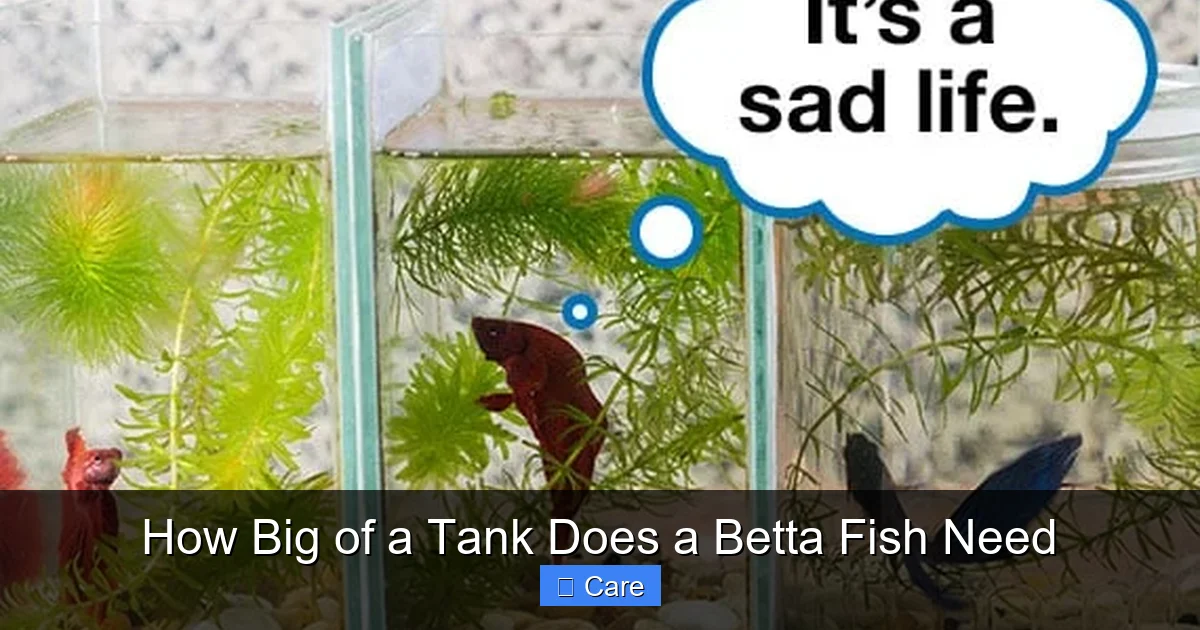
Walk into any big-box store, and you’ll see them: a solitary betta fish, often a brilliant blue or red, floating sadly in a tiny cup or a decorative vase. The imagery is powerful and persistent. This myth, that bettas are “perfect” for small spaces because they “breathe air,” has caused immeasurable suffering. It’s the single biggest misconception in the aquarium hobby. Let’s trace its roots and dismantle it completely.
The myth stems from a half-truth: yes, bettas possess a labyrinth organ, allowing them to gulp atmospheric air. This is an adaptation for surviving in shallow, oxygen-depleted rice paddies and stagnant ponds in their native Southeast Asia. But survival is not the same as thriving. In the wild, even these shallow waters span several square feet and are part of a complex ecosystem. A small bowl is the equivalent of locking a human in a studio apartment with no toilet, no fresh air circulation, and no way to clean. It’s a prison, not a home.
This retail packaging is driven by profit, not animal welfare. A tiny, cheap container is easy to stock and sell as an impulse buy. The message is clear: “This is a simple, low-maintenance pet.” The reality is the opposite. A betta in a proper setup is a wonderfully low-*maintenance* pet, but the initial *setup* must be correct. Choosing the right tank size is the very first and most critical step in that process.
The Science Behind Tank Size: Why Volume is Everything
The Nitrogen Cycle: Your Invisible Filter
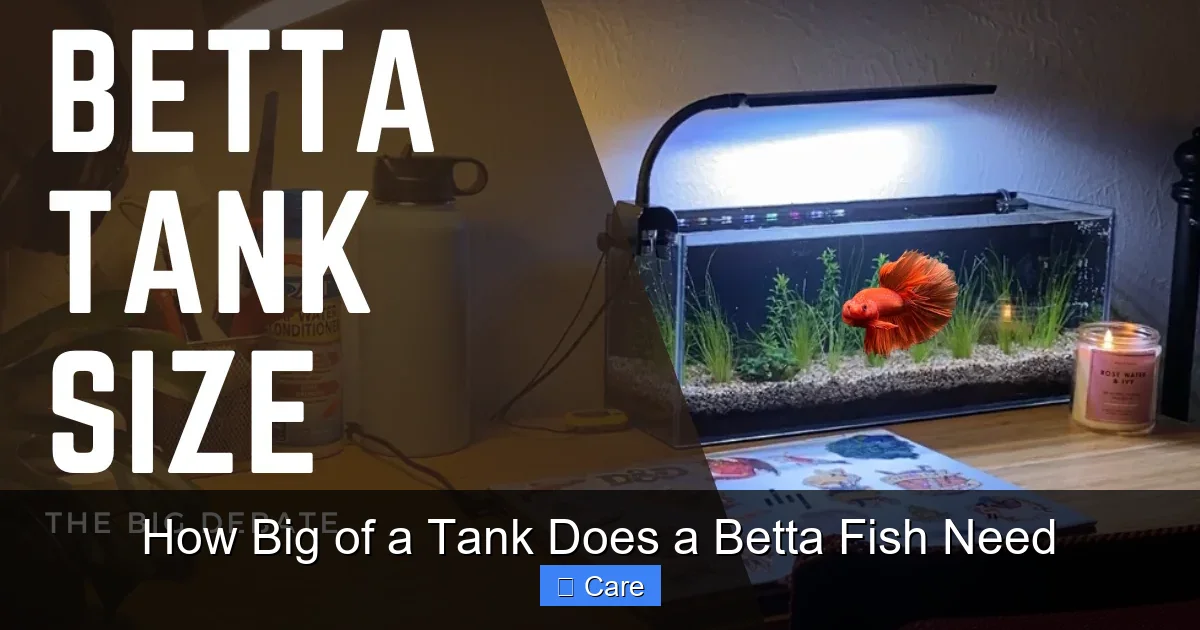
To understand why tank size matters, you must grasp the nitrogen cycle. This is the biological process that breaks down fish waste (ammonia) into less harmful substances (nitrite, then nitrate). It’s carried out by beneficial bacteria that live on every surface in your tank—the gravel, the rocks, the filter media. This bacterial colony is your tank’s life support system.
Visual guide about How Big of a Tank Does a Betta Fish Need
Image source: pnwbettas.com
A tiny volume of water, like in a bowl, has an infinitesimally small surface area for bacteria to colonize. A single betta’s waste produces ammonia that skyrockets to lethal levels within days. There’s no dilution effect. In a 5-gallon tank, that same amount of waste is diluted across a much larger volume, giving bacteria a chance to establish and process it. In a 10-gallon tank, the dilution is even greater, creating a massive buffer against mistakes. This is the primary reason larger tanks are more stable and forgiving.
Swimming Behavior and Mental Stimulation
Bettas are not sedentary decorations. In the wild, they patrol territories that can be several feet across. They explore, hunt for insects on the water’s surface, and flare at intruders. Confining them to a cup prevents all natural behaviors, leading to boredom, stress, and depression (yes, fish experience this). Signs of stress include lethargy, loss of color, clamped fins, and repetitive glass surfing.
A larger tank provides horizontal space for swimming. It allows you to create a varied landscape with plants, caves, and open areas. A betta will use this space, investigating every leaf and corner. This mental stimulation is crucial for their well-being. You’ll see their personality shine—they might “beg” for food at the front glass, follow your finger, or build a bubble nest in a quiet corner. These behaviors are rarely seen in severely restricted environments.
Defining the Minimum: The 5-Gallon Benchmark
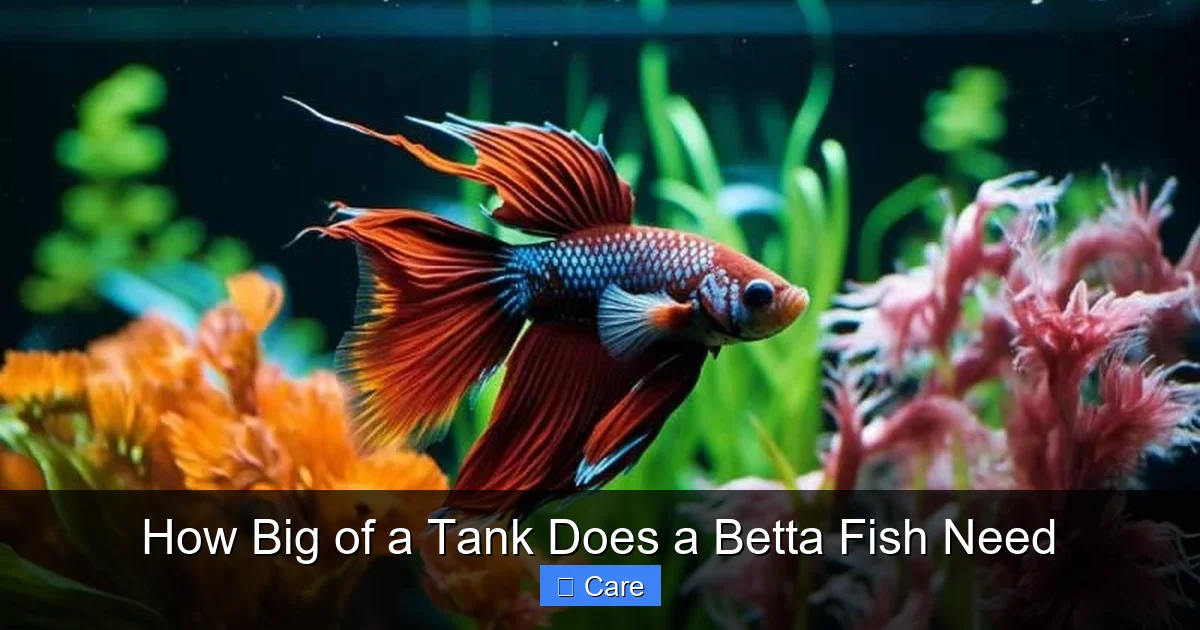
If you are on a strict budget or space constraint, the absolute smallest tank you should ever consider for a betta is a 5-gallon (19-liter) aquarium. This is not a recommendation for a “good” life; it is the baseline for a “not actively cruel” one. Here’s what a 5-gallon can and cannot do:
Visual guide about How Big of a Tank Does a Betta Fish Need
Image source: bettafishnest.com
- What it CAN do: It can hold a stable cycle with proper maintenance. It can accommodate a small, gentle filter (like a sponge filter) and a 25-50 watt heater. It provides enough room for a few silk plants and a cave. It is a vast improvement over a bowl.
- What it CANNOT do: It offers very little error margin. A missed water change or a slightly overfed day can cause dangerous ammonia spikes. It’s too small for any tank mates, not even a single ghost shrimp (which are often eaten anyway). It heats and filters less efficiently due to the small volume. Water changes are a bigger proportion of the total water volume, causing more stress to the fish each time.
Practical 5-Gallon Setup: You would need: a dedicated 5-gallon tank (not a “kit” with poor lighting/filter), a small sponge filter or a hang-on-back filter with a flow baffle, a 25-50W adjustable heater with a controller, a thermometer, a lid (bettas jump!), a bare minimum of 3-4 silk plants or live plants like Anubias, and a small hiding cave. This setup will cost more than a “betta kit” from a pet store but is the only ethical way to keep a betta in this small volume.
The Sweet Spot: Why 10 Gallons is the True Starting Point
Stability and Forgiving Nature
Jumping from 5 to 10 gallons (38 liters) might seem like a small increase, but it’s a quantum leap in terms of stability. You are doubling the water volume, which dilutes toxins twice as much. The beneficial bacterial colony has double the surface area to colonize. This means ammonia and nitrite spikes are less severe and shorter-lived if something goes wrong. A slightly overfed day or a missed water change is a minor blip on the radar in a 10-gallon, but a crisis in a 5-gallon.
Visual guide about How Big of a Tank Does a Betta Fish Need
Image source: fishlab.com
For a new hobbyist, this “forgiveness” is priceless. It reduces the anxiety of perfect weekly maintenance and gives you time to learn your tank’s rhythms. You can perform 25% water changes instead of 50%, which is far less disruptive to the fish and the established cycle.
Space for a Proper Environment
A 10-gallon tank typically has a footprint of about 20″ x 10″. This is a fantastic canvas. You can create a true aquascape. Place a piece of driftwood or a rock, plant a small forest of easy live plants like Java Fern, Anubias, and Amazon Swords. Add a few floating plants like Frogbit or Water Lettuce, which bettas adore for building bubble nests under. This complexity provides crucial enrichment. Your betta will have paths to explore, plants to rest on, and hiding spots to feel secure.
This space also allows for a properly sized filter. You can use a small hang-on-back (HOB) filter or a canister filter set to a very low flow, which you can further baffle with a sponge. The increased water movement promotes gas exchange and keeps the water crystal clear without stressing the betta.
Beyond the Basics: Tank Mates and Larger Setups
Can Bettas Have Friends?
This is a hotly debated topic. The short, safe answer for beginners is: no. Bettas are famously territorial, especially males. Introducing any other fish is a significant risk. However, in a properly sized and heavily planted 10+ gallon tank, *some* experienced keepers have success with a very few, specific, fast-moving, non-flashy tank mates that occupy different water levels. Possibilities include:
- Neon/Cardinal Tetras (6+): Need a 15-gallon minimum. Must be in a large school to diffuse their activity. Risky, as they have bright colors that can trigger aggression.
- Harlequin Rasboras (6+): Similar to tetras, need a 15-gallon minimum. Slightly less flashy.
- Pygmy Corydoras (6+): A good candidate for a 10-gallon. They are bottom-feeders, are not brightly colored, and are very peaceful. They need a soft substrate.
- Amano Shrimp: Large, fast, and mostly plant-focused. They can be eaten, but their size and speed offer a decent chance of survival in a 10-gallon with ample cover.
Rule of Thumb: If you want to try tank mates, start with a 15-gallon long. Never attempt with a 5-gallon. Always have a backup plan (a second cycled tank) to remove any fish that is being bullied or is bullying the betta. Observe closely for the first 72 hours.
The 15-20 Gallon “Luxury” Tank
If you have the space, a 15 or 20-gallon long tank is the ultimate betta setup. The water stability is superb. You have room for a beautiful, densely planted aquascape that looks like a slice of the betta’s natural habitat. You can comfortably house a small school of peaceful rasboras or corydoras with your betta. Maintenance is a breeze—a 25% water change in a 20-gallon tank is a simple 5-gallon bucket swap. The heater and filter operate more efficiently. Your betta will be so mentally and physically stimulated that its colors will be more vibrant and its behavior more engaging than you ever thought possible. It transforms the betta from a “pet in a box” to the centerpiece of a living ecosystem.
Essential Equipment for Any Tank Size
Now that we’ve established the tank size, let’s talk about the non-negotiable gear that goes inside it. This applies to a 5-gallon just as much as a 20-gallon.
Filtration: Gentle is Key
Bettas have long, flowing fins. A strong current exhausts them, makes it hard to swim, and can damage their fins. You need a filter that cleans the water without creating a torrent.
- Sponge Filter: The gold standard for bettas. It provides excellent biological filtration, creates a gentle flow of bubbles, and is impossible to suck a betta into. Requires an air pump.
- Hang-On-Back (HOB) Filter: Choose a small model rated for your tank size. You must baffle the outflow. This can be done with a pre-filter sponge, a piece of filter floss, or by adding a vertical piece of plastic to deflect the water.
- Internal Filter: Can work if it has an adjustable flow setting. Ensure the intake is covered with a sponge to prevent fin damage.
Heating: The 78-80°F Rule
Bettas are tropical fish. Their immune system shuts down below 74°F (23°C). A consistent temperature of 78-80°F (25.5-26.5°C) is ideal. You need:
- An Adjustable Aquarium Heater: Never use a preset “stick-on” heater. Get a reliable, adjustable heater (25-50W for a 5-10 gallon, 50-75W for a 15-20 gallon).
- A Separate Heater Controller (Highly Recommended): This is a cheap insurance policy. It plugs into your heater and has its own thermostat. If your primary heater fails and gets stuck “on,” the controller will cut power, preventing your tank from overheating and cooking your fish.
- A Digital Thermometer: Do not rely on the sticker thermometer that comes with the tank. Get a floating digital or a glass thermometer with a suction cup for an accurate reading.
Common Mistakes and How to Avoid Them
Mistake 1: “I’ll Cycle the Tank Later”
The nitrogen cycle takes 3-6 weeks to establish fully. You cannot put a betta in a new tank and expect it to survive. You must “cycle” the tank first by adding an ammonia source (pure ammonia or fish food) and letting the bacteria grow until they can process ammonia and nitrite to zero. Adding a betta before the cycle is complete is like pouring poison into its home. Use a liquid test kit (API Freshwater Master Test Kit) to monitor ammonia, nitrite, and nitrate. Only when both ammonia and nitrite read 0ppm is it safe.
Mistake 2: Overfeeding and Under-Maintaining
A betta’s stomach is the size of its eye. Feed 2-3 high-quality pellets once or twice a day, removing any uneaten food after 5 minutes. Overfeeding is the #1 cause of poor water quality. Even in a large tank, excess food decays and spikes ammonia. Pair this with inadequate water changes (you should change 25-30% weekly in a 5-gallon, 20-25% in a 10+ gallon), and you have a disaster waiting to happen.
Mistake 3: Using Decorations with Sharp Edges
Those plastic plants and resin castles from the pet store can have razor-sharp edges that tear a betta’s delicate fins, leading to infections like fin rot. Always choose plants with soft, silk leaves. For hiding spots, use all-natural materials like java moss, driftwood (soaked to remove tannins), or smooth, inert river stones. Sandpaper any rough edges on decorations before placing them.
Frequently Asked Questions
Can a betta fish truly be happy in a 5-gallon tank?
While a 5-gallon is the absolute minimum for survival, a betta can have a decent, stress-free life in one if it is meticulously maintained with a heater, gentle filter, and plenty of plants. However, “happy” is subjective. The betta will be far more active, colorful, and display more natural behaviors in a 10-gallon or larger tank where it has genuine space to explore.
What about those “betta vase” setups with a plant on top?
These are one of the worst possible setups. The plant roots do nothing to clean the water. The vase is far too small, lacks filtration and heating, and the water quickly becomes foul. The betta is trapped in a tiny, dirty, cold prison. Avoid these entirely.
Can I put a betta in a community tank?
Yes, but only in a *large*, *heavily planted* tank (15+ gallons recommended) with carefully chosen, peaceful tank mates that do not resemble other bettas (no long, bright fins) and occupy different areas of the tank. It is a calculated risk that requires close observation and a backup plan. Never attempt this in a tank under 10 gallons.
Is a filter really necessary if I do frequent water changes?
Yes. Filters do more than just remove debris; they provide the essential surface area for beneficial bacteria that process toxic fish waste. Water changes remove nitrates but do nothing for the daily ammonia production. Without a filter, ammonia will spike lethally between changes, even in a large tank.
My betta is in a 2.5 gallon tank with a filter and heater. Is that okay?
No. A 2.5-gallon tank is too small to establish a stable cycle or provide a meaningful buffer against pollution. Water parameters will fluctuate wildly, causing chronic stress. You must upgrade to at least a 5-gallon tank as soon as possible for the fish’s long-term health.
How often should I do water changes in my betta tank?
In a properly cycled 5-gallon tank, perform a 25-30% water change weekly. In a 10-gallon or larger, 20-25% weekly is sufficient. Never change 100% of the water, as this kills your beneficial bacteria and resets your cycle. Always use a dechlorinator to treat tap water before adding it to the tank.