Does a Betta Fish Need a Filter
While a betta fish can survive without a filter, they absolutely thrive with one. The common myth that bettas prefer dirty, stagnant water is false and leads to shortened lifespans. A proper filter maintains crucial water quality by cycling toxins, reduces harmful bacteria, and provides necessary water movement—as long as it’s a gentle, adjustable flow suited to a betta’s long fins. For a happy, healthy betta that lives 3-5 years, a filter is a non-negotiable piece of equipment in a properly sized tank (minimum 5 gallons).
Key Takeaways
- Surviving vs. Thriving: A betta can exist in a small, unfiltered bowl, but this is a life of stress and poor health. A filter is essential for them to thrive, reaching their full lifespan potential.
- Filters Enable the Nitrogen Cycle: The primary job of a filter is to host beneficial bacteria that convert toxic fish waste (ammonia) into less harmful substances (nitrite, then nitrate). This cycle is the foundation of all aquarium health.
- Ammonia is a Silent Killer: Even tiny amounts of ammonia from a betta’s gills and waste are deadly over time. A filter’s bio-media is the only reliable way to process this toxin continuously.
- Gentle Flow is Mandatory: Betta fish have delicate, flowing fins and come from slow-moving waters. A filter with a strong current causes stress, exhaustion, and physical damage. Look for sponge filters or adjustable hang-on-back/canister filters.
- Filtration ≠ Water Changes: A filter reduces the frequency of water changes but does not replace them. Regular partial water changes (25-50% weekly) are still required to remove nitrate and other dissolved wastes.
- Tank Size Dictates Feasibility: In a tiny, unfiltered vase or bowl, water quality deteriorates rapidly. A filtered tank of 5 gallons or more provides a stable environment that is exponentially easier to maintain.
- Proper Setup & Maintenance is Key: A filter must be correctly sized for the tank, cycled before adding the betta, and maintained (rinsing bio-media in old tank water) to function effectively and safely.
📑 Table of Contents
- Debunking the Bowl Myth: The Origin of a Dangerous Idea
- The Science of Filtration: Why Water Quality is Everything
- Choosing the Right Filter for Your Betta: Gentle is the Golden Rule
- The Critical Role of Tank Size and the Nitrogen Cycle
- Can You Keep a Betta Without a Filter? The “No-Filter” Method
- Putting It All Together: Your Betta’s Ideal Filtration Setup
- Conclusion: A Filter is an Act of Care
Debunking the Bowl Myth: The Origin of a Dangerous Idea
Walk into any big-box pet store, and you’ll likely see them: small, ornate glass vases or one-gallon “betta bowls” with a single, flaring fish perched atop a silk plant. This iconic, yet deeply flawed, image has sold millions of people on the idea that betta fish are low-maintenance pets perfectly content in isolation. The marketing slogan “a betta in a bowl” is one of the most persistent and harmful myths in the aquarium hobby. It implies a betta fish does not need a filter, a heater, or much space. But where did this idea come from, and why is it so wrong?
The myth stems from a half-truth about the betta’s natural habitat. Wild bettas (Betta splendens) are native to the shallow, slow-moving rice paddies, stagnant ponds, and ditches of Thailand and Cambodia. These waters are often warm, low in oxygen, and yes, can appear murky. From this, an erroneous conclusion was drawn: “If they live in dirty, still water in the wild, they must like it and need it in captivity.” This is a critical misunderstanding of ecology versus optimal husbandry. In the wild, bettas survive in these conditions through a combination of specialized adaptations (like their labyrinth organ for breathing air) and by being part of a complex, balanced ecosystem with plants, microorganisms, and natural water turnover from rain. A small, static bowl in your living room has none of these balancing forces. It is a toxic, shrinking prison. The “dirty” water in the wild is not filled with concentrated fish waste and ammonia; it’s tea-colored from tannins and plant decay, and it’s part of a functioning cycle. A unfiltered bowl is simply a container where the betta’s own waste quickly poisons it.
The Labyrinth Organ: A Survival Tool, Not a Preference
The betta’s famous labyrinth organ allows it to gulp atmospheric air. This is an incredible adaptation for surviving in oxygen-poor water, but it is not a license to keep them in poor-quality water. Think of it like a human’s ability to hold their breath—it’s useful in emergencies, but you wouldn’t choose to live underwater. Providing clean, well-oxygenated water (through surface agitation from a filter) is always preferable and reduces the stress on the fish. The labyrinth organ is a survival mechanism, not a sign that bettas prefer low-oxygen environments.
The Science of Filtration: Why Water Quality is Everything
To understand why a filter is essential, we must understand what it actually does. Filtration is not primarily about making water look clear (though it does that too). Its three core functions are mechanical, chemical, and biological filtration. For a betta tank, biological filtration is the absolute most critical.
Visual guide about Does a Betta Fish Need a Filter
Image source: fishkeepingguide.net
Biological Filtration: The Invisible Lifeline
This is the process by which beneficial bacteria (Nitrosomonas and Nitrobacter) convert toxic fish waste. Here’s the simple, deadly cycle: Your betta eats, breathes, and excretes ammonia (NH3/NH4+). Even a tiny betta produces a surprising amount. Ammonia is highly toxic, causing burns to the gills and internal organs, leading to lethargy, loss of appetite, and death. In a cycled filter, the first bacteria colony consumes ammonia and converts it to nitrite (NO2-), which is also highly toxic. A second bacteria colony then consumes nitrite and converts it to nitrate (NO3-), which is much less toxic but still needs to be managed via water changes.
This “nitrogen cycle” must be established in the filter media (ceramic rings, bio-balls, sponge) before you even add your betta. This process, called “cycling the tank,” takes 4-6 weeks. Without a filter providing ample surface area for these bacteria to grow, ammonia and nitrite will spike uncontrollably in a new or unfiltered tank, a condition known as “new tank syndrome” that is a leading cause of death for beginner bettas. A filter isn’t just helpful; it’s the engine that makes a stable, safe aquatic environment possible.
Mechanical and Chemical Filtration: The Support System
Mechanical filtration physically removes debris like uneaten food, feces, and shed skin. This is done with filter floss, sponge pads, or filter socks. Keeping the water clear isn’t just for aesthetics; decaying organic matter trapped in the gravel or floating in the water contributes to ammonia spikes and bacterial blooms. A filter with good mechanical media catches this gunk before it breaks down.
Chemical filtration uses media like activated carbon or specialty resins to absorb dissolved pollutants, medications, tannins (which can lower pH), and odors. While not always strictly necessary in a well-maintained betta tank, carbon is invaluable for polishing the water after a cycling period or if you need to remove medications or tannins from driftwood. It’s a useful tool in the filtration toolbox.
Choosing the Right Filter for Your Betta: Gentle is the Golden Rule
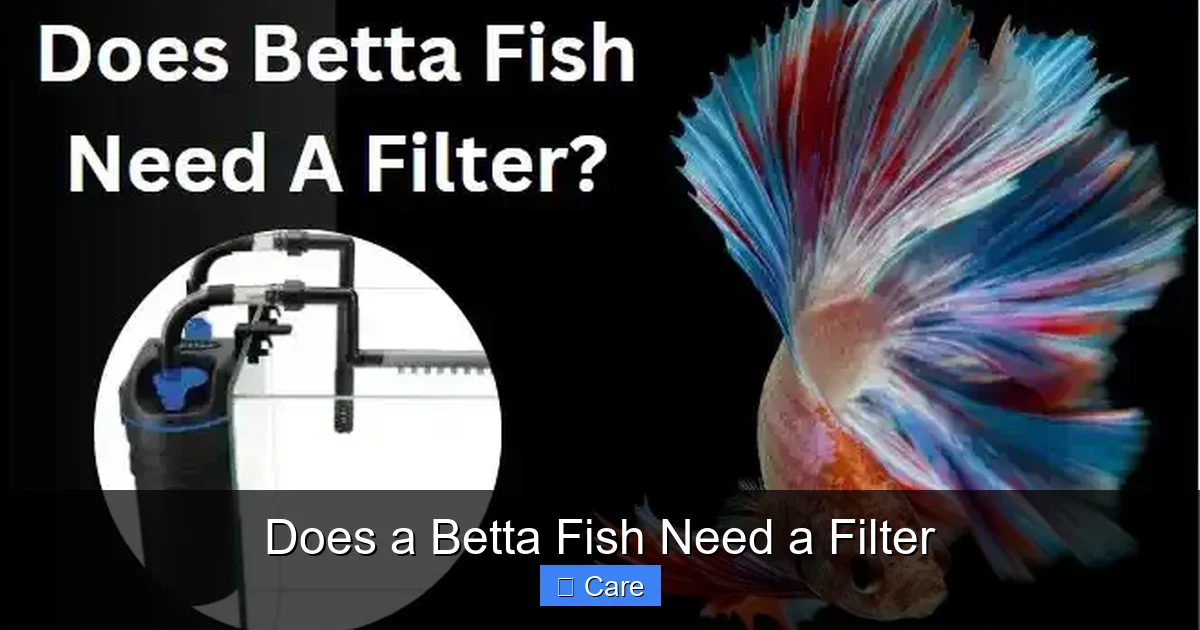
Okay, so a filter is necessary. But you can’t just slap any old aquarium filter on a betta tank. The cardinal rule is gentle flow. Betta fish are not built for currents. Their large, flowing fins are for display, not swimming against a stream. A strong filter current forces them to expend energy just to stay in one place, leading to chronic stress, exhaustion, clamped fins, and can even cause physical damage to their delicate fin tissues. In the worst cases, they are pushed into the filter intake or against the glass.
Visual guide about Does a Betta Fish Need a Filter
Image source: petscareworld.com
Sponge Filters: The Betta Favorite
For single betta tanks (especially in 5-10 gallon setups), the humble sponge filter is often the gold standard. It’s an air-driven filter where an air pump pushes bubbles through a porous sponge. The bubbles create very mild water movement and surface agitation for gas exchange. The sponge itself is fantastic biological media, providing immense surface area for beneficial bacteria. It’s also completely safe—no impeller to suck in fins, no strong current. It’s quiet, cheap, and incredibly effective at biological filtration. The only downside is it doesn’t do much mechanical filtration for fine particles, and you’ll see the bubbles (which some find unsightly).
Adjustable Hang-On-Back (HOB) Filters
These are the common power filters that hang on the back of the tank. Many modern HOB filters come with a flow control dial or a bypass valve. Look for models where you can dial the flow down to a very gentle trickle. You can also modify the output by attaching a spray bar or a sponge over the nozzle to diffuse the current. Brands like the Tetra Whisper IQ or some Fluval models offer good adjustability. Ensure the intake tube has a pre-filter sponge to protect your betta’s fins.
Canister Filters: For Larger, Planted Setups
For a heavily planted 20+ gallon community tank with a betta, a canister filter offers superior mechanical, chemical, and biological capacity with a very quiet, customizable flow. The key is to use a spray bar or lily pipes to create a soft, wide spread of water movement rather than a focused jet. Canisters are more expensive and require more maintenance but are excellent for complex ecosystems.
What to AVOID: Internal Power Filters & Strong Flow
Small, cheap internal power filters (the ones that sit inside the tank) are often problematic. They typically have a very direct, powerful outflow that is difficult to modify and can stress a betta. Avoid any filter that creates a visible current your betta has to fight. If you see your betta consistently hiding behind decorations or pinned against the back glass by the flow, the filter is too strong.
The Critical Role of Tank Size and the Nitrogen Cycle
The question “does a betta need a filter?” cannot be answered in a vacuum. It is intrinsically linked to tank size. The logic is simple math: a larger volume of water dilutes toxins more slowly and provides a more stable environment. A 1-gallon bowl with no filter will have ammonia spike to lethal levels within a day or two after a feeding. A 5-gallon tank with a properly cycled filter gives you a buffer—the ammonia produced is diluted, and the bacteria colony has time to process it. This is why the “betta in a bowl” is so cruel; it’s an impossible environment to maintain without daily, complete water changes, which is still highly stressful and rarely done correctly.
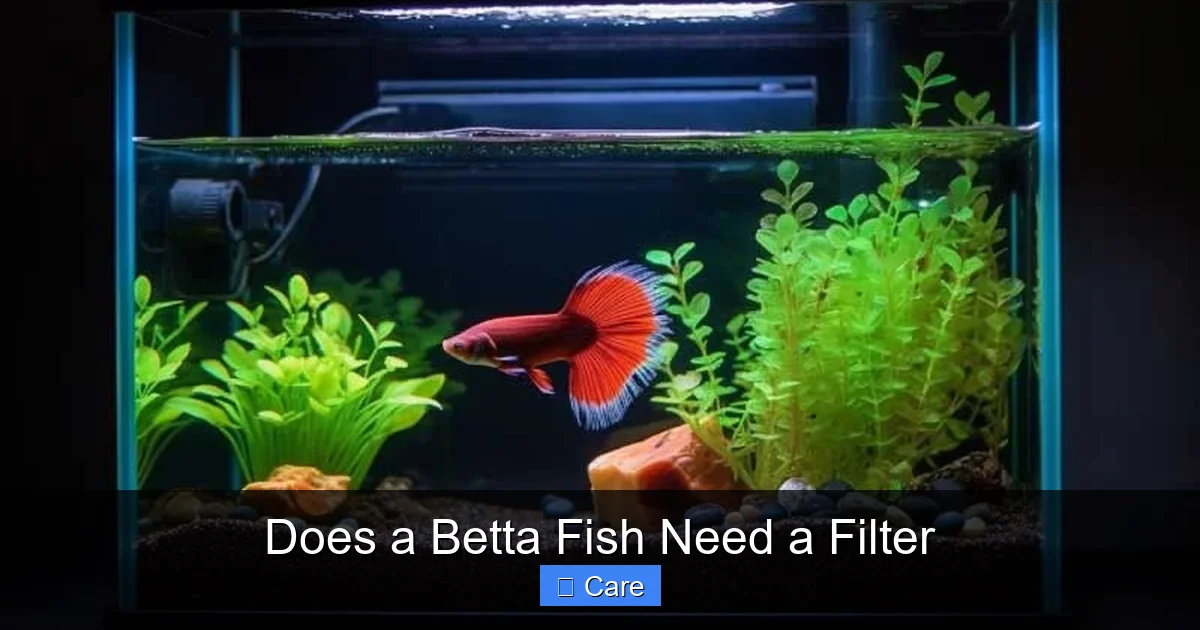
Visual guide about Does a Betta Fish Need a Filter
Image source: bettafishnest.com
Cycling: The Non-Negotiable Prelude
You cannot add a betta to a new tank with a new filter and expect it to be safe. The filter media must be colonized by beneficial bacteria first. This is the cycling process. You set up the tank with filter, heater, and decor (no fish). You add an ammonia source (pure ammonia, fish food, or a bacteria starter). You test the water daily with a liquid test kit (API Freshwater Master Test Kit is the industry standard). You watch ammonia rise, then fall as nitrite rises, then nitrite falls as nitrate rises. Once ammonia and nitrite are at 0 ppm and nitrate is present, the tank is cycled and safe for your betta. This process takes patience but is the single most important thing you can do for your betta’s long-term health. A filter provides the home for these bacteria, but you must cultivate the colony first.
Maintenance: Keeping the Cycle Alive
Once cycled, maintenance is simple but vital. Never replace all your filter media at once or rinse it in tap water. You would be sterilizing your entire bacterial colony, causing a “cycle crash” and a toxic ammonia spike. Instead, during your weekly water change, rinse about 25-30% of the mechanical media (the sponge or floss) in a bucket of old tank water (which dechlorinates and is full of bacteria). This removes large debris while preserving the bacteria. Replace chemical media (carbon) as directed, usually every 4-6 weeks. Biological media (ceramic rings) should rarely, if ever, be replaced. If you must, replace half at a time months apart.
Can You Keep a Betta Without a Filter? The “No-Filter” Method
Yes, technically, you can keep a betta without a filter, but it is an advanced, high-maintenance, and risky endeavor that is generally not recommended for beginners. It is not a “natural” or “better” method; it’s a compromise that requires immense diligence to avoid poisoning your fish. If you choose this path, you are accepting full responsibility for performing the biological function of the filter yourself through very frequent and substantial water changes.
The Walstad Method and Its Challenges
The “no-filter” or “natural” method often refers to the Walstad Method, which uses a heavily planted tank with a deep substrate to host anaerobic bacteria that process nitrate. For a single betta in a large, densely planted tank (20+ gallons), this can be stable. However, for the typical beginner’s 2.5-gallon “betta tank,” it is a recipe for disaster. Without mechanical filtration, waste accumulates on the substrate and plant leaves. Without a robust biological filter media, ammonia spikes are inevitable and fast. The only defense is daily testing and water changes—often 30-50% daily in small tanks. This is stressful for the fish and a huge commitment for the owner. The margin for error is zero.
When a Filter Might Be Impractical
There are rare scenarios where a filter is logistically difficult: a very small desktop “nano” tank with no space for a HOB, or a temporary hospital/quarantine tank. In these cases, you must:
- Use the largest tank possible. A 3-gallon unfiltered tank is marginally better than a 1-gallon one.
- Perform massive, frequent water changes. 50% every day, sometimes twice a day, based on ammonia/nitrite tests.
- Have a test kit and use it. You are flying blind without one.
- Never overfeed. A single pellet too many can crash the water.
This is a temporary holding pattern, not a permanent solution. The goal should always be to move to a filtered, cycled system as soon as possible.
Putting It All Together: Your Betta’s Ideal Filtration Setup
Let’s synthesize this into a practical, actionable plan for a happy, healthy betta.
The Minimum Recommended Setup
For a single betta, your goal is a 5-gallon (or larger) glass aquarium with a secure lid (betta jumpers!). Equip it with:
- A gentle, adjustable filter. A sponge filter is the simplest, most effective, and safest bet. For a 5-gallon tank, a small sponge filter like the AquaTop Sponge Filter (5-10 gallon size) powered by a tiny air pump is perfect.
- A reliable heater. Bettas are tropical fish requiring 78-80°F (25.5-26.5°C). A 25-watt submersible heater with an automatic shut-off is standard for a 5-gallon tank.
- A thermometer. To verify heater accuracy.
- Decor and hiding places. Live or silk plants, smooth rocks, and ornaments with no sharp edges. Provide vertical resting spots near the surface (a betta leaf hammock is ideal).
- A water test kit. The API Freshwater Master Test Kit is essential for cycling and monitoring.
- A water conditioner. Seachem Prime is the gold standard for detoxifying ammonia and chloramines during water changes.
The Weekly Maintenance Routine
Once your tank is fully cycled (after 4-6 weeks of testing), your weekly routine should be:
- Test your water. Check ammonia, nitrite, and nitrate. They should be 0, 0, and <20 ppm respectively.
- Perform a 25-30% water change. Use a gravel vacuum to siphon debris from the substrate. Match the temperature of the new water to the tank.
- Condition the new water. Add water conditioner to the bucket before adding it to the tank.
- Maintain the filter. If flow seems reduced, rinse the sponge or mechanical media in a bucket of old tank water. Do not use tap water.
- Observe your betta. Check for any signs of illness, stress, or changes in behavior or appetite.
This routine, centered around a functioning filter, takes about 20-30 minutes a week and will keep your betta vibrant, active, and healthy for years.
Conclusion: A Filter is an Act of Care
The question “does a betta fish need a filter?” is ultimately a question about what kind of life we want for our pets. The minimal, survival-only existence in a unfiltered bowl is a relic of outdated marketing. It is a life of chronic stress, compromised health, and a fraction of the potential lifespan. Providing a filtered, cycled tank of appropriate size is the bare minimum of responsible betta fish care. It’s not about making our lives easier (though it does); it’s about respecting the biological needs of a living creature. A filter, when chosen and maintained correctly, is the cornerstone of a stable ecosystem. It silently works to remove toxins, host beneficial life, and create the clear, clean water that allows your betta’s stunning colors to shine, its fins to flow freely, and its fascinating personality to emerge. You wouldn’t expect a dog to live in a kennel full of its own waste. Don’t expect it of your betta. Invest in a proper tank, a gentle filter, and the patience to cycle it. Your betta will repay you with years of beauty and companionship.
Frequently Asked Questions
Can a betta fish live without a filter?
Yes, a betta can survive for a time in an unfiltered container, but this is a life of poor water quality and high stress that severely shortens its lifespan. A filter is essential for a betta to thrive long-term.
What is the best type of filter for a betta fish?
The best filters for bettas are sponge filters or adjustable hang-on-back (HOB) filters with a flow control valve. Both provide excellent biological filtration with a very gentle current that won’t damage fins or cause stress.
How do I know if my betta’s filter flow is too strong?
Signs of too-strong flow include your betta consistently hiding behind decorations, clamped fins, fatigue (resting on the bottom a lot), being pushed against the tank glass, or visible fin tearing. You should see gentle water movement, not a strong current.
Do I still need to do water changes if I have a filter?
Absolutely. A filter reduces the frequency of water changes but does not eliminate the need. You must still perform weekly 25-50% water changes to remove nitrate and other dissolved wastes that the filter does not process.
Can I put a betta in a new tank with a new filter right away?
No. You must first “cycle” the tank, which means establishing a colony of beneficial bacteria in the filter media to process ammonia. This takes 4-6 weeks. Adding a betta to an uncycled tank will expose it to lethal ammonia poisoning.
How often should I clean my betta’s filter?
Only clean the mechanical media (sponge/floss) when it becomes clogged and water flow slows, typically every 2-4 weeks. Always rinse it in old tank water, never tap water, to preserve the beneficial bacteria. Never replace all filter media at once.