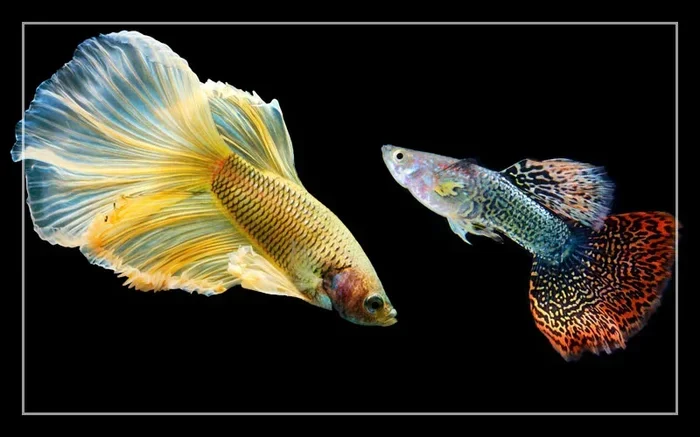
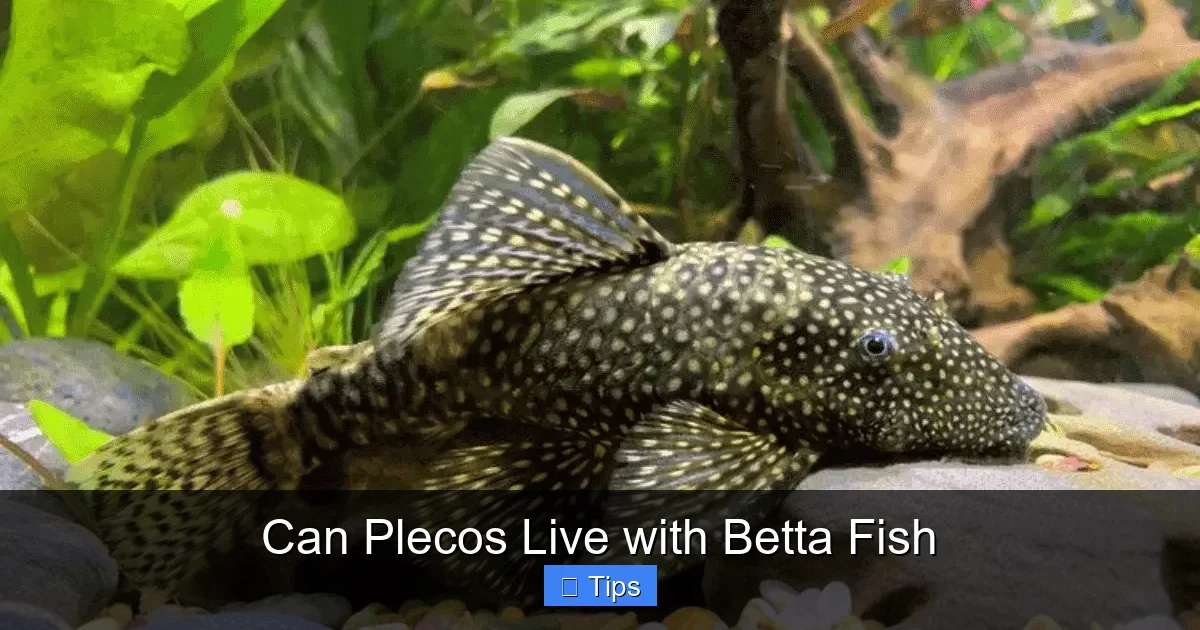
Can Plecos Live with Betta Fish
Yes, some plecos can live with betta fish, but success is not guaranteed and depends heavily on careful planning. The key is choosing the right pleco species—typically small, peaceful varieties like the Bristlenose Pleco—and providing a spacious, heavily decorated tank of 30+ gallons to diffuse the betta’s territorial aggression. You must also meet the pleco’s specific needs for wood, pristine water, and a high-quality diet, as a dirty tank or underfed pleco will quickly lead to conflict or health issues. Never assume compatibility; observe interactions closely and be prepared to separate them if problems arise.
So, you’ve got that stunning, flowing-finned betta in his solo tank, and you’re thinking about adding a little “cleaner crew” buddy. The idea of a plecostomus, that famous algae-eating catfish, seems perfect. But then you hear the whispers, the horror stories: “My betta killed the pleco!” or “The pleco sucked the slime coat off my betta!” It leaves you wondering, can plecos live with betta fish? The honest, and perhaps frustrating, answer is: it depends. It’s not a simple yes or no. It’s a conditional yes, hinging on a perfect storm of factors you, as the aquarium keeper, must control. This guide will walk you through every single one of those factors, from the temperament of your individual betta to the specific species of pleco, tank setup, and feeding routines. We’re going beyond the pet store myth to give you the real blueprint for either a successful community tank or a clear reason to keep your betta as the lone king he was meant to be.
Key Takeaways
- Tank Size is Non-Negotiable: A minimum of 30 gallons is essential to provide enough space for both species to establish territories and avoid constant conflict.
- Pleco Species Matters Immensely: Avoid common plecos (which grow huge and are aggressive). Opt for small, peaceful species like the Bristlenose, Albino Bristlenose, or Clown Pleco.
- The Betta’s Temperament is the Wild Card: A particularly aggressive or territorial betta may never tolerate a tankmate, regardless of the pleco’s disposition.
- Hiding Spots & Structure are Critical: Driftwood, caves, and dense plants are mandatory for the pleco to feel secure and for the betta to patrol a defined territory, reducing line-of-sight confrontations.
- You Must Feed the Pleco Properly: Plecos are not just “cleaner fish.” They require high-quality algae wafers, wood to graze on, and occasional protein to stay healthy and less likely to bother your betta.
- Water Quality Must Be Impeccable: Both species are sensitive to poor water conditions. A powerful canister filter and regular water changes (25-50% weekly) are crucial for long-term health.
- Introduction Process is Key: Use a divider or introduce the pleco first in a fully cycled, established tank. Never add a pleco to a new, uncycled tank with a betta.
📑 Table of Contents
- Understanding the Betta: More Than Just a Pretty Face
- The Pleco Personality: It’s Not “One Size Fits All”
- Tank Setup: The Foundation for Peace
- Which Plecos Are Safest with Bettas? A Detailed Breakdown
- The Step-by-Step Guide to Introducing Your Tank Mates
- Common Mistakes and Red Flags to Avoid
- The Verdict: Is It Worth the Risk?
Understanding the Betta: More Than Just a Pretty Face
Before we even talk about plecos, we must become experts on our betta. The Siamese fighting fish is not a passive, decorative object. He is a territorial, often moody, and incredibly perceptive vertebrate with a personality as big as his fins. His entire world is that glass box, and he will defend it.
The Betta’s Territorial Instincts
In the wild, bettas (Betta splendens) are not solitary hermits. They occupy vast, dense networks of shallow rice paddies and slow-moving streams. However, they are still highly territorial, especially males. A male betta will establish a “bubble nest” area and fiercely defend it from rivals. In your aquarium, every square inch is his territory. He patrols it constantly, flaring his gills at his own reflection, and will view any new, slow-moving, bottom-dwelling creature as an intruder or a potential threat to his domain. This instinct doesn’t vanish in captivity; it’s the core of his being.
Signs of a Stressed or Aggressive Betta
You need to be a betta behavior detective. A happy, secure betta will be active, curious, and build bubble nests (though not all do). A stressed or aggressive betta will show clear signs: constant flaring (spreading gills and fins), chasing anything that moves near him, fin nipping at tank decor or reflections, and hiding excessively. If your betta flares at a spoon waved near the glass, he’s a prime candidate for aggression toward a tankmate. His initial reaction to a pleco will be a critical indicator. Will he cautiously investigate, or will he immediately charge and bite? You must observe this for days, not hours.
The Pleco Personality: It’s Not “One Size Fits All”
Here’s where the biggest myth gets shattered. The term “pleco” is a catch-all for hundreds of species in the Loricariidae family. The image most people have is of the Common Pleco (Hypostomus plecostomus), a fish that can grow over 24 inches, produces massive waste, and becomes increasingly territorial and aggressive as it matures. This is the worst possible choice for a betta tank. It’s like introducing a territorial bull into a delicate garden. Your goal is to find the opposite: a small, peaceful, and reclusive species that wants nothing to do with the betta’s upper-water-world drama.
Visual guide about Can Plecos Live with Betta Fish
Image source: fisharticle.com
Small & Peaceful Species: Your Realistic Options
Focus on these species, which have a proven track record (with caveats) of cohabiting with bettas in properly sized tanks:
- Bristlenose Pleco (Ancistrus sp.): The gold standard. Males grow to 4-5 inches, females slightly smaller. They are nocturnal, shy, and spend their days hidden in caves or under driftwood. Their “bristles” are actually sensory organs. The Albino variety is equally suitable.
- Clown Pleco (Panaqolus maccus): A smaller, wood-eating species reaching 3-4 inches. They are active grazers but remain reclusive. They have distinct striped patterns.
- Butterfly Pleco (Dekeyseria spp.): Another small (3-4 inch), visually striking species that prefers well-oxygenated water and plenty of rockwork.
- Zebra Pleco (Hypancistrus zebra): A stunning, small (3 inch), and notoriously expensive species. They are shy and require excellent water conditions. Not for beginners, but a compatible candidate in the right setup.
Critical Reminder: Even these “small” plecos need space. A single Bristlenose in a 5-gallon tank with a betta is a recipe for disaster. The tank size requirement is the next pillar of success.
Tank Setup: The Foundation for Peace
This is the single most important section. A bad tank setup guarantees failure, no matter how docile your betta or pleco seems. The goal is to break up line-of-sight, provide distinct territories, and meet the biological needs of both fish.
Visual guide about Can Plecos Live with Betta Fish
Image source: aquariumfishmag.com
The 30-Gallon (and Up) Rule
Let’s be brutally clear: a 5-gallon or 10-gallon tank is not suitable for a betta/pleco community. It’s too small. The betta will see the entire tank as his, and the pleco will have nowhere to escape. The minimum recommended size is a 30-gallon long tank. This provides a footprint (length) that is more important than height for these fish. A 40-gallon breeder is an even better, more stress-free choice. The extra space allows you to create physical barriers and gives the pleco a proper grazing territory at the bottom, far from the betta’s mid-water patrol zone.
Creating a Pleco-Proof, Betta-Friendly Landscape
Your aquascape is your peace treaty. You must build it with intent.
- Driftwood is Non-Negotiable: For plecos, especially Bristlenoses, driftwood is a primary food source and a security blanket. It provides surface area for biofilm and algae to grow, which they graze on. It also softens water slightly. Use large, branched pieces to create a complex bottom structure.
- Caves and Hiding Spots: Every pleco needs at least one dark, secluded cave it can claim as its own. Use ceramic caves, PVC pipes (cleaned thoroughly), or rock piles. Place these in the corners and back of the tank, out of the main sightlines.
- Dense Planting: Live plants are ideal. Use tall, leafy plants like Amazon Swords, Java Ferns, and Cryptocorynes to create a jungle at the mid-level. Floating plants like Frogbit or Salvinia are fantastic for breaking up the surface, where bettas often patrol, and diffusing light. This gives the betta places to rest and “patrol” among leaves, reducing his focus on the open bottom.
- Rocks and Hardscape: Create a visual barrier between the betta’s preferred front-and-center area and the pleco’s back-corner domain. A stack of large, flat rocks or a slate divider can be very effective.
Which Plecos Are Safest with Bettas? A Detailed Breakdown
We’ve mentioned the species, but let’s dive deeper into the “why” and add crucial warnings.
Visual guide about Can Plecos Live with Betta Fish
Image source: petfishonline.com
The Champion: Bristlenose Pleco (Ancistrus sp.)
This is your best shot. They are small, have a gentle disposition, and are primarily nocturnal. During the day, they are almost always hidden. Their diet is heavily geared toward wood and algae, making them less likely to scavenge for protein-based foods that might lead them near a betta. They are also one of the few plecos that can be sexed easily (males have larger bristles). A single male or female is fine; they are not schooling fish and can be territorial with their own kind in small tanks.
The Underdog: Clown Pleco (Panaqolus maccus)
An excellent alternative. They are even smaller and more secretive. Their demand for wood is even higher. They are active grazers but will spend hours hidden in tiny crevices. Their smaller size makes them less of a “target” for a betta’s aggression.
The Species to AVOID at All Costs
- Common Pleco / Sailfin Pleco: Grows huge (2+ feet), lives 15+ years, produces a mountain of waste, and becomes belligerent. It will outgrow your tank and bully your betta.
- Rubberlip Pleco (Chaetostoma sp.): Often sold as a “small pleco,” but many get to 6-8 inches. They are more active and less reclusive than Bristlenoses, increasing interaction chances.
- Any “Royal” or “Golden” Pleco: These are usually larger, more aggressive species in disguise.
- Any Pleco You Can’t Identify: If the tag just says “plecostomus” or “algae eater,” do not buy it for a betta tank. It’s a gamble you will likely lose.
The Step-by-Step Guide to Introducing Your Tank Mates
Assuming you have a cycled, heated, filtered 30+ gallon tank with the proper hardscape, here is the safest protocol.
Step 1: The Pleco First Strategy (Highly Recommended)
This is the gold standard. Fully cycle your tank with the pleco as the sole inhabitant for 4-6 weeks. This allows the pleco to:
- Establish its territory and claim its cave.
- Grow accustomed to the tank’s routine (lights on/off, feeding times).
- Start its grazing routine on driftwood.
- Become a ” permanent fixture” in the environment.
After this period, you can introduce the betta. Use a divider in the tank for a few days so they can see but not touch each other. If the betta flares excessively at the divider for more than a day or two, it’s a red flag. If he mostly ignores it, you can try a very slow, supervised release. Always have a backup tank or net ready to immediately separate them.
Step 2: If You Must Add a Pleco to an Existing Betta
This is riskier. The betta already owns the territory. Use a large, clear breeding box or divider within the main tank. Place the pleco inside with its own driftwood and cave for at least 48 hours. Observe the betta’s reaction to the “prisoner.” If he constantly flares and rams the divider, abort the mission. If he shows mild curiosity and then ignores it, you can attempt a supervised release at night when both fish are less active. Watch intently for the first hour.
Step 3: The First 72 Hours of Co-Habitation
This is the critical window. Keep the lights dimmed. Feed the betta as usual, but also feed the pleco its own food (algae wafer, blanched zucchini) in a specific spot near its cave. A well-fed pleco is a less curious pleco. Watch for any chasing, nipping, or the pleco hiding constantly and not coming out to eat. One or two brief chases can be normal as they establish boundaries. Persistent, violent chasing means immediate separation.
Common Mistakes and Red Flags to Avoid
Even with the best intentions, aquarists make critical errors that doom the pairing.
Mistake 1: “He’s Just a Cleaner Fish”
This is the #1 fatal mistake. Plecos are not sanitation workers. They do not eat fish poop. They require a specific diet. A pleco starved of its proper food will become emaciated, stressed, and may start scavenging for other food sources, including the slime coat on your betta (which is a sign of severe health issues). Always provide dedicated pleco food.
Mistake 2: Inadequate Hiding Spots
One small cave is not enough. In a 30-gallon tank, provide 2-3 distinct hiding spots of different types (cave, under driftwood, behind a rock). The pleco must feel it has options. Without them, it will be stressed, its immune system will drop, and it will be forced out into the open where the betta can harass it.
Mistake 3: Poor Water Quality
Plecos are messy eaters. They shred algae wafers and wood. A small filter will clog quickly, leading to high ammonia and nitrite levels. Both bettas and plecos are sensitive to poor water. This causes stress, disease (like ich or velvet), and makes the pleco lethargic and vulnerable. Invest in a filter rated for at least twice your tank’s volume. A canister filter is ideal for this setup.
Recognizing the Red Flags: When to Separate
You must be willing to be the bad guy and separate them if needed. Red flags include:
- The betta relentlessly chasing the pleco to the point of exhaustion.
- The pleco hiding 24/7 and not coming out to eat for more than 2 days.
- The pleco showing signs of physical injury (torn fins, missing scales).
- The betta flaring and posturing at the pleco’s cave constantly.
- Either fish showing signs of chronic stress: loss of color, clamped fins, lethargy, rapid breathing.
Have a “hospital tank” or a spare cycled tank ready. It is always better to have two happy, solitary fish than one dead or dying community.
The Verdict: Is It Worth the Risk?
After all this, you might be thinking, “Why not just keep the betta alone?” And that is a perfectly valid and responsible choice. A betta in a well-planted, heated, filtered 10-gallon tank is living a life of luxury. Adding a pleco changes that dynamic entirely. It turns a simple, low-maintenance setup into a complex, high-maintenance community project that requires significant investment in space, equipment, and time.
If you have the tank size (30+ gallons), the willingness to research and purchase the correct pleco species (Bristlenose), the dedication to provide specialized diet and wood, and the observational skills to monitor their relationship, then yes, it can be done successfully. You’ll be rewarded with a fascinating display of two very different behaviors sharing a space. The betta will cruise the mid-water, a flash of color, while the pleco works the bottom, a silent, armored vacuum.
But if any of those pillars—space, correct species, proper diet, time for observation—are missing, then no, they cannot live together peacefully. The risk to the pleco’s life (from aggression or poor care) and the betta’s stress levels is too high. In those cases, your betta’s solitary reign is the kindest and most ethical choice. The question isn’t just “can they live together?” but “can I provide the environment that allows them to?” Your answer to that will determine the future of your tank.
Frequently Asked Questions
Will a pleco really eat algae and clean my tank?
They will graze on some algae, but they are not a reliable cleaning crew. Their primary diet must be supplemented with high-quality algae wafers and driftwood. Relying on them to clean your tank will lead to an underfed, unhealthy pleco.
Can a pleco hurt my betta by sucking on its slime coat?
Yes, this can happen, but it’s usually a symptom of a larger problem. A healthy, well-fed pleco in a spacious tank with plenty of its own food will rarely bother a betta. If a pleco is constantly grazing on a betta, it’s almost always because it is starving and stressed due to poor tank conditions or an incorrect diet.
What is the absolute minimum tank size for a betta and a Bristlenose pleco?
The absolute, rock-bottom minimum is a 30-gallon long tank. Anything smaller drastically increases stress and aggression. A 40-gallon breeder is strongly recommended for the most stable and peaceful environment.
My betta is very aggressive. Can I still try a pleco?
The betta’s temperament is the biggest wild card. If your betta flares at everything that moves near the glass, adding a slow, bottom-dwelling pleco is a very high-risk endeavor. It’s better to accept that your betta is a solo king and provide him with a richly planted, appropriately sized single-species tank.
Do plecos need driftwood, or is a regular rock okay?
Driftwood is essential for most small plecos, especially Bristlenoses. It provides essential fiber for their digestive system, a grazing surface for beneficial biofilm, and a crucial tannin source that slightly softens water. A rock cave is good for hiding, but it does not replace the dietary and biological need for wood.
What if my pleco outgrows the tank or becomes aggressive?
This is a major risk with misidentified plecos. If you accidentally purchased a Common Pleco that will reach 2 feet, you must have a long-term plan for a 200+ gallon tank or a suitable new home. This is why purchasing only identified, small species from a reputable source is critical. Be prepared to rehome either fish if incompatibility or size becomes an issue.