Can I Use Purified Water for My Betta Fish
Using untreated purified water for your betta fish is a direct path to poor health or death. Purified water, like distilled or reverse osmosis, lacks essential minerals that bettas need for osmoregulation and stable pH. You must add a comprehensive mineral supplement (remineralizer) and a water conditioner to make it safe. For most hobbyists, properly conditioned tap water is a simpler, more reliable, and equally safe alternative.
So you’ve got your beautiful, flowing-finned betta fish settled in his tank. You’re on top of feeding, you’ve got some nice plants, and you’re ready to be the best betta parent ever. Then you start reading about water changes, and the advice seems simple: use clean water. But what does “clean” mean? You see people talking about distilled water, reverse osmosis (RO) water, and purified water. Your tap water has a strong chlorine smell. Is the answer to go buy jugs of purified water from the store? It sounds pure and safe—after all, it’s what humans drink. But when it comes to your sensitive Siamese fighting fish, the answer is a resounding, caution-filled no, not without major modifications. This guide will dive deep into the science of water chemistry, explain exactly why purified water is a trap for the uninformed, and give you the definitive, safe steps to use it if you absolutely must.
Key Takeaways
- Purified Water is Inherently Unsafe: Water purified through distillation or reverse osmosis is devoid of all dissolved minerals (carbonate hardness and general hardness), making it extremely aggressive and unstable for fish.
- Bettas Require Minerals for Survival: Essential minerals like calcium and magnesium are critical for a betta’s osmoregulation (balancing internal fluids), nerve function, and maintaining a stable, non-toxic pH.
- Remineralization is Non-Negotiable: You must add a commercial aquarium mineral supplement (e.g., Seachem Equilibrium) to purified water before it ever touches your betta. A water conditioner is also required to neutralize chlorine/chloramines if you mix with tap water.
- Testing is Mandatory: After remineralizing, you must test for pH, KH (carbonate hardness), and GH (general hardness) to ensure parameters are within the safe betta range (pH 6.5-7.5, KH 3-5 dKH, GH 5-20 dGH).
- Conditioned Tap Water is Usually Better: For the vast majority of betta keepers, using a reliable water conditioner on tap water is the easiest, most cost-effective, and biologically stable method.
- Purified Water Has Niche Uses Only: Its primary value is for very specific situations: extremely hard tap water you need to soften, precise control for breeding projects, or as a base for mixing with tap water to achieve exact parameters.
📑 Table of Contents
- Why Water Quality is Non-Negotiable for Bettas
- What Exactly is “Purified Water”? (And Why It’s Problematic)
- The Critical Missing Ingredient: Minerals (and How to Add Them Back)
- How to Make Purified Water Safe for Your Betta (Step-by-Step Guide)
- Common Mistakes & How to Avoid Them
- The Verdict: Is It Worth the Hassle?
- Conclusion: Simplicity and Stability Win
Why Water Quality is Non-Negotiable for Bettas
Before we talk about purified water, we need to understand what makes a healthy home for a betta. Bettas, native to the stagnant, shallow rice paddies and slow-moving streams of Southeast Asia, are adapted to soft, acidic, mineral-poor water. But “mineral-poor” in nature is not the same as “mineral-free.” Natural water always contains a delicate balance of dissolved minerals and salts. In your aquarium, these dissolved substances are not just background noise; they are fundamental to your fish’s survival.
The Critical Role of Minerals
Think of the minerals in your aquarium water as a life-support system for your betta. Two key measurements define this system:
- GH (General Hardness): This measures primarily calcium and magnesium ions. These are vital for your betta’s osmoregulation. Fish live in a constant state of osmotic pressure. The water around them is always trying to leach salts and water from their bodies. Their gills and kidneys work to expel excess water and retain essential salts. Calcium and magnesium are crucial salts for this process. Without them, a betta’s body cannot maintain its internal fluid balance, leading to severe stress, organ failure, and death.
- KH (Carbonate Hardness): This measures bicarbonate and carbonate ions. KH is the primary buffer that stabilizes your tank’s pH. It resists rapid, dangerous swings in acidity. A stable pH is arguably more important than a “perfect” pH number. A sudden pH crash can kill a betta in hours. KH acts as the shock absorber for your water chemistry.
Purified water, by definition, has zero GH and zero KH. It is chemically aggressive, with a neutral pH of 7.0 that will plummet rapidly as soon as any biological activity (like a fish’s waste) occurs. It will literally leach minerals from your betta’s body and any decorations in the tank. Using it untreated is akin to asking your fish to live in a toxic vacuum.
The Danger of “Soft” vs. “Mineral-Free”
This is a crucial distinction. Your betta’s natural habitat has soft water, meaning low GH and KH. But it’s not zero. There are still trace minerals. The goal in a betta tank is to replicate soft, stable water, not empty water. Purified water starts at empty. Your job is to carefully and precisely add back only the minerals you want, in the right amounts. This is a delicate process that requires testing and precision, which is why it’s not recommended for beginners.
What Exactly is “Purified Water”? (And Why It’s Problematic)
The term “purified water” is a broad category. For aquariums, we’re primarily concerned with two types that are essentially mineral-free. Understanding the difference helps you know what you’re dealing with.
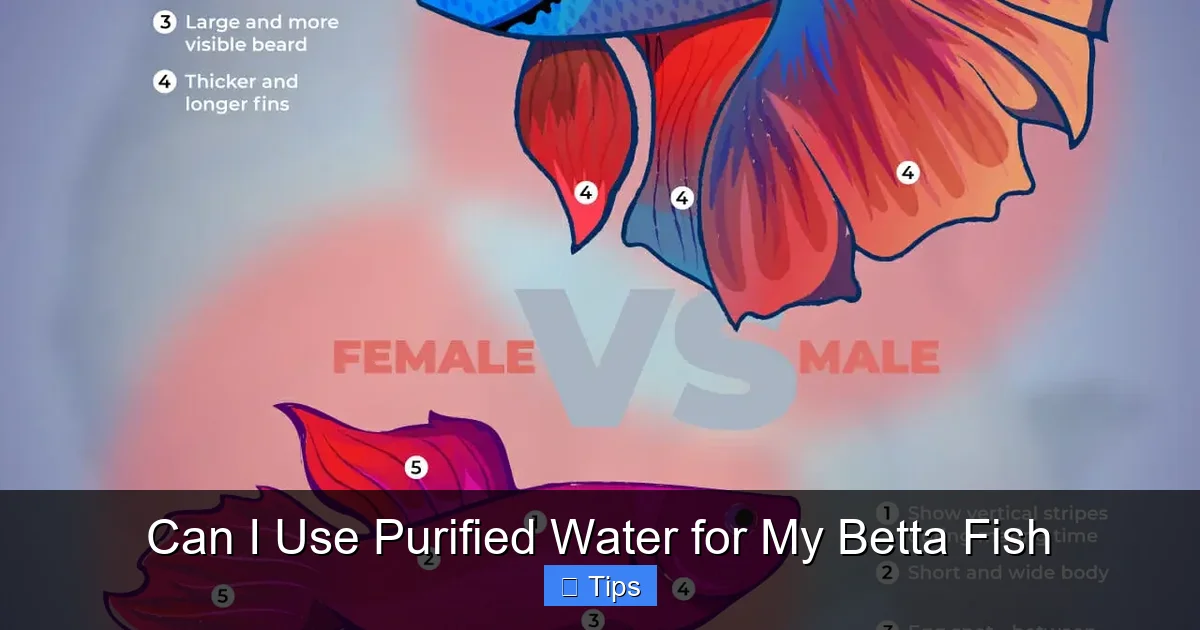
Visual guide about Can I Use Purified Water for My Betta Fish
Image source: ekk4j69ebaa.exactdn.com
Distilled Water
This is created by boiling water and capturing the steam, which then condenses back into liquid. This process removes 100% of minerals, salts, metals, and contaminants. The result is H₂O in its purest, most stripped-down form. It’s what you often find in grocery stores in blue plastic jugs. It’s cheap and readily available, but its complete lack of minerals makes it the most dangerous option to use directly in a fish tank.
Reverse Osmosis (RO) / Deionized (DI) Water
RO systems force water through a semi-permeable membrane under pressure, filtering out about 90-99% of dissolved solids. DI systems use electrically charged resin beads to remove the last traces of ions. Many home RO/DI units combine both for near-distilled purity. This is the gold standard for ultra-pure water used in laboratories, pharmaceuticals, and—you guessed it—some advanced aquarium applications. Like distilled water, it is a blank slate with zero buffering capacity.
The Common Thread: Zero Buffering Capacity
Whether distilled or RO/DI, the core problem is identical: no KH, no GH. This means:
- pH is wildly unstable and will drop rapidly from 7.0 to 5.0 or lower with any organic load.
- The water is hungry for minerals and will pull them from anything it contacts, including your betta’s slime coat, gills, and scales.
- It provides no electrolyte balance for your fish’s bodily functions.
Using either without treatment is not a matter of if your betta will suffer, but when. Symptoms of mineral deficiency and pH shock include lethargy, loss of color, clamped fins, labored breathing, flashing (rubbing against objects), and eventually, death.
The Critical Missing Ingredient: Minerals (and How to Add Them Back)
Okay, so purified water is bad. But what if you really want or need to use it? The only safe way is through a process called remineralization. You must add back specific, controlled amounts of minerals to create a stable, betta-friendly water profile.

Visual guide about Can I Use Purified Water for My Betta Fish
Image source: bettafish.org
You Need Two Products (Not One)
A common and fatal mistake is thinking a “water conditioner” like Seachem Prime is enough. It is not. Prime and similar products are dechlorinators and detoxifiers. They neutralize chlorine, chloramines, and heavy metals. They do not add minerals. They do not raise GH or KH. You need a separate product specifically designed to add minerals.
Commercial Remineralizers: The Safe Choice
Do not try to make your own mix using Epsom salt (magnesium sulfate) or baking soda (sodium bicarbonate). The ratios are precise, and incorrect dosing can lead to toxic spikes or severe imbalances. Use a product formulated for freshwater aquariums. The most popular and trusted is:
- Seachem Equilibrium: This is a GH booster. It adds primarily calcium and magnesium in a ratio that mimics natural freshwater. It does not contain sodium (which can build up to toxic levels) or phosphates. It is the industry standard for raising GH in soft water tanks.
For KH (the buffer), you have two main options:
- Seachem Alkaline Buffer: A phosphate-free buffer that raises KH and stabilizes pH. It’s excellent for creating a stable alkaline buffer system.
- Baking Soda (Sodium Bicarbonate): A cheap, effective way to raise KH. However, it adds sodium to the water. In a well-maintained tank with regular water changes, this is usually not an issue, but it’s less precise and adds a non-natural element. For a betta tank, Alkaline Buffer is the preferred professional choice.
Important: Some all-in-one products exist, but for ultimate control, using a dedicated GH booster (Equilibrium) and a dedicated KH buffer (Alkaline Buffer) is the best practice, especially for a sensitive species like the betta.
Target Parameters for a Betta
Aim for soft, stable water:
- pH: 6.5 – 7.5 (Stable is more important than exact number)
- KH: 3 – 5 dKH (This provides a gentle buffer)
- GH: 5 – 10 dGH (This is soft water, suitable for bettas)
Always use a liquid test kit (like API Freshwater Master Test Kit for pH/KH, and a separate GH test) for accuracy. Test strips are notoriously unreliable for KH and GH.
How to Make Purified Water Safe for Your Betta (Step-by-Step Guide)
Let’s walk through the exact process. Assume you are making 5 gallons (19L) of purified water for a water change or a new tank setup.
Visual guide about Can I Use Purified Water for My Betta Fish
Image source: aquariadise.com
Step 1: Start with Purified Water
Use your distilled or RO/DI water. If using a home RO system, ensure the membrane is new and functioning correctly. If you buy distilled, use a clean, dedicated container that has never held soap or chemicals.
Step 2: Add the KH Buffer First
Why first? The KH buffer will dissolve and stabilize the pH before you add the GH booster. Follow the dosing instructions on your product for your target volume. For Seachem Alkaline Buffer, the typical dose is 1/2 teaspoon per 10 gallons to raise KH by 1 dKH. For 5 gallons, you might start with 1/4 teaspoon. Add it to the empty container of purified water, stir vigorously, and wait 15 minutes. Then, test your KH. You want to land between 3-5 dKH. It’s easier to add a little more than to fix an overshoot. Once your KH is stable, proceed.
Step 3: Add the GH Remineralizer
Now, add your GH booster, like Seachem Equilibrium. The standard dose is 1/2 tablespoon per 10 gallons to raise GH by 1 dGH. For 5 gallons aiming for ~7 dGH (starting from 0), you might use ~1/3 to 1/2 tablespoon. Add it to the same container, stir vigorously, and wait another 30 minutes. This allows all minerals to fully dissolve and integrate. Then, test your GH. Adjust if necessary by adding tiny amounts more.
Step 4: Check and Adjust pH
After the minerals are fully dissolved (wait at least an hour), test your pH. With a KH of 3-5 dKH, your pH should naturally settle between 6.8 and 7.4, depending on other factors. Do not use pH up or down chemicals! They are temporary and destabilizing. If your pH is wildly out of range (e.g., below 6.5 or above 7.8) after achieving proper KH/GH, you may have a contamination issue or need to re-evaluate your source water. A stable pH in the target range is the goal.
Step 5: Temperature Match & Water Change
Bring the treated water to the exact temperature of your aquarium (use an aquarium thermometer). A temperature shock of even a few degrees is harmful. Now you can perform your water change, replacing the old tank water with your new, properly remineralized purified water.
Step 6: Test Your Tank Parameters After the Change
After 1-2 hours, test the water parameters in your aquarium (not just the new water). The change should not cause a significant swing in your tank’s established KH and pH. If it does, you may have added too much remineralizer to the new water, or your tank’s biological load is too low for the volume changed. Always change no more than 25-30% of the tank volume at a time for a betta.
Common Mistakes & How to Avoid Them
The path to using purified water is littered with well-intentioned but deadly errors. Here are the biggest pitfalls:
Mistake 1: Using Purified Water “As-Is”
This is the cardinal sin. Pouring distilled water directly into your betta tank is a guaranteed way to cause osmotic shock and pH crash. The water will immediately start leaching minerals from your fish. Never skip remineralization.
Mistake 2: Only Using a Water Conditioner
As stated, Prime and its ilk are for dechlorination. They do not add minerals. You will still have zero GH/KH, and your betta will slowly die from mineral deficiency while you wonder why he’s fading. Conditioner is a supplement to remineralization if your purified water source is contaminated with chlorine (some municipal RO systems add chlorine back), not a replacement.
Mistake 3: Guessing Doses
“A pinch of this, a splash of that” is a recipe for disaster. Minerals must be measured precisely by weight (using a digital scale) or by the provided measuring spoon. Under-dosing leaves your water unstable. Over-dosing, especially with KH buffers, can cause a dangerous, rapid pH spike. Always follow product guidelines, start at the lower end of the recommended range, and test your water.
Mistake 4: Not Testing After Every Change
Water chemistry is dynamic. Your tap water source can change seasonally. Your remineralization mix might vary slightly. You must test the parameters (pH, KH, GH) of your tank water after every water change made with purified water until you are confident your process is rock-solid and consistent. Then, test weekly.
Mistake 5: Using Purified Water for Top-Offs Only
This is a sneaky one. If you only use purified water to replace evaporated water (top-offs), you are concentrating minerals and pollutants in your tank. Evaporation leaves behind all the dissolved solids. Topping off with pure water dilutes nothing; it just lowers the water level, making the remaining water even more concentrated. You must perform partial water changes (removing old water) to remove waste products. Top-offs should only be done with water that matches your tank’s parameters exactly.
The Verdict: Is It Worth the Hassle?
For the average betta keeper, the answer is a firm no. The complexity, cost (for remineralizers and test kits), and risk of error make purified water a poor choice. Properly conditioned tap water is almost always the superior, safer, and simpler option.
Here’s the simple, foolproof method for 99% of betta owners:
- Get a reliable water conditioner. Seachem Prime is the gold standard. It detoxifies ammonia, nitrite, and nitrate for 48 hours, in addition to dechlorinating.
- Fill your bucket with tap water.
- Add the water conditioner according to the dosage on the bottle for the amount of water you’re treating.
- Let it sit for 15-30 minutes to ensure full neutralization.
- Temperature-match the water to your tank.
- Do your water change.
This method gives you stable, mineral-balanced water (because your tap water already has minerals) that is free of chlorine. It requires no testing beyond the occasional check of your tank’d parameters with a simple test strip to monitor the cycle. It’s cheap, easy, and effective.
When might purified water be justified? Only if:
- Your tap water is extremely hard (GH > 20 dGH) and you are trying to keep a very soft-water species (though bettas are adaptable).
- You are a serious breeder doing precise water chemistry experiments.
- Your tap water is contaminated with something a standard conditioner can’t handle (very rare).
Even in these cases, many keepers find it easier to use a commercial RO/DI system to blend with their tap water, creating a consistent, medium-hardness water, rather than going 100% purified and remineralizing from scratch.
Conclusion: Simplicity and Stability Win
Your betta fish’s health is directly tied to the stability of his aquatic environment. Purified water, in its raw state, is the antithesis of stability. It is a volatile, mineral-free void that will destabilize pH and rob your fish of essential electrolytes. While it is technically possible to make it safe through a meticulous process of remineralization and constant testing, it introduces unnecessary complexity and risk.
For the vast majority of betta enthusiasts, the most loving and responsible choice is to embrace the minerals already present in your municipal supply. Use a high-quality water conditioner to neutralize the chlorine, and you have a stable, life-supporting foundation for your fish to thrive. The goal is not to achieve “perfect” lab water, but to provide a consistent, stable, and chemically balanced home. Purified water, without a doubt, makes that goal harder, not easier. Stick with conditioned tap water, and you’ll spend less time playing chemist and more time enjoying the vibrant, active personality of your magnificent betta.
Frequently Asked Questions
Can I use purified water for my betta fish if I just add a water conditioner like Prime?
No. Water conditioners like Prime only remove chlorine/chloramines and detoxify ammonia/nitrite/nitrate for a short time. They do not add the essential minerals (GH/KH) that purified water lacks. Using only a conditioner with purified water will still lead to mineral deficiency and pH instability, harming your betta.
Is it okay to mix purified water with my tap water to make it softer?
Yes, this is one of the few good uses for purified water. You can blend it with your hard tap water to achieve a desired, softer mineral profile. However, you must still treat the final blend with a water conditioner to neutralize chlorine, and you should test the resulting GH/KH to ensure it’s in the safe betta range.
What is the easiest and safest product to remineralize purified water for a betta?
The easiest and safest method is to use a dedicated GH booster like Seachem Equilibrium to raise general hardness, and a dedicated KH buffer like Seachem Alkaline Buffer to raise carbonate hardness and stabilize pH. Always dose precisely according to the product instructions for your water volume and test your parameters after dosing.
How often would I need to test the water if I use purified water?
You must test the parameters (pH, KH, GH) of your tank water after every single water change made with newly remineralized purified water, until you have a perfectly repeatable and reliable process that yields identical results each time. Once established, you should still test weekly as a best practice.
What are the signs that my betta is suffering from poor water chemistry due to using purified water?
Signs include lethargy, loss of vibrant color, fins clamped tightly to the body, labored breathing at the surface, frequent rubbing or flashing against tank objects (due to irritated skin/gills), and a complete loss of appetite. These symptoms often appear quickly after a water change with improper water.
My tap water has a strong chlorine smell. Is purified water a better option than using a conditioner?
Absolutely not. A strong chlorine smell means you need a water conditioner. Conditioners like Seachem Prime instantly and safely neutralize chlorine and chloramines. This is a simple, inexpensive, and highly effective solution. Using purified water to avoid chlorine is like using a sledgehammer to crack a nut—it creates far bigger problems than it solves.